



Antique Glass Corner Unit
An antique glass corner unit solves the eternal problem of dead space while offering a stage for your collection.

Antique Glass Corner Unit
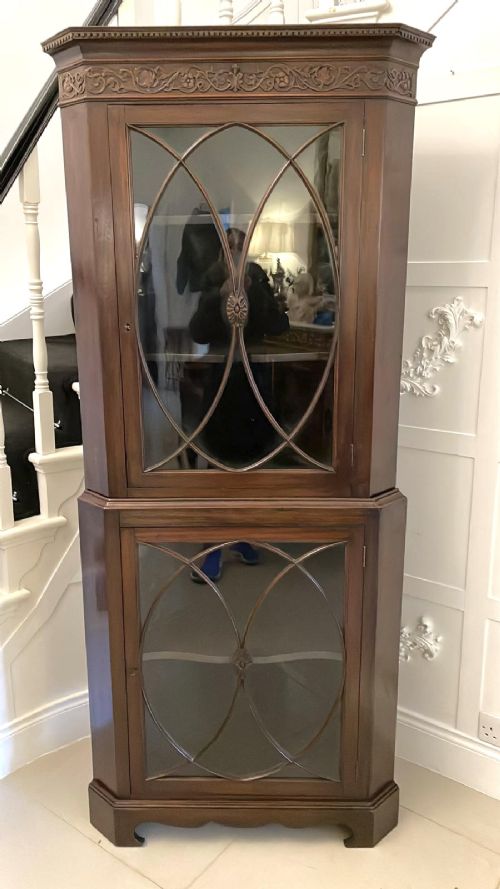
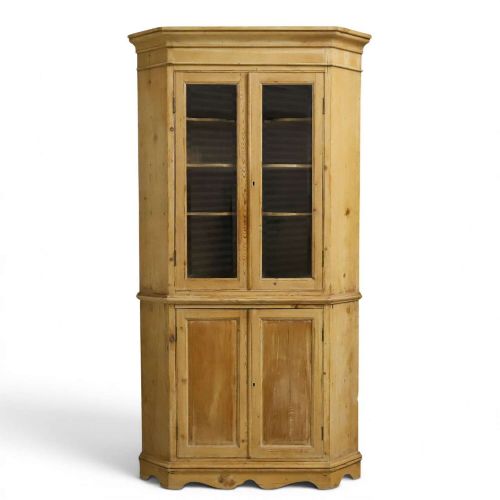
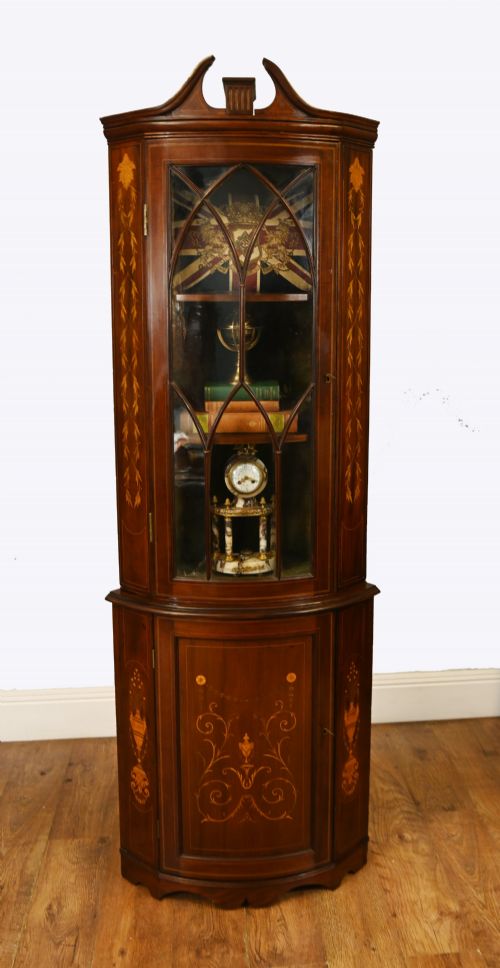
When you search for an antique glass corner unit, you encounter pieces designed to fit snugly into room angles, uniting practicality with display. The examples on this page span the 18th century, the Georgian era, the Victorian period, and the Edwardian years.
Forms vary significantly across these periods, ranging from wall-hanging display cabinets and single-door cupboards to imposing standing double-height units and two-part floor pieces. Many utilise glazed doors or bow fronts to showcase the contents within.
Styles represented include Sheraton Revival, Arts and Crafts, Queen Anne, and Country House aesthetics. Mahogany and oak dominate the construction, often enhanced by satinwood inlay, brass fittings, and walnut veneers.
Materials and construction
Cabinet makers relied heavily on timber such as mahogany, oak, walnut, and pine for the carcase and framing. Panels of glass form the doors, allowing light to reach objects displayed inside.
Decorative elements involve intricate techniques like marquetry and satinwood inlay, while brass fixtures secure doors and hanging mechanisms. Construction methods adapt to the period, from early panelled oak to refined Edwardian mahogany framing.
Antique Glass Corner Unit Retail Price Guide 2026
Typical asking prices for glass corner unit among the pieces listed under this phrase on Sellingantiques today, from the lower quarter to the upper quarter. They describe what is for sale here now, not the wider market.
Materials span mahogany, oak, walnut, pine, brass, and satinwood inlay across the 18th, 19th, and early 20th centuries.
Judging quality in corner cabinetry
Quality reveals itself in the selection of timber figures, such as rich mahogany grain or figured walnut, paired with precise joinery at the angled corners. The crispness of carved details and the finesse of satinwood marquetry separate standard production from superior pieces.
Proportion and form dictate distinction, with serpentine-shaped fronts, bow glass doors, and double-height configurations demonstrating greater ambition from the maker. Original glass panes and intact brass hardware further elevate the standing of a cabinet.
Edwards And Roberts
The Antique Glass Corner Unit Glossary
- Astragal glazed
- Glass doors divided into smaller panes by narrow wooden bars called glazing bars. These create geometric patterns across the front of the cabinet.
- Bow front
- A convex, outwardly curved front facade. This shape softens the hard angles typical of room corners.
- Serpentine front
- A facade shaped with a central convex curve flanked by concave sweeps, or vice versa. It requires advanced woodworking skill to execute.
- Marquetry
- Decorative veneer work arranged in pictorial or geometric patterns using various woods. It often adorns the doors of Edwardian and Georgian pieces.
- Two-part form
- A cabinet constructed in separate upper and lower sections stacked together. This aids in transport and placement within a room.
Antique Glass Corner Unit: Frequently Asked Questions
How do I secure a wall-hanging corner cabinet?
Wall-hanging units require firm attachment to wall studs using appropriate fixings suited to the weight of the timber and glass.
Because these cabinets hold heavy items, professional installation ensures the piece remains stable and secure against the wall.
Where should I place a corner unit?
These cabinets fit neatly into unused room angles, turning dead space into a focal point for display.
They work well in dining rooms, hallways, or living spaces where floor area is at a premium.
How do I tell Georgian from Edwardian pieces?
Georgian pieces from the 18th century often feature solid oak or early mahogany construction with simpler, robust proportions and hand-cut joinery.
Edwardian items from around 1900 frequently incorporate lighter mahogany frames, delicate satinwood inlay, and Sheraton Revival styling.
What is the difference between a cupboard and a display cabinet?
Cupboards traditionally feature solid wooden doors designed to conceal stored items away from view.
Display cabinets utilise glass doors specifically to show off ceramics, glassware, and decorative objects.