

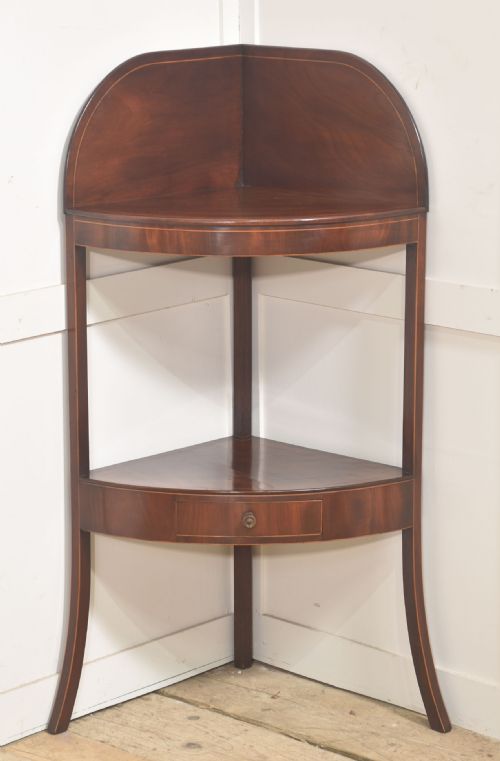


Standing Corner Washstand
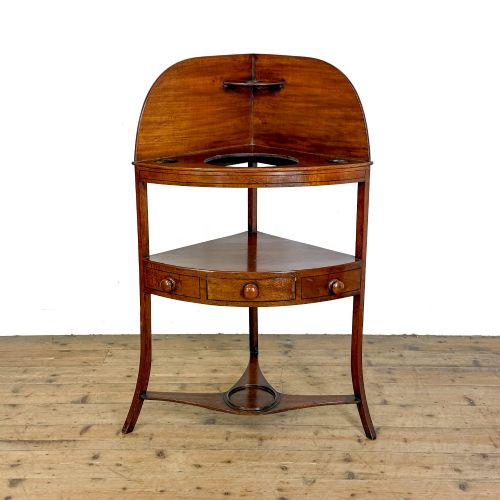
A standing corner washstand is a clever piece of vernacular furniture designed to tuck neatly into a room, offering a dedicated surface for morning ablutions.
Standing Corner Washstand
When you search for a standing corner washstand, you encounter practical items engineered to utilise awkward angles in period rooms efficiently.
The pieces on this page are predominantly Georgian, Regency, and Victorian examples built to house basins, ewers, and grooming apparatus out of the main path of traffic.
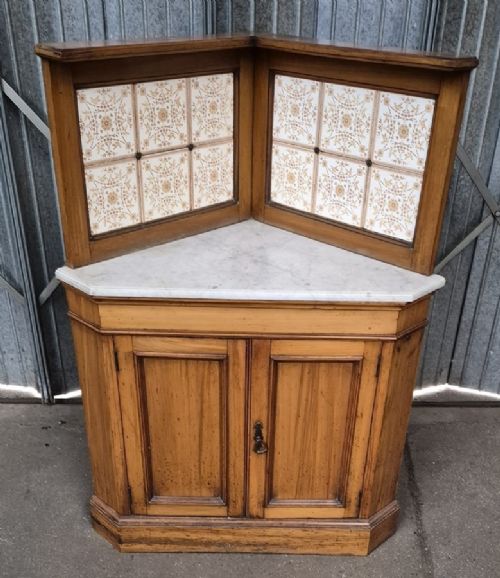
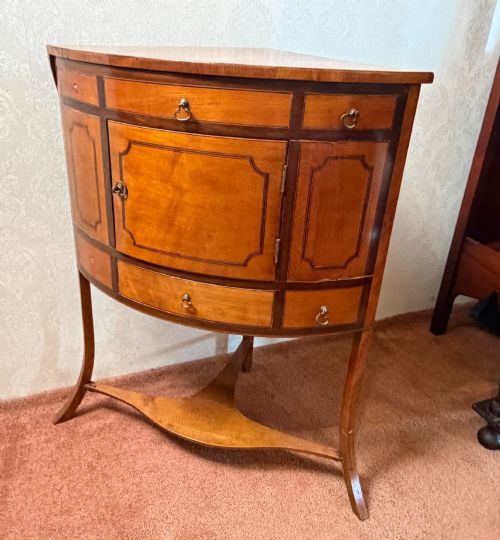
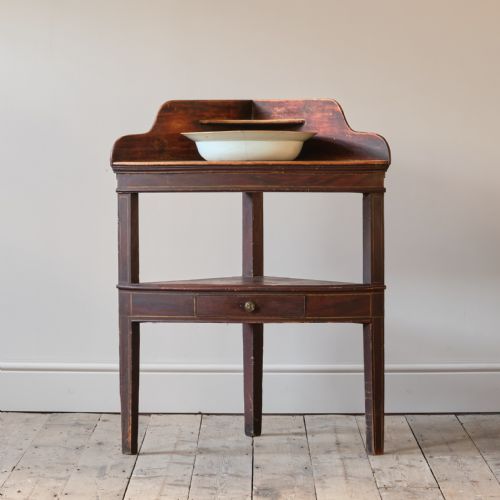
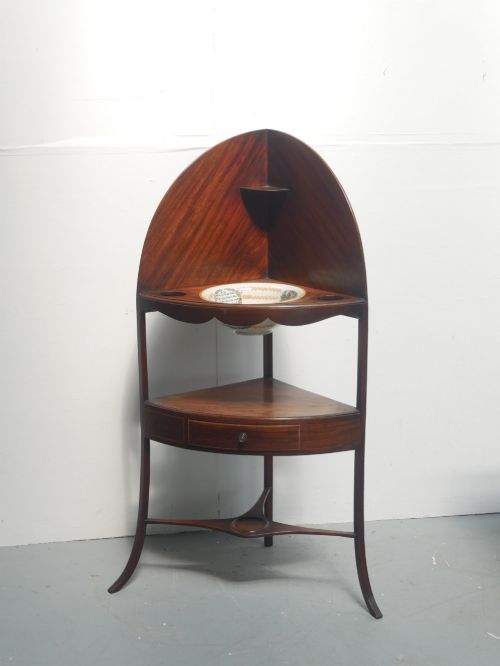
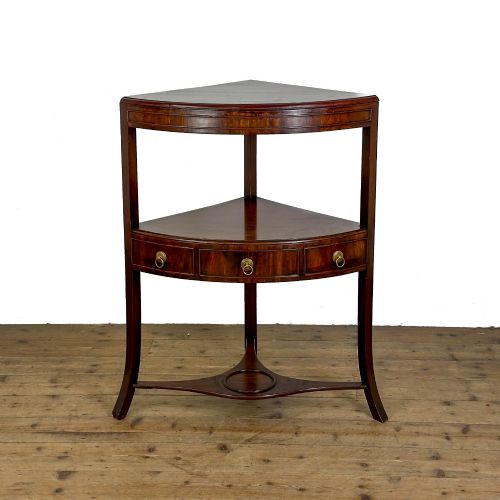
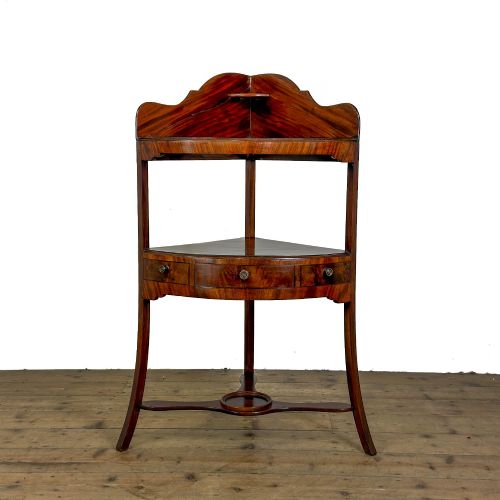
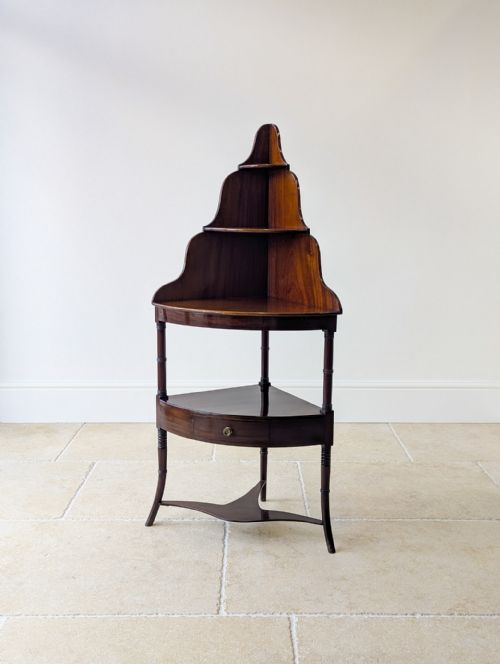
Most variations take the form of tiered stands or enclosed corner cabinets constructed from mahogany, occasionally featuring bow fronts or folding tops to conceal the basin.
How they were made
Cabinet makers utilised solid mahogany and pine carcasses, often selecting figured veneers for visible surfaces and adding subtle boxwood inlay for contrast.
Functional details such as brass fittings, ceramic inserts, and fitted marble tops were incorporated to withstand daily use with water and personal care implements.
Listings span the Georgian, Regency, and Victorian periods, utilising mahogany, marble, brass, and boxwood inlay.
What varies in quality
Quality rests on the selection of timber and the crispness of secondary details such as stringing, inlay, and the retention of original paint or hardware.
The distinction between a standard utility piece and a finer workshop production lies in the cleverness of folding mechanisms, tier construction, and the preservation of original structural integrity.
Walker and Sons·Gillows Lancaster
The Standing Corner Washstand Glossary
- Bow front
- A convex curved cabinet front that projects outward, commonly seen on refined Regency and Georgian corner stands to soften sharp angles.
- Tiered stand
- Furniture constructed with multiple open shelves arranged vertically, allowing storage space for ewers, soap dishes, and miscellaneous items.
- Pot cupboard
- An enclosed lower compartment within a washstand designed to house a chamber pot discreetly behind panelled doors.
- Boxwood inlay
- Narrow strips of pale boxwood embedded into darker mahogany surfaces to create linear decorative borders and geometric patterns.
Standing Corner Washstand: Frequently Asked Questions
What is a standing corner washstand?
A standing corner washstand is a specialised piece of domestic furniture built with angled sides to fit precisely into the corner of a bedroom or dressing room. These stands typically feature a cutout top tier to hold a wash basin, accompanied by lower shelves or enclosed cupboards.
Historically, they provided a stable, space-saving station for personal hygiene before modern plumbed bathrooms became common in private homes.
How were these washstands used originally?
In period households, they served as the primary station for morning washing, shaving, and grooming tasks. Servants would fill the basin with warm water from a matching ceramic ewer placed on the stand.
Lower tiers and drawers held soaps, sponges, and towels, while enclosed lower cupboards often housed a chamber pot out of sight.
How do I live with a washstand today?
These pieces integrate easily into modern interiors by serving alternative functions in hallways, living rooms, or bathrooms. The top surface and lower shelves adapt well to holding plants, lamps, or decorative ceramics.
Folding top versions allow you to close the surface flat when the washing recess is not in use, presenting a clean wooden cabinet front.
How do I tell Georgian and Regency examples apart?
Georgian versions, particularly from the George III period, often emphasise straight lines, bracket feet, and restrained mahogany construction with occasional string inlay. Regency pieces tend to introduce bolder architectural shapes, such as pronounced bow fronts and simpler, heavier pillar supports.
Examining the secondary timbers inside drawers and cupboards helps confirm the period of construction alongside the exterior styling.