
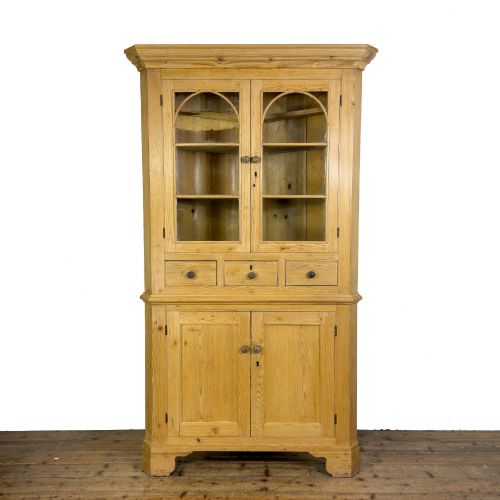
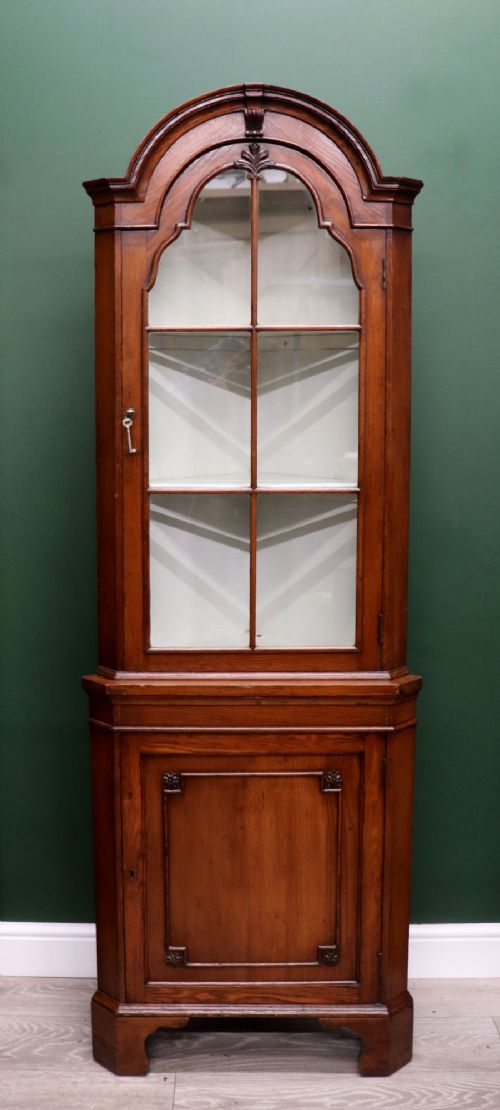


Standing Corner Display Case
A standing corner display case uses awkward angles to advantage, turning unloved room junctions into focal points for glass and polished timber.
Standing Corner Display Case
A standing corner display case makes use of unused floor space in a room by fitting neatly into a ninety-degree angle. These tall pieces turn forgotten junctions into focal points for showing off ceramics, glass, and collections.
The pieces on this page span several eras, from the Georgian period through Victorian and Edwardian times into the twentieth century. Mahogany and walnut appear often, sometimes fitted with glazed doors or arranged in two-part heights.
Formations range from simple glazed cabinets on stands to grand double-height cupboards with bowed or serpentine fronts. Buyers will find variations in timber and inlay work, reflecting the domestic tastes of their respective decades.
How they were made
Cabinet makers built these standing corner display cases using solid timbers and decorative veneers such as mahogany and walnut. Workshops applied satinwood inlay and marquetry details to enrich the flat surfaces of Edwardian and revival pieces.
Glazing bars divided glass panels into smaller panes, a traditional method that supported larger apertures before single large sheets of plate glass became common. Brass hardware secured the doors, while mirrored backs occasionally enhanced the internal light.
Designed to conquer the awkward empty corner, these tall cabinets make a virtue out of the room's most neglected geometry.
What varies in quality
The ambition of the design sets the standard across these standing corner display cases. Simple pine country cupboards contrast sharply with elaborate double-height serpentine-fronted cabinets featuring fine marquetry and detailed glazing.
Timber selection and the crispness of the inlay define the upper tier of craftsmanship. The handling of proportions and the integration of the two-part structures separate utilitarian storage from finer parlour furniture.
Edwards And Roberts
The Standing Corner Display Case Glossary
- Bow front
- A convex, outwardly curved front section on a cabinet that softens the hard angles of the room. This shape requires skilled joinery to bend wood or shape veneers accurately.
- Marquetry
- The art of applying pieces of veneer to a structure to form decorative patterns and pictures. Craftsmen used various tinted woods to create floral or geometric motifs.
- Serpentine front
- A furniture front featuring a concave centre flanked by two convex ends, or the reverse. This undulating profile demands advanced woodworking expertise.
- Double height
- A tall cabinet built in two stacked sections, usually comprising an upper display display area and a lower enclosed cupboard. This format maximises vertical storage capacity.
Standing Corner Display Case: Frequently Asked Questions
Where should I put a corner cabinet?
These tall pieces fit snugly into any vacant ninety-degree angle in a dining room, hallway, or drawing room. They use vertical wall space that normally goes without a function.
Positioning them away from direct sunlight protects the timber polish and internal items from fading over time.
Are these cabinets one piece or two?
Many standard examples are built as a single tall unit, while larger or double-height models often separate into two stacking parts. Two-part construction helps with moving and navigating tight staircases.
Checking the descriptions will confirm whether a specific piece divides for transport.
How do I date a corner cabinet?
Dating relies on timber choices, construction techniques, and decorative styles visible across the frame. Edwardian and Victorian pieces often show distinct inlay patterns and glass arrangements.
Earlier Georgian examples tend to feature heavier timbers and simpler glazing bar configurations.
Can I display heavy items inside?
Most standing display cases feature fixed or adjustable wooden shelves designed for porcelain, glass, and ornaments. Heavy collections should be distributed evenly to avoid stressing older timber supports.
Reviewing the internal shelf structure helps determine what weight the cabinet can safely hold.