

Standing China Vitrine
A standing china vitrine is a glazed display cabinet designed to showcase porcelain and decorative objects while protecting them from dust.
Standing China Vitrine
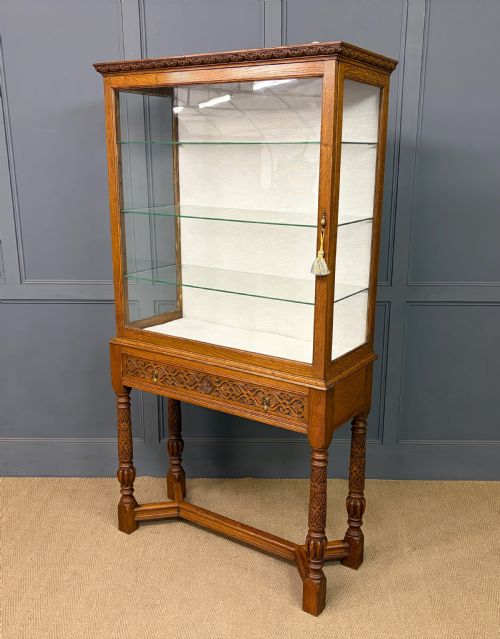
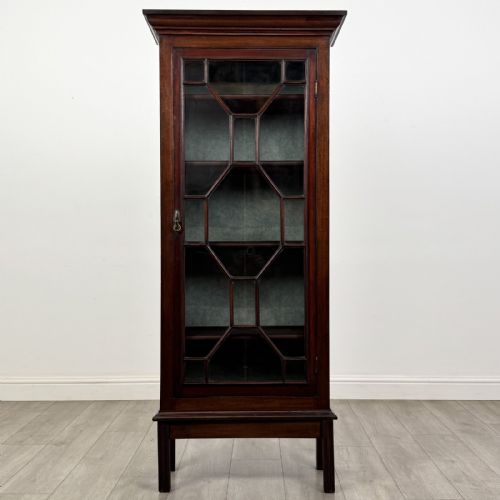
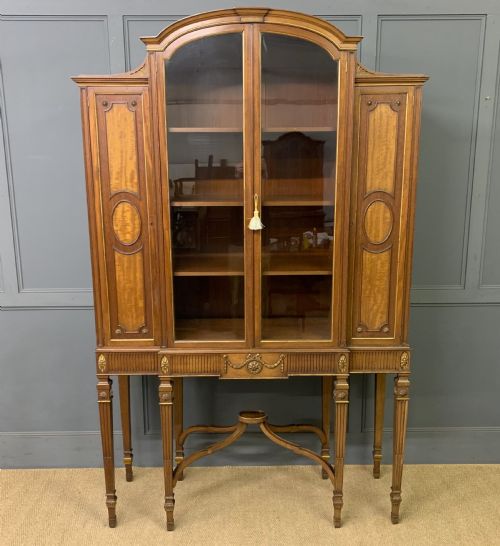
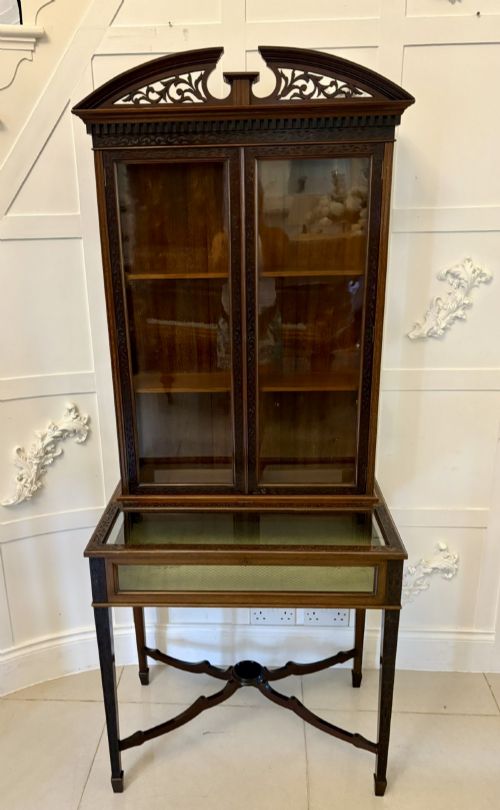
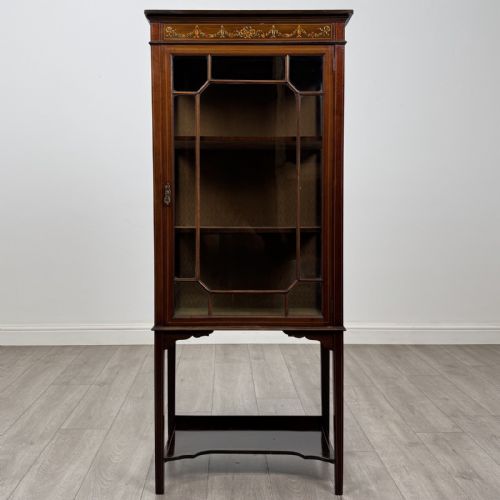
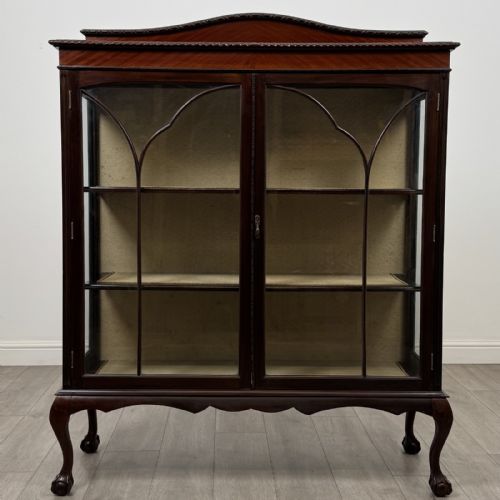
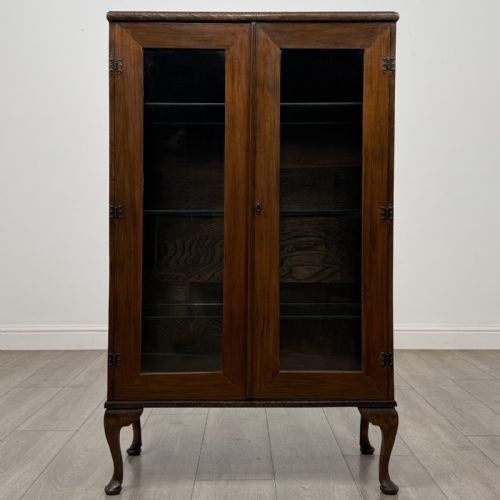
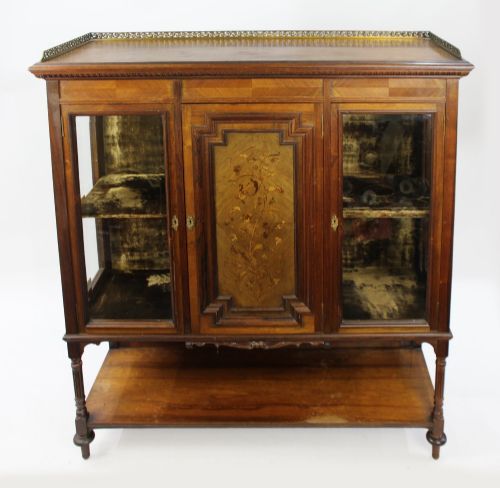
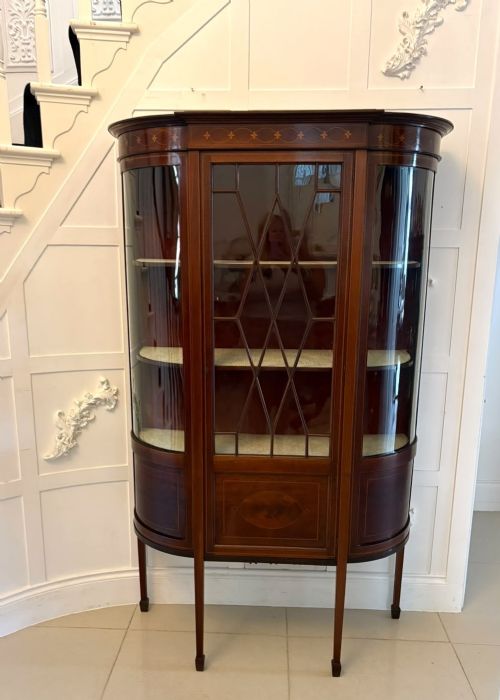
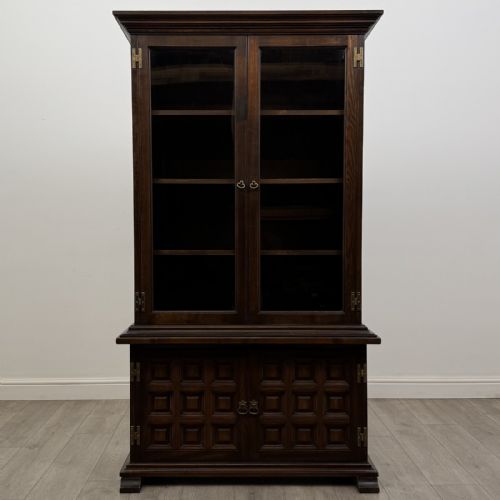
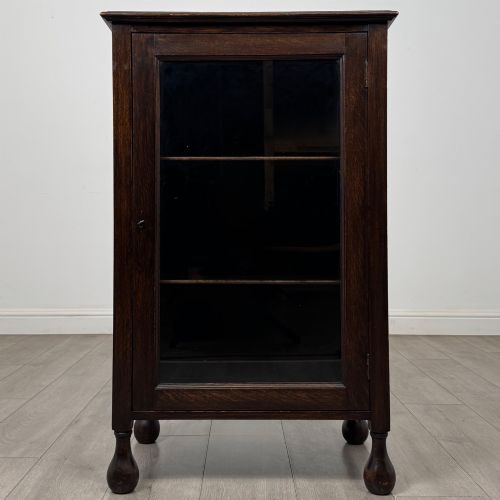
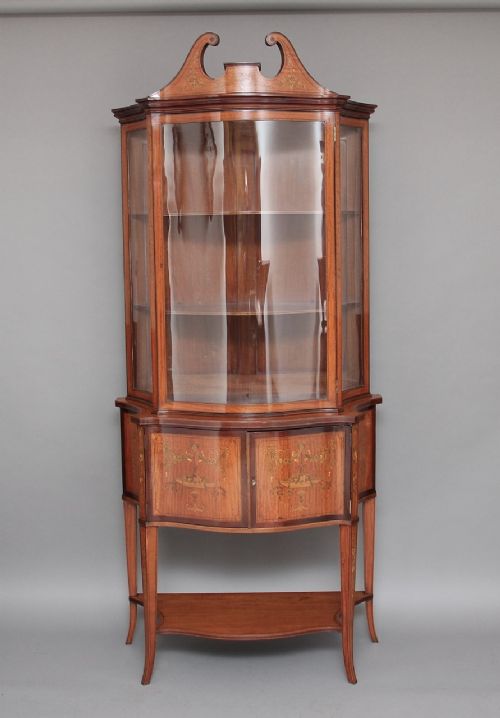
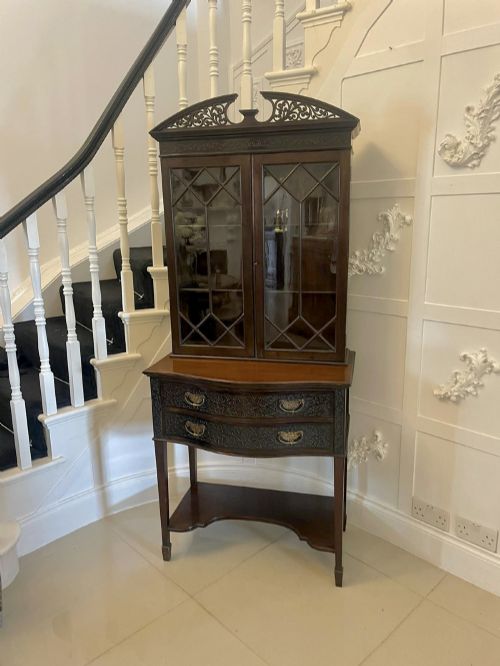
A standing china vitrine provides upright glass-fronted storage for delicate ceramics and precious objects. The pieces appearing here predominantly span the Victorian and Edwardian eras, alongside revival pieces that draw on Georgian and Sheraton designs.
Makers utilised various formats, including tall single-door units, breakfront designs, and corner cabinets that fit snugly into domestic interiors. These cabinets combine timber frames with extensive glazing to maximise light transmission across shelved interiors.
Distinguishing Factors of Quality
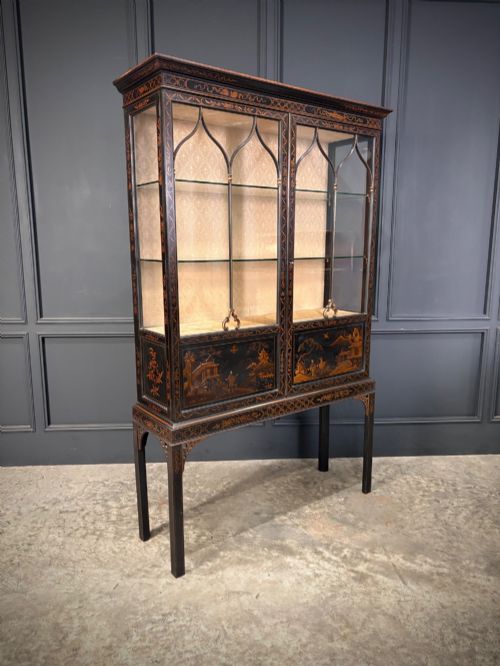
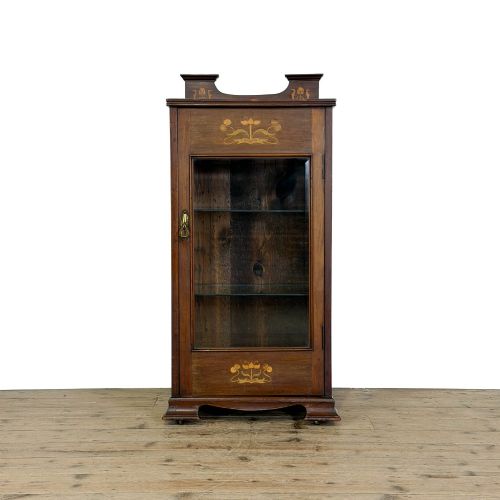
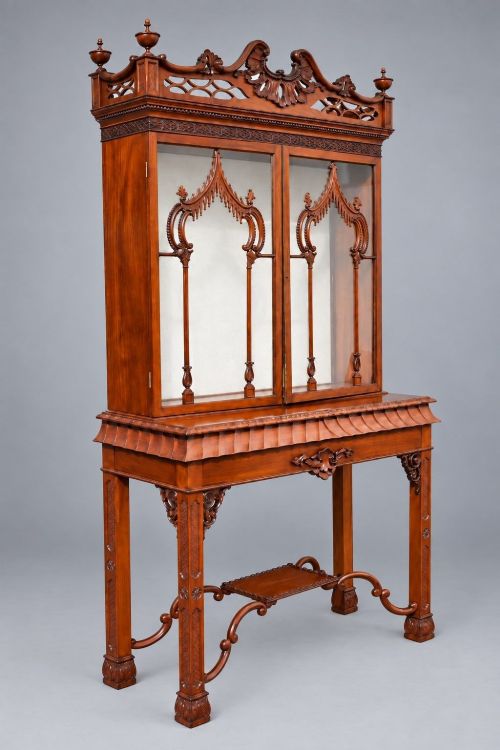
Quality rests upon the selection of timber figures, such as figured walnut and richly grained mahogany, matched with precise inlay work. The crispness of carved details, particularly on revival styles like Chippendale or Chinoiserie, separates standard workshop production from finer examples.
The integration of original painted decoration and the finesse of the glazing bars indicate the level of craftsmanship invested in a piece. Proportions and the retention of original glass or brass elements also influence the standing of an individual cabinet.
Standing China Vitrine Retail Price Guide 2026
Typical asking prices for standing china vitrine among the pieces listed under this phrase on Sellingantiques today, from the lower quarter to the upper quarter. They describe what is for sale here now, not the wider market.
Mahogany and oak appear most frequently as the primary structural materials across the listed items.
Collinson & Lock·Maple & Co.·Edwards & Roberts
The Standing China Vitrine Glossary
- Vitrine
- A glass-fronted display cabinet used for showing fine porcelain and objets d'art. The term derives from the French word for glass.
- Inlay
- A decorative technique where pieces of contrasting timber or shell are inserted into depressions in the base wood. This method creates geometric or floral patterns.
- Breakfront
- A cabinet design where the central section projects forward from the flanking wings. This architectural arrangement adds depth and visual interest to larger furniture.
- Glazing
- The installation of glass panes within the door frames and sides of a cabinet. It allows uninterrupted viewing of the contents while keeping dust at bay.
Standing China Vitrine: Frequently Asked Questions
What is a standing china vitrine used for?
These cabinets serve to display delicate porcelain, china sets, and decorative items safely within a room. The glass panels and shelves ensure that contents remain visible from multiple angles while staying protected from household dust.
Historically, they allowed households to exhibit their finest dining wares and collected curiosities to visiting guests. Today, they perform the exact same function in domestic settings.
How do I identify an Edwardian vitrine?
Edwardian cabinets often feature lighter timbers like mahogany, frequently enhanced with satinwood inlay and Sheraton Revival motifs. The construction tends to feel more delicate compared to earlier heavy Victorian furniture.
They frequently date from the period around nineteen hundred to nineteen ten, reflecting the brighter, neoclassical tastes of that era.
Where should I place a corner cabinet?
Corner cabinets fit directly into the intersection of two walls, making efficient use of otherwise empty domestic space. They work effectively in dining rooms or drawing rooms where floor space is at a premium.
Their angled footprint allows a large display area without dominating the centre of the room.
Are these cabinets suitable for heavy books?
Many of these pieces function as combined bookcases and display cabinets, though their primary purpose is lighter display. The internal wooden shelves suit porcelain and glassware rather than massive architectural libraries.
Standard shelving supports ordinary household volumes, but heavy folios require sturdier dedicated library shelving.