


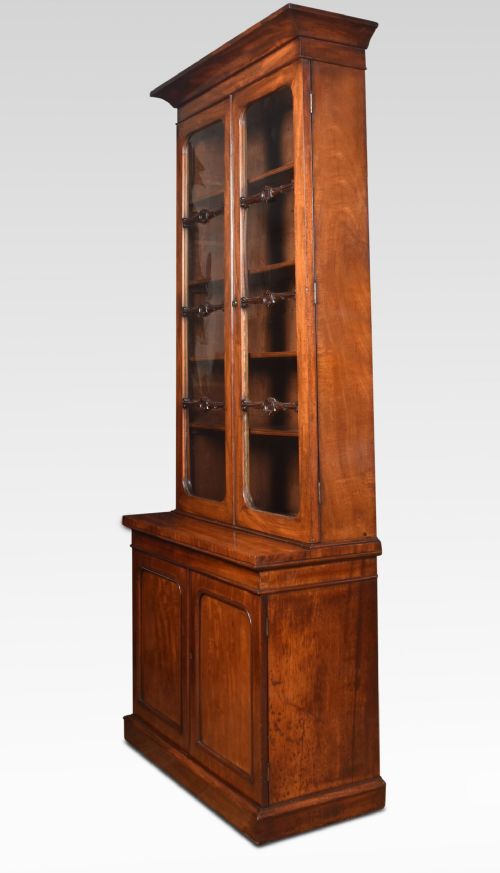


Narrow Mahogany Vitrine
These narrow mahogany vitrine examples bring refined display space to a room without crowding the floor.
Narrow Mahogany Vitrine
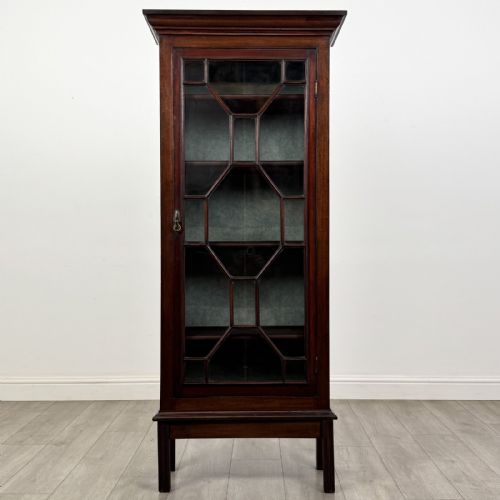
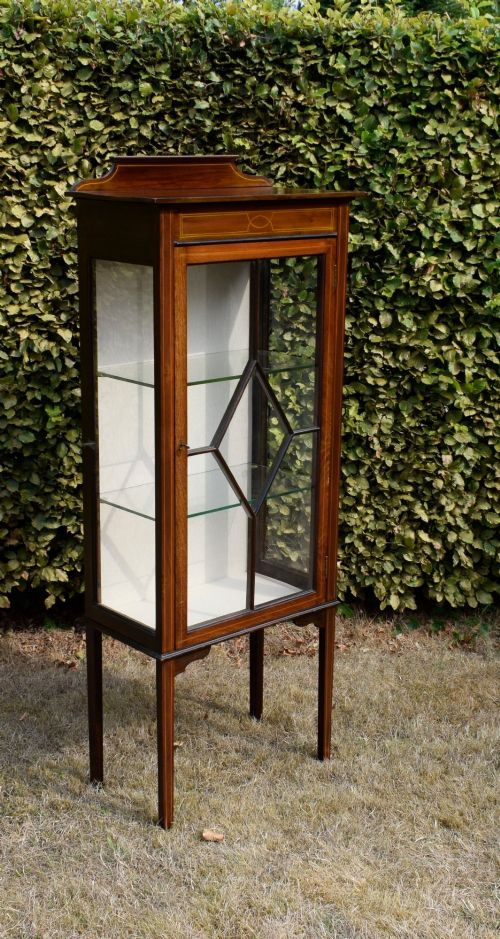
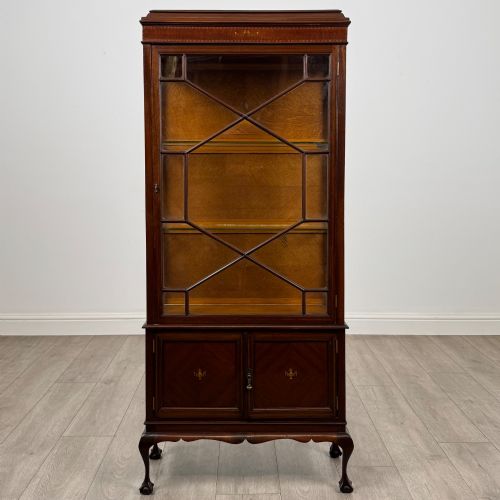
A narrow mahogany vitrine is a tall, slender display cabinet designed to showcase fine objects while protecting them behind glass. You will encounter various forms on this page, including Edwardian display cabinets, freestanding shop display cabinets, and tall narrow mahogany cabinets.
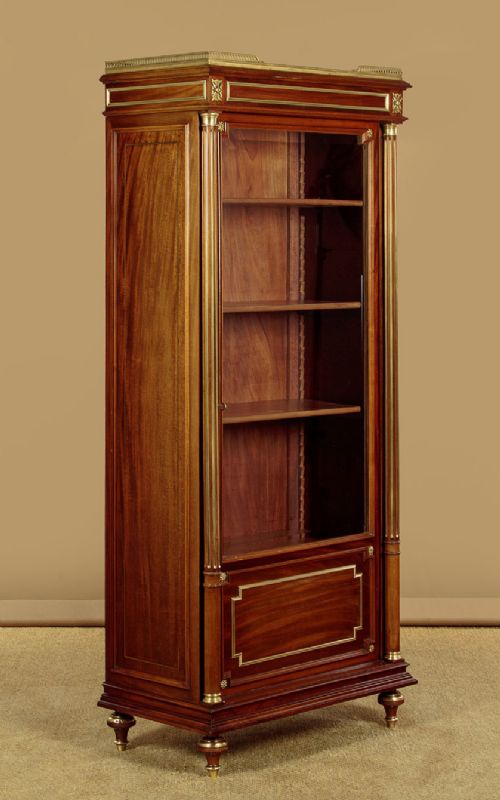
The pieces span periods from the late 19th century through the Edwardian era, incorporating styles such as Georgian Revival, Gothic Revival, Edwardian Sheraton Revival, and French Empire. Most examples lean towards Edwardian and 19th century origins, offering slender proportions suited to compact spaces.
Makers and creators utilised specific regional designs, resulting in variations like English narrow cupboards and French mahogany bookcase combinations. The core purpose remains consistent across these forms: presenting china, books, and collections within a vertical wooden frame.
How narrow mahogany vitrine pieces were made
Cabinet makers constructed these pieces primarily from solid mahogany and mahogany veneers, often embellished with satinwood inlay for decorative contrast. Structural stability relied on tight joinery, while glass panels were glazed into doors to permit light to enter the interior shelving.
Additional detailing incorporated brass hardware, fabric linings for the display interiors, and occasionally marble surfaces on specific configurations. The integration of these materials required traditional woodworking techniques suited to slender, tall elevations.
Narrow Mahogany Vitrine Retail Price Guide 2026
Typical asking prices for narrow mahogany vitrine among the pieces listed under this phrase on Sellingantiques today, from the lower quarter to the upper quarter. They describe what is for sale here now, not the wider market.
Styles recorded across these listings range from Georgian Revival and Gothic Revival to French Empire and Edwardian Sheraton Revival.
What varies in quality in narrow mahogany vitrine examples
The refinement of the timber and the precision of the inlay set superior examples apart from simpler utilitarian pieces. Finer cabinets display careful matching of mahogany grain and delicate satinwood stringing rather than plain, unadorned surfaces.
Construction details such as original glass panes, well-fitted doors, and intact brass fittings elevate the integrity of a piece. The sophistication of the revival style - whether Georgian, Gothic, or French Empire - also dictates the complexity of the design.
The Narrow Mahogany Vitrine Glossary
- Vitrine
- A glass-fronted cabinet designed for displaying fine objects or china. This term frequently overlaps with display cabinets and bookcases in older listings.
- Satinwood
- A durable, yellowish-brown timber utilised for contrasting inlay and decorative banding on mahogany furniture. It creates bright geometric lines against darker wood.
- Gothic Revival
- An architectural and decorative style incorporating pointed arches and medieval motifs into cabinet work. This style appears selectively on certain period display pieces.
- Inlay
- A technique where pieces of contrasting wood, such as satinwood, are inserted into recessed portions of the mahogany base. This adds pattern and visual depth to the facade.
Narrow Mahogany Vitrine: Frequently Asked Questions
Where should I place a narrow mahogany vitrine?
These tall, slender cabinets suit alcoves, hallways, or smaller rooms where floor space is limited. Their vertical orientation provides substantial display capacity without dominating the surrounding furniture.
Position the cabinet away from direct sunlight to protect interior fabrics and wooden surfaces from fading over time.
How do I clean the interior glass?
Use a soft, lint-free cloth and a mild glass cleaner applied sparingly to avoid damaging the surrounding wooden frame. Spray the cloth rather than the glass directly to prevent liquid from seeping into the joints.
Take care around delicate satinwood inlay and antique brass hardware during maintenance.
Can these cabinets hold heavy books?
While some listings include bookcases and combination units, the primary purpose of a vitrine is light display rather than heavy library storage. Check the construction of the internal shelves before loading dense collections.
Lighter items such as china, glassware, and small ornaments are best suited for glass-fronted display spaces.
What defines the Edwardian style?
The Edwardian period spans the early 20th century up to the First World War, characterised by lighter proportions and eclectic revivals of earlier designs. Cabinets from this era often feature refined inlay work and slender legs.
Many examples on this page reflect this lighter aesthetic compared to earlier, heavier Victorian furniture.
Are the glass panes original?
Many period cabinets retain their original glass, which often displays subtle imperfections, slight waviness, or small bubbles consistent with older manufacturing methods. Inspecting the surface texture helps identify period glass.
Replacement glass is sometimes fitted during restoration work to ensure safety and structural integrity.