

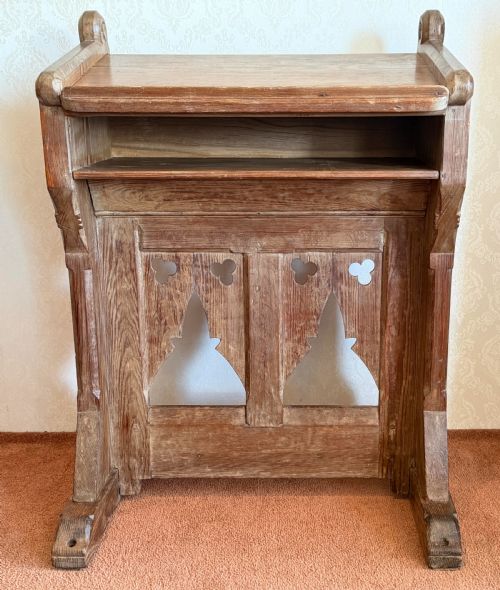


Standing Bible Desk
A standing bible desk offers a raised surface for sacred texts, combining architectural presence with functional reading height.
Standing Bible Desk
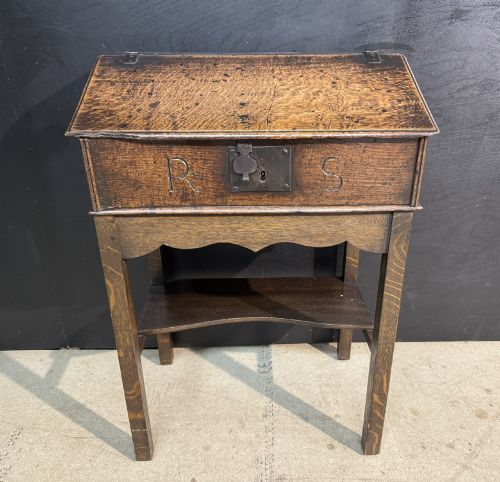
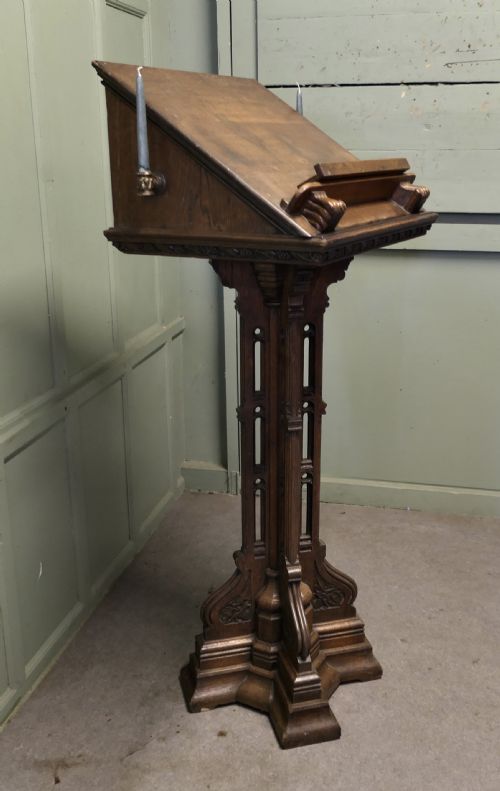
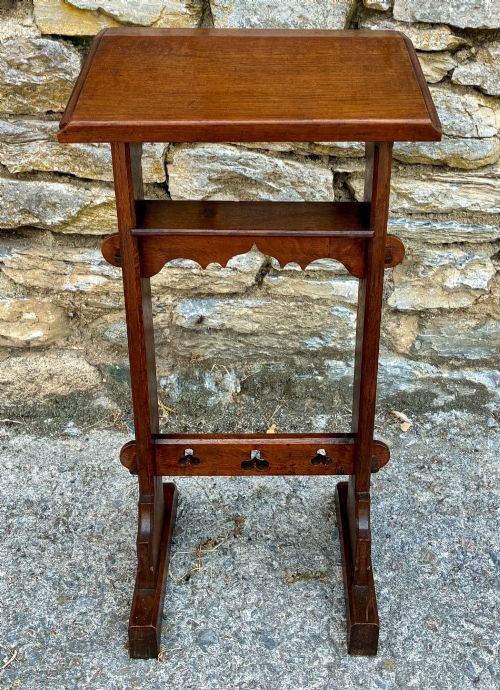
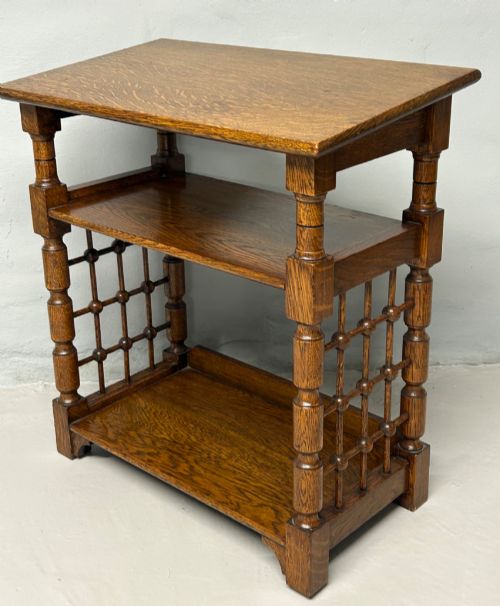
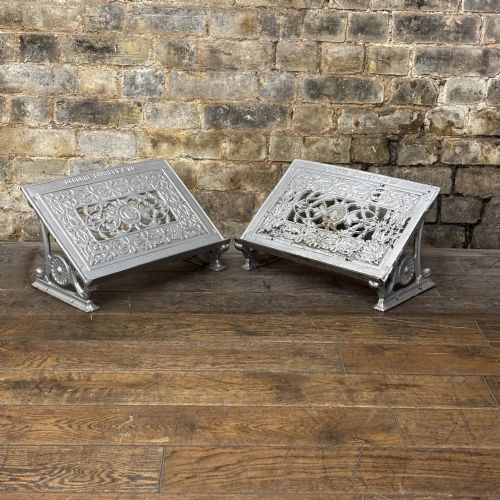
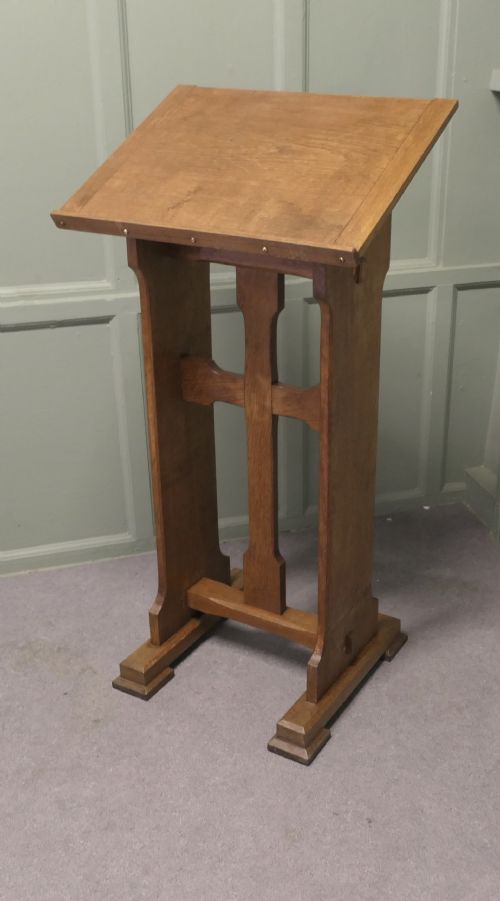
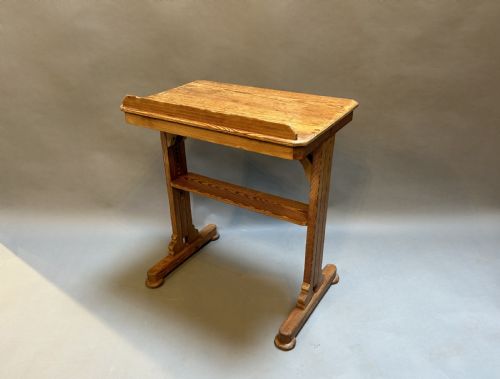
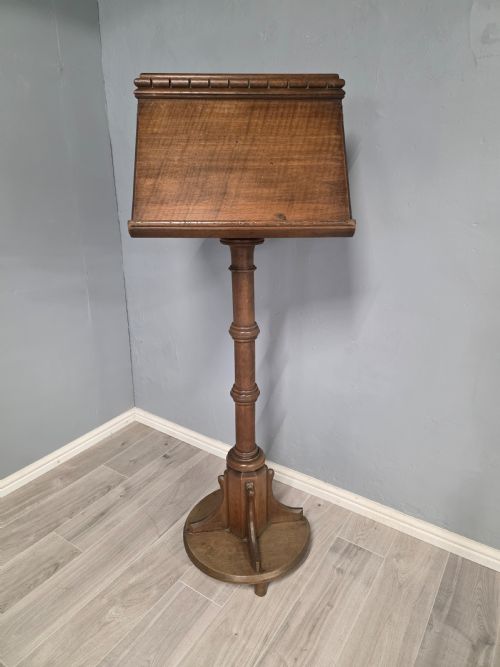
A standing bible desk is primarily designed to hold large volumes at a comfortable reading angle, appearing across periods from the seventeenth century to the twentieth century. These pieces encompass forms such as church lecterns, reading stands, folding book pedestals, and writing desks on stands.
Origins span formal ecclesiastical workshops and vernacular cabinet makers, producing objects that range from austere pine tables to heavily carved oak podiums with brass work. Each piece serves the practical requirement of supporting books or menus at standing height.
Materials and construction
Makers relied principally on solid oak, pine, and hardwood, frequently joining panels with traditional mortise and tenon techniques suited to load-bearing ecclesiastical furniture. Iron and brass components appear in structural braces, folding mechanisms, and book rests, adding mechanical utility to wooden frames.
Surface ornamentation relies on hand-carved detailing, particularly in Gothic Revival and Arts and Crafts examples where tracery, mouldings, and carved figures adorn the panels and supports. Pine versions tend towards simpler, utilitarian board construction, whilst seventeenth-century pieces utilise panelled chest and desk formats on stands.
Listings feature oak as the dominant material, appearing across seventeenth-century joined boxes, Victorian church lecterns, and Edwardian Arts and Crafts reception desks.
Evaluating quality and execution
Quality separates through the integrity of the timber selection and the depth of hand-carving executed by the maker. Superior pieces display dense, figured oak with crisply defined architectural motifs and harmonious proportions, whereas lesser examples rely on mechanical stamping or plain pine boards.
Construction methods also dictate standard, where original stands and integrated joinery command higher regard than later adaptations or married bases. The presence of functional brass work and robust pivoting or folding mechanisms further distinguishes finer reading stands from basic utility tables.
Osborne Garrett & Co
The Standing Bible Desk Glossary
- Lectern
- A tall desk with a slanted top designed to hold a book for reading aloud to an assembly. These often feature enclosed storage or tiered ledges.
- Gothic Revival
- An architectural and decorative style drawing inspiration from medieval design. It employs pointed arches, trefoils, and heavy carved tracery.
- Arts and Crafts
- A design movement prioritising traditional craftsmanship and visible construction. It favours honest materials like solid oak without excessive veneer.
- Bible Box
- A small box with a slanted lid used to store and read holy scriptures. When placed on a separate base or frame, it forms a desk on stand.
Standing Bible Desk: Frequently Asked Questions
What is a standing bible desk used for?
These pieces were originally built to hold large liturgical books, ledgers, or bibles at a comfortable height for standing readers in churches or libraries.
Today, buyers repurpose them as reception greeter stations, menu stands, or architectural reading desks in domestic studies.
How do I identify the period of a standing bible desk?
Dating relies on examining the timber species, tool marks, joinery techniques, and stylistic vocabulary such as Jacobean turnings or Arts and Crafts framing.
Earlier seventeenth-century examples show boarded construction and pegged joints, whilst Victorian pieces often incorporate machine-cut elements and Gothic Revival ironwork.
Are standing bible desks stable enough for daily use?
Most standing bible desks are structurally robust, constructed from heavy hardwoods like oak to support substantial volumes without tipping.
Pieces with slender legs or folding mechanisms require careful placement to ensure stability on uneven modern flooring.
What is the difference between a lectern and a reading stand?
A lectern typically refers to a larger, floor-standing piece with an enclosed or columnar base designed for public speaking and church services.
A reading stand is generally lighter, sometimes folding or adjustable, meant for desk or tabletop use by individual scholars.