


Staffordshire Whippet Figurine
A staffordshire whippet figurine captures the devoted loyalty and sleek lines of the breed through Victorian pottery.
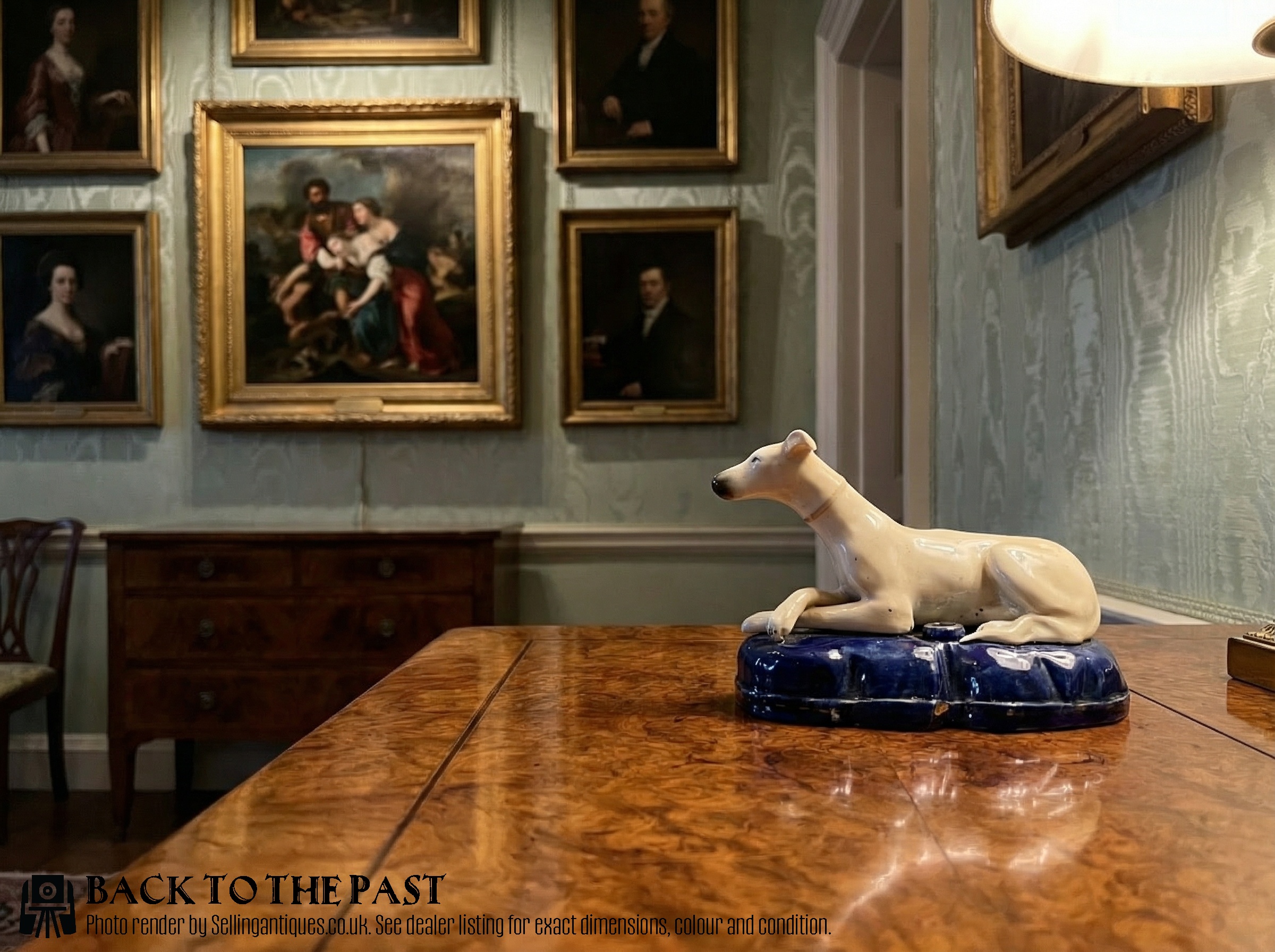
Staffordshire Whippet Figurine
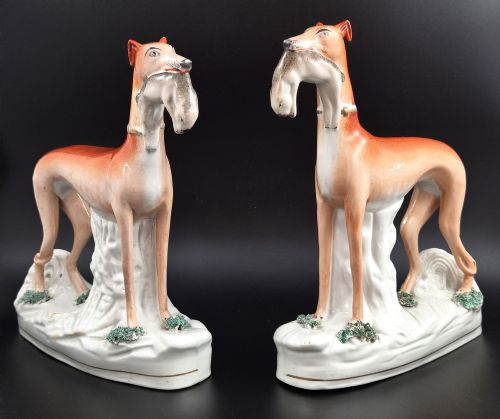
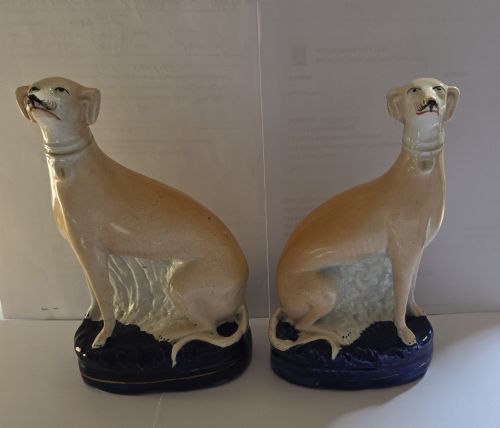
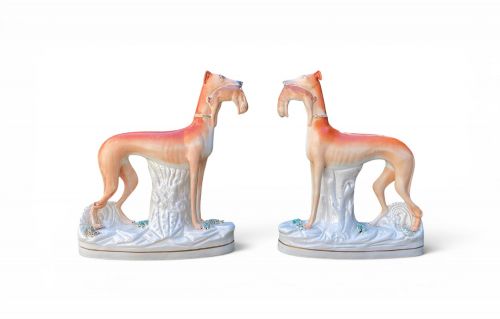
A staffordshire whippet figurine represents a distinct category of nineteenth century ceramic art, capturing the slender silhouette of hounds often posed alongside hares. These decorative ornaments appear most frequently as matched pairs, reflecting domestic tastes across the Victorian era.
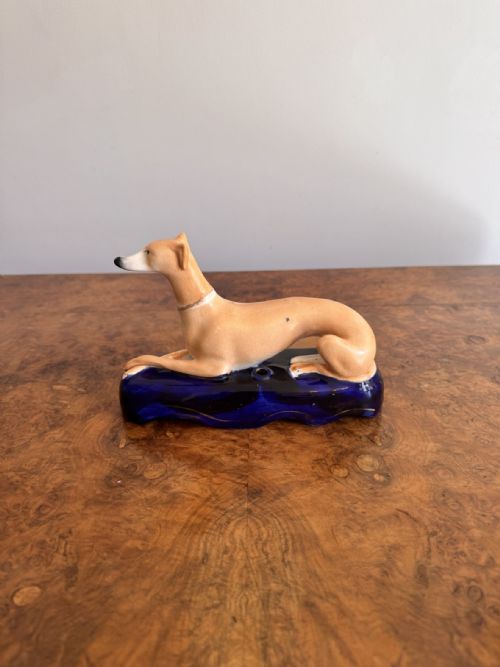
The pieces documented in the current inventory span several decades of production, incorporating regional variants from country potteries alongside works attributed to named makers like Thomas Parr. Collectors encounter single figures, substantial pairs, and functional variants designed to hold quills upon a desk.
Methods and materials of production
The manufacturing process relied on durable ceramic techniques suited to mass production within nineteenth century English potteries, resulting in sturdy decorative objects that survived generations of mantelpiece display.
Some nineteenth century whippets moonlighted as stationery assistants by holding feathered quills in their laps.
Distinctions in craftsmanship
Finer examples distinguish themselves through crisp moulding of the musculature and facial expressions, whereas simpler versions display softer outlines and more rudimentary painting. The application of the enamel colours and the preservation of the original gilt highlights heavily influence the visual appeal of each hound.
Scale and proportion also define the better pieces, with larger or more complex compositions - such as those featuring hunted hares or functional inkwells - representing greater ambition in the original pottery workshop.
Thomas Parr
The Staffordshire Whippet Figurine Glossary
- Earthenware
- Porous pottery fired at lower temperatures, serving as the standard ceramic body for nineteenth century Staffordshire figures. This material required an impermeable glaze to seal the surface.
- Lead glaze
- A shiny coating applied to pottery before firing, which vitrified into a glossy protective layer. It gives these figures their characteristic reflective sheen.
- Enamel paint
- Opaque vitreous colours applied over the fired glaze and fixed with a secondary low-temperature heating. This technique allowed potters to add realistic markings to the dogs.
- Quill holder
- A desk accessory featuring a hollow base or specialised rest designed for writing feathers. Several Staffordshire dog models incorporated this functional element.
- Cobalt glaze
- A metallic oxide pigment producing a rich blue coloration under the glaze. Potters utilised this for deep coloration on bases or decorative accents.
Staffordshire Whippet Figurine: Frequently Asked Questions
What periods do these figurines date from?
The pieces span the Victorian era, specifically concentrating between the years eighteen fifty and eighteen eighty.
Potteries in England produced these decorative hounds continuously throughout the nineteenth century.
Were these figures made as pairs?
Many examples were manufactured as symmetrical pairs to adorn fireplace mantels in nineteenth century homes.
Individual pieces and functional desk accessories also appear alongside the traditional matched sets.
How were these ceramic dogs used originally?
Victorian households displayed the figurines primarily as decorative ornaments on mantelpieces and living room surfaces.
Certain specialised versions incorporated inkwells or quill holders for use on writing desks.
What materials did the potters use?
The core structure consists of moulded earthenware finished with glossy lead or cobalt glazes.
Surface details were subsequently added using enamel paints and occasional touches of gold leaf.