


English Pottery Dog Figurine
An English pottery dog figurine brings the hearth-side charm of the nineteenth century straight into a modern room.
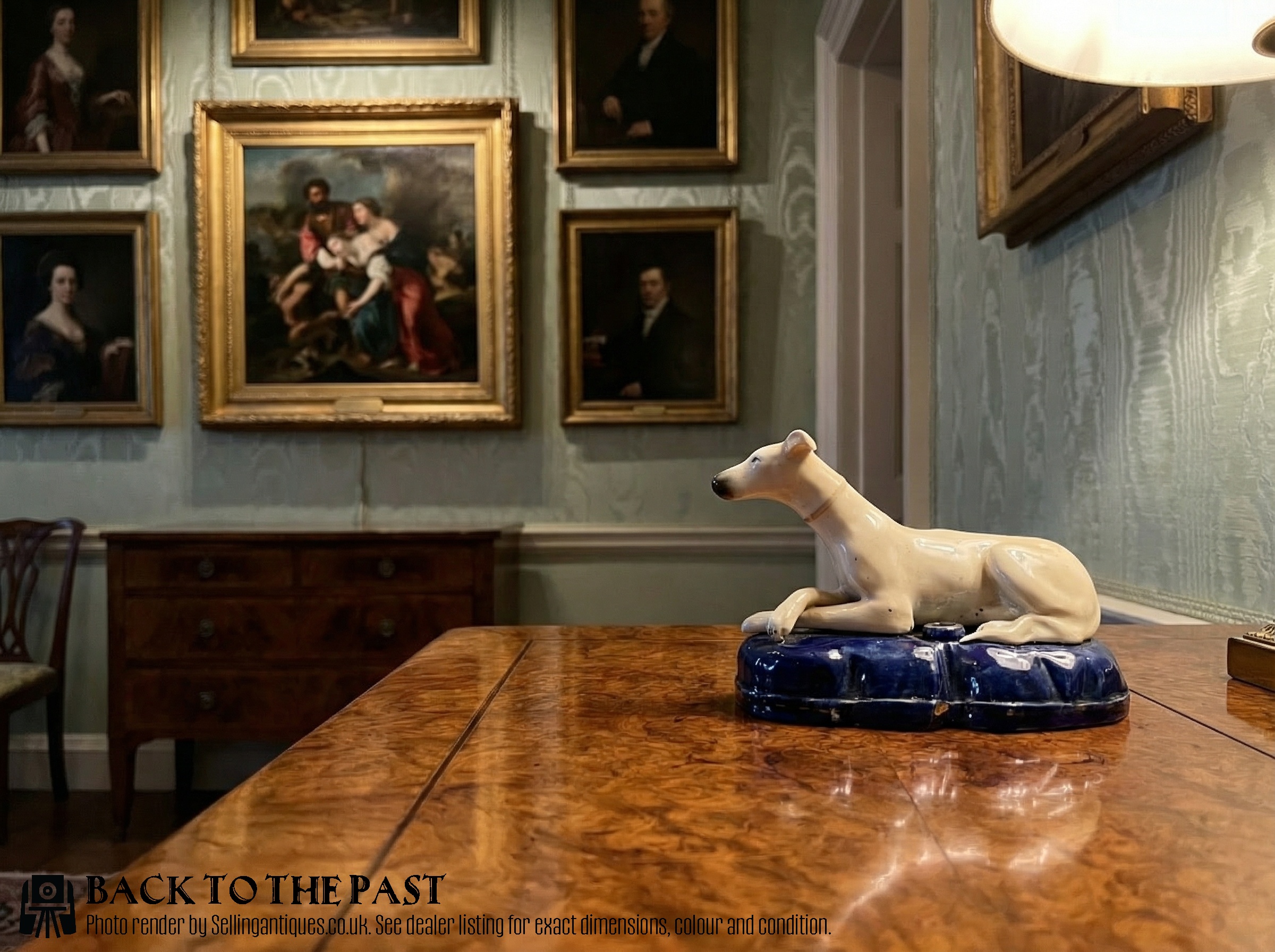
English Pottery Dog Figurine
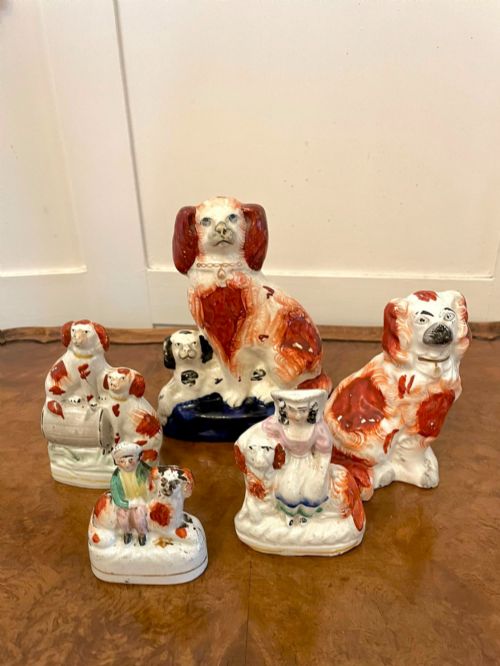
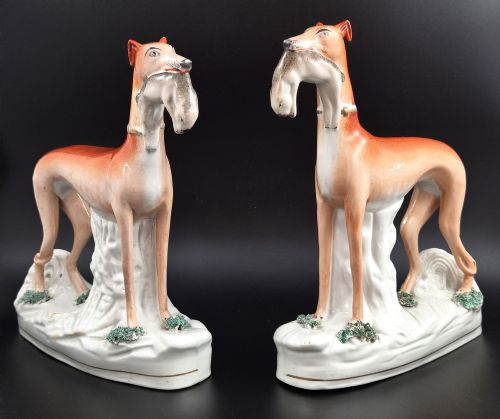
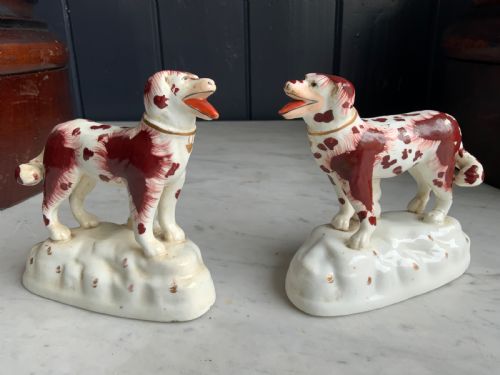
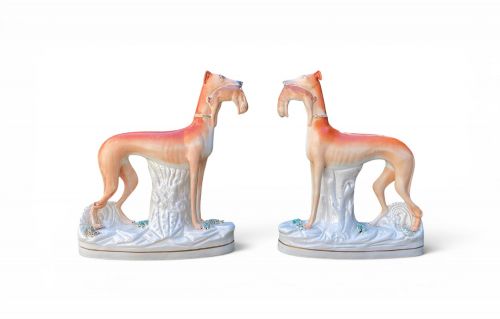
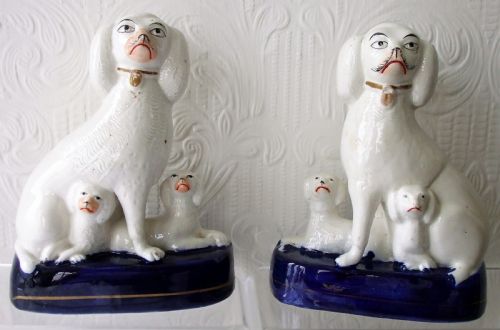
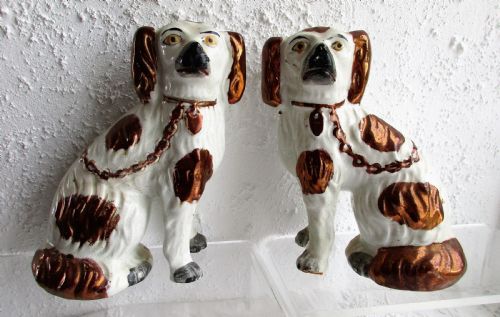
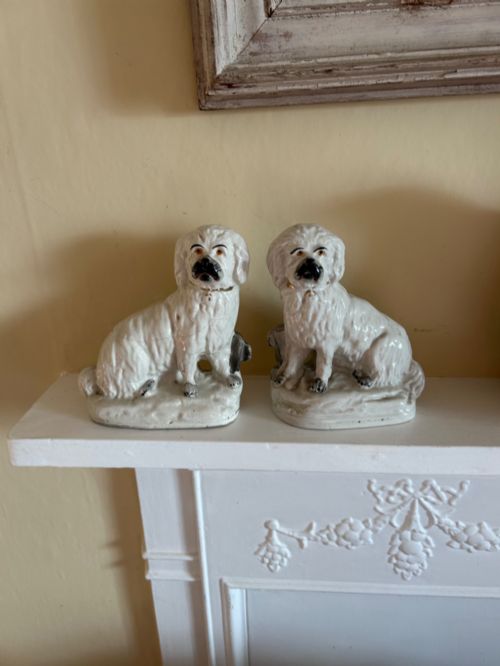
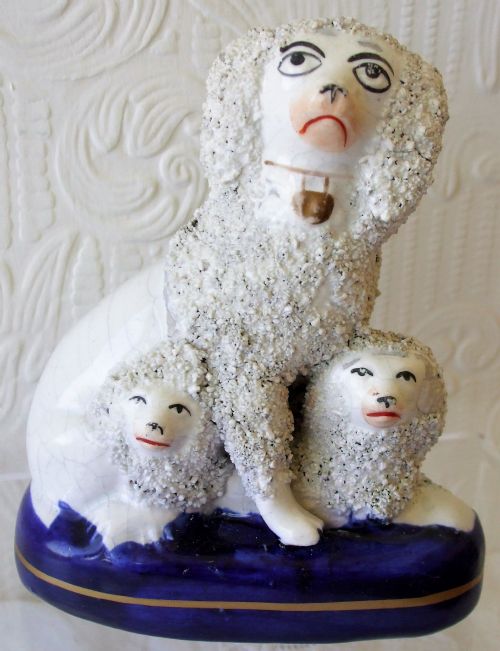
An english pottery dog figurine represents the popular animal figures produced across the nineteenth century, most frequently taking the form of Victorian Staffordshire spaniels, poodles, greyhounds, and terriers. Buyers frequently encounter pairs designed to sit symmetrically upon a mantelpiece, often modelled as comforter spaniels or hunting hounds with hares.
The selection ranges from miniature poodles to large decorative figures and figure groups involving children or puppies. Most examples date from the Victorian era, spanning specific decades like eighteen-sixty and eighteen-eighty, though earlier Georgian and Regency specimens also appear.
Makers shaped these ceramic dogs as ornamental objects for domestic display rather than functional vessels, though some greyhound variants double as quill holders. Collectors find spaniels with gilt highlights, black and white markings, red and white patches, and plain white glazes.
How they were made
The finishing process often incorporated gold leaf or gilt highlights, and certain later nineteenth-century variations included inserted glass eyes for added realism.
Listings feature earthenware bodies decorated with enamel paints, lead glaze, and occasional gold leaf highlights.
What varies in quality
The distinction between tiers rests upon the crispness of the moulding and the sensitivity of the hand-painting on the enamel surface. Superior pieces exhibit well-defined facial expressions, clean glaze application, and carefully controlled gilding rather than hasty decoration.
Scale and proportion also dictate standing, with larger pairs and unusual subjects like greyhounds with hares or detailed poodle curls commanding greater visual presence than standard small models.
James Dudson
The English Pottery Dog Figurine Glossary
- Earthenware
- A porous pottery body fired at lower temperatures, requiring a glaze to render it waterproof. Most nineteenth-century figures utilise this material.
- Lead glaze
- A glossy coating containing lead oxide, applied to earthenware to give a smooth, shiny finish. It creates the characteristic reflective surface on Victorian figures.
- Enamel
- Opaque coloured decoration applied over the fired glaze and fixed by a secondary low-temperature firing. It provides the bright reds, blacks, and golds on the animal coats.
- Quill holder
- A desk accessory featuring a hollow base or shaped back designed to hold writing feathers. Greyhound figures sometimes take this functional form.
- Comforter spaniels
- Staffordshire spaniels traditionally displayed on either side of a fireplace mantelpiece. They symbolise loyalty and domestic comfort in Victorian homes.
English Pottery Dog Figurine: Frequently Asked Questions
What are Staffordshire dogs?
Staffordshire dogs are ceramic figures made in the English pottery districts during the nineteenth century, depicting popular breeds such as spaniels, greyhounds, and poodles.
Potters created them primarily as decorative mantelpiece ornaments, often sold in mirrored pairs to sit at either end of a fireplace.
How were pottery dogs displayed?
Victorian households traditionally arranged pairs of spaniels or greyhounds on mantelpieces, facing inward toward the centre of the fireplace.
Smaller models and miniature poodles also decorated side tables, sideboards, and drawing-room cabinets alongside other ceramic ornaments.
How do I date an antique dog figurine?
Dating relies on stylistic clues, glaze characteristics, and manufacturing techniques, with Victorian pieces generally showing deeper moulding and specific enamel palettes.
Earlier Georgian and Regency examples tend to feature simpler modelling, while late nineteenth-century versions occasionally incorporate glass eyes.
Why do some dogs have glass eyes?
Glass eyes appear on later nineteenth-century figures to enhance realism and decorative appeal compared to painted eyes.
This technique emerged toward the end of the Victorian period on larger spaniels and specialised models.