
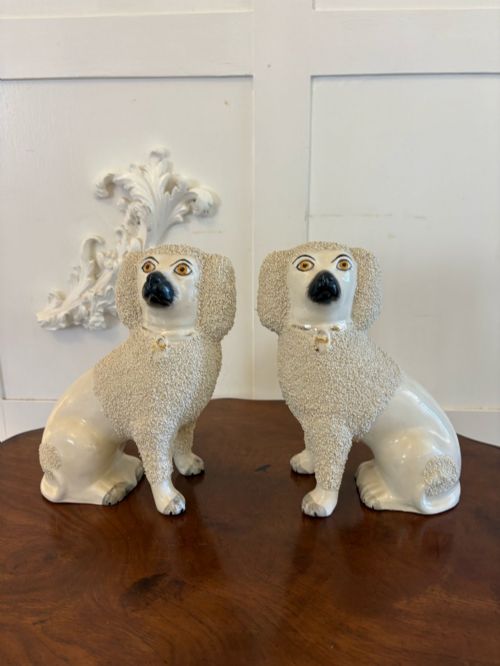
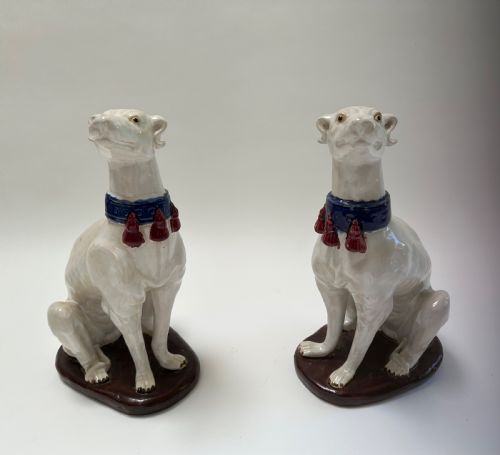


Cream Ceramic Dog Figure
These cream ceramic dog figure pieces bring the character of nineteenth- and twentieth-century animals into the home through modelled clay.
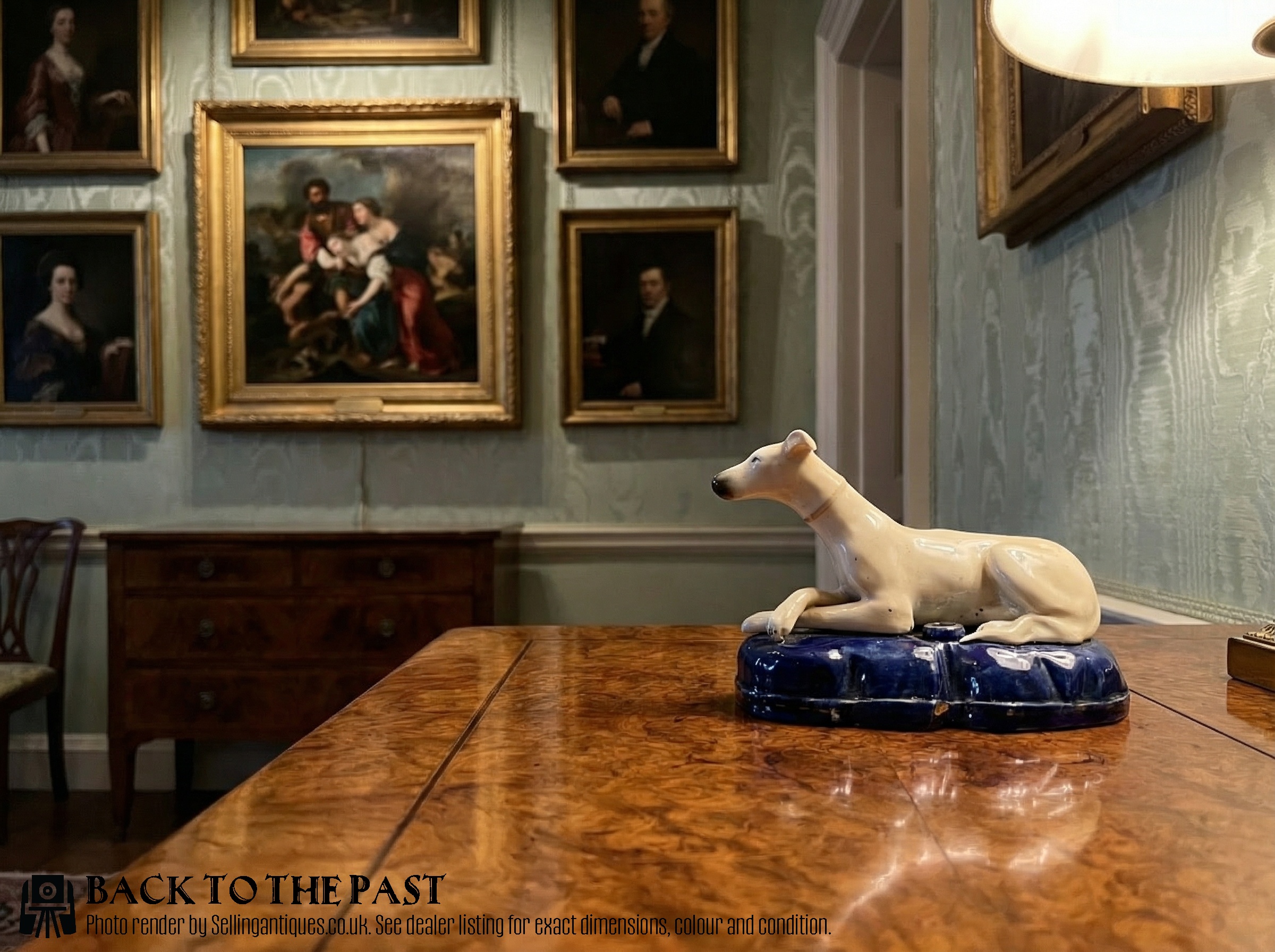
Cream Ceramic Dog Figure
When you search for a cream ceramic dog figure, you are looking at modelled representations of canines spanning the Victorian, Edwardian, and later periods. These decorative figures take the form of individual animals like poodles, greyhounds, and setters, or group compositions involving boys and hunting dogs.
The pieces represented here include Staffordshire poodles and greyhounds alongside Royal Dux Bohemia groups and Royal Doulton seated spaniels. They range from cabinet-sized figurines to larger sculptural groups shaped by various historic potteries and makers.
How they were made
Makers shaped these animals using ceramic bodies such as porcelain, earthenware, and biscuit porcelain. These materials were moulded or modelled by hand before receiving glazes, lead glazes, tin-glazing, or enamel decoration to define the surface.
Firing techniques fixed the enamels and glazes to the clay bodies, allowing manufacturers like Royal Dux and Staffordshire potteries to produce durable ornamental sculptures with varied surface finishes.
Listings feature periods from the nineteenth century up to 1940, including Victorian and Edwardian examples.
What varies in quality
The standard of modelling separates straightforward production pieces from finer sculptural works, particularly in the rendering of animal anatomy and fur texture. Crisp details in the mould and careful hand-painting of enamels elevate certain figures above standard factory output.
Scale and ambition also distinguish the range, moving from modest seated spaniels to large, complex figure groups involving multiple dogs and human figures.
Royal Dux·Royal Doulton·Staffordshire
The Cream Ceramic Dog Figure Glossary
- Biscuit porcelain
- Unglazed porcelain fired once to a matte, porous finish. It offers a smooth, marble-like surface often seen on nineteenth-century sculptures.
- Lead glaze
- A transparent or coloured glossy coating containing lead oxide. It provides a waterproof and shiny finish on earthenware figures.
- Tin-glazed earthenware
- Pottery covered with a tin-oxide opacified glaze that turns white and opaque. It forms a smooth ground for painted enamel decoration.
- Parian
- A fine white biscuit porcelain resembling marble. It was developed in the nineteenth century for portrait busts and animal sculptures.
- Majolica
- Low-fired earthenware covered with a tin glaze and painted with metallic oxide colours. It produces rich, vibrant decorative surfaces.
Cream Ceramic Dog Figure: Frequently Asked Questions
What periods do these dog figures come from?
The listings span from the nineteenth century through the Victorian and Edwardian eras into the nineteen-forties. These dates reflect the active years of the original Staffordshire potteries and European porcelain works.
Periods like the Victorian era bring distinct modelling styles compared to later twentieth-century productions from makers such as Royal Dux.
Which dog breeds appear in these sculptures?
The evidence records poodles, greyhounds, setters, and spaniels among the represented breeds. Some pieces also feature hunting dogs shown alongside game or human companions.
These varied breeds reflect the specific tastes of nineteenth- and twentieth-century animal sculptors and the collectors who bought them.
How do I display a ceramic dog figure?
These decorative figures sit well on mantelpieces, sideboards, and dedicated display cabinets. Their ceramic and porcelain surfaces suit traditional interiors and sit securely on flat wooden or stone furniture.
Pairs of poodles or greyhounds can be arranged symmetrically to mirror historic mantel displays.
What materials make up these sculptures?
Makers utilised ceramic, porcelain, earthenware, and biscuit porcelain to form the body of each animal. Surfaces are often finished with lead glaze, tin-glazed earthenware, or enamel colours.
These varied materials dictate whether a piece has a glossy reflective sheen or a matte, stone-like texture.