







Staffordshire Pottery Animal Figures
Staffordshire pottery animal figures are characterful nineteenth-century ceramic beasts and domestic pets that bring whimsical charm and traditional English folk warmth to any mantelpiece.
Staffordshire Pottery Animal Figures
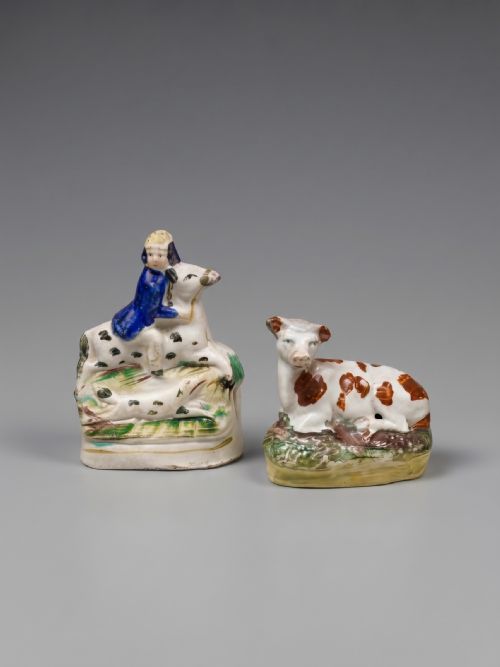
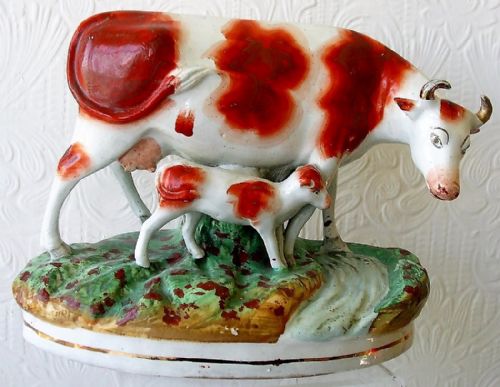
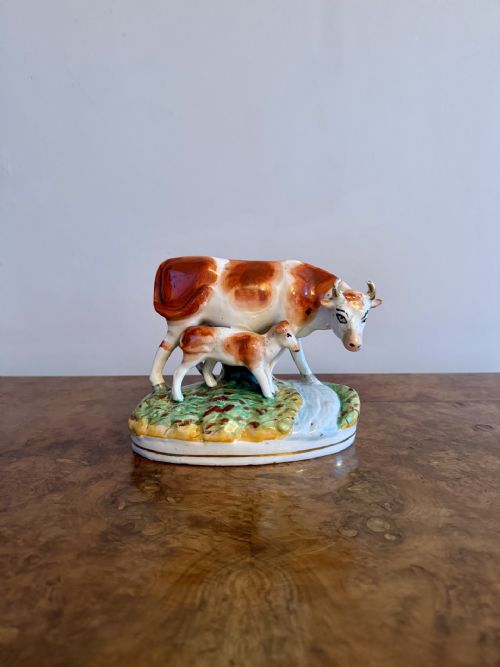
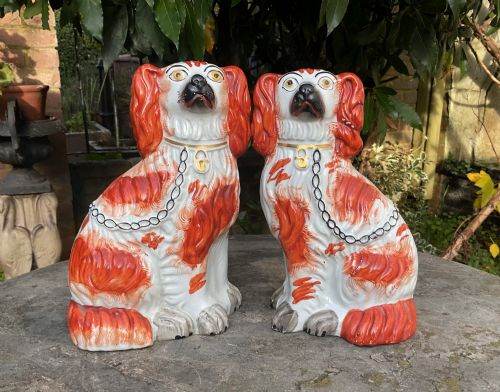
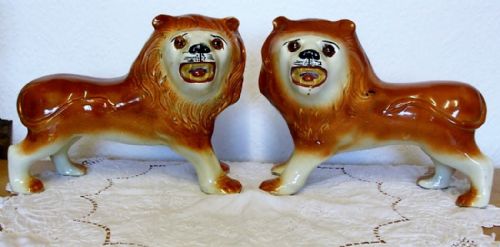
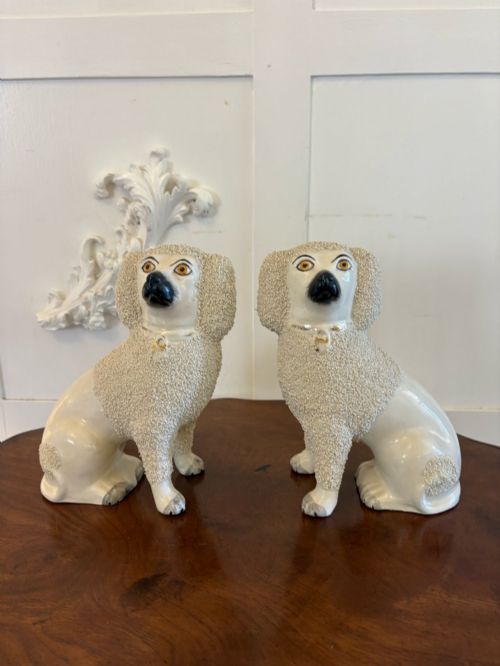
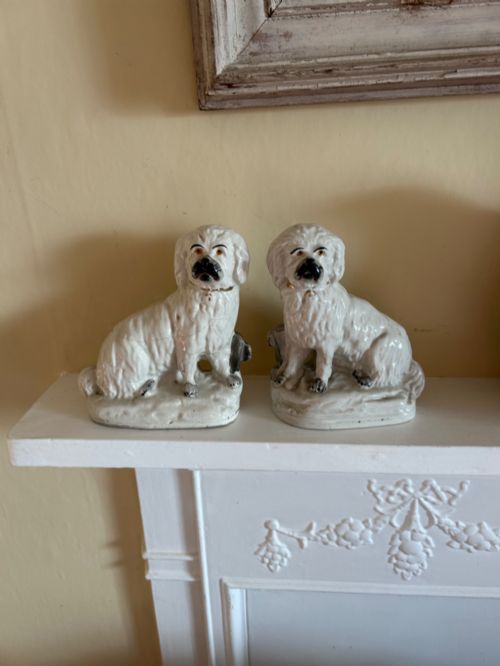
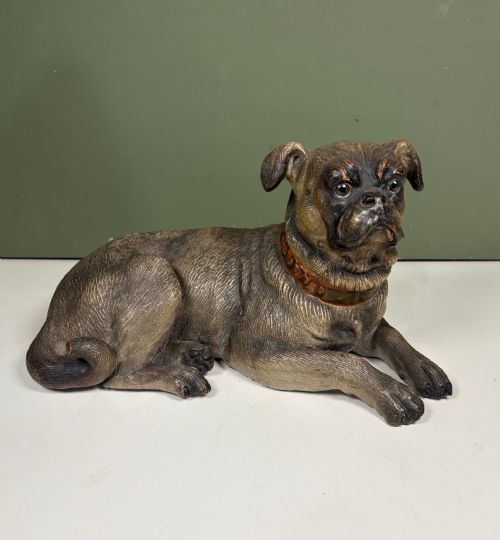
Collectors seeking staffordshire pottery animal figures encounter an array of nineteenth-century ceramic menageries, from domestic pugs, poodles, sheep, and cows with calves to exotic lions, zebras, and snow leopards. These decorative figurines and spill vases were produced largely during the Victorian era, capturing the Victorian fascination with both household pets and distant wildlife.
The pieces appearing on this page span the nineteenth century, including pearlware examples from earlier decades alongside robust Victorian country pottery. Buyers frequently meet pairs of seated dogs, recumbent lions, and charming animal groups designed for ornamental display in domestic interiors.
Materials and methods
Potters shaped these figures from earthenware and pearlware ceramic bodies, forming them to create domestic dogs, wild cats, and farm animals. Artisans applied lead glazes and vibrant enamels to surface details, giving coats, markings, and facial expressions their distinctive definition.
Certain models received rich treacle glaze finishes, yielding deep, glossy brown surfaces seen on nineteenth-century lions and dogs. The combination of moulded ceramic forms and hand-painted or glazed decoration defines the physical character of these works.
Staffordshire Pottery Animal Figures Retail Price Guide 2026
Typical asking prices for staffordshire pottery animal figures among the pieces listed under this phrase on Sellingantiques today, from the lower quarter to the upper quarter. They describe what is for sale here now, not the wider market.
Nineteenth-century potters captured fierce snow leopards and zebras with the same endearing, domestic expressions given to household pugs.
Quality and execution
The distinction between ordinary and superior pieces rests on the crispness of the moulding and the sensitivity of the hand-painted enamel decoration. Finer examples display lively, individual expressions in the eyes and muzzle rather than flat, mechanical application.
Pairs matched in size, glaze depth, and modeling represent a higher tier of production than single survivors or mismatched companions. The depth and clarity of the glaze, particularly on pearlware and treacle-glazed pieces, further separate standard items from the best works.
Walton·Wooley·Rockingham Pottery
The Staffordshire Pottery Animal Figures Glossary
- Pearlware
- A refined earthenware body developed in the late eighteenth century featuring a faint bluish tinge in the glaze pooled in recesses. It provides a smooth white ground for underglaze and enamel painting.
- Spill vase
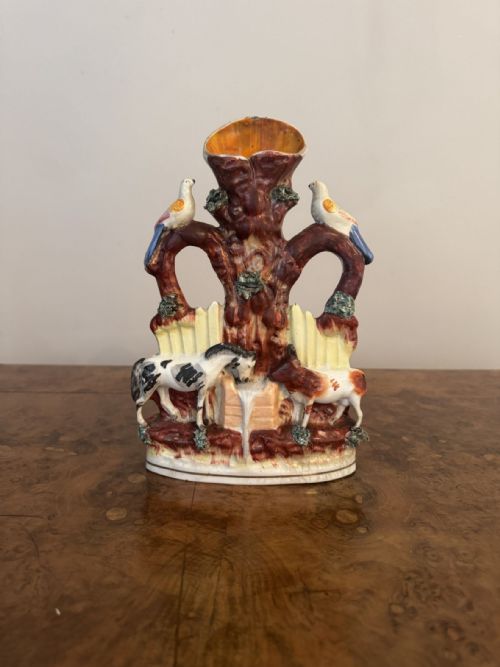
- A hollow cylindrical ceramic vessel incorporated into a figure group designed to hold wooden spills for lighting fires. These practical ornaments sit alongside solid decorative figurines.
- Treacle glaze
- A dense, dark brown lead glaze producing a rich, glossy finish resembling dark treacle. It appears frequently on nineteenth-century lions and hounds.
- Earthenware
- Porous pottery fired at lower temperatures, serving as the standard ceramic body for nineteenth-century Staffordshire figures. It requires glazing to become impermeable.
Staffordshire Pottery Animal Figures: Frequently Asked Questions
How do I display Staffordshire animals?
These ceramic figures traditionally sit in mirrored pairs on mantelpieces, bookshelves, or side tables where their decorative forms can be appreciated from the front.
Keep them away from direct sunlight and damp environments to protect the enamel colours and glazed surfaces over time.
Are these figures genuine nineteenth century?
The listings on this page date primarily from the nineteenth century, encompassing pearlware and Victorian earthenware productions.
Examining the weight of the ceramic, the crazing in the glaze, and the hand-applied pigments helps confirm their period origin.
Why do some dogs have baskets?
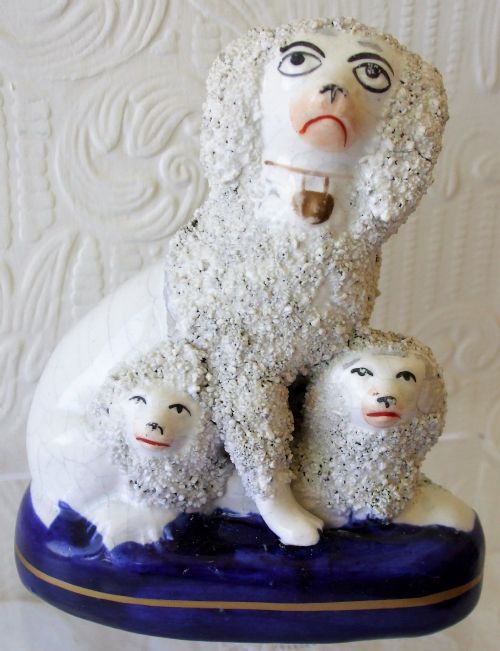
Poodles and spaniels often appear holding small baskets or carrying pups in their mouths, reflecting popular Victorian sentiments regarding domestic pets.
These varied models allowed households to display specific canine breeds that mirrored their own cherished companions.
What is a spill vase figure?
A spill vase combines an animal figure with an integrated hollow cylinder meant to hold thin wooden matches used for lighting candles and fires.
This practical household accessory disguised utility within an appealing ornamental ceramic sculpture.