




Staffordshire Military Figure
A Staffordshire military figure is a British earthenware portrait piece from the Victorian era, capturing notable commanders and historic alliances for domestic mantelpieces.
Staffordshire Military Figure
When you search for a Staffordshire military figure, you are looking at nineteenth-century earthenware portrayals of generals, admirals, and allied leaders. These pieces served as patriotic ornaments in British homes during the Victorian period, commemorating contemporary conflicts and political figures.
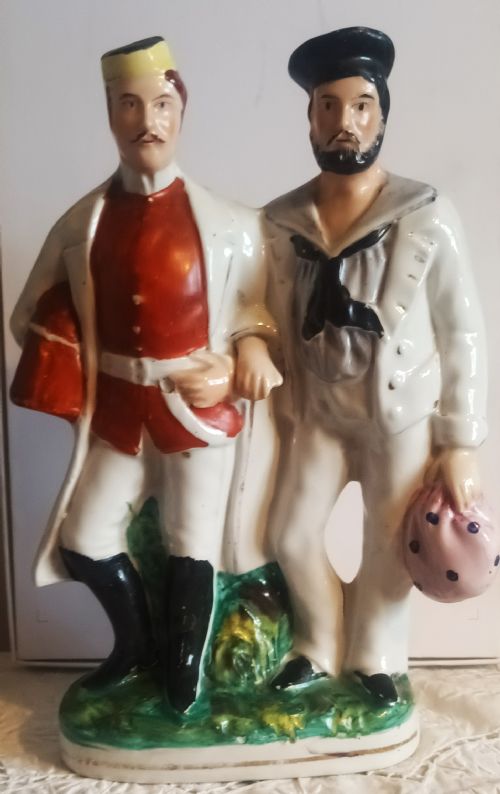
The versions you are most likely to meet on this page include flatback figures and standing portrayals of commanders such as Admiral Sir Charles Napier, General Charles George Gordon, and Napoleon III. Most date to the nineteenth century, including specific pieces recorded from around eighteen sixty.
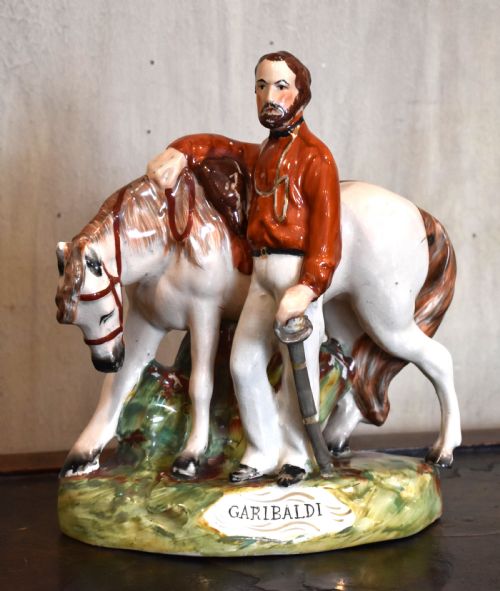
Makers shaped these decorative figurines from local clay, producing both standard portraits and titled subjects like Companions in Arms or depictions of Garibaldi. They capture the public fascination with military campaigns through accessible ceramic likenesses.
Materials and Manufacture
Potters formed these earthenware figures using clay bodies finished with lead glazes to create a smooth surface sheen. The ceramic base provided an affordable medium for mass-produced portraiture across the region.
Materials recorded across the site include earthenware, enamel, lead glaze, and gilt.
Assessing Quality
The preservation of the original enamel paint and gilt highlights distinguishes superior pieces from heavily worn examples. Crisp lettering on titled bases also indicates a more carefully finished workshop production.
Thomas Parr
The Staffordshire Military Figure Glossary
- Earthenware
- A porous pottery body fired at lower temperatures, standard for nineteenth-century Staffordshire production. It forms the structural base for all these figures before glazing.
- Flatback
- A figure moulded with a finished front and a plain, unmodelled reverse designed to sit against a wall. This construction saved clay and kiln space for mantelpiece display.
- Lead glaze
- A glossy coating containing lead oxide applied to pottery to seal the porous clay body. It gives the figures their characteristic shine and protects the painted surface underneath.
- Enamel paint
- Opaque vitrifiable colours applied over the fired glaze and fixed in a second, lower-temperature kiln firing. It provides the bright reds, blues, and blacks of military uniforms.
- Gilt
- A thin layer of gold application used to highlight uniform buttons, epaulettes, and titles. It adds a decorative flourish to important portrait pieces.
Staffordshire Military Figure: Frequently Asked Questions
What are Staffordshire military figures?
Staffordshire military figures are nineteenth-century earthenware portrait pieces depicting generals, admirals, and political leaders. Potters produced them in the Victorian period as patriotic ornaments for British homes.
These decorative objects often feature titled subjects and historical alliances, reflecting public interest in military campaigns. They remain collectable examples of regional ceramic art.
How were they used?
Victorian households displayed these figures on mantelpieces, sideboards, and occasional tables to demonstrate patriotism and political awareness. They brought colourful representations of famous commanders into domestic interiors.
Because they had flat backs designed to face forward against a wall, they sat securely on narrow shelves. They functioned purely as decorative ornaments rather than practical items.
How do I identify Victorian periods?
Identifying the Victorian period involves examining the style of the earthenware body, the application of lead glazes, and the specific historical personalities depicted. Figures commemorating events around eighteen sixty share distinct modelling characteristics.
Archival records and titles painted on the bases help connect individual pieces to nineteenth-century production standards. The style of uniform and lettering provides further chronological clues.