
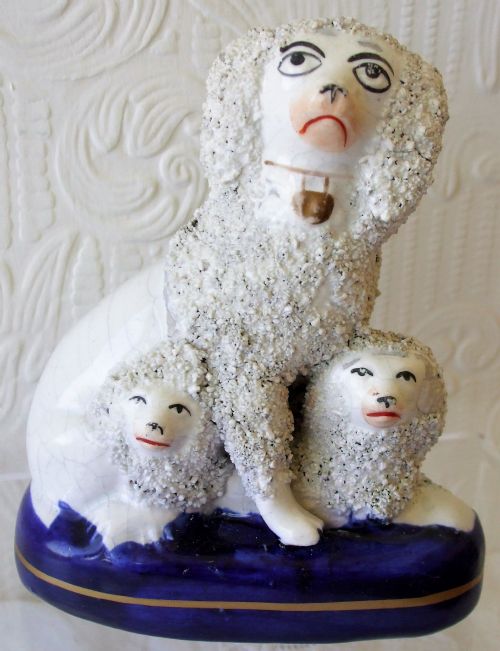


Staffordshire Mantelpiece Dogs
Staffordshire mantelpiece dogs are ceramic figures made to sit on hearths, bringing a distinct Victorian character to a room.
Staffordshire Mantelpiece Dogs
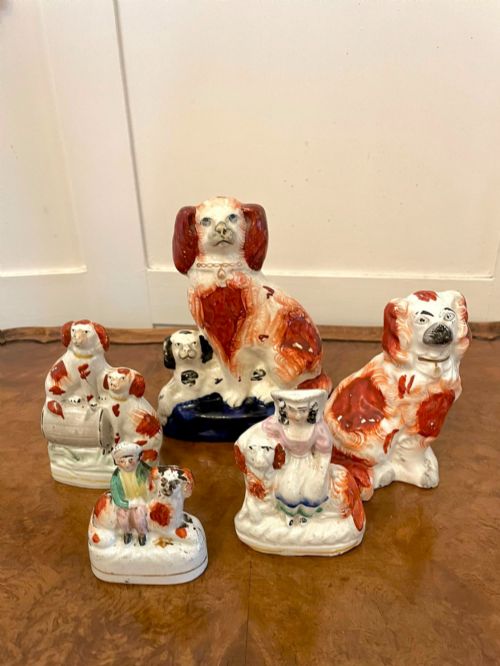
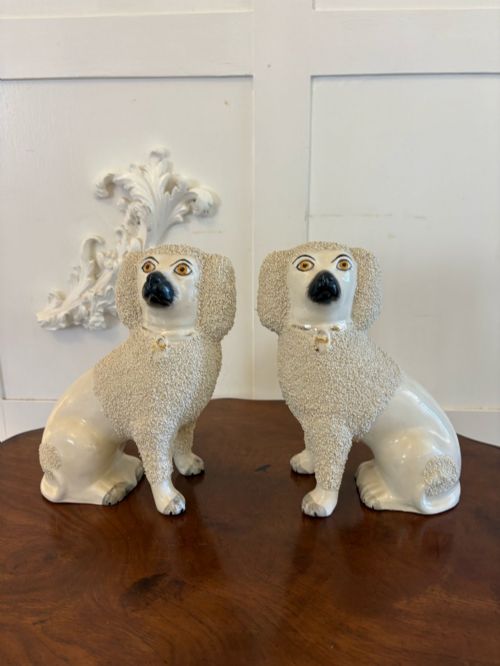
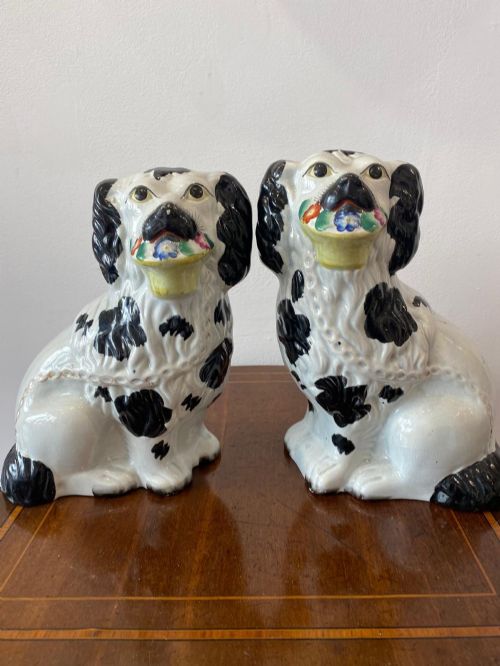
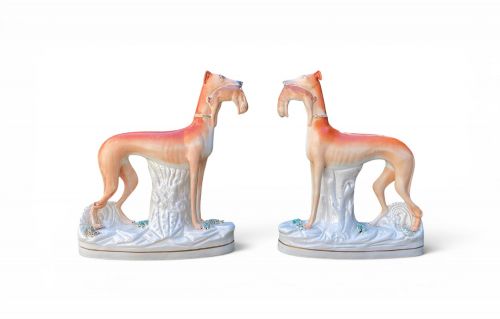
When you search for staffordshire mantelpiece dogs, you look at earthenware pottery figures shaped as spaniels, poodles, greyhounds, and setters. These decorative objects date from the 19th century and the Victorian era, often appearing in matched pairs.
The selections range from miniature poodles to large hound figures and spaniels, sometimes featuring hand painted enamel details or copper lustre finishes. Makers such as James Dudson, Beswick, and Royal Dolton also appear within these ceramic groupings.
How they were made
Potters shaped these figures in earthenware clay before applying glazes and enamel paint to build the surface patterns. Many examples incorporate lead glaze surfaces alongside highlights of gold leaf or copper lustre.
Moulds formed the base pottery shapes for these dogs and figures, which were subsequently fired and hand decorated with coloured enamels. Miniature poodles and larger spaniel pairs relied on these established ceramic techniques throughout the Victorian period.
Poodles appear with sculpted clay curls that resemble oversized woollen pom-poms.
What varies in quality
The application of glaze, gold leaf, and copper lustre creates distinct variations in visual depth across different pairs. Intact enamel work and well preserved ceramic surfaces define the higher tiers of these figures.
James Dudson·Beswick·Royal Dolton
The Staffordshire Mantelpiece Dogs Glossary
- Earthenware
- Porous pottery fired at lower temperatures, commonly used for traditional Staffordshire figures. It forms the solid clay body beneath the glaze.
- Copper lustre
- A metallic glaze finish producing a reflective coppery sheen on pottery surfaces. This technique appears on specific 19th century Staffordshire dog pairs.
- Lead glaze
- A glossy coating applied to ceramic pieces before firing to create a smooth, waterproof finish. It gives many Victorian earthenware figures their characteristic shine.
- Enamel paint
- Coloured decoration applied over the glaze and fired at a lower temperature to fix the pigments. It provides the black, white, and gold details on the dogs.
Staffordshire Mantelpiece Dogs: Frequently Asked Questions
Are staffordshire dogs always found in pairs?
Many examples are modelled and sold as symmetrical pairs designed to flank a fireplace or mantel centre.
However, individual pieces and larger collections of multiple figures also occur within the 19th century pottery groups.
What breeds are represented in these figures?
The ceramic figures depict various dogs including King Charles spaniels, poodles with pups, greyhounds, and setters.
Some pieces also incorporate human figures alongside the animals, such as children sitting with setters or musicians.
How do I identify a 19th century piece?
Nineteenth century examples typically utilise earthenware bodies finished with hand painted enamel details and lead glazes.
Dates range from the 1800s through the Victorian period up to 1900, reflecting the primary era of production.
How should I display them on a mantelpiece?
Pairs are traditionally placed facing inwards toward each other at either end of a shelf or hearth.
Their flat backs allow them to sit flush against a wall or mantel surface.