


Staffordshire Dog Statues
These Staffordshire dog statues are nineteenth-century ceramic figures that bring domestic charm and traditional British character to a mantelpiece.
Staffordshire Dog Statues
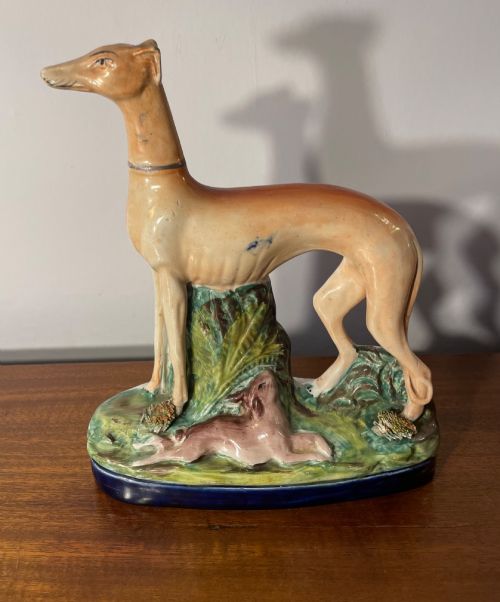
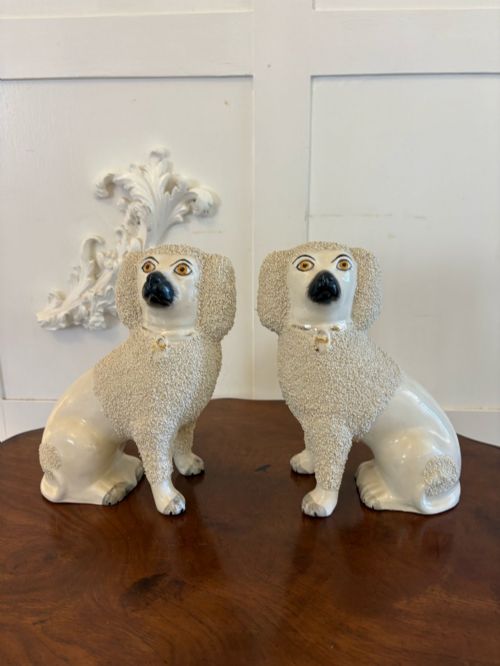
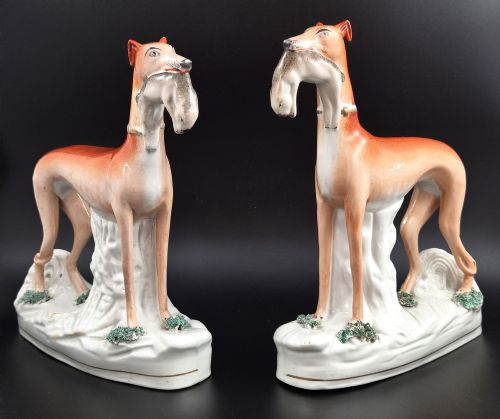
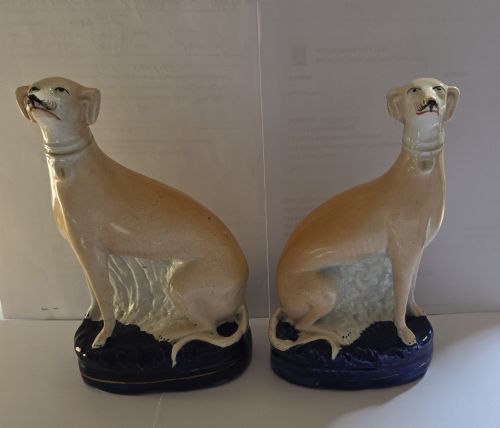
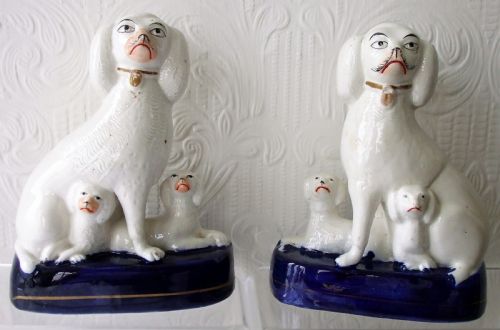
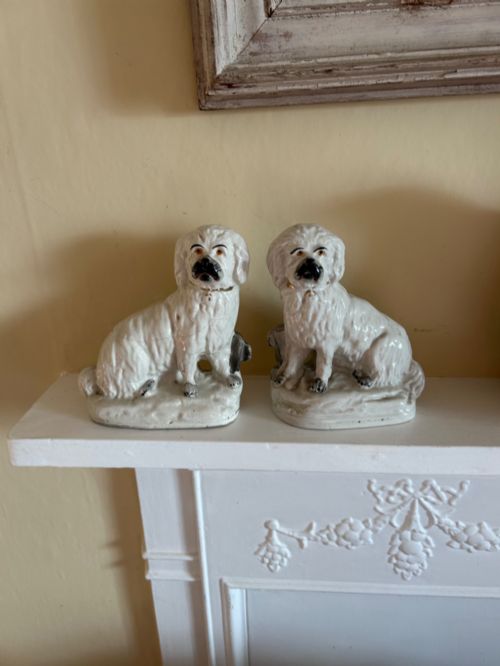
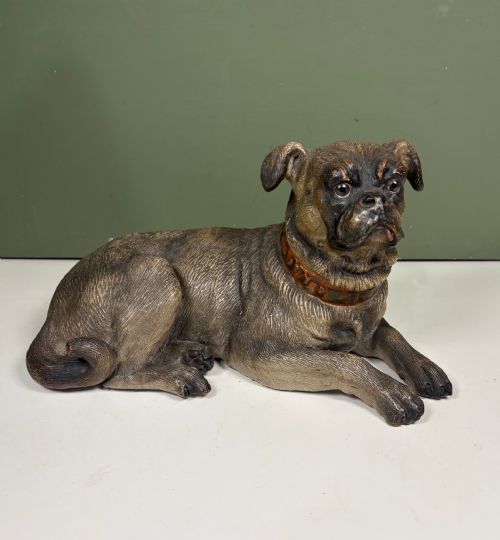
Staffordshire dog statues are decorative ceramic figures modelled on popular breeds such as spaniels, greyhounds, poodles, pugs and whippets, often produced as matching pairs for symmetrical placement on hearths and sideboards. The pieces listed now originate primarily from the nineteenth century, spanning the Georgian, Victorian and Edwardian eras.
Most examples take the form of seated or standing dogs, though variations include greyhound quill holders, poodles with pups, and figurative groups depicting children with setters or huntsmen with dogs. The most common form met on this page is the classic Victorian pair of spaniels or poodles finished with painted or gilt details.
How they were made
Listings feature earthenware bodies finished with lead glaze, enamel paint and gold leaf.
What varies in quality
The precision and preservation of the hand-painted enamel and gilt decoration also distinguish finer examples, as well-executed brushwork on the eyes, muzzles and accessories remains bright and sharply registered against the white or coloured glaze.
Wedgwood and Co Ltd·Beswick
The Staffordshire Dog Statues Glossary
- Earthenware
- Porous pottery fired at lower temperatures, serving as the standard ceramic body for the vast majority of Staffordshire animal figures.
- Glaze
- A glassy coating fused to the ceramic body during firing, providing a glossy protective surface that seals the earthenware beneath.
- Enamel
- Vitreous coloured paint applied over the fired glaze and subjected to a secondary low-temperature kiln firing to fix the pigment.
- Gilt
- Gold leaf or gold-coloured paint applied as a surface highlight to ornamental details such as collars, lockets and bases.
- Quill holder
- A utilitarian hollow figure or base fitted with a receptacle intended for holding writing quills or pens on a desk.
Staffordshire Dog Statues: Frequently Asked Questions
Where were Staffordshire dog statues displayed?
These figures were traditionally displayed in pairs on the mantelpiece of a Victorian parlour, facing inwards toward each other from opposite ends of the shelf.
Owners also placed them on sideboards, chests of drawers and occasional tables to brighten domestic living spaces.
How do I identify a Victorian pair?
Victorian pairs generally show matching posture, reverse orientation and similar hand-painted facial markings designed for symmetrical display.
Closer inspection of the earthenware body, glaze crazing and enamel wear helps confirm nineteenth-century production periods.
What dog breeds are commonly represented?
Spaniels, poodles, greyhounds and pugs appear most frequently across these ceramic figures, reflecting popular household pets and sporting animals of the period.
Less common variations include Maltese terriers, whippets and hounds accompanied by hares or huntsmen.
How should I clean these ceramic figures?
Dust the statues gently with a soft dry cloth to remove surface particles without disturbing the aged glaze or enamel paint.
Avoid using water, chemical cleaners or abrasive cloths that might damage the hand-painted details or historic earthenware surface.