

Stacking Oak Cabinet
A stacking oak cabinet brings modular versatility to a room, offering adaptable shelving that grows with a library.
Stacking Oak Cabinet
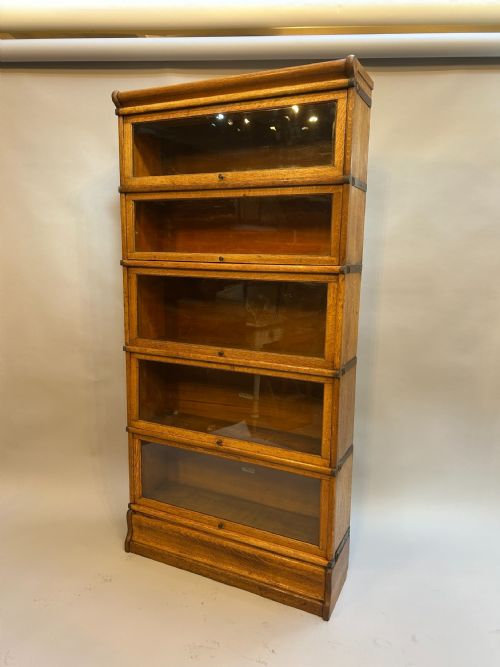
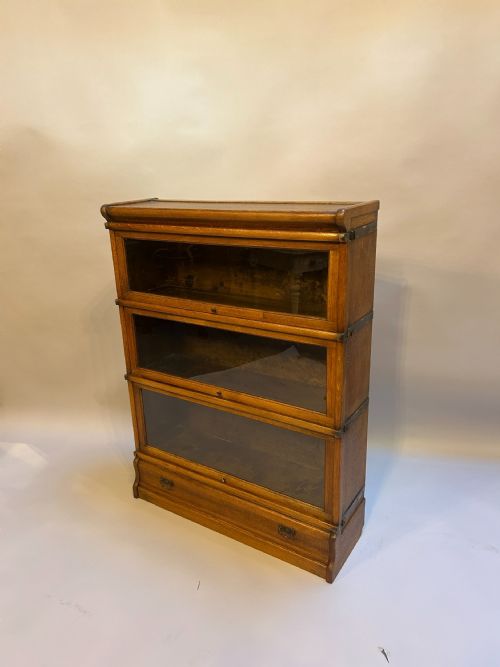
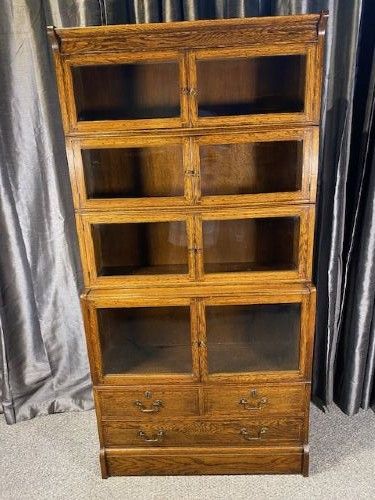
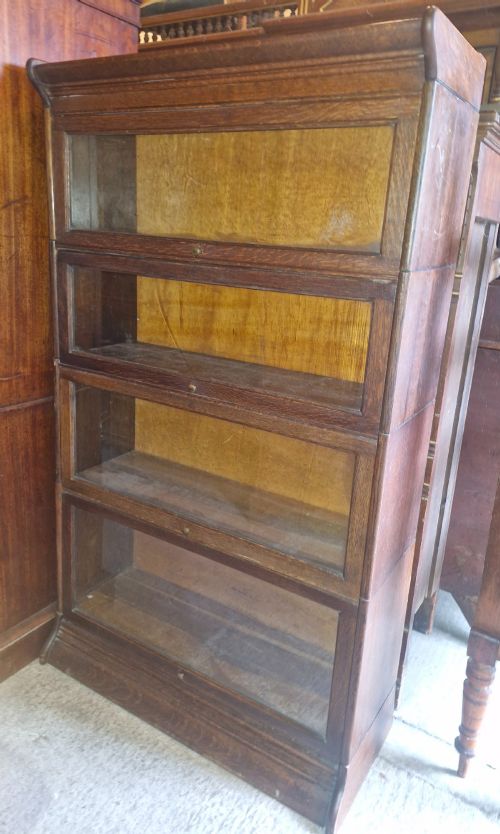
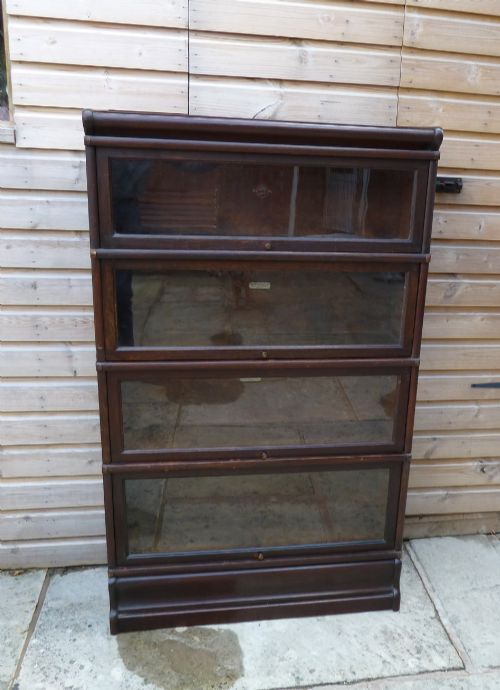
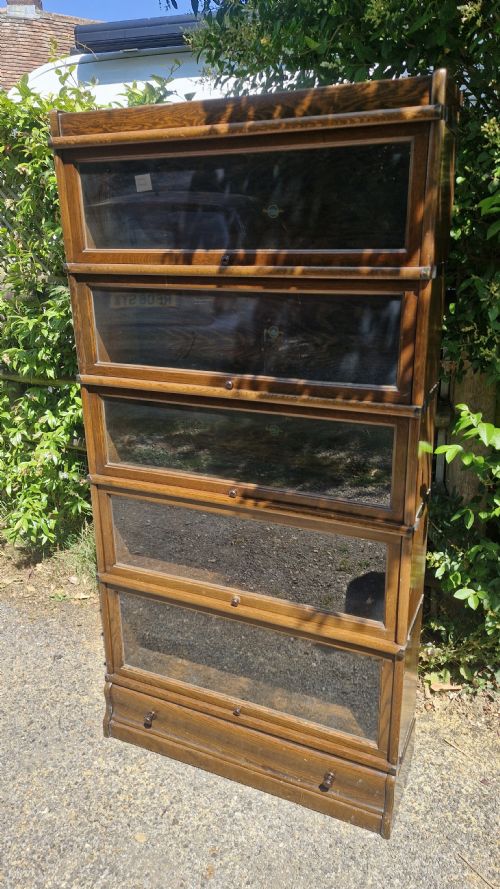
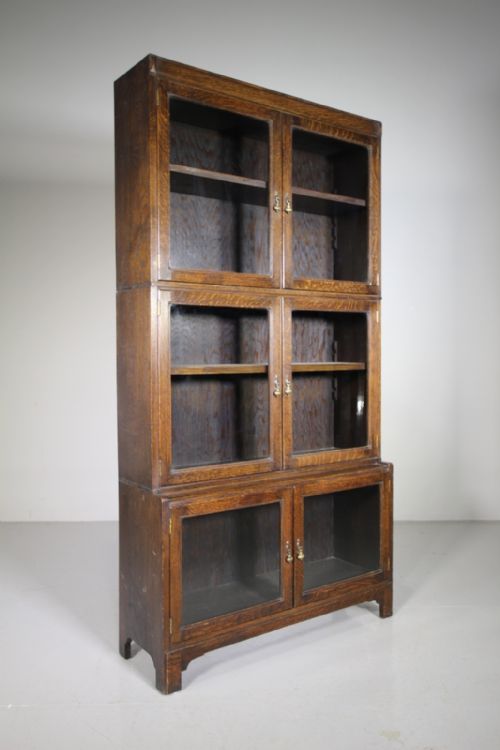
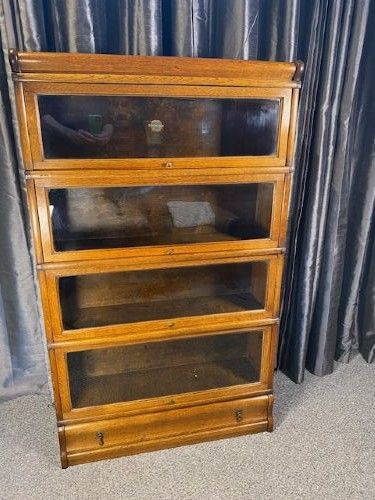
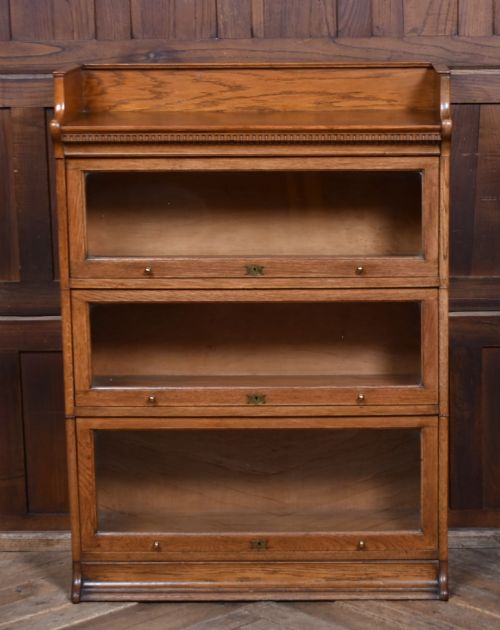
A stacking oak cabinet is primarily encountered here as a sectional bookcase or barrister bookcase comprising individual modular tiers that lift and stack together. These modular units span from the Edwardian period through the 1920s and 1930s, reflecting office and domestic utility from the early twentieth century.
The form relies on independent wooden sections topped with a cornice base and set on a plinth, allowing owners to reconfigure or expand the height as required. Most examples utilise glazed lifting doors that slide neatly above the books inside.
The prevalent variations stem from maker designs such as Globe Wernicke, Minty, Lebus, and Gunn, alongside unbranded sectional office furniture produced in oak.
What varies in quality
Quality rests upon the integrity of the modular mechanism and the matching of the oak grain across separate tiers. Superior examples maintain smooth action in the lifting glass doors and retain original hardware without replacement fittings.
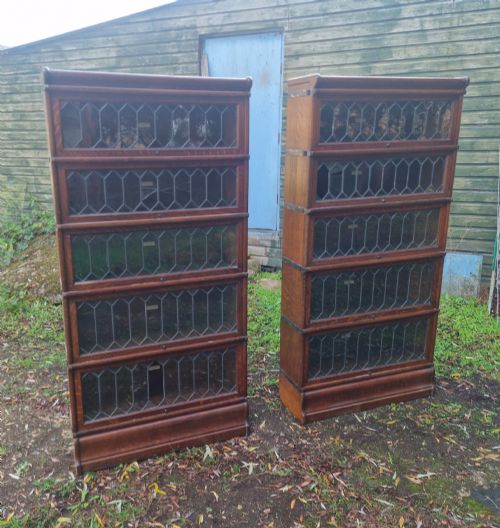
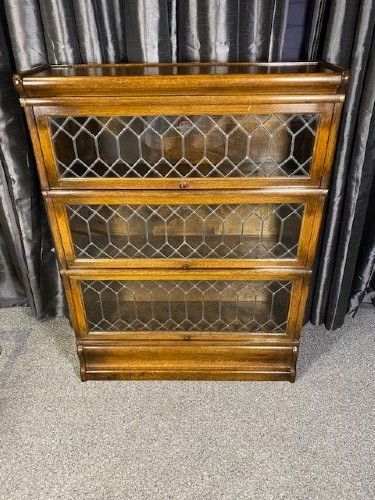
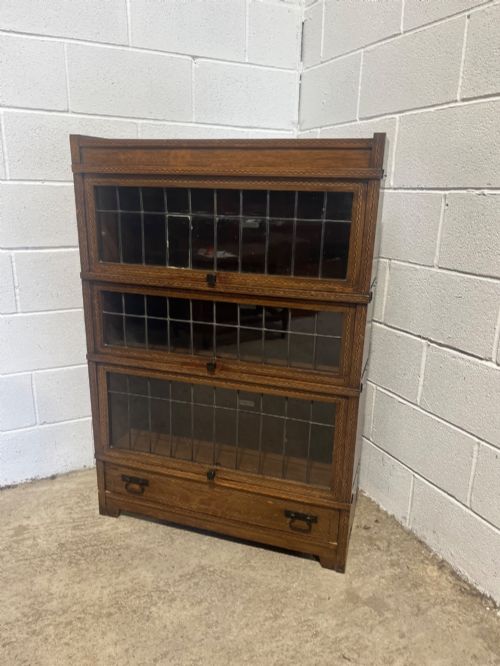
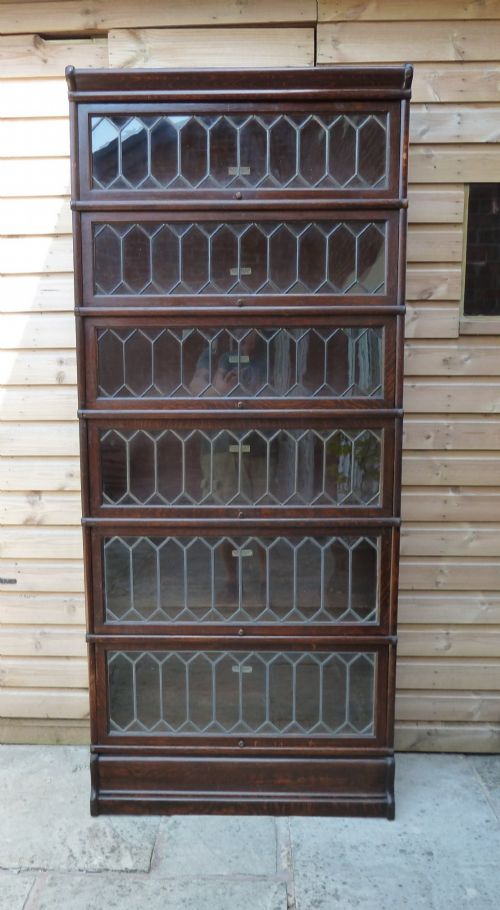
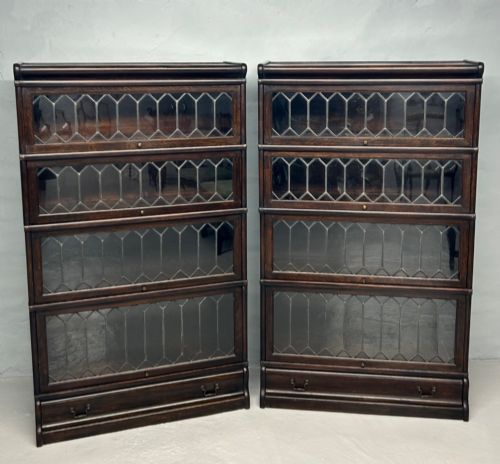
Maker attribution elevates certain pieces, particularly certified cabinets from established manufacturers compared to utilitarian office equivalents. The presence of leaded glass or specialised finishes such as limed oak also distinguishes finer decorative commissions from standard commercial output.
Listings feature oak stacking cabinets spanning the Edwardian era through the 1950s, incorporating styles from Arts and Crafts to Art Deco and Mid-Century Modern.
Globe Wernicke·Minty·Lebus·Gunn·Warwick·Heals·Phoenix Gallery
The Stacking Oak Cabinet Glossary
- Sectional bookcase
- A modular bookcase built from multiple stacking tiers that operate as independent cabinets. This design allowed libraries to expand vertically by adding single units over time.
- Barrister bookcase
- An alternative name for a stacking cabinet fitted with glazed lifting doors designed to protect law books from dust. The glass panels slide upward into the cabinet interior.
- Cornice
- The moulded architectural projection sitting atop the uppermost tier of the cabinet. It caps the modular stack with a finished decorative profile.
- Golden oak
- A bright, warm oak finish popular during the Edwardian period and early twentieth century. This tone highlights the natural medullary rays in quarter-sawn timber.
- Leaded glass
- Glass panes held together within narrow cames of lead to create geometric window patterns. This technique appears frequently on Edwardian and Arts and Crafts cabinet doors.
Stacking Oak Cabinet: Frequently Asked Questions
How do the stacking sections stay together?
Individual tiers rest securely on one another using tongue-and-groove or pin-and-socket locating joints that prevent lateral sliding. The weight of the timber and the top cornice keep the whole column stable without requiring permanent fixings.
Because each tier is removable, disassembly for transport or reconfiguring the shelf order requires only lifting each section straight up once the books are cleared.
How do the glass doors open?
The glass doors lift outward and slide horizontally into the recess directly above the books on that specific tier. Metal guide arms inside the cabinet control this movement so the panel remains level as it travels.
When pushed fully home, the door sits completely out of the way, allowing easy access to the shelf contents without swinging outward into the room.
Can I add more sections later?
Matching additional tiers depends on finding sections from the same maker and matching the exact depth, width, and timber tone. Because different manufacturers used proprietary dimensions, Minty tiers do not interchange with Globe Wernicke frames.
Checking the internal dimensions and external moulding profile ensures a newly acquired tier aligns correctly with an existing stack.
Where were these cabinets used originally?
Lawyers, offices, and domestic studies adopted stacking cabinets to protect growing reference libraries from dust and moisture. The modular format suited professionals who needed to transport or expand their book collections incrementally.
Today, the same compact footprint and modular practicality make these cabinets well suited for modern living rooms and home workspaces.