


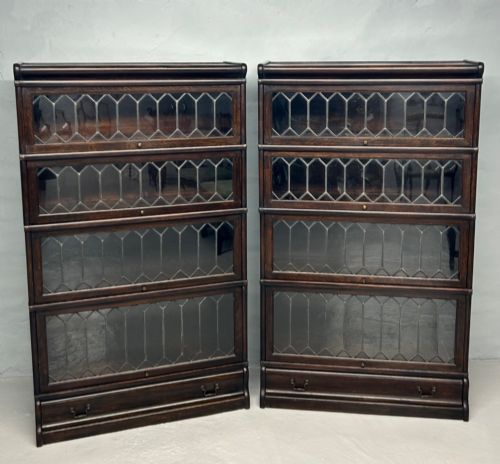

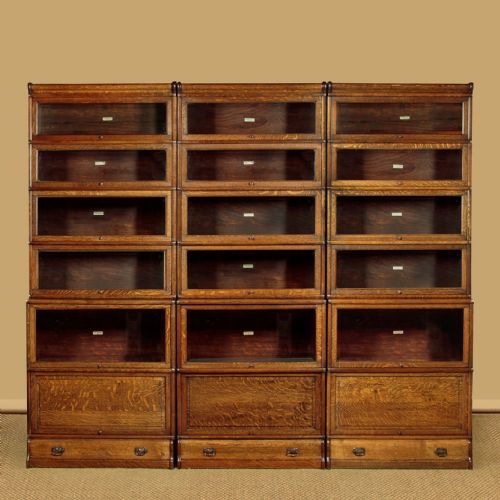
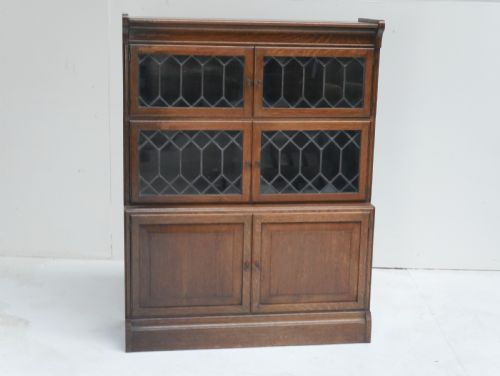


Stacking Library Bookcase
A stacking library bookcase offers modular adaptability and period charm, keeping substantial volumes organised behind sliding glass panels.
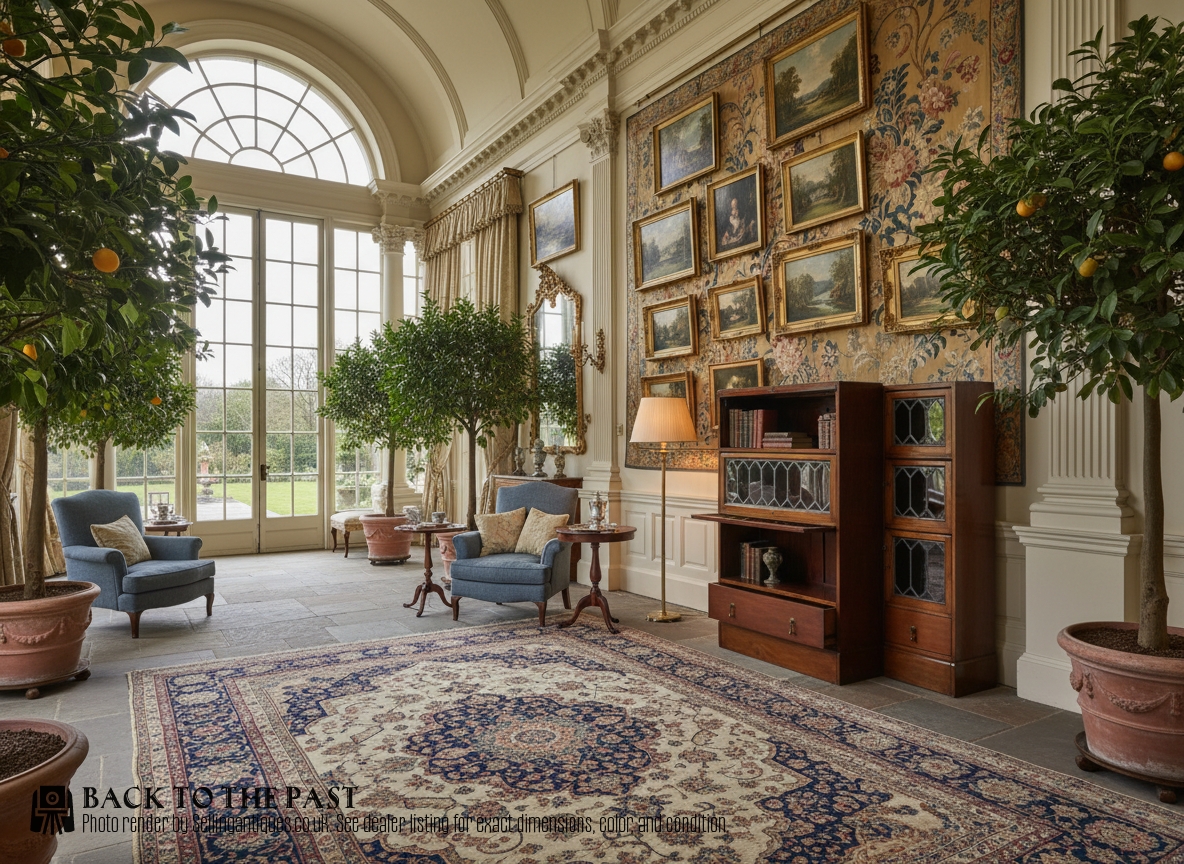
Stacking Library Bookcase
A stacking library bookcase consists of individual modular tiers that stack vertically to form a unified cabinet. These pieces allow collectors to house growing libraries without committing to a single fixed height.
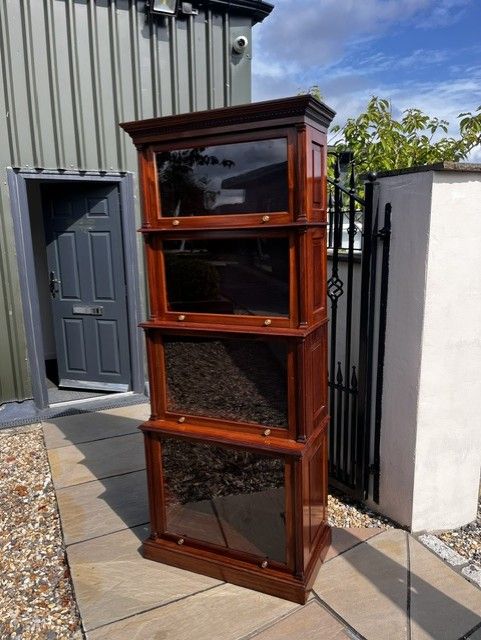
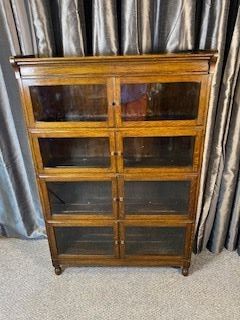
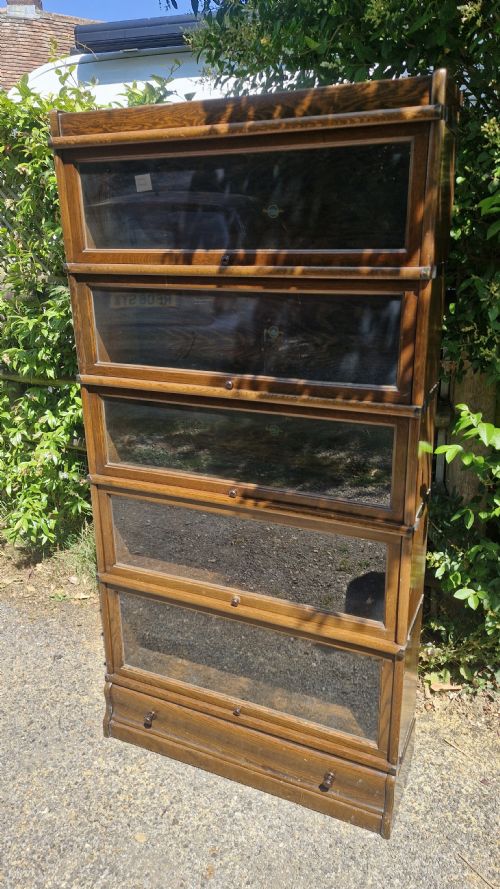
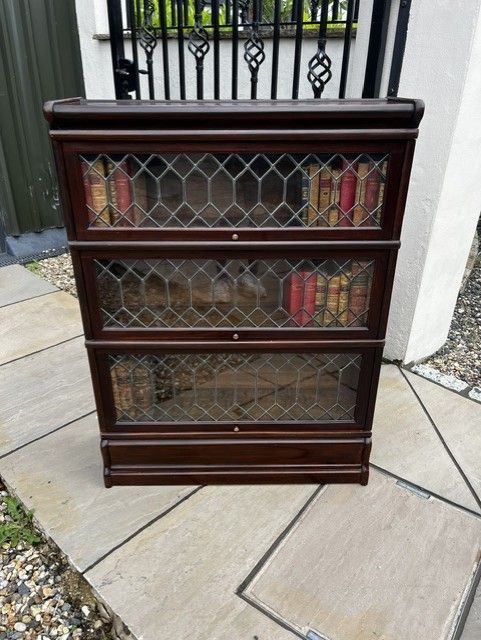
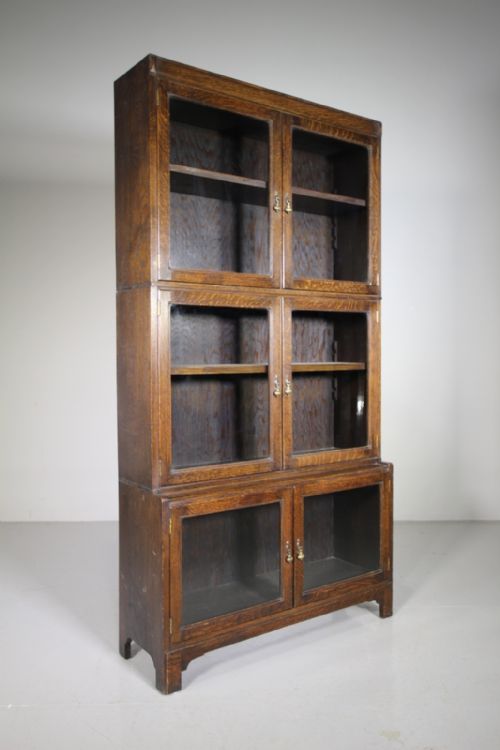
The version most frequently met on this page is the early twentieth-century oak or mahogany sectional bookcase. These units emerge from periods spanning the Edwardian era through the nineteen-thirties.
Makers such as Globe Wernicke, Minty, Lebus, and Gunn dominate the records, alongside pieces by Heal and AMYL. Oak and solid mahogany provide the primary structure for these modular office and library units.
Materials and construction methods
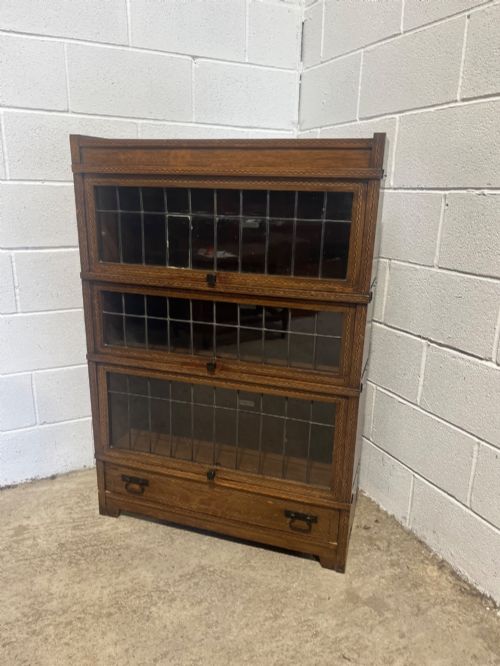
Makers utilised solid oak and mahogany as the main timber bodies, sometimes enhanced with wood inlay. Brass hardware secures the modular mechanisms, while lead often frames the glass doors on specific variants.
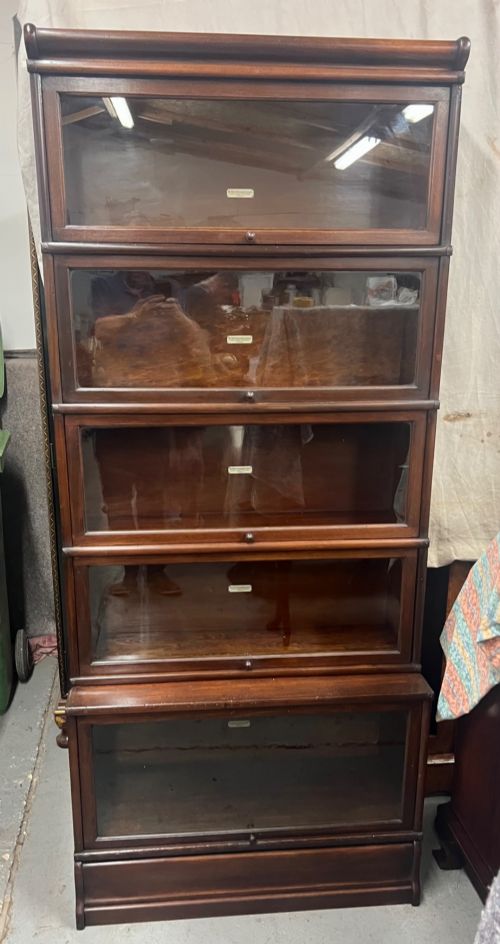
The construction relies on interchangeable stacked tiers featuring glazed fronts that lift and slide inward. Metal components assist the internal balancing arms that guide the movement of each tier's glass panel.
Listings feature modular bookcases predominantly from the Edwardian period through nineteen-thirty, constructed in oak, mahogany, and glass.
Distinctions in quality
Quality separates through the selection of timber and the precision of the modular joints. Solid mahogany and figured oak command higher regard than plain utility surfaces.
The smooth operation of the lifting glass doors and the integrity of the brass or metal internal hardware dictate the tier's manufacturing standard. Maker attribution from firms like Globe Wernicke or Minty also elevates a piece.
Globe Wernicke·Minty·Lebus·Gunn·Heal·AMYL
The Stacking Library Bookcase Glossary
- Sectional bookcase
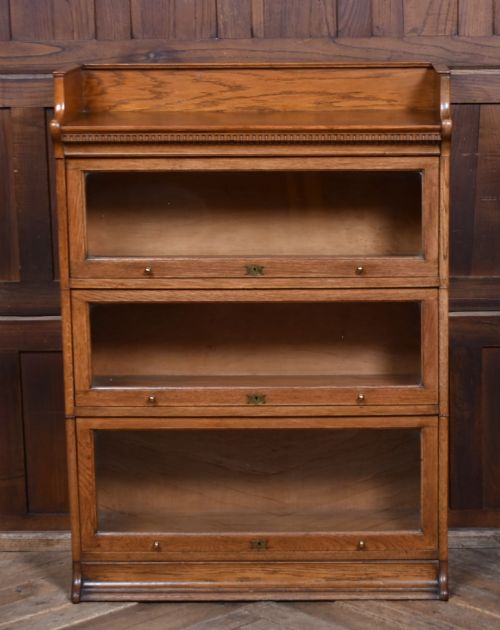
- A piece built from separate, detachable tiers that stack upon a base and sit beneath a top cornice. This design allows the cabinet to grow incrementally.
- Barrister bookcase
- A term commonly applied to stacking library bookcases because legal professionals originally favoured them to transport and protect case files. The glazed upward-lifting doors keep documents dust-free.
- Globe Wernicke
- A prominent manufacturing firm known for standardising modular stacking bookcases with patented door mechanisms. Their pieces remain benchmarks for the style.
- Leaded glass
- Small panes of glass held together by lead cames within the door frame. This technique adds decorative geometric detail to the front elevation.
- Cornice
- The ornamental moulding fitted to the very top of the stacking bookcase. It provides a finished architectural cap to the vertical tiers.
Stacking Library Bookcase: Frequently Asked Questions
How do the glass doors open?
The glass doors lift upward on metal pivoting arms and slide smoothly into the recess above the books.
This mechanism protects the volumes while allowing quick access to individual shelves without swinging doors taking up room.
Can the tiers be separated?
Yes, the individual sections lift apart from the base and top cornice for easier transport and reconfiguration.
Owners can add or remove tiers depending on their current shelving needs.
What woods were used?
Makers constructed these bookcases predominantly in oak and solid mahogany, sometimes incorporating wood inlay.
Golden oak variations appear frequently alongside darker polished mahogany finishes.
How do I date a piece?
Dating relies on maker stamps, patent marks, and stylistic clues connecting the piece to the Edwardian era or the nineteen-twenties and nineteen-thirties.
Art Deco examples introduce distinct geometric lines compared to earlier Arts and Crafts or Edwardian variants.