

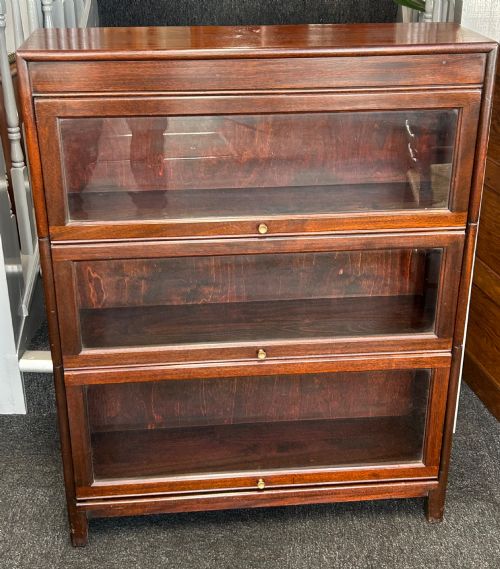
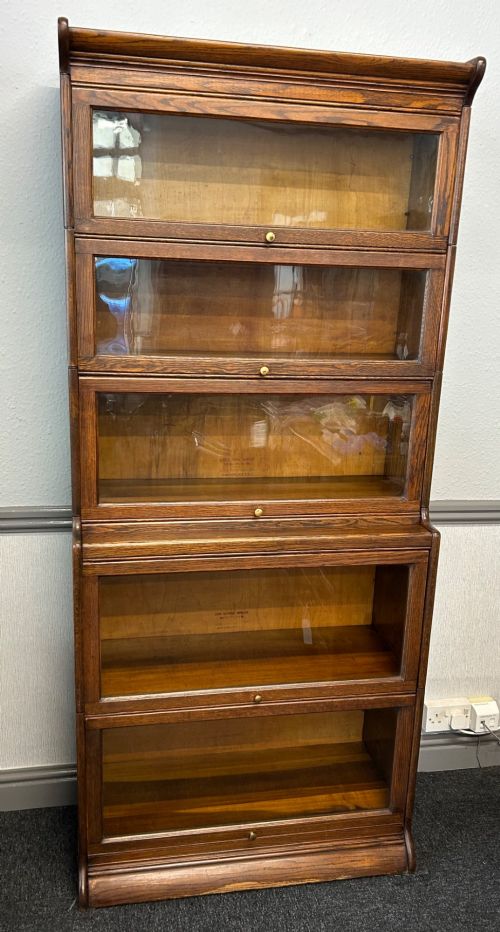
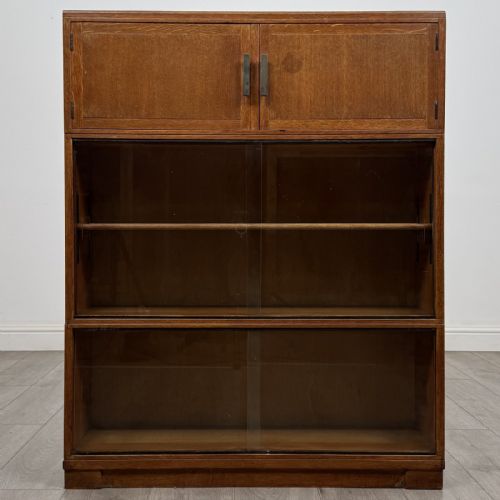
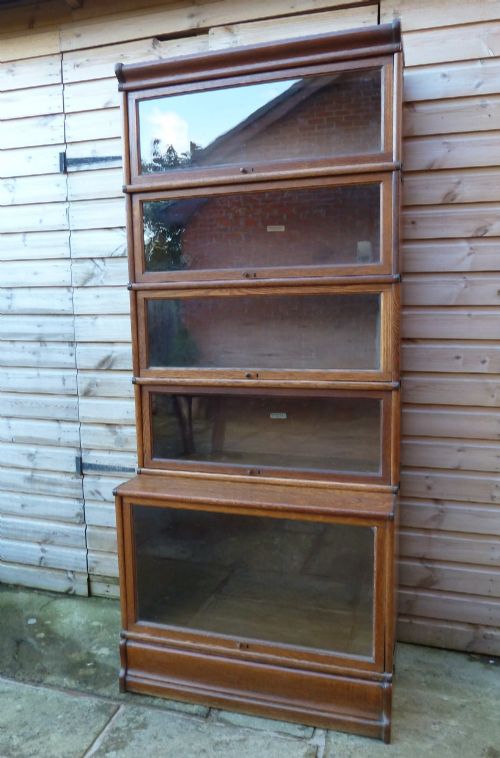

Stacked Tier Bookcase
These stacked tier bookcase examples offer modular shelving for domestic libraries, combining flexible storage with period character.
Stacked Tier Bookcase
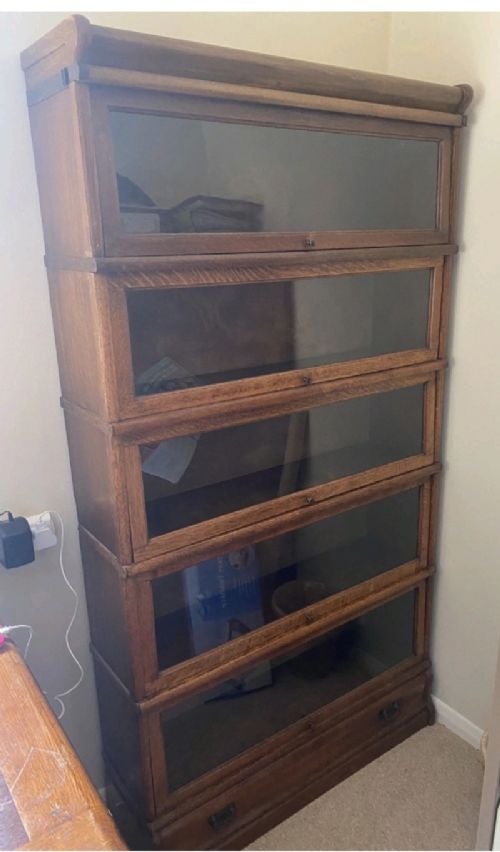
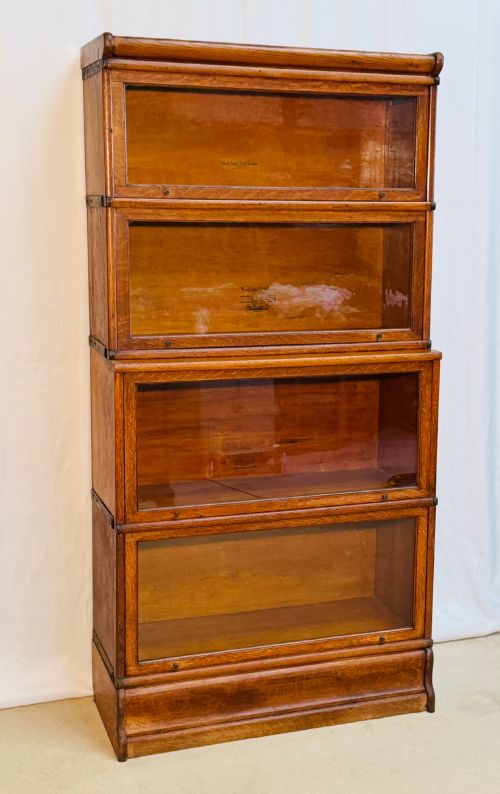
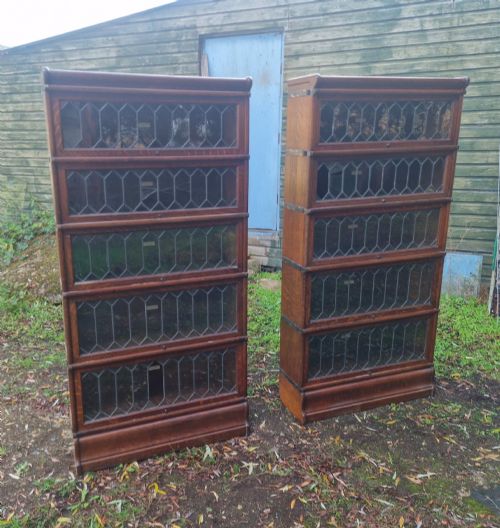
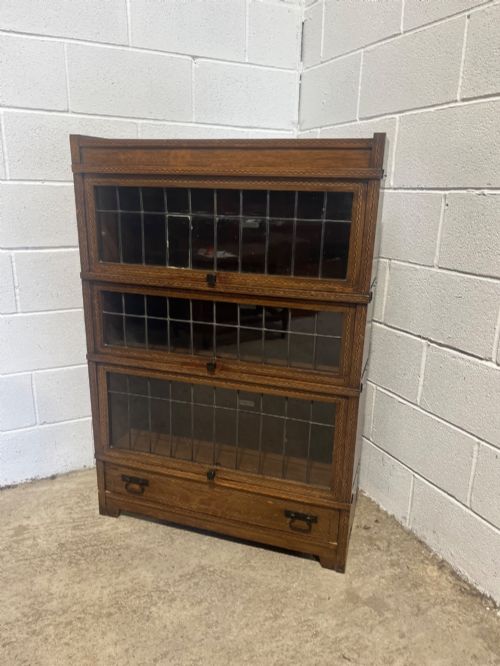
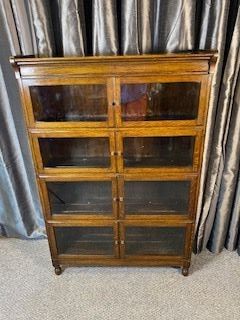
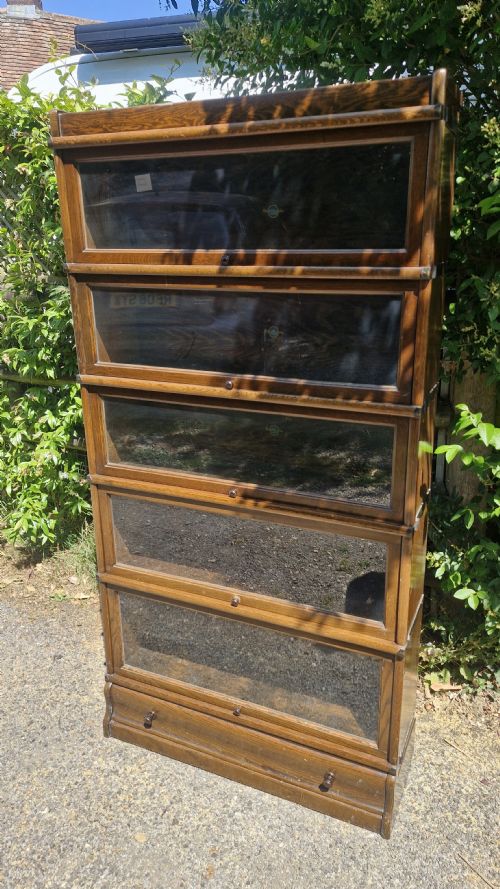
A stacked tier bookcase comprises modular sections that lift apart for separate placement or build upwards into a tall tower. These items emerge primarily from the Edwardian period through to the nineteen thirties, with numerous examples spanning nineteen hundred to nineteen twenty.
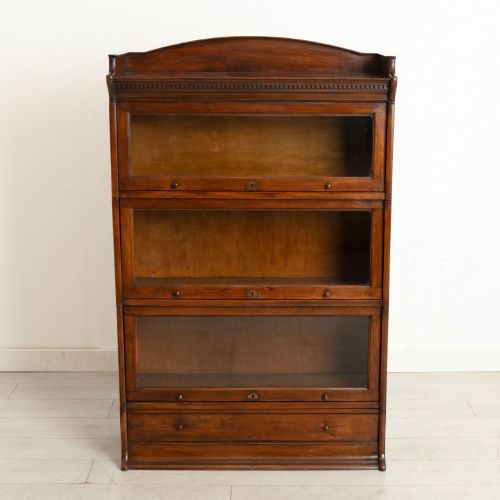
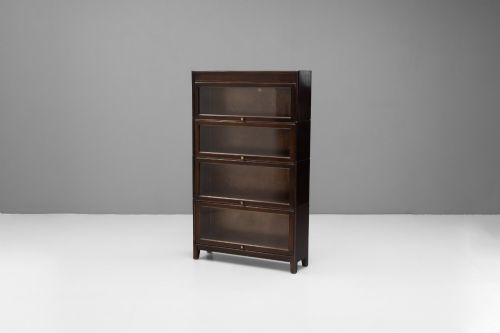
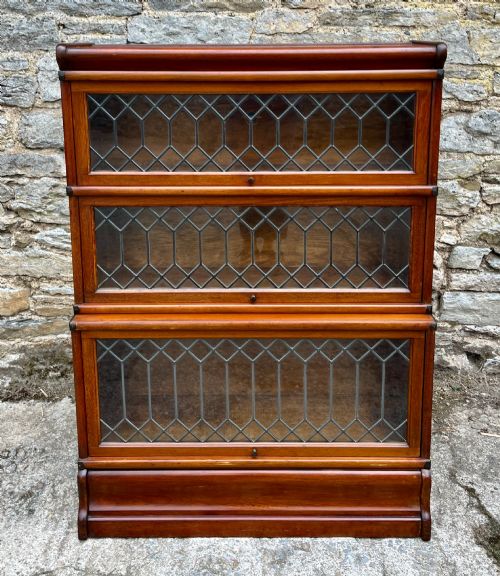
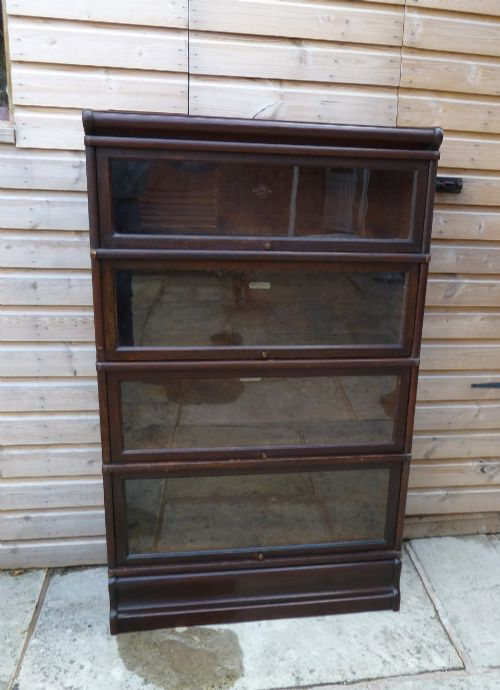
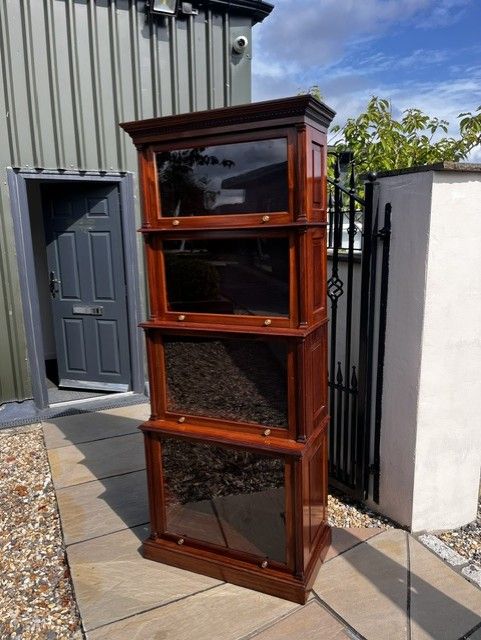
The most common form on this page is the glazed sectional bookcase, often built with lift-up glass doors that slide inwards above each shelf of books. Oak and mahogany dominate the construction, appearing in configurations ranging from three tiers up to six.
How they were made
Carpenters constructed these modular units using solid oak and mahogany timbers, frequently housing the shelves within interlocking wooden frames. Brass hardware and leaded glass often accent the doors, which lift and slide on internal mechanisms.
Makers integrated glass panels within wooden frames to protect volumes from dust while maintaining visibility. Drawers frequently form the base tier below the stacked bookcase sections.
Stacked Tier Bookcase Retail Price Guide 2026
Typical asking prices for stacked tier bookcase among the pieces listed under this phrase on Sellingantiques today, from the lower quarter to the upper quarter. They describe what is for sale here now, not the wider market.
Early lawyers used these stacking tiers because moving house was easier when your library came apart in portable wooden cubes.
What varies in quality
The distinction between standard utility items and finer examples rests in the choice of timber and the complexity of the sectional mechanism. Solid mahogany or quarter-sawn golden oak with well-fitted brass hardware represents the upper tier of production.
Makers such as Globe Wernicke or Heal's incorporated refined patent systems that govern the smooth operation of the glazed doors. Simpler sectional cabinets rely on basic stacking frames with fewer proprietary fittings.
Gunn Furniture·Lebus·Globe Wernicke·Heals·AMYL·Warwick·Minty
The Stacked Tier Bookcase Glossary
- Sectional bookcase
- A modular shelving unit built from individual tiers that stack on top of a base and beneath a top cornice. Each tier functions as an independent bookshelf with its own glazed door.
- Barrister bookcase
- An alternative name for a stacking tier bookcase, traditionally used by lawyers to transport and house law books. The glass-fronted shelves protect volumes during office moves.
- Leaded glass
- Windowpanes held together by narrow strips of lead, found on several Edwardian and Arts and Crafts cabinet doors. This technique creates geometric patterns across the front of the stacked tiers.
- Cornice
- The decorative moulding that sits atop the uppermost tier of a sectional bookcase. It finishes the architectural profile of the stacked cabinet.
- Elastic bookcase
- A proprietary term for an expanding modular shelving system that grows by adding further tiers. These units adapt to expanding library collections.
Stacked Tier Bookcase: Frequently Asked Questions
How do sectional bookcases work?
Each tier consists of a separate wooden box with its own glass door and interlocking edges. The sections simply stack on top of one another without permanent fixings.
This modular design allows the entire bookcase to be disassembled into individual shelves for easy transport and rearrangement.
Are the glass doors removable?
The glass doors slide inwards on internal tracks or scissor hinges housed within each individual tier. They remain attached to their specific section during stacking.
Lifting a tier off the stack provides access to remove or adjust the door mechanism for maintenance.
What is a barrister bookcase?
A barrister bookcase is another term for a stacking tier bookcase with glazed drop-front doors. Lawyers originally used them because the modular sections could be packed up quickly.
They evolved into standard domestic furniture for displaying and protecting valuable home libraries.
How do I date a stacking bookcase?
Dating relies on timber choices, hardware styles, and maker marks stamped inside the sections or on the metal fittings. Oak dominates the early Edwardian pieces, while later Art Deco examples feature limed finishes or walnut.
Maker stamps from firms like Globe Wernicke or Lebus often indicate specific production decades around nineteen hundred to nineteen thirty.