
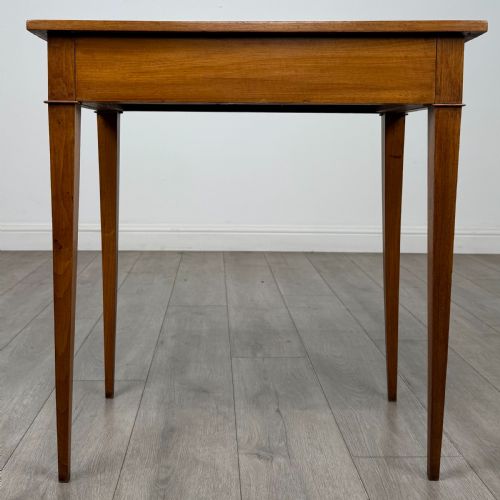
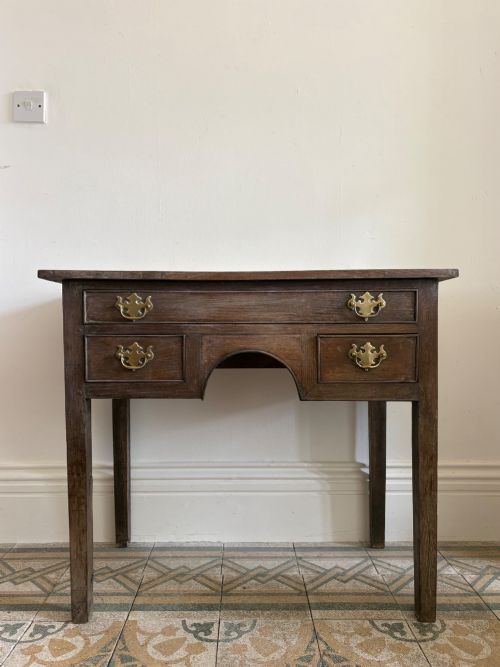
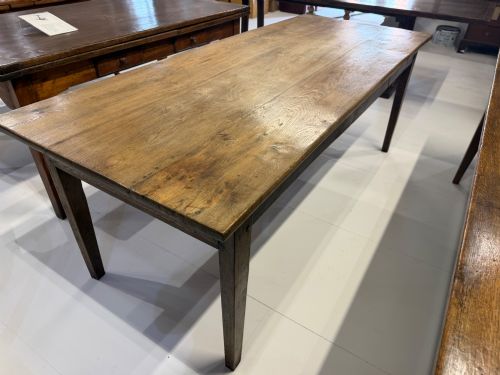


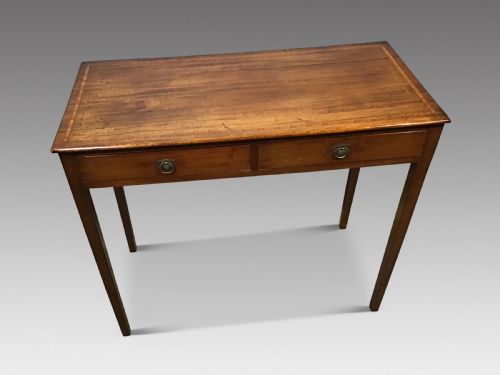


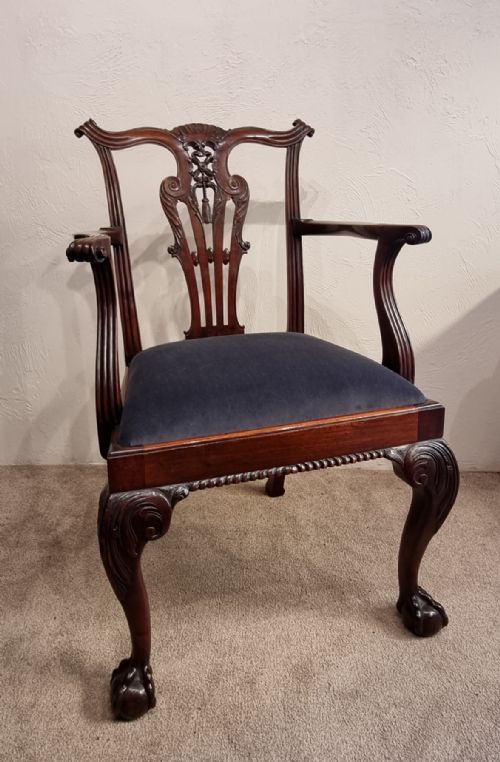


Square Leg Desk
A square leg desk brings linear elegance and solid timber construction to a study, offering a clean silhouette rooted in Georgian and later traditions.
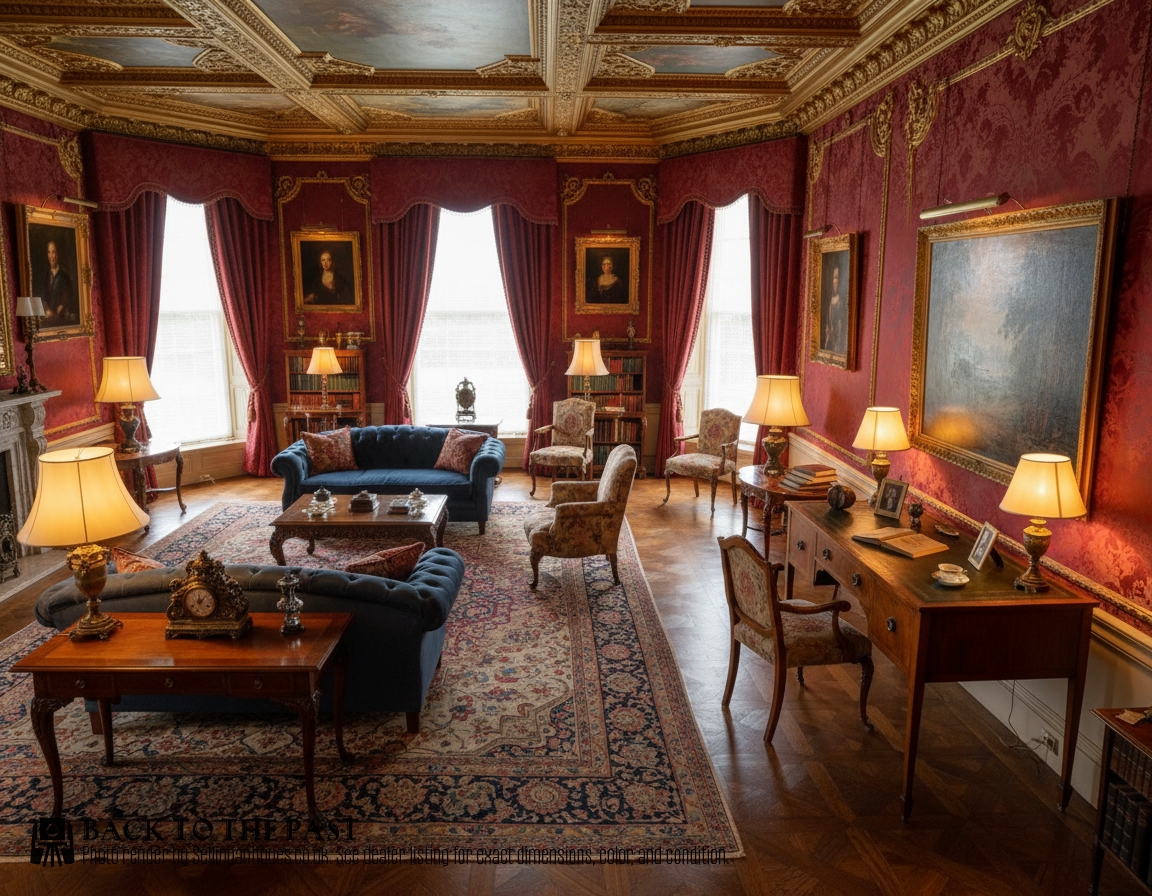
Square Leg Desk
When you search for a square leg desk, you encounter pieces designed with straight, vertical supports rather than turned or cabriole legs. These forms span the Georgian period, the nineteenth century, and the Edwardian era, reflecting lasting utility in domestic and professional spaces.
The versions most commonly met on this page combine mahogany timber with writing surfaces, occasionally featuring inlay or single drawer configurations. They bridge formal architectural styles and simpler vernacular interpretations like the farmhouse tradition.
Makers adapted the rectilinear framework across various formats, including writing tables and side tables that served domestic writing tasks. Their proportions range from compact occasional pieces to larger library tables.
Materials and construction
Makers relied primarily on mahogany, oak, and satinwood, often selecting dense hardwoods for both structural frames and visible surfaces. Timber selection governed the durability of the linear supports and the smoothness of the writing surface.
Craftsmen incorporated boxwood stringing and brass hardware to accent the timber carcases. Leather inserts provided a durable, tactile surface for writing, while interior drawer dividers organised paper and ink.
Secret drawers occasionally hide behind the main writing slide, waiting for someone to discover where past owners tucked away their spare nibs.
Judging quality in design
Quality rests in the precision of the joinery and the selection of figured timber veneers. Superior examples display careful grain matching across drawer fronts and precise inlay work that frames the structure without distortion.
The refinement of the leg tapering and the integration of hardware reveal the maker's hand. Finer pieces maintain balanced proportions between the writing surface and the rectilinear base, ensuring visual stability.
Trollope & Colls Ltd
The Square Leg Desk Glossary
- Square tapered leg
- A vertical support that narrows gradually toward the foot, commonly found on Georgian and later furniture. This geometry lightens the visual weight of heavy timber desks.
- Satinwood
- A lustrous, yellow-toned timber used extensively for fine cabinetmaking and decorative stringing. It provides a bright contrast against darker woods like mahogany.
- Inlay
- The technique of embedding contrasting woods or materials into a recessed surface to form decorative patterns. Boxwood and darker veneers frequently create geometric borders.
- Pembroke table
- A drop-leaf table with hinged flaps on two opposite sides, often utilised for writing or light dining. These versatile forms share period characteristics with writing tables.
Square Leg Desk: Frequently Asked Questions
What periods do these desks cover?
The pieces span from the Georgian era and George III period through the nineteenth century, Victorian era, and into Edwardian times. Each period introduced subtle shifts in timber selection and decorative inlay.
Craftsmen adapted the rectilinear format across these generations, ensuring the straight leg remained a staple of functional furniture design.
How were these tables used?
These pieces served primarily for correspondence, accounting, and general household administration. The inclusion of drawers allowed for the storage of ink, paper, and writing implements.
Some designs doubled as occasional or lamp tables, reflecting the multi-purpose nature of furniture in historic English interiors.
How do I spot an Edwardian piece?
Edwardian examples often feature lighter satinwood finishes, painted decorations, and refined mahogany frames dating around nineteen hundred. They frequently incorporate delicate stringing and polished brass hardware.
These later interpretations balance traditional Georgian forms with the lighter aesthetic preferences of the early twentieth century.