



Spring Driven Fusee Clock
A spring driven fusee clock offers reliable timekeeping housed within a handsome timber case, perfect for a mantel or desk.
Spring Driven Fusee Clock
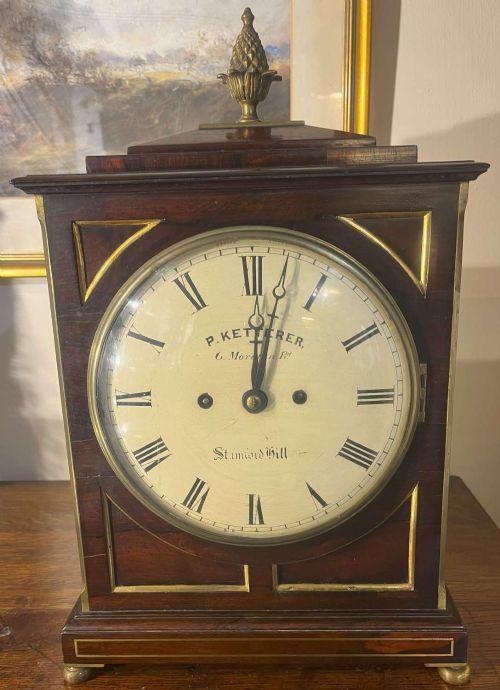
A spring driven fusee clock is a precision timepiece powered by a mainspring rather than hanging weights, using a cone-shaped pulley to equalise the force as the spring unwinds. Buyers seeking a spring driven fusee clock look for traditional craftsmanship, often finding pieces housed in sturdy wooden table, mantel, or bracket clock formats.
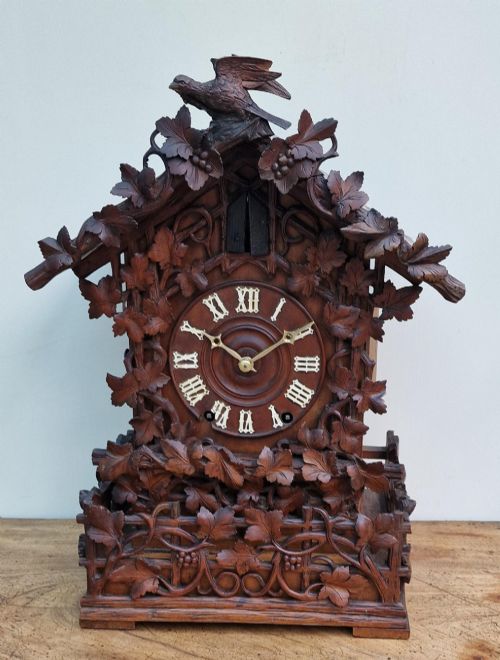
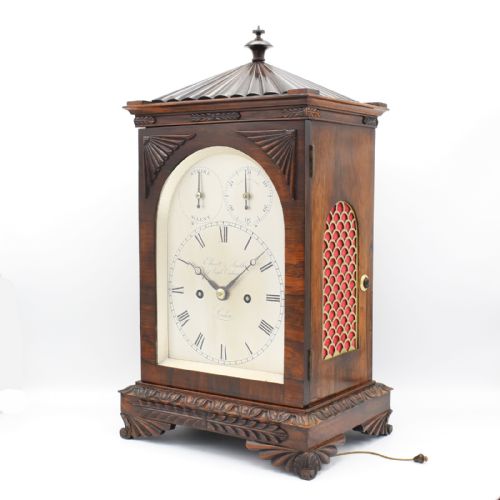
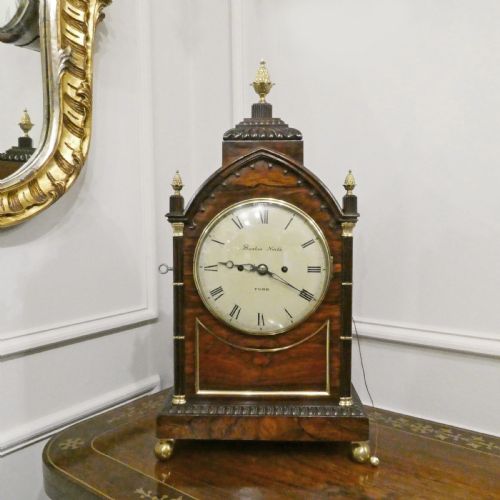
The selections range across multiple historical periods, with Victorian and Georgian examples appearing most frequently alongside Regency, William IV, and Gothic Revival styles. These clocks take various forms, including library timepieces, bell-top bracket clocks, and lancet top mantel clocks designed to sit securely on furniture.
Origins span both London workshops and regional makers across England and Scotland, showing regional variations in dial design and case architecture. Most pieces utilise rich hardwoods, with mahogany and rosewood dominating alongside ebonised wood and oak.
Judging Quality
The integrity of the case - whether the mahogany or rosewood retains its original rich tone and structural soundness - separates standard pieces from exceptional ones. Dials that retain clear silvering or clean enamel without heavy restoration hold greater appeal for serious collectors.
Spring Driven Fusee Clock Retail Price Guide 2026
Typical asking prices for spring driven fusee clock among the pieces listed under this phrase on Sellingantiques today, from the lower quarter to the upper quarter. They describe what is for sale here now, not the wider market.
Movements range from single fusee timepieces to twin and triple fusee models with striking capabilities.
George Wadham Bath·Ellicott Smith·Barber North of York·Cording of London·Phillips Brothers·Geo Carter Hackney·Wilkinson Leicester·J Kingerley Manchester·Somersall London·Funnell of Brighton·John McGregor Wick·Desbois Wheeler·Plumbly Tupman·Isaac Hurley London·Osborn of Bognor Regis·Leith of London
The Spring Driven Fusee Clock Glossary
- Fusee
- A conical pulley used in spring-driven clocks to equalise the diminishing power of the mainspring as it unwinds. This clever device ensures steady force reaches the escapement throughout the running cycle.
- Bracket clock
- A portable timekeeper originally designed to sit on a wall bracket or a tabletop. Many examples feature carrying handles and glazed side panels to display the movement.
- Verge escapement
- An early type of escapement mechanism that controls the release of the wheel train. It works alongside a balance spring or pendulum to regulate the ticking beat.
- Silvered dial
- A brass clock face treated with a silver compound to create a bright, frosted metallic finish. Numerals and maker details are typically engraved and darkened for readability.
Spring Driven Fusee Clock: Frequently Asked Questions
How does a fusee movement work?
A fusee movement uses a conical pulley connected to the mainspring by a chain or cord. As the spring unwinds and loses strength, the chain pulls on a wider section of the cone, maintaining even power.
This ingenious mechanism prevents the clock from running fast when fully wound or slow as it runs down, ensuring accurate timekeeping.
Where should I place my clock?
These clocks are designed for stable horizontal surfaces such as mantels, sideboards, desks, or specialised wall brackets. Avoid placing them in areas subject to heavy vibrations or fluctuating humidity.
Keeping the clock on a level surface ensures the pendulum or balance mechanism beats evenly and maintains correct time.
How do I identify a Georgian clock?
Georgian clocks usually feature classical proportions, rich mahogany or ebonised cases, and brass bracket feet or carrying handles. Look for engraved brass dials and maker signatures typical of the eighteenth and early nineteenth centuries.
Archival details and regional maker inscriptions often confirm this period of origin.
What maintenance do these clocks need?
Spring driven clocks benefit from periodic cleaning and lubrication by a professional horologist to prevent wear on the brass gears. Winding should be done steadily using the appropriate key without over-tensioning the spring.
Regular care preserves the delicate mechanics of the fusee chain and escapement.