
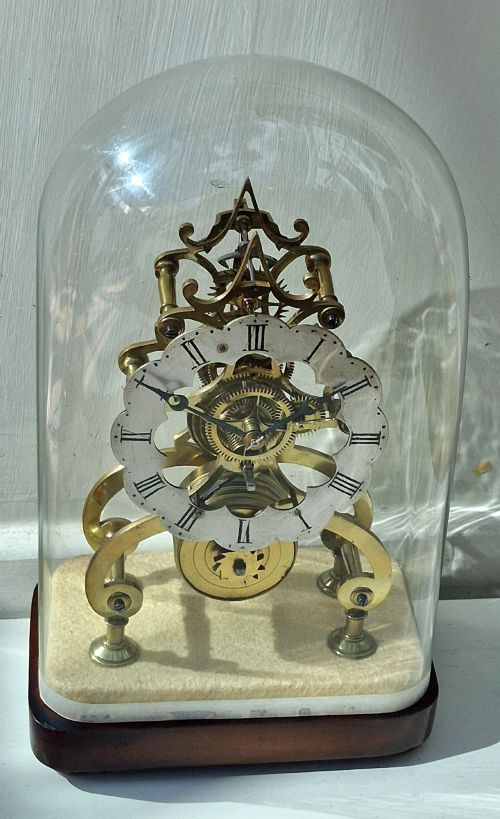


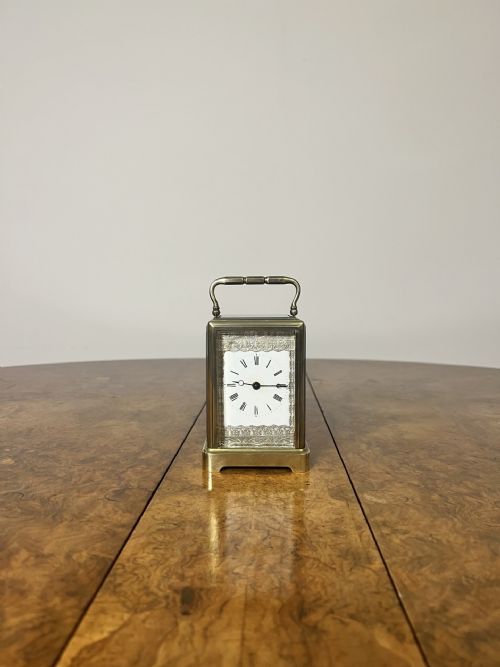


Vintage Horology Table Clock
These vintage horology table clock pieces are brass-framed timepieces and wooden mantel movements that bring mechanical presence to a room.
Vintage Horology Table Clock
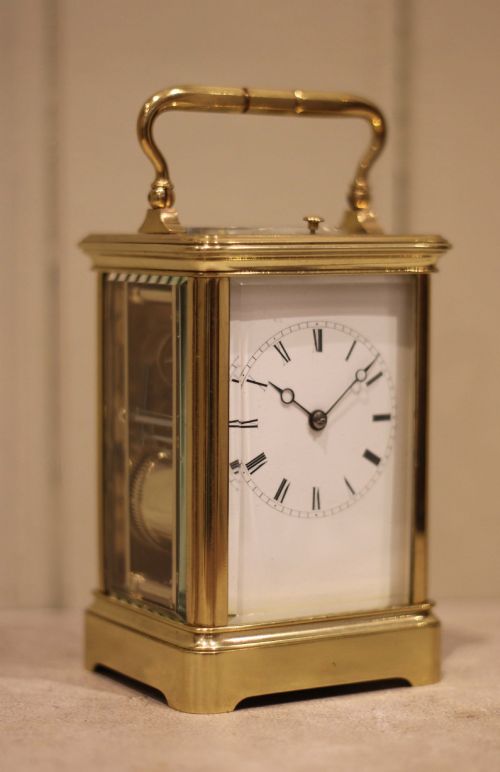
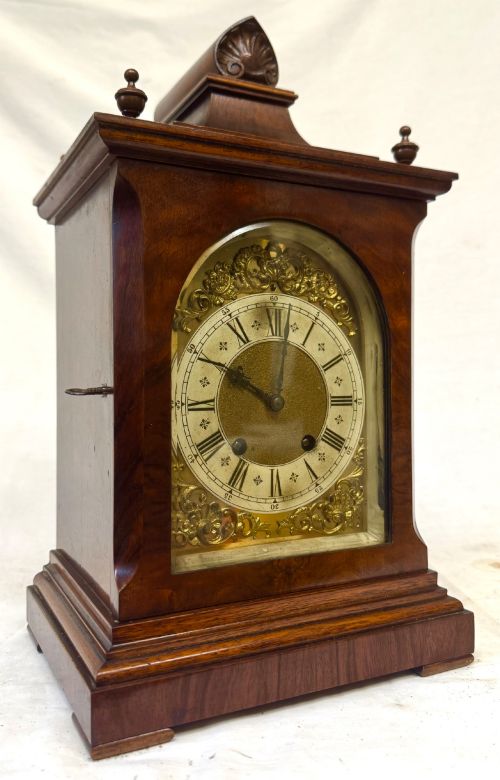
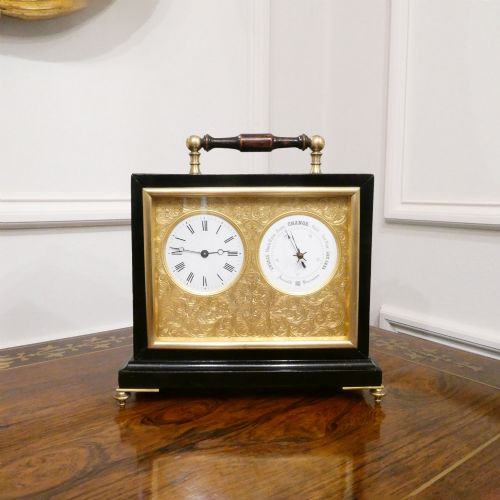
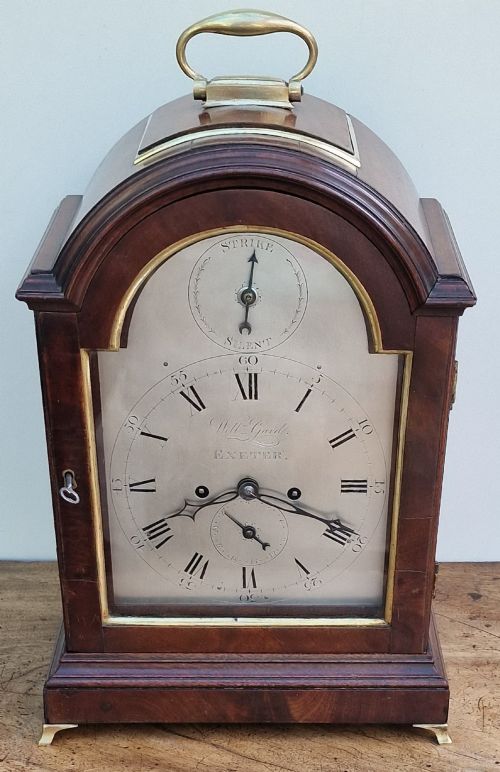
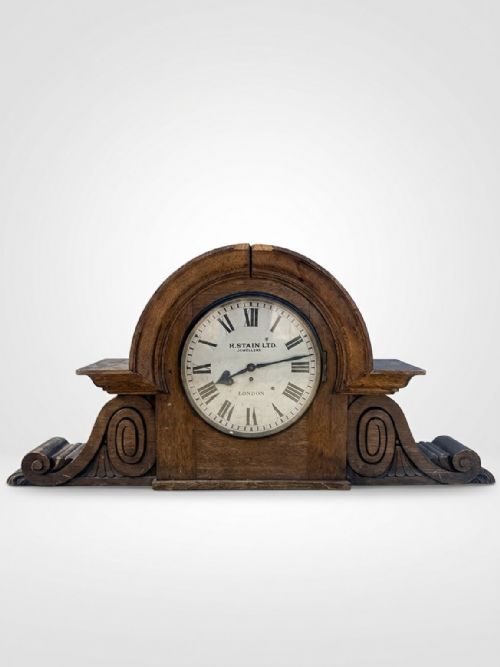
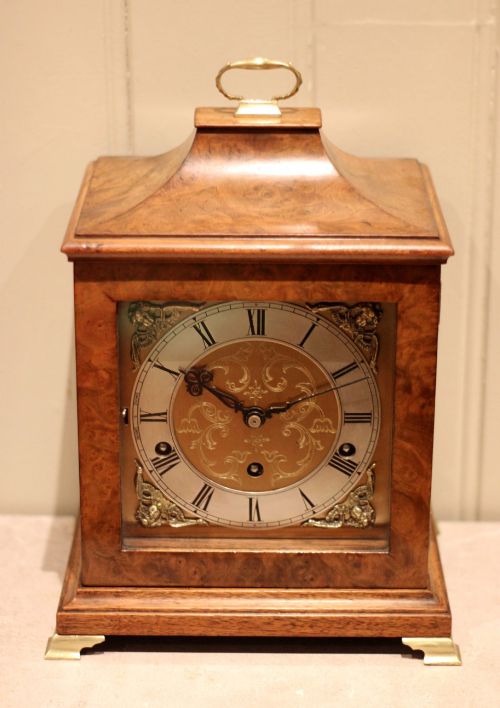
A vintage horology table clock encompasses several distinct forms designed to sit upon furniture rather than hang on a wall. You encounter carriage clocks housed in bevelled glass and brass cases, alongside wooden bracket and mantel clocks driven by pendulum or fusee movements.
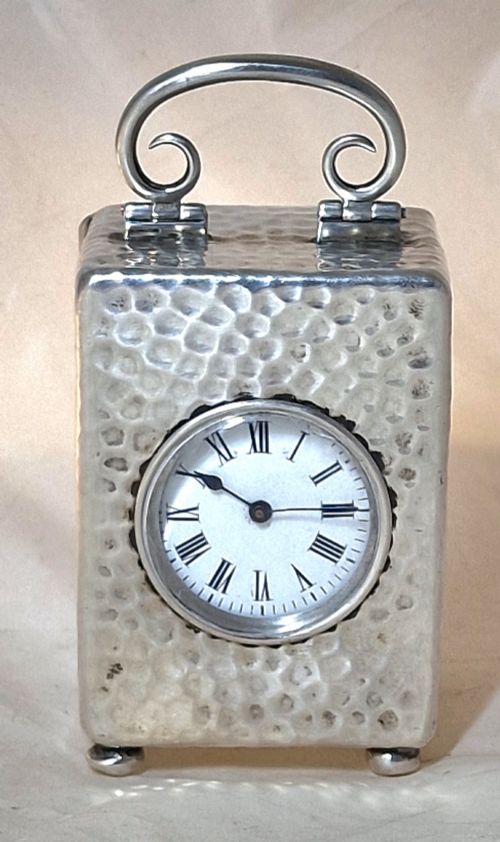
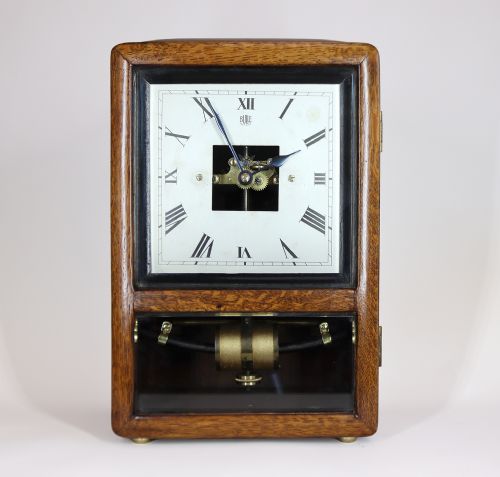
The selection ranges from nineteenth century French striking pieces to Edwardian silver-cased travel timepieces and Art Deco oak examples. These mechanical items combine utility with decorative cabinetwork spanning multiple design revivals.
How they were made
Cases combine timber frames such as mahogany, walnut, and oak with metal components in brass and silver, occasionally enriched with enamel dials or tortoiseshell veneers. Makers housed mechanical movements behind glass panels or fitted them into portable brass housings with folding handles.
Movements rely on traditional escapements and spring-driven or fusee mechanisms assembled by hand, requiring precise gear-cutting and dial silvering to achieve accurate timekeeping and striking functions.
Several carriage clocks retain original leather travel cases designed to protect the glass during horse-drawn journeys.
What varies in quality
Quality rests in the crispness of the movement engraving, the weight and thickness of the cast brass framing, and the joinery of the timber case. A finely made clock shows meticulous hand-finishing on the internal brass plates and clean, unblemished enamel dials.
The distinction between standard production and superior work lies in signed movements by known makers, original casework retaining its finish, and complications such as repeat striking or alarm mechanisms that operate smoothly.
William Gard·Mappin & Webb·L. Vick of Stroud·Antoine Redier of Paris·Sir John Bennett·David Veasey for Liberty & Co·Turner of London·Latshea & Sons Edinburgh·William Barrow·J Batson & Son·DROCOURT·Henry Marc·Perigal of London·Joseph Jump·Paul Garnier
The Vintage Horology Table Clock Glossary
- Carriage clock
- A small spring-driven timepiece designed for travel, typically featuring a brass case with glass panels on all sides and a swing handle on top.
- Bracket clock
- A portable table clock originally built to sit on a wall bracket, housed in a wooden case with a carrying handle or architectural top.
- Fusee
- A conical pulley connected to the mainspring by a cord or chain, designed to equalise the driving force as the spring unwinds.
- Verge escapement
- An early type of escapement mechanism that controls the release of power in pendulum or balance-wheel clocks.
- Striking and repeating
- A mechanism that sounds the hours on demand or on the hour through internal gongs or bells.
Vintage Horology Table Clock: Frequently Asked Questions
What is a carriage clock?
A carriage clock is a portable timepiece developed for travel in the nineteenth century, featuring a heavy brass frame fitted with bevelled glass sides.
Most examples include a hinged handle on top and a spring-driven movement that does not rely on a pendulum.
How do fusee clocks work?
A fusee clock uses a conical pulley connected to the mainspring by a fine chain to maintain even tension as the power winds down.
This mechanical refinement helps the timepiece maintain steady accuracy throughout its running cycle.
Where should I place a table clock?
These timepieces suit stable surfaces like mantelpieces, sideboards, and desk tops away from direct sunlight and drafts.
Level placement is essential for pendulum clocks to maintain an even beat and keep correct time.
How do I identify the period?
Dating relies on case styles, materials, and maker signatures, such as heavy gilt brass frames for nineteenth-century French pieces or clean oak geometric lines for Art Deco.
Inscribed signatures on dials or backplates often point to specific makers and active trading decades.