



Sporting Dog Wall Art
Sporting dog wall art brings the historic energy of the field and kennel directly into your room through painted canvases and detailed prints.
Sporting Dog Wall Art
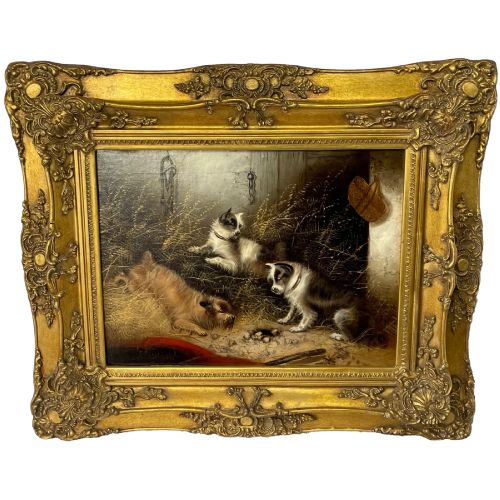
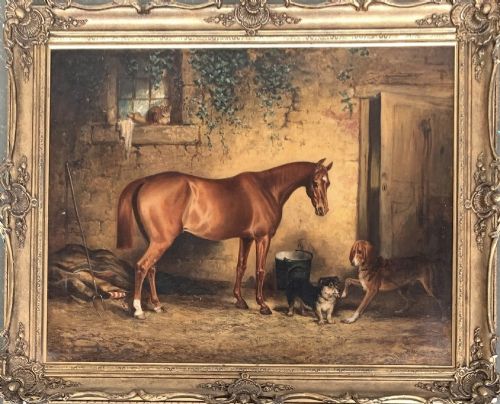
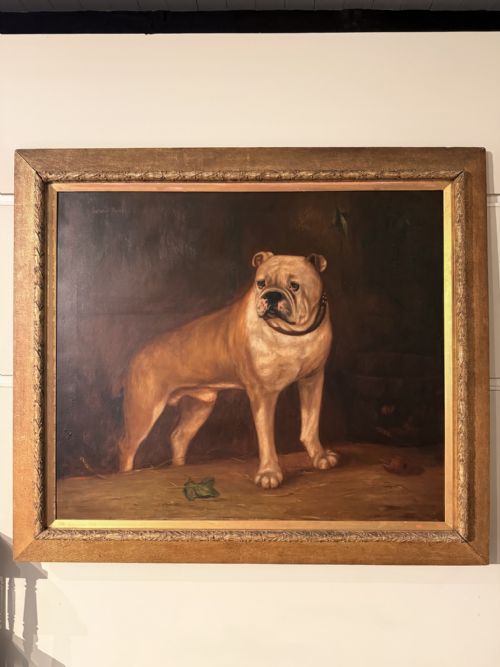
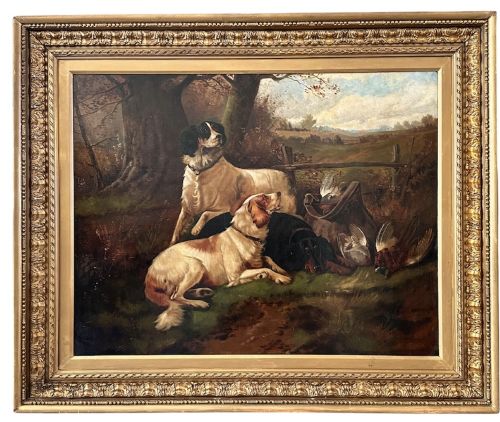
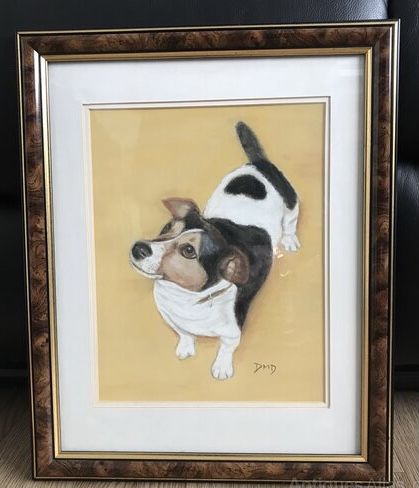
Sporting dog wall art encompasses framed oil paintings, watercolours, pastels and etchings depicting gun dogs, terriers, hounds and working dogs alongside horses and handlers. These works frequently draw from the nineteenth century and Victorian periods, capturing gundogs with the day's bag or terriers at work in the yard.
The pieces on this page range from intimate portraits of individual curly-coated retrievers and fox terriers to broader landscape genre scenes featuring hunting parties. Buyers will find both signed compositions by named animal artists and unsigned studies created within English country houses.
Forms vary from traditional giltwood-framed canvas paintings to works under glass and carved wood overdoor panels. Each piece reflects a longstanding British tradition of recording working animals with distinct character and anatomical precision.
How They Were Made
Painters utilised oil on canvas and oil paint on board to build rich textures in animal coats and rural landscapes, often applying layered glazes for depth. Watercolours and pastels on paper provide a lighter touch, frequently preserved under glass.
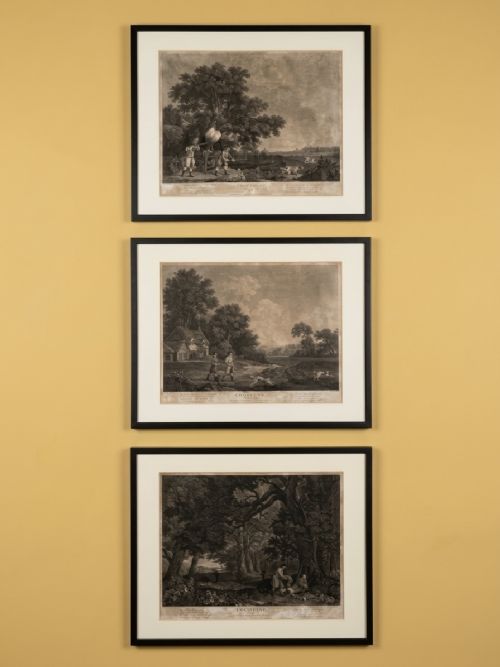
Printmakers employed engraving and etching techniques on paper to circulate detailed portraits of celebrated bitches and sporting dogs. Master craftsmen also carved detailed relief panels directly into walnut wood for architectural placement.
Listings feature works executed in oil paint, canvas, paper, gold leaf and carved walnut across the nineteenth and twentieth centuries.
What Varies In Quality
Quality rests primarily upon the artist's command of canine anatomy, expression and movement, distinguishing stiff renderings from spirited portrayals that capture the alert posture of a pointer or spaniel. Superior works display confident brushwork in the rendering of fur texture and the surrounding landscape.
The integrity of the original frame, particularly period giltwood or gold leaf mouldings, influences the overall presentation and historical cohesion of the piece.
Henry Barraud·John Sargent Noble·Herbert Dicksee·George E Sharpe·Valentine Thomas Garland·Fannie moody·Edwin Frederic Holt·John Charles Tunnard·John Emms·Tom Carr·Robert cleminson·Molly Maurice Latham·Henry Frederick Lucas-Lucas·A. Betts·William Albert Clark·Thomas Blinks·Samuel John Egbert Jones·GEORGE WRIGHT
The Sporting Dog Wall Art Glossary
- Giltwood
- Wood carved and finished with a thin layer of gold leaf. This material frames many traditional nineteenth-century paintings.
- Etching
- A printmaking method where acid cuts lines into a metal plate to hold ink. Artists utilise this technique to produce fine lines in animal portraits.
- Canvas
- Heavy woven fabric stretched across a wooden frame to serve as a painting surface. Oil paints adhere durably to this traditional medium.
- Genre painting
- Artwork depicting scenes from everyday life involving people and animals. These works often show dogs accompanying sportsmen in rural landscapes.
- Watercolour
- Paint made from pigments suspended in a water-based solution applied to paper. This medium allows for transparent washes of colour.
Sporting Dog Wall Art: Frequently Asked Questions
What periods do these pieces date from?
The works span the nineteenth and twentieth centuries, with a heavy concentration of Victorian oil paintings and later twentieth-century studies.
Dates range from the early eighteen-hundreds through to the mid-twentieth century, encompassing various traditional British artistic movements.
How should I hang heavy oil paintings?
Heavy oil paintings in wood and giltwood frames require secure wall fixings anchored directly into wall studs or masonry.
Ensure the wire and D-rings on the back match the substantial weight of the framed canvas before mounting.
Are watercolours and pastels fragile?
Works on paper, including watercolours and pastels, are sensitive to direct sunlight and high humidity.
Display these pieces away from bright windows and maintain stable indoor conditions to protect the paper and pigments.
How do I identify working dog breeds in art?
Artists often recorded specific traits such as the curly coat of a retriever, the docked tail of a terrier or the long ears of a hound.
Historical titles and inscriptions on the frame or canvas frequently name the exact breed or the dog's working context.