
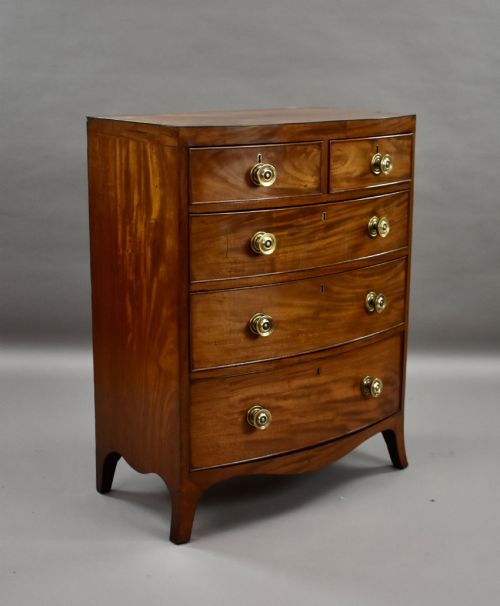
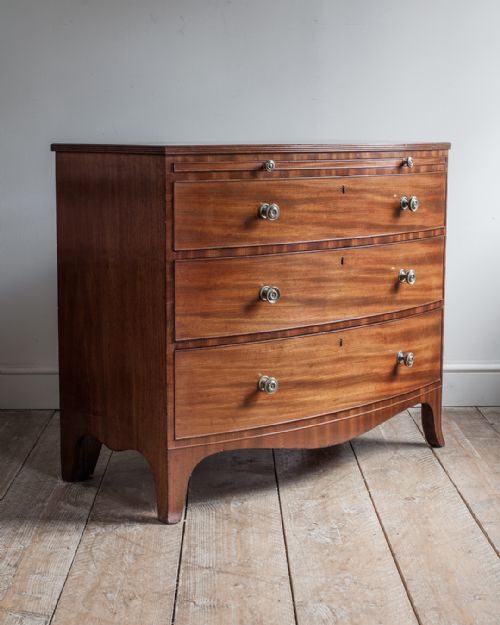
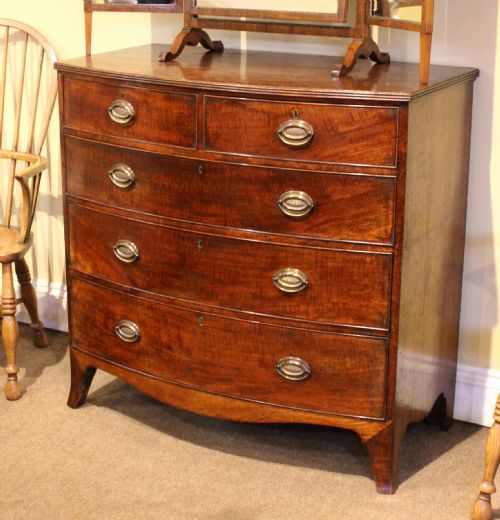


Splayed Foot Tallboy Chest
A splayed foot tallboy chest brings vertical storage and Georgian proportions into a room.
Splayed Foot Tallboy Chest
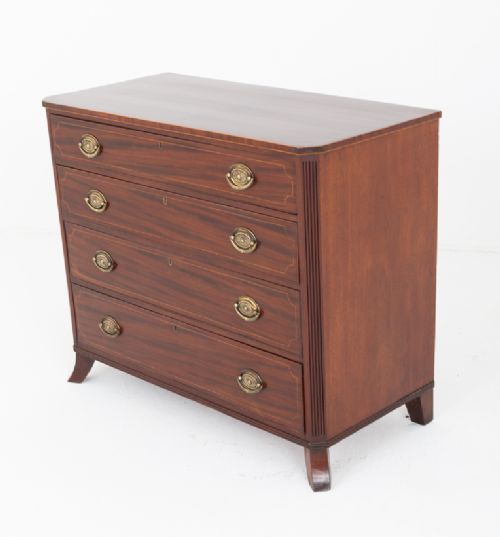
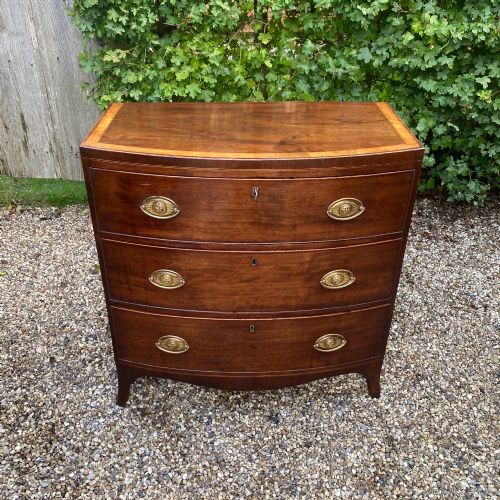
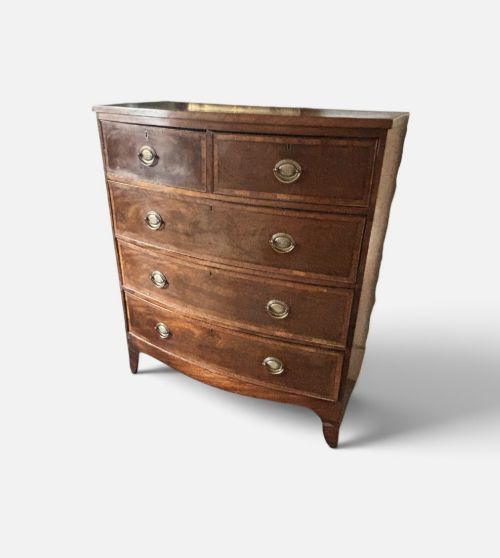
A splayed foot tallboy chest combines vertical drawer space with distinctive angled feet, offering substantial storage without consuming excessive floor area. When searching for a splayed foot tallboy chest, buyers typically encounter pieces originating from the eighteenth and nineteenth centuries, spanning Georgian, Regency, and Edwardian periods.
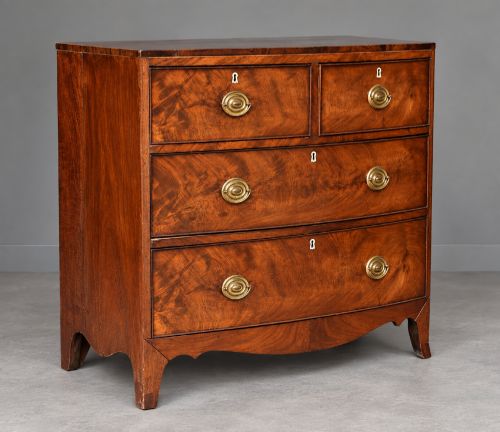
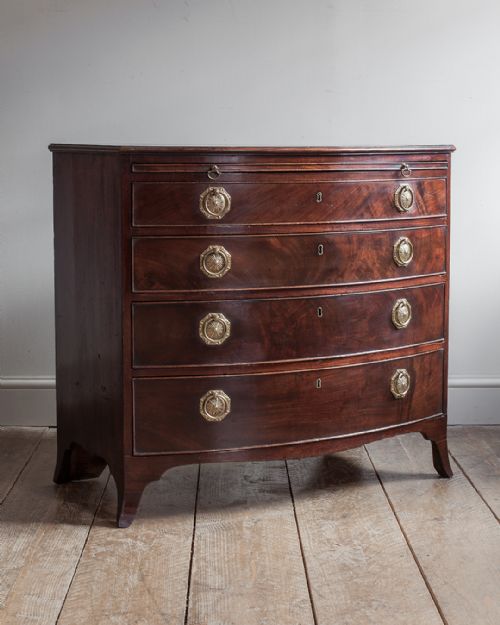
The selection ranges from narrow formats to larger chest configurations, often featuring bow front profiles. These pieces demonstrate cabinet-making traditions centred on domestic utility and refined surface presentation.
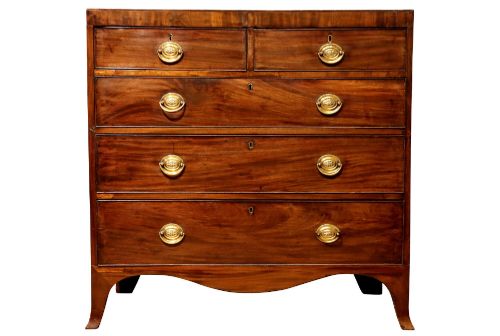
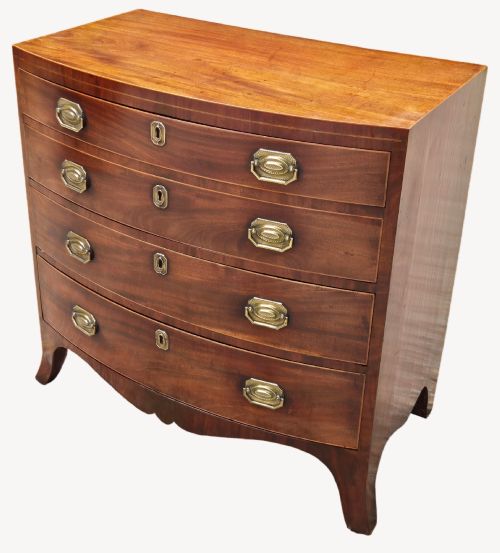
While formal tallboys and chests on chests stand tall, many examples incorporate bracket or splayed feet to lift the carcass cleanly from the floor. This architectural detail lightens the visual weight of heavy timber construction.
Materials and construction methods
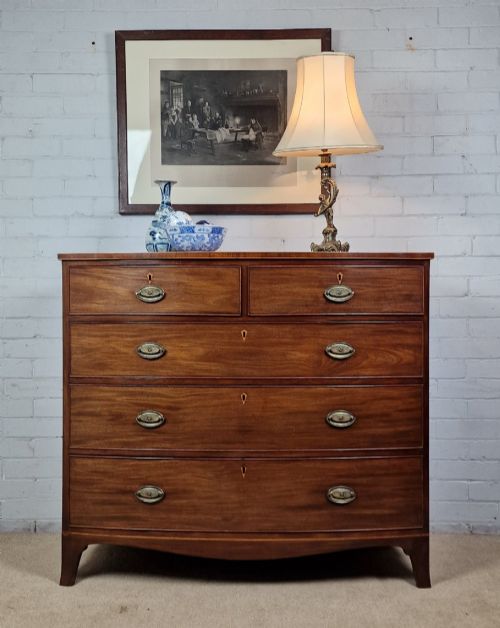
Construction relies primarily on solid mahogany and oak, frequently enhanced by flame mahogany veneers on drawer fronts. Cabinet-makers employed boxwood and satinwood inlay to create delicate borders and contrasting stringing lines along the edges.
Drawer divisions and internal carcases utilise secondary timbers such as oak, while brass hardware provides functional pulls and escutcheons. Joinery techniques include precise dovetailing on drawer boxes and hand-cut joints supporting the outer frame.
Cabinet forms include narrow bow fronts, caddy top designs, and five-drawer configurations supported by bracket or splayed feet.
Distinguishing quality across examples
Quality rests upon the selection of timber figures and the crispness of inlaid wood details. Superior execution shows in balanced grain alignment across multiple drawers and fine retention of the original splayed foot proportions.
The integration of secondary timbers and the integrity of brass fittings signal higher workshop standards. Subtle variations in edge banding and the precision of boxwood stringing separate standard utility pieces from finer cabinet work.
The Splayed Foot Tallboy Chest Glossary
- Splayed foot
- A foot that angles outward from the vertical base of a piece of furniture. This form provides a stable stance while offering a lighter visual appearance than a standard bracket foot.
- Tallboy
- A tall chest of drawers, often constructed in two stacked sections. The upper chest sits upon a lower base to maximise vertical storage capacity.
- Bow front
- A convex curved front facade characteristic of many Georgian and Regency chests. This curved profile softens the rectangular lines of the carcase.
- Crossbanding
- A strip of veneer applied perpendicularly to the grain of the main surface. It creates a contrasting border around drawer fronts or table tops.
- Stringing
- A narrow inlay of contrasting wood used to outline panels and drawers. It adds delicate linear decoration to mahogany and satinwood surfaces.
Splayed Foot Tallboy Chest: Frequently Asked Questions
How do I date a splayed foot tallboy chest?
Dating relies on observing timber choices, construction methods, and hardware styles across the piece. Georgian and Regency examples often display hand-cut dovetails and specific secondary woods like oak inside the drawers.
Subsequent periods like the Edwardian era introduced modified manufacturing techniques and distinct handle designs. Comparing the carcass construction against known stylistic periods helps establish an approximate date of origin.
Where should I place a tallboy chest?
A tallboy suits bedrooms or hallways where vertical storage is required within a limited floor footprint. The elevated design allows for substantial capacity without dominating the surrounding room scale.
Ensure placement avoids direct heat sources and excessive sunlight to protect mahogany veneers and inlaid details. Adequate clearance around the splayed feet prevents accidental knocks to the projecting lower angles.
What is the difference between a tallboy and a standard chest?
A tallboy traditionally incorporates greater height, often through a two-part chest-on-chest configuration designed to hold extensive wardrobes. Standard chests of drawers remain lower in profile and usually consist of a single carcass.
Both forms utilise similar materials like mahogany and oak, but the tallboy prioritises vertical capacity. The inclusion of splayed feet on certain tallboys lifts the heavier carcass visually from the floor.
How should I maintain mahogany and satinwood surfaces?
Maintenance involves gentle dusting with a dry, soft cloth to prevent particulate buildup on polished timber. Avoid chemical sprays or silicone polishes that can degrade historical finishes over time.
Occasional application of appropriate wax helps nourish the timber and maintain the lustre of flame mahogany veneers. Keeping the piece away from damp environments preserves the stability of boxwood and satinwood inlays.