

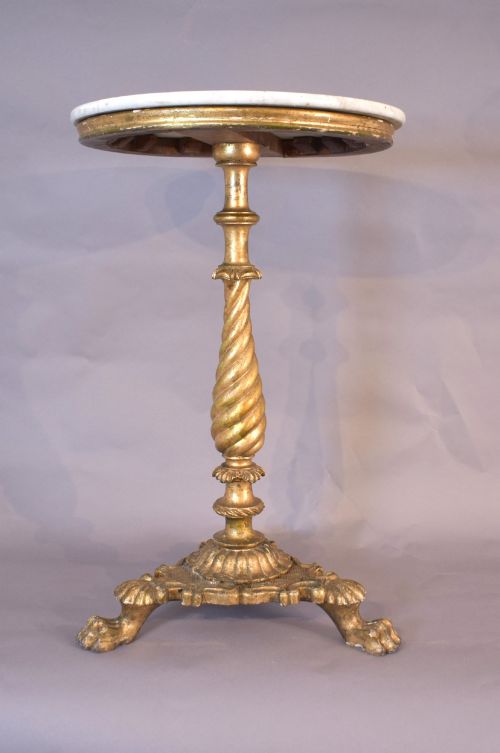
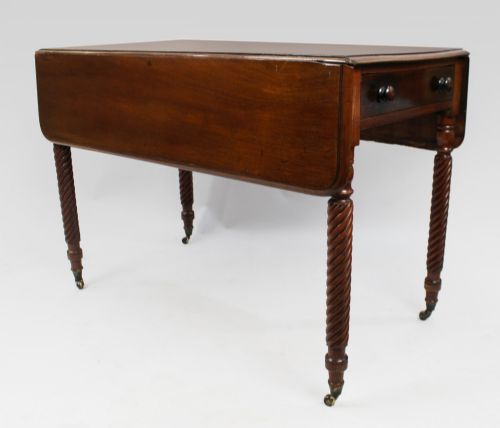
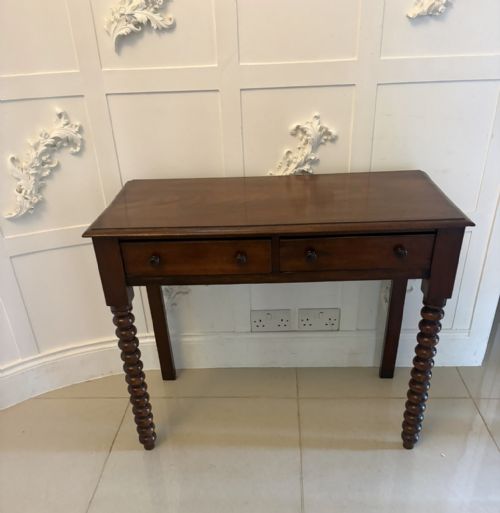
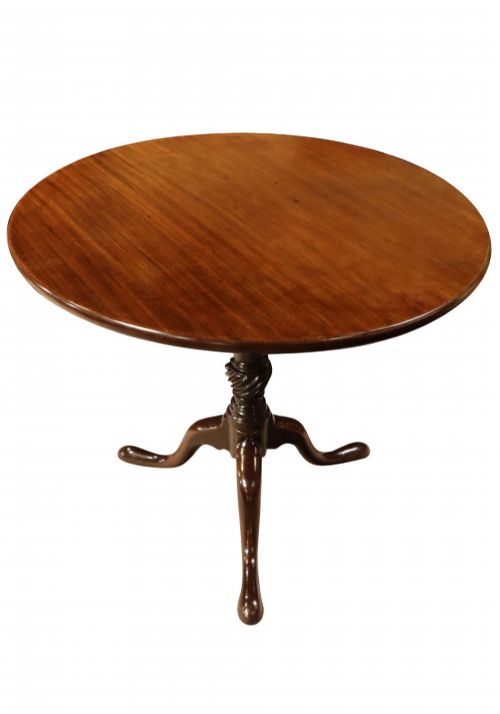


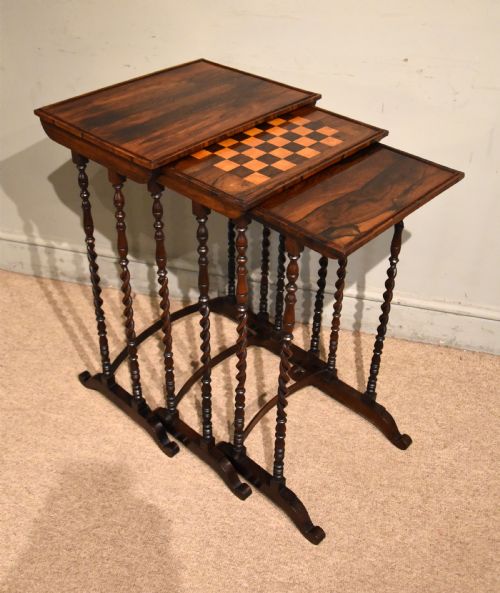


Spiral Twist Side Table
A spiral twist side table brings sculptural turned timber and practical surface space into a room.
Spiral Twist Side Table
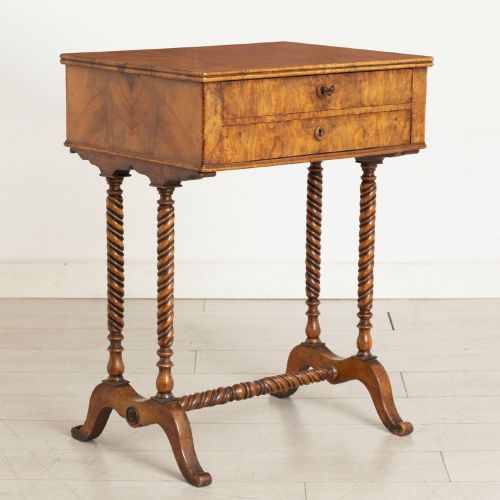
A spiral twist side table serves as a compact surface for lamps, drinks, and books while adding distinct architectural character to a room. These pieces appear across several periods, most notably in Victorian, Edwardian, and earlier seventeenth-century revivals.
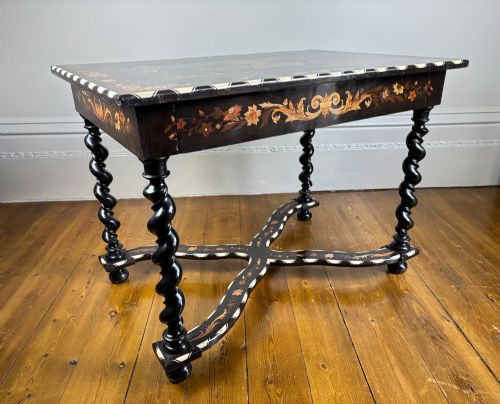
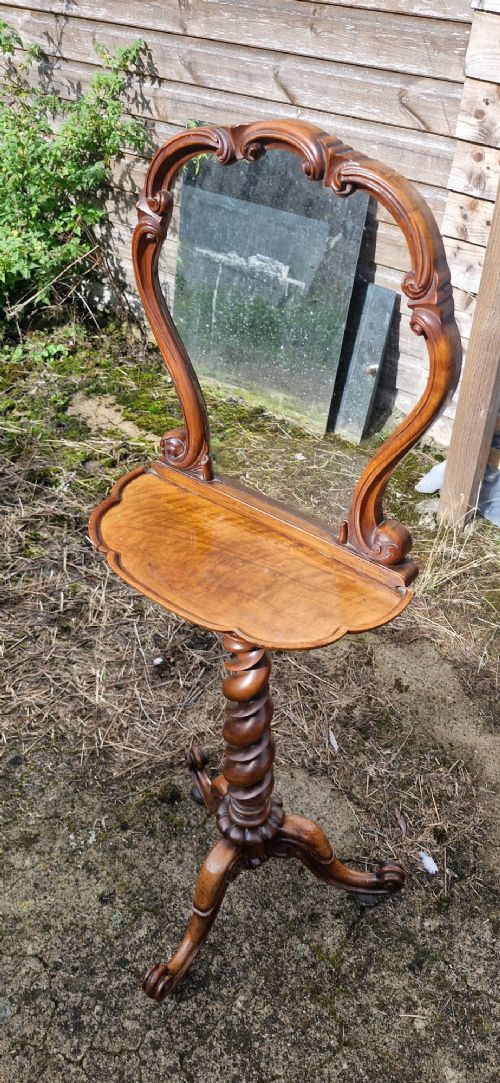
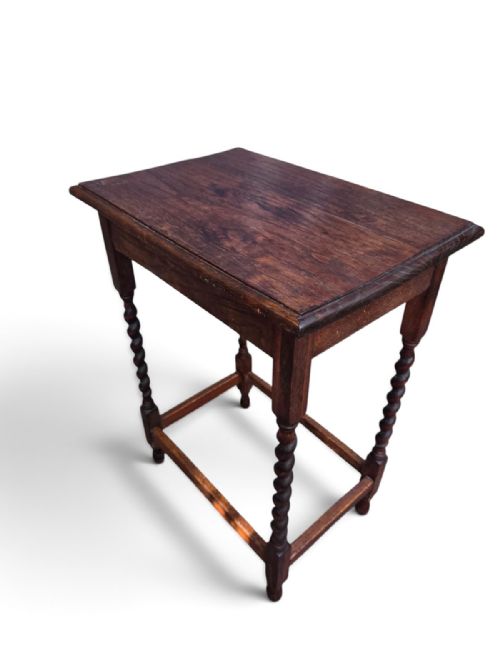
The form encompasses various table types, including occasional tables, wine tables, tripod designs, and nest of tables. Oak and mahogany are common timbers, often shaped into specific regional styles such as Dutch baroque revival or Jacobean revival.
Buyers will encounter items ranging from simple oak tables with barley twist legs to elaborate walnut and marquetry examples. The unifying feature remains the twisted wooden turning found on the legs, columns, or supports.
Materials and construction methods
Cabinet makers utilised dense hardwoods such as mahogany, walnut, oak, and rosewood to ensure the turned structural elements maintained their integrity. Ebonised wood and giltwood also appear, providing contrast and decorative finish on specific revival pieces.
The characteristic spiral or barley twist was typically produced using manual lathe turning and hand carving, requiring skilled joinery to shape the timber accurately. Inlays of bone, marquetry, and parquetry frequently adorn the tabletops of Dutch and English examples from the seventeenth and nineteenth centuries.
Listings feature timbers including mahogany, walnut, oak, rosewood, ebonised wood, and giltwood across centuries of table production.
Markers of construction quality
Quality rests in the crispness of the timber turning and the selection of figured veneers such as burr walnut or burr elm. Better examples show careful grain alignment and stable joinery where the legs meet the top.
The precision of hand-cut marquetry and bone inlay distinguishes finer decorative tables from simpler utilitarian pieces. Original surface patination and substantial timber thickness further elevate the standing of an individual table.
The Spiral Twist Side Table Glossary
- Barley twist
- A cylindrical wooden turning resembling a twisted rope, commonly found on table legs and supports from the seventeenth century onward.
- Marquetry
- Decorative patterns formed by fitting together thin slices of various wood veneers, often creating floral or geometric designs on tabletops.
- Tripod table
- A small freestanding table supported by a central pillar resting on three spreading feet.
- Occasional table
- A small, movable table designed for periodic use around a living space.
- Parquetry
- Geometric mosaic woodwork used for surfacing floors or tabletops, distinct from pictorial marquetry.
Spiral Twist Side Table: Frequently Asked Questions
What periods do these tables come from?
The pieces span several centuries, with examples originating from the seventeenth century, the Georgian era, and the Victorian and Edwardian periods.
Revival styles from the nineteenth century often replicate earlier seventeenth-century turning techniques, meaning buyers find both original antique pieces and later interpretations.
Where should I place a side table?
These tables fit easily beside armchairs, sofas, or beds, providing a convenient surface for lamps, glasses, or small decorative objects.
Because many versions feature compact dimensions or tripod bases, they occupy minimal floor space in hallways and smaller rooms.
How do I identify barley twist legs?
Barley twist legs feature a helical turning that winds down the length of the timber, creating a rhythmic, screw-like profile.
This technique differs from straight tapering legs or cabriole legs by offering pronounced vertical movement and texture.
Are these tables made of solid wood?
Many tables utilise solid hardwoods such as oak, mahogany, and walnut, particularly for structural elements and turned legs.
Finer decorative surfaces often employ wood veneers laid over a secondary timber core to create complex marquetry or burr patterns.