
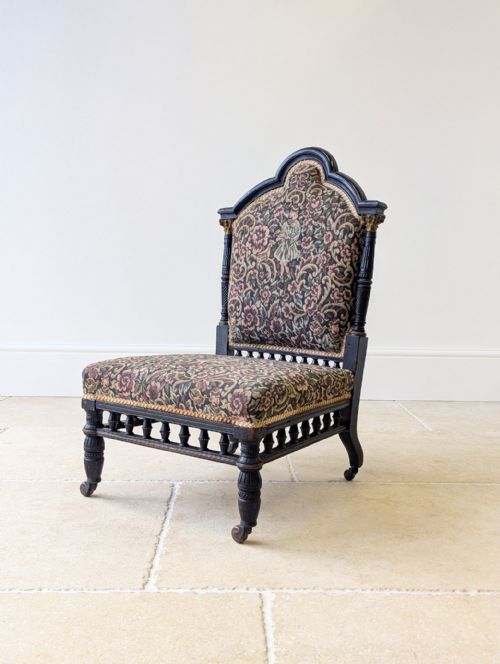
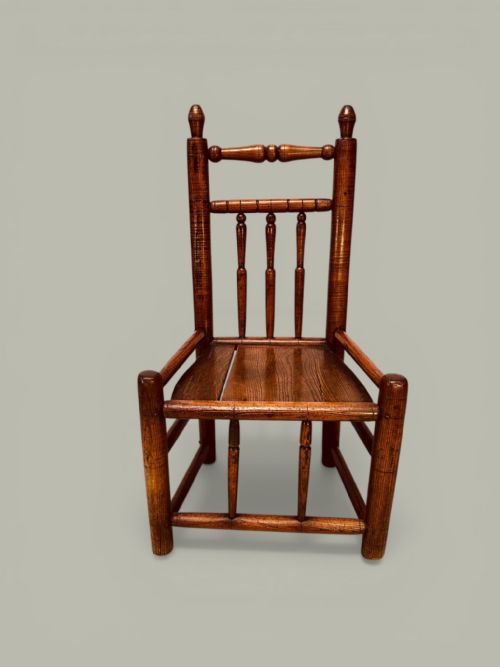


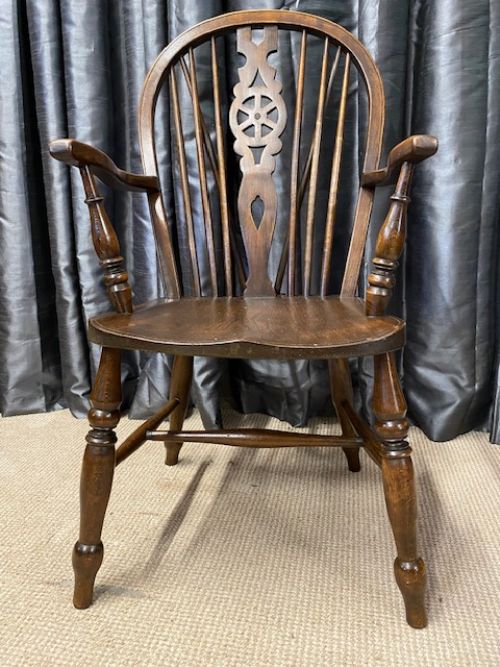


Spindle Side Armchair
These spindle side armchairs combine turned wooden supports with comfortable seating, offering robust construction and straightforward utility for any traditional room.
Spindle Side Armchair
A spindle side armchair brings together supportive back structures and sturdy wooden frames. These pieces appear across Victorian, Edwardian and eighteenth-century periods, spanning rustic vernacular styles to refined aesthetic movement pieces.
The selections on this page include elm spindleback dining chairs, beech stick-back Windsor armchairs, and ebonised salon chairs. Regional variations display simple country craftsmanship alongside more formal urban designs.
Makers utilised native timbers to build forms intended for everyday dining, reading or relaxing. Each chair reflects the specific domestic needs of its era, from low salon seats to substantial kitchen armchairs.
Materials and construction methods
Carpenters relied on sturdy native hardwoods such as ash, elm, beech and mahogany to construct these frames. Turned spindles provide lightweight back support while maintaining structural integrity.
Seats often feature shaped solid timber or traditional rush matting, complemented by periodic additions of upholstery fabric. Turned wooden components join through pegged mortise and tenon joints or specialised Windsor construction.
Early turners used lathes powered by foot treadles to shape these slender back spindles one by one.
Judging quality in spindle side armchairs
Quality rests in the precision of the woodturning and the selection of timber. Dense grain in ash or mahogany and crisp execution on turned spindles separate finer examples from utilitarian pieces.
Proportion and balance dictate the visual success of each chair. Original surfaces, uncompromised joinery, and retaining early rush seats or appropriate upholstery enhance the integrity of the piece.
The Spindle Side Armchair Glossary
- Spindleback
- A chair back constructed with vertical turned wooden rods. These slender elements provide flexible support and reduce overall weight.
- Windsor
- A traditional wooden chair built with a heavy solid seat into which the legs and back spindles are separately bored. This technique creates a strong integrated structure.
- Ebonised
- Wood treated with a dark finish to resemble ebony. This decorative technique appears frequently on Victorian aesthetic movement furniture.
- Vernacular
- Everyday objects made by local tradesmen using regional materials and traditional methods. These pieces prioritize function and local utility over high-style ornament.
Spindle Side Armchair: Frequently Asked Questions
How do I date a wooden armchair?
Dating relies on identifying timber choices, joinery methods and stylistic markers. Eighteenth-century examples often employ ash, whereas Victorian pieces frequently utilise beech, mahogany or ebonised wood.
Construction details like tool marks and assembly techniques help pinpoint the manufacturing period. Comparing known regional types clarifies the timeline further.
Are these chairs comfortable for daily use?
Many designs incorporate contoured wooden seats or rush bases that accommodate daily sitting. Adding cushions can increase comfort on solid timber platforms.
Their sturdy frames withstand regular use when joints remain secure. Proper placement protects the wooden structure from extreme humidity.
What woods were used for these chairs?
Makers selected ash, elm and beech for country and Windsor styles due to their bending strength and toughness. Mahogany appeared more frequently in formal Victorian and Edwardian dining and salon settings.
Selection depended on local timber availability and the intended formality of the furniture. Ebonised finishes were also applied to disguise cheaper woods or achieve a fashionable dark surface.