



Spindle Back Wooden Bench
A spindle back wooden bench brings rustic country character and practical seating to an interior, shaped by centuries of regional craftsmanship.
Spindle Back Wooden Bench
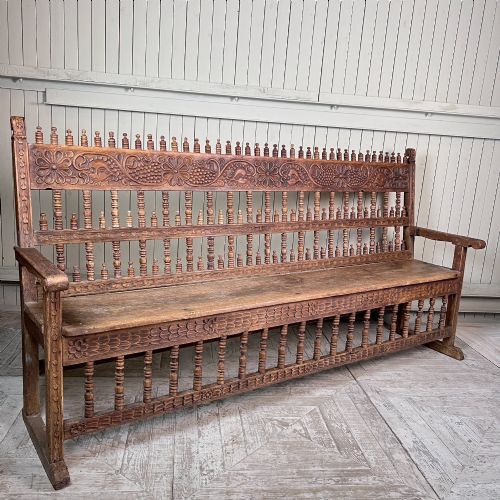
When you search for a spindle back wooden bench, you encounter robust seating traditions spanning the 18th century, the Georgian era, and the Victorian period. These pieces originate from various European traditions, including Hungarian folk art, French provincial workshops, Spanish colonial regions, and Scandinavian country contexts.
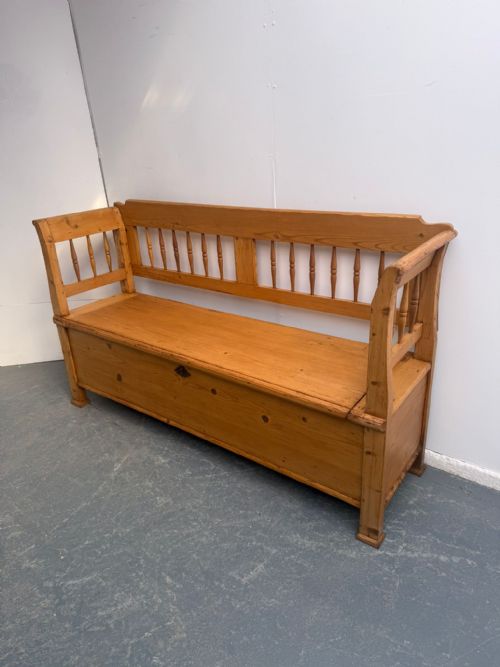
The most common forms on this page are multi-seater benches, settle benches, and hall benches configured from sturdy timbers. They serve functional purposes as seating and storage settles, often featuring high backs composed of slender turned wooden uprights.
How they were made
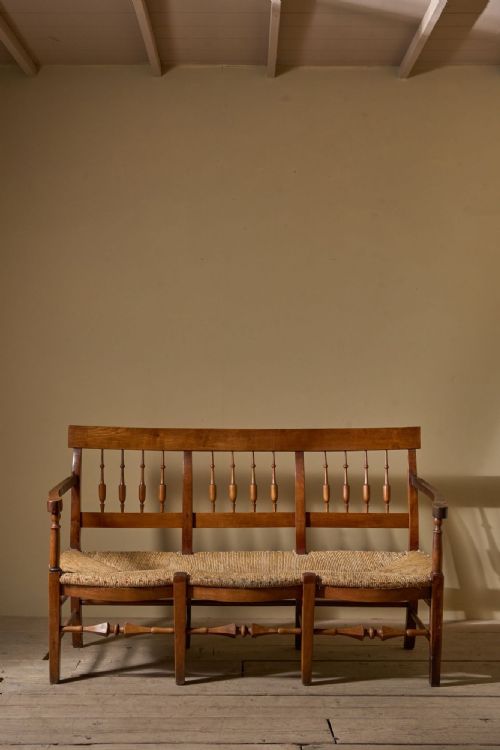
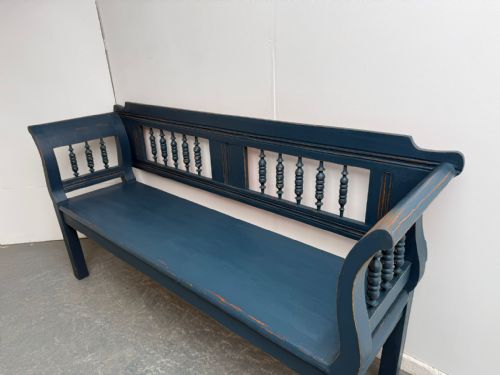
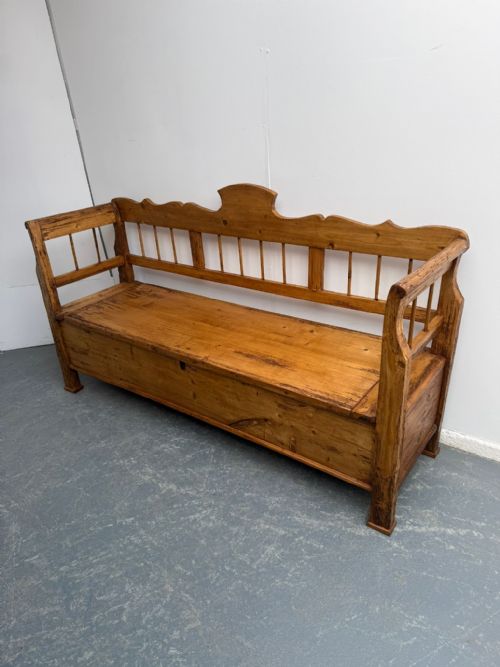
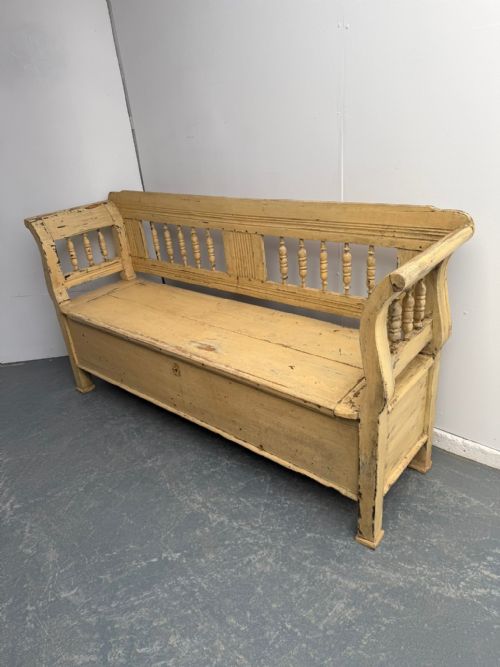
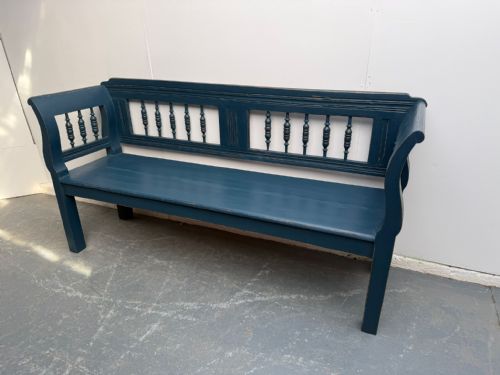
These pieces rely primarily on solid woods such as pine, hardwood, fruitwood, and chestnut, sometimes paired with natural rush for seating or iron hardware for structural joinery. Surfaces are finished either with clear wax to highlight the natural grain or with historical coats of paint in blue, cream, or other muted tones.
Joinery methods reflect traditional country carpentry, integrating turned vertical spindles into sturdy framework construction. Upholstered elements occasionally appear on later examples from the end of the nineteenth century.
Listings span pine, hardwood, fruitwood, and chestnut, incorporating painted surfaces, wax treatments, rush, and iron details across various European styles.
What varies in quality
The distinction between examples lies in the integrity of the original surfaces and the complexity of the turned spindle work. Retaining an original painted finish or a deeply oxidized wax patina elevates a piece considerably compared to later refinishing.
Structural robustness also defines the range, where firmly fixed joints and well-preserved timber retain the authentic utility intended by provincial makers.
The Spindle Back Wooden Bench Glossary
- Settle bench
- A high-backed wooden bench often featuring solid wooden panels or a box base beneath the seat to store household items. This form provides protection from draughts in traditional rooms.
- Spindle
- A slender, cylindrical piece of wood turned on a lathe to form a decorative vertical upright. Rows of these elements create the characteristic open backrest.
- Rush seating
- Woven marsh plant material used to form supportive and textured seat pads. It is commonly found on traditional provincial hall benches.
- Wax finish
- A protective treatment applied to timber surfaces to nourish the wood and produce a soft, natural sheen. It preserves the character of pine and fruitwood over generations.
Spindle Back Wooden Bench: Frequently Asked Questions
Where were these benches used?
These benches traditionally furnished farmhouse kitchens, hallways, and living spaces across rural Europe. They provided communal seating near hearths or practical spots for removing outerwear by an entrance.
Their sturdy construction suited them for daily domestic life in Hungarian, Scandinavian, and French country homes.
How do I care for waxed pine?
Maintain waxed pine surfaces by applying a quality natural beeswax periodically to nourish the dry timber. Avoid placing the wood in direct sunlight or near heat sources to prevent cracking.
Dust gently with a soft dry cloth rather than using wet cleaners that might compromise the historical finish.
Are painted finishes original?
Many pieces retain early or original painted surfaces in tones such as blue, cream, or muted country hues. Evaluating the wear patterns and paint layering helps determine the age of the coating.
Original paint adds significant character and historical value to regional country furniture.
What is a box settle?
A box settle incorporates a concealed storage compartment beneath the hinged seat. This design maximises utility in smaller rooms by combining seating with blanket or linen storage.
The high back and enclosed sides also helped block cold draughts in historical interiors.