




South of France Artwork
South of France artwork brings warm Mediterranean light, olive groves, and coastal scenes into a room through oil and paper.
South of France Artwork
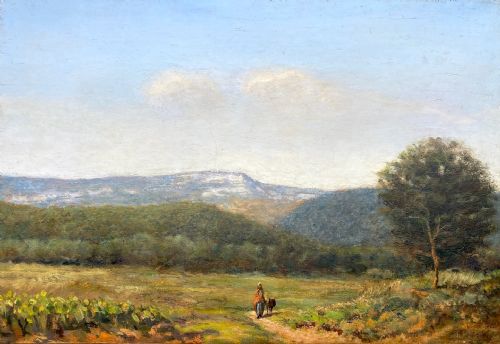
South of France artwork captures the distinctive light and landscapes of regions such as Provence, the Côte d'Azur, and Corsica. When exploring south of france artwork, buyers encounter pieces that range from nineteenth-century scenes of the Alpilles to mid-century coastal views.
The subjects focus heavily on regional life and geography, depicting olive trees, harbour scenes, washerwomen, and sun-drenched Mediterranean streets. Canvases and works on paper record these rural and coastal vistas through various regional lenses.
Mid-century and earlier twentieth-century examples dominate the available selection, often utilising vibrant colourist palettes. These paintings and drawings bring specific Mediterranean localities directly into domestic spaces.
Materials and Construction
The majority of these works employ oil paint applied to canvas, panel, or board. Artists used these mediums to build texture and render the intense light characteristic of southern regions.
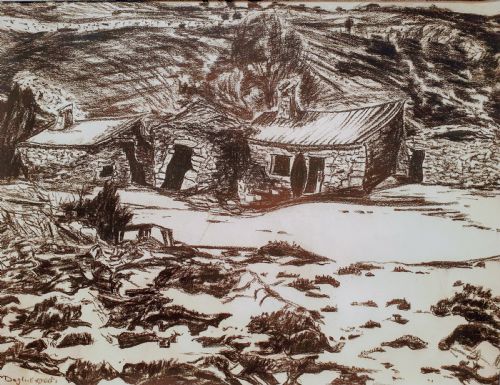
Works on paper incorporate charcoal, ink line drawings, and watercolours. Many pieces retain their period frames, frequently constructed from gilded wood or featuring fabric slips.
Windy days in Provence make their presence known through charcoal strokes capturing the fierce regional Mistral.
Assessing Quality and Execution
Quality rests upon the artist's ability to handle the characteristic Mediterranean light and atmosphere. Stronger works demonstrate confident brushwork and a coherent palette that evokes the heat and wind of Provence or the coast.
The relationship between the subject and the framing contributes to the overall integrity of the piece. Period frames of gilded wood or simple wood construction that complement the canvas enhance the presentation.
Gustave Vidal·Cecil Rochfort D'Oyly-John
The South of France Artwork Glossary
- Colourist
- An artist who uses colour as the primary element to express emotion and light. Colourist works from the south often employ vibrant hues to capture Mediterranean brightness.
- Post-Impressionism
- An art movement following Impressionism that extends its remit while rejecting its limitations. Practitioners use vivid colours and thick application of paint.
- Gilded Wood
- Wood treated with gold leaf or a gold-coloured metallic finish. This material frequently appears on the frames surrounding period canvases.
- Fabric Slip
- A narrow band of fabric, often silk or linen, placed between a painting and its outer wooden frame. It provides a visual transition for the artwork.
South of France Artwork: Frequently Asked Questions
What periods do these artworks cover?
The available selection spans from the late nineteenth century through the mid-twentieth century. Dates range from eighteen-seventy pieces depicting the Alpilles to nineteen-sixties coastal scenes.
Most items concentrate in the nineteen-thirties, forties, and fifties. This era reflects strong output from French colourists and British artists painting along the Mediterranean.
What subjects are most common?
Mediterranean landscapes dominate the selection, featuring olive trees, coastal jetties, and rocky shores. Scenes often capture specific locations like Cannes, Corsica, and the lake of Bages.
Figurative elements also appear, including washerwomen in Provence and figures reading on seafronts. Farmhouses and harbour construction scenes provide structural focal points.
How are these pieces framed?
Many works retain their period wooden frames, which often include gilded finishes or fabric slips. These surrounds correspond to the mid-century or nineteenth-century origins of the paintings.
The interaction between the frame and the canvas supports the overall visual weight of the landscape. Original frames help anchor the work in its historical period.
Are these works on canvas or paper?
Both supports appear across the selection, with oil on canvas forming a significant portion of the paintings. Artists also utilised oil on board and oil on panel for coastal and street scenes.
Works on paper include charcoal drawings and two-coloured ink line drawings. These diverse supports allow for varied applications of tone and pigment.