





South Caucasian Rug
These South Caucasian rug examples bring rich tribal geometry and saturated natural dyes straight from nineteenth-century weaving traditions into modern interiors.
South Caucasian Rug
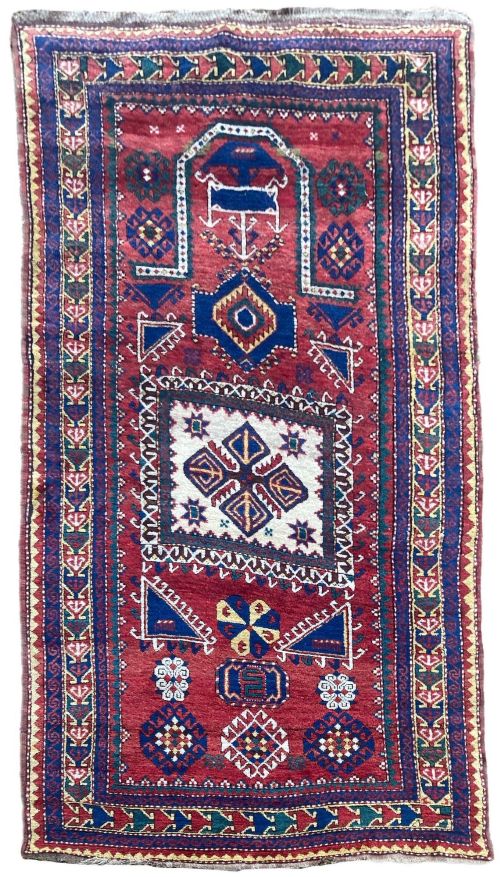
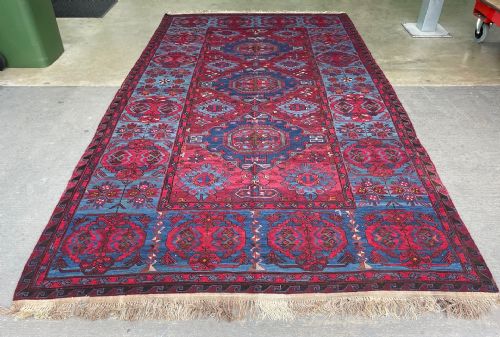
A south caucasian rug encompasses regional tribal weavings created across the southern Caucasus during the late nineteenth and early twentieth centuries. The selection includes full room-sized carpets, long runners, prayer rugs, and utilitarian storage bags such as complete mafrash panels. These pieces reflect diverse village and nomadic traditions from specific locales including Karabagh, Shirvan, and Talysh.
Buyers examining this inventory will most frequently encounter formats dating from the 1880s through to the 1920s. Kazak and Kurdish pieces appear regularly, alongside Shahsavans and Soumak flatweaves featuring geometric medallions, latch hooks, and garden motifs. The corpus ranges from small prayer formats to extended corridor runners.
Materials and construction
Weavers relied primarily on wool and hand-spun wool for the pile, yielding a dense and resilient surface suited to heavy domestic use. Cotton foundations appear alongside traditional wool warps and wefts to provide structural stability. Flatwoven pieces utilise brocading and Soumak techniques rather than a knotted pile.
The distinct visual character stems from traditional dye methods producing saturated tones, including scarce yellow grounds and soft secondary shades. Artisans constructed storage bags and animal trappings to withstand nomadic migration before these items entered the antique market.
South Caucasian Rug Retail Price Guide 2026
Typical asking prices for south caucasian rug among the pieces listed under this phrase on Sellingantiques today, from the lower quarter to the upper quarter. They describe what is for sale here now, not the wider market.
Several runners manage to incorporate unexpected menageries of tiny animals and birds alongside strict geometric medallions.
Distinguishing quality across the range
Quality rests upon the crispness of the tribal design and the depth of the palette, where saturated natural dyes and scarce colour grounds elevate an example. The handling of geometric motifs, such as elongated latch hook medallions or animal figures, demonstrates the weaver's technical skill.
Structural integrity also separates standard room items from exceptional pieces, particularly in the tightness of the weave and the preservation of original borders. Intact storage bag panels and finely woven flatweaves show the precision of regional nomadic workshops.
The South Caucasian Rug Glossary
- Mafrash
- A large rectangular storage box or chest panel used by nomadic groups for bedding and household goods. These pieces are often woven in Soumak technique.
- Kazak
- A term denoting rugs woven by various tribal groups in the central and southern Caucasus region. They are celebrated for bold geometric layouts and primary colours.
- Soumak
- A flatweave technique involving coloured threads wrapped around the warp yarns to create a sturdy, textured surface without a cut pile. This method produces crisp geometric clarity.
- Boteh
- A stylised almond or pear-shaped motif of Persian origin representing a floral shoot or cypress tree. It appears frequently across Kurdish and Caucasian runners.
- Talysh
- A style originating from the south-east Caucasus featuring narrow formats and spacious open fields. The design typically centres on medallion columns and intricate border guards.
South Caucasian Rug: Frequently Asked Questions
How do I date a south caucasian rug?
Dating relies on stylistic markers, wool characteristics, and natural dye analysis pointing towards the late nineteenth and early twentieth centuries. Exact years in listings indicate estimated periods derived from structural comparison.
Nomadic pieces from this region frequently display transitional design traits that help narrow down their decade of origin. Examining the wear patterns and foundation materials clarifies the age of each textile.
Where were these tribal rugs made?
Production centred in the southern Caucasus region, encompassing areas populated by diverse ethnic groups including Armenians, Kurds, and Shahsavans. Villages and nomadic camps across Karabagh, Shirvan, and Daghestan contributed distinct regional patterns.
Weavers drew upon local iconography and traditional tribal motifs passed down through generations. This geographic diversity explains the wide variety of structures found within the inventory.
How were storage bags originally used?
Nomadic families utilised mafrash bags as pack containers loaded onto pack animals during seasonal migrations. Once settled at camp, these containers served as domestic storage chests for bedding and clothing.
Many surviving examples now circulate as complete bags or individual panels suited for display. Their dense flatweave construction ensured durability during transit.
What is the difference between a pile rug and a flatweave?
Pile rugs feature knotted wool yarn sheared to create a soft, plush surface underfoot. This structure allows for thick textural depth and rounded curves in the pattern.
Flatweaves such as kilims and Soumaks contain no pile, relying instead on interlocking or wrapped weft threads. This technique creates a thinner, lighter textile with sharp, geometric precision.