
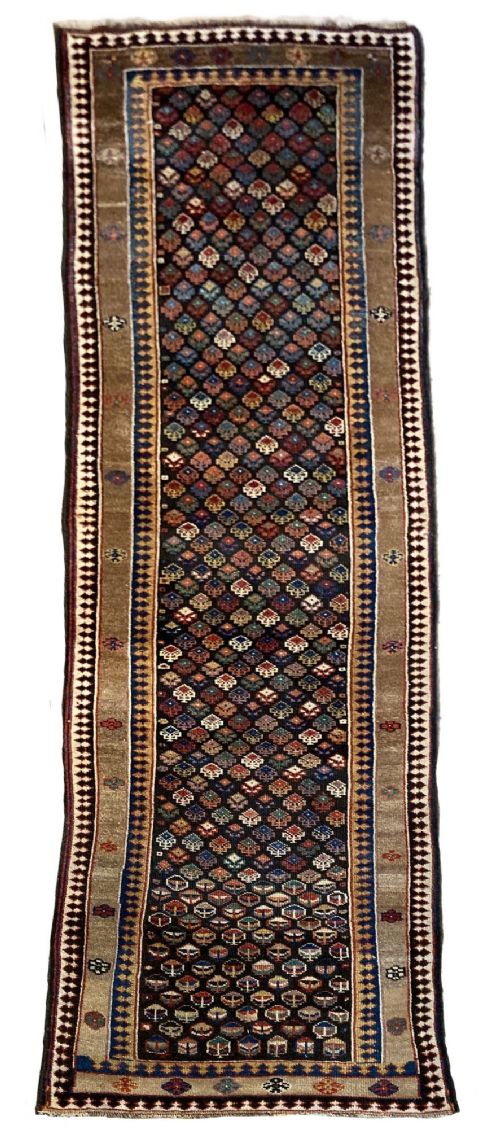


Antique Passage Rug
An antique passage rug brings narrow warmth to hallways and corridors, offering centuries of hand-knotted character underfoot.
Antique Passage Rug
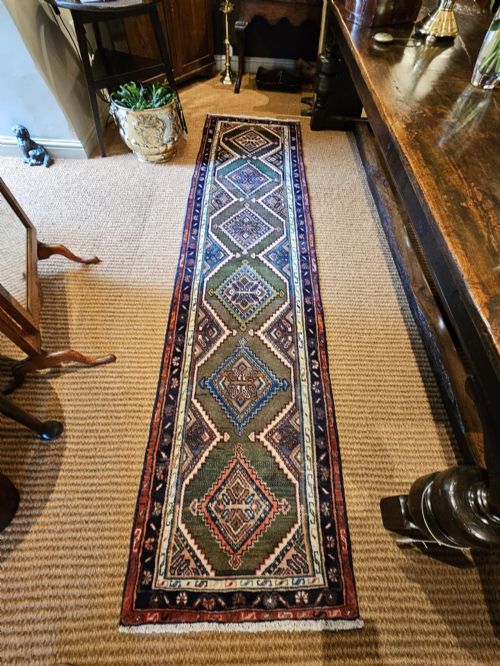
An antique passage rug serves as a long, narrow floor covering designed specifically for corridors, hallways, and staircases. These pieces span from the late nineteenth century into the early twentieth century, originating primarily from Persian and Caucasian weaving traditions.
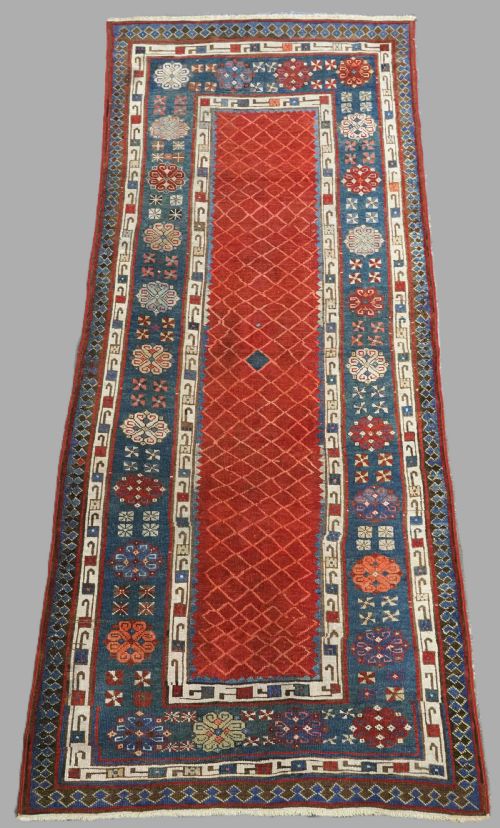
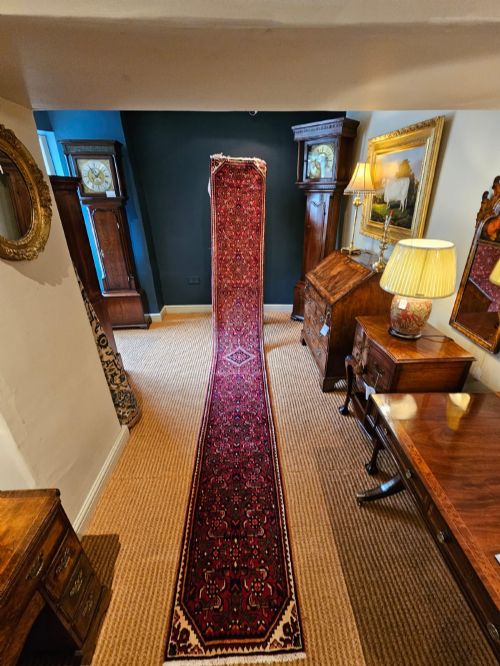
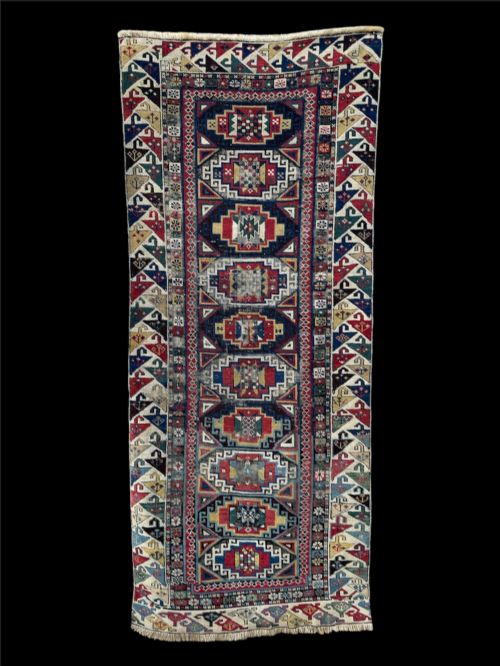
Buyers encounter regional styles such as Heriz, Kurdish, Shirvan, and Talish on this page, often woven in elongated proportions to fit narrow spaces. The forms range from compact six-foot runners to grand gallery carpets exceeding twelve metres in length.
Each runner reflects the distinct tribal or village aesthetic of its maker, employing traditional geometric motifs, lattice patterns, and all-over shrub designs. They provide a practical solution for heavy traffic areas while introducing historic textiles into domestic interiors.
How they were made
These floor coverings are constructed primarily using pure wool for the pile and cotton for the foundational warp and weft threads. Hand-knotting techniques secure the wool fibres firmly to the supportive cotton grid, producing a dense textile capable of withstanding daily foot traffic.
Natural dye stuffs impart the rich palette seen across the pieces, yielding mellow tones of ivory, blue, and olive green that age gracefully. The weavers employ upright looms, tying individual knots by hand to build up geometric designs and pictorial elements line by line.
Some runners stretch to nearly thirteen metres, proving that nineteenth-century weavers understood the true length of a grand hallway.
What varies in quality
Quality in these textiles depends heavily on the fineness of the knotting and the precision of the woven geometry. Denser knot counts allow for sharper detail in intricate lattice and boteh designs.
The integrity of the wool pile and the balance of natural colours further separate standard village pieces from finer workshops. Examples retaining a full, even pile alongside harmonious dye variations demonstrate superior craftsmanship.
The Antique Passage Rug Glossary
- Runner
- A long, narrow carpet designed for corridors, hallways, and staircases. These pieces measure significantly longer than they are wide.
- Pile
- The upright yarn loops that form the tactile surface of the textile. A deep, intact pile protects the structural foundation beneath.
- Warp
- The vertical threads stretched tightly on the loom that carry the structural load of the rug. Cotton is commonly utilised for this foundation.
- Weft
- The horizontal threads passed between warp threads to lock the rows of knots in place. This contributes to the structural stability of the piece.
- Boteh
- An almond-shaped or paisley motif representing a floral shoot or cypress tree. This symbol frequently appears in traditional Persian weaving.
Antique Passage Rug: Frequently Asked Questions
Where should an antique passage rug be placed?
These narrow textiles suit hallways, corridors, and entrance spaces where length is required rather than width. They soften hard flooring and guide movement through narrow architectural layouts.
Placing them in moderate traffic areas preserves the wool pile while allowing the geometric designs to be fully appreciated.
How do I measure for a hallway runner?
Measure the clear floor space of your corridor, leaving an even border of exposed wood or tile on all sides. Account for door clearance so the rug does not obstruct swinging entryways.
Check the maximum length available in the listings to ensure the piece spans the desired length of the hallway without bunching against skirting boards.
What materials make up these runners?
The surface pile consists of pure wool, which provides softness and resilience underfoot. Cotton forms the hidden structural warp and weft foundation that holds the knots together.
This combination of natural materials ensures the textile remains stable and flexible over decades of use.
How do I distinguish regional Persian styles?
Heriz runners typically display bold geometric medallions and robust structural lines. Kurdish and Caucasian pieces often favour tighter repeating motifs, lattice patterns, and diagonal stripes.
Studying the colour palette and specific border arrangements helps identify whether a piece originates from the Caucasus or Northwest Persia.