



Solid Silver Waiter Tray
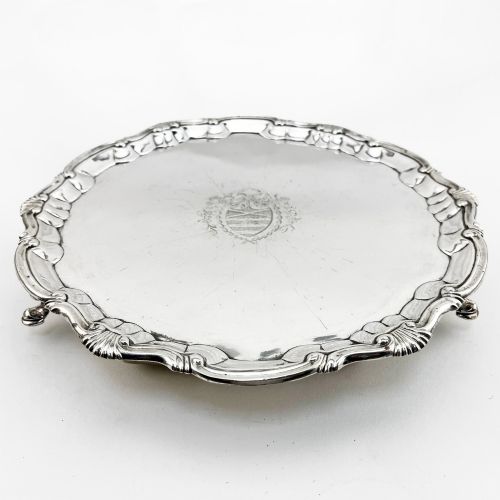
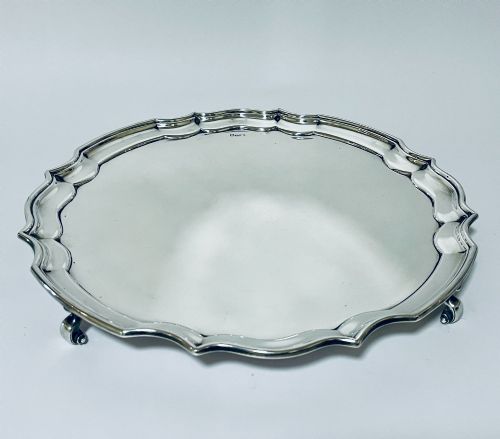
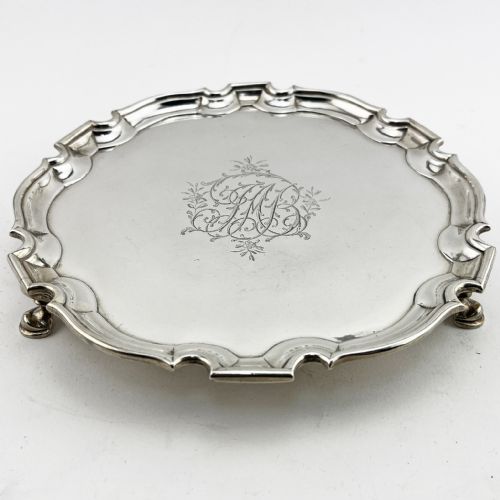
These solid silver waiter tray pieces are heavy, reflective serving surfaces in sterling silver designed to hold cups, glasses, or small decanters.
Solid Silver Waiter Tray
A solid silver waiter tray represents a specialised form of antique domestic metalwork designed for presenting drinks and correspondence. When people search for a solid silver waiter tray, they encounter various historical iterations ranging from early eighteenth century examples to later twentieth century pieces.
The pieces on this page span several distinct periods including the Georgian era, Victorian period, and Art Deco design movements. Most items fall into the category of salvers or small serving trays, often resting on feet or incorporating handles depending on their specific era of production.
Origins stretch across English and Irish silversmithing workshops, with notable items reflecting changing social rituals around hospitality. Buyers frequently find forms such as teapot stands, small salvers, and larger drinks trays within the broader selection.
Materials and construction
Construction relies primarily on sterling silver, shaped through traditional smithing techniques such as raising, casting, and hand-chasing. Silversmiths formed the main body from solid sheet metal, frequently reinforcing edges with applied cast borders.
Details like scrollwork, feet, and handles were often cast separately and attached using traditional soldering methods. Surfaces then underwent careful polishing to achieve the characteristic reflective sheen associated with fine domestic silver.
Some trays have travelled from grand European dining rooms all the way to a world fair display in Chicago before finding their way here.
Assessing quality in silver trays
Quality in a solid silver waiter tray rests on the weight of the metal relative to its size and the crispness of any chased or engraved decoration. Thicker gauge silver ensures the tray resists flexing when lifted under the weight of heavy glassware.
The integration of feet and handles demonstrates the maker's skill, with superior pieces showing seamless attachment and balanced proportions. Engraved crests or crisp hallmarks add historical interest and confirm the origin of the piece.
S.C. Younge And Co·Charles Boyton·Tiffany And Co·Paul Storr·Robert Abercromby
The Solid Silver Waiter Tray Glossary
- Sterling silver
- A silver alloy containing 92.5 percent pure silver and 7.5 percent other metals, usually copper, chosen for durability.
- Salver
- A flat tray, typically made of silver and raised on small feet, used for serving food or drinks.
- Hallmark
- A series of official marks stamped onto items to certify the metal purity, place of assay, and year of making.
- Chasing
- A metalworking technique where a hammer and punches push the metal from the front to create raised surface patterns.
Solid Silver Waiter Tray: Frequently Asked Questions
How do I clean an antique silver tray?
Maintenance requires a soft cloth and specialised silver polish applied gently to avoid wearing down hallmarks or engraved details. Regular dusting helps prevent tarnish from building up in recessed decorative areas.
Harsh abrasive cleaners and chemical dips should be avoided entirely because they strip the natural patina and can permanently damage the surface finish.
Can these trays be used daily?
These pieces function well for serving drinks or displaying items when handled with reasonable care. The solid silver construction makes them durable enough for occasional use.
Using coasters and avoiding acidic foods or liquids helps protect the antique surface from pitting or stubborn staining over time.
What is the difference between a salver and a tray?
A salver traditionally describes a smaller, formal serving plate raised on feet rather than flat-bottomed trays. The term often applies to earlier Georgian and Victorian round serving pieces.
Trays more frequently include handles and rectangular or broader oval shapes intended for carrying larger sets of glassware or teapots.
How can I tell the age of a silver tray?
Dating relies heavily on reading the stamped hallmarks, which indicate the specific assay office and year cycle. Stylistic cues such as Georgian borders or Art Deco geometry also point toward specific decades of manufacture.
Comparing the weight, edge construction, and engraving style with known period examples helps confirm the timeline of the piece.