






Solid Silver Tea Service
A solid silver tea service brings the enduring craft of Georgian, Victorian, and Art Deco silversmiths directly to the table.
Solid Silver Tea Service
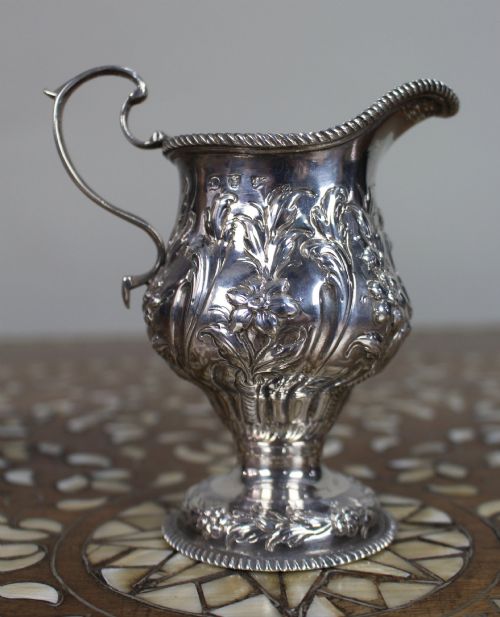
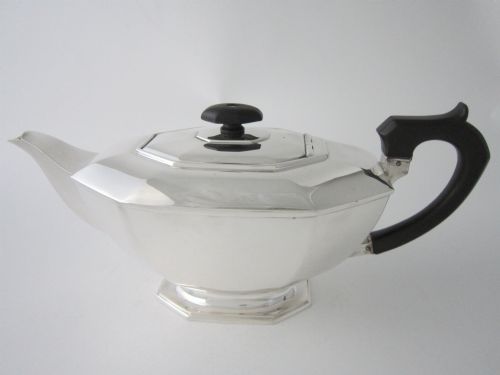
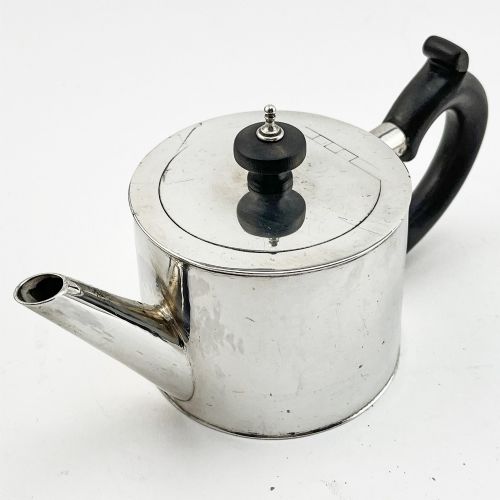
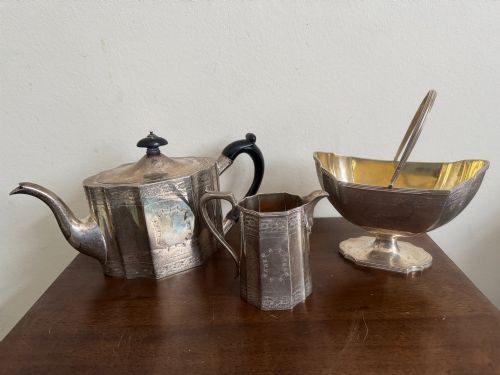
A solid silver tea service comprises matching sets of teapots, cream jugs, and sugar basins produced across the Georgian, Victorian, Edwardian, and Art Deco periods. Pieces range from intimate bachelor sets to substantial four-piece tea and coffee services accompanied by matching trays.
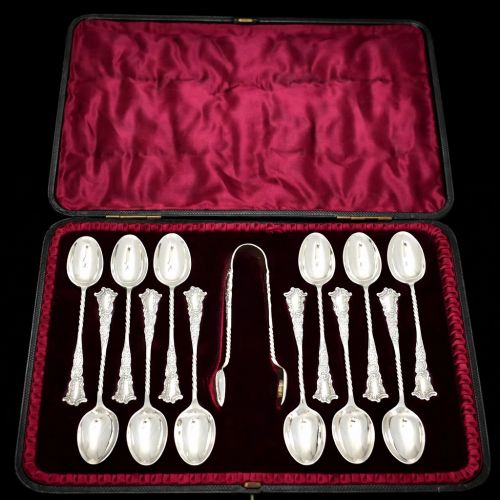
Most examples encountered on this page originate from British silversmiths working in London, Birmingham, Sheffield, and regional assay offices like Newcastle and Exeter. Functional accessories such as sugar tongs, teaspoons, and hot water pots frequently complete the groupings.
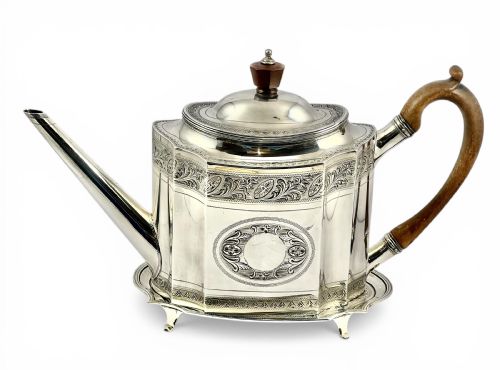
Buyers select these sets for formal entertaining, daily use, or as lasting silver collections displaying Neoclassical, William IV, or geometric styling.
How they were made
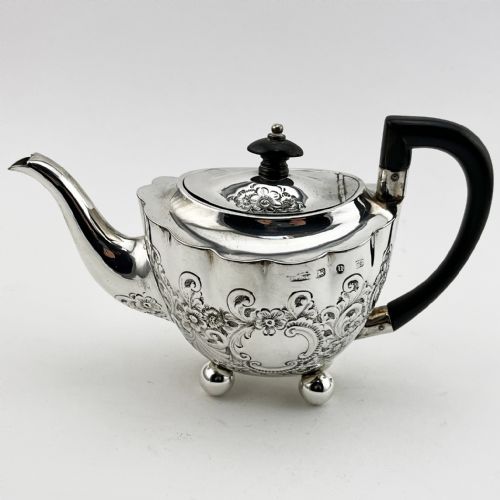
Silversmiths shaped sterling silver using techniques of raising from a single flat sheet, casting handles and spouts, and assembling components with silver solder. Handles frequently incorporated insulating spacers of wood, ebonised wood, or ebony to protect users from heat.
Decoration relied on hand chasing, repoussé work, and crisp engraving, often featuring foliate motifs, grape vines, or geometric Art Deco lines. Interior surfaces of cream jugs and sugar basins occasionally received a gold wash known as silver-gilt.
Listings feature sterling silver tea services spanning the Georgian period through the 1960s, incorporating wood, ebony, and silver-gilt elements.
What varies in quality
The weight of the metal and the balance of individual pots define the foundational standard of a service, distinguishing substantial workshop output from lighter commercial production. Heavier gauge sterling silver resists denting and maintains crispness in chased or engraved ornament.
Design cohesion separates comprehensive matched services from assembled suites, where matching maker marks and assay office dates across every component elevate collector interest. The retention of original insulating handles and fitted travel or presentation cases further distinguishes superior survivals.
Robert Hennell I·Benjamin Smith·Francis Higgins·Mappin & Webb·Henry Clifford Davis·Harrods of London·Solomon Hougham·Henry Holland
The Solid Silver Tea Service Glossary
- Sterling Silver
- An alloy comprising 925 parts of pure silver per thousand, forming the standard material for British tableware and hollowware.
- Repoussé
- A metalworking technique where the silversmith hammers and pushes the design from the reverse side to form raised relief ornamentation.
- Silver-Gilt
- Sterling silver that has been coated with a thin layer of gold on the interior surfaces, commonly applied to cream jugs and sugar bowls.
- Assay Office
- An official body responsible for testing the purity of precious metals and stamping items with hallmarks denoting town, standard, and date.
- Bachelor Set
- A smaller scale tea service designed for single occupancy or intimate use, typically comprising a compact teapot, milk jug, and sugar basin.
Solid Silver Tea Service: Frequently Asked Questions
How do I date a silver tea service?
Dating relies upon the hallmarking system stamped directly onto the metal of each piece. These marks include assay office symbols, maker initials, and specific date letters that correspond to official registry years.
Additional clues come from the overall form and decorative style, moving from Neoclassical Georgian shapes to ornate Victorian chasing and streamlined Art Deco geometries.
Can I use an antique tea service daily?
Solid silver tea sets were built for practical service and handle hot liquids safely. Users simply need to exercise care with gentle hand washing and soft cloths to preserve the polished finish.
Insulating spacers on handles prevent heat transfer, though modern dishwashers and harsh abrasives must be avoided entirely.
What is a bachelor tea service?
A bachelor tea service is a scaled-down version of a standard set designed for one or two people. These compact sets include smaller teapots alongside matching cream jugs and sugar basins.
They gained popularity in the Georgian and Victorian eras for private apartments or morning use before large household gatherings.
Why do some tea sets include coffee pots?
Larger domestic services incorporate taller coffee pots alongside tea pots to accommodate both beverages during formal morning or afternoon hospitality. These four or five-piece sets share matching decorative motifs, handles, and maker marks.
Adding a matching hot water pot or heavy serving tray completed the comprehensive setup utilised by Victorian and Edwardian households.