





Solid Silver Pedestal Dish
A solid silver pedestal dish elevates fruit, sweets or floral arrangements upon a footed base, bringing undeniable architectural presence to a table.
Solid Silver Pedestal Dish
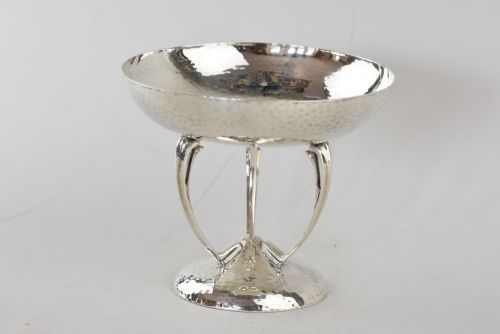
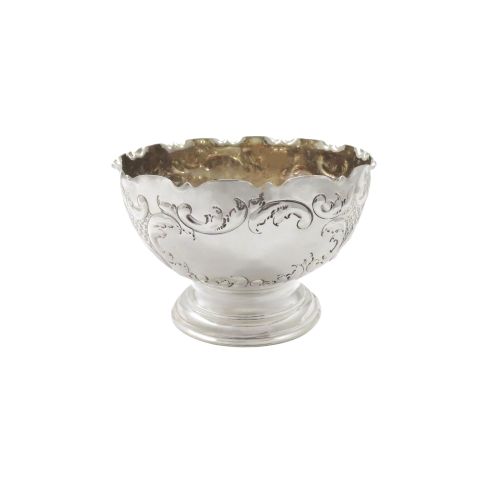
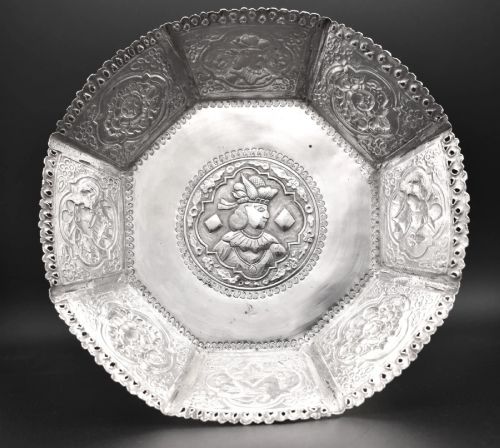
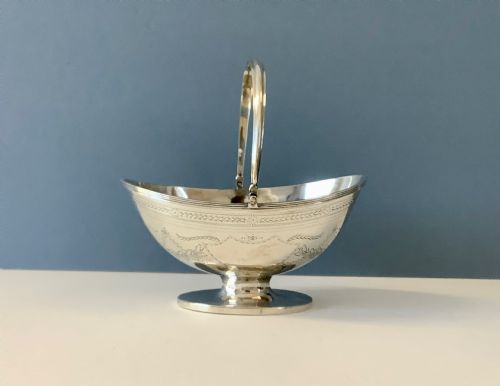
When you search for a solid silver pedestal dish, you enter a diverse field spanning the Georgian, Victorian, and Edwardian eras through to the early decades of the twentieth century. These pieces encompass formal comports, tazzas, footed bowls, and decorative baskets raised on a pedestal base. The selection ranges from plain Edwardian bowls to elaborate Anglo-Indian, Burmese, and Thai repoussé creations, alongside distinct Arts and Crafts expressions.
The version you are most likely to meet on this page is a British sterling silver pedestal bowl or basket dating from the late nineteenth or early twentieth century. Makers in Birmingham, Sheffield, and London produced these vessels with pierced lattice work, embossed detailing, or planished surfaces. Alongside these domestic examples appear international forms, including wirework compotes and Persian pattern comports.
Materials and construction
Silversmiths constructed these elevated vessels primarily from sterling silver, shaping the bowls and pedestals through traditional methods of raising, spinning, or casting. Many examples feature pierced or lattice cut-outs, achieved through careful sawing and filing of the silver sheet. Embossed and repoussé detailing involved hammering the metal from behind to push out intricate floral and scroll motifs.
In the Arts and Crafts tradition, makers utilised planishing hammers to create textured, light-catching surfaces, often leaving visible hammer marks as a mark of manual craftsmanship. Footed bases and three-legged supports were securely soldered or attached to the main body to ensure stability when bearing weight.
Solid Silver Pedestal Dish Retail Price Guide 2026
Typical asking prices for solid silver pedestal dish among the pieces listed under this phrase on Sellingantiques today, from the lower quarter to the upper quarter. They describe what is for sale here now, not the wider market.
Some Edwardian baskets were built so intricately with pierced lattice work that dusting them required the patience of a saint and a very small brush.
Distinguishing quality in silver pedestals
Quality in a pedestal dish lies in the structural integrity of the foot and the crispness of the ornamentation. Superior pieces maintain a balanced weight distribution, ensuring the bowl sits securely on its pedestal without leaning or wobbling. The thickness of the silver sheet matters greatly; better vessels resist flexing under pressure and maintain rigid walls.
Artistic execution separates standard production from exceptional work. In pierced and repoussé pieces, the depth of relief and the precision of the piercing define the standard. Hand-hammered surfaces display deliberate, uniform texturing rather than careless surface marks, while maker marks and hallmarks remain clear and legible.
Goldsmiths and Silversmiths Company·James Deakin and Sons·Elkington and Co·Walter Brind·John Round
The Solid Silver Pedestal Dish Glossary
- Tazza
- A shallow bowl or dish mounted on a stem and foot, often used for serving fruit or small cakes. This form dates back to classical times and remains popular in decorative silver.
- Repoussé
- A metalworking technique where the silversmith hammers the design from the reverse side to create a raised pattern in relief on the front. It requires great skill to maintain even metal thickness.
- Comport
- A large pedestal dish or bowl used traditionally for serving fruit, nuts, or confectionery at the end of a meal. They sit higher on the table than standard bowls.
- Planishing
- The process of smoothing and shaping metal with a flat-faced hammer to harden the silver and create a faceted, light-reflecting finish. This technique is central to Arts and Crafts silver.
- Pierced
- Openwork decoration created by cutting or sawing patterns through the silver sheet. Piercing lightens the visual weight of the vessel and creates delicate lattice designs.
Solid Silver Pedestal Dish: Frequently Asked Questions
What was a pedestal dish used for?
These elevated vessels served primarily for presenting fruit, sweets, sweetmeats, or pot pourri on dining and drawing room tables. Their height added vertical interest and hierarchy to table settings.
Over time, their functions expanded to include decorative floral arrangements, particularly when paired with wirework or lattice inserts.
How do I identify an Edwardian pedestal bowl?
Edwardian silver often displays neoclassical revival motifs, such as ribbons, garlands, and pierced lattice patterns. Hallmarks stamped inside the bowl or on the foot will verify the assay office and date letter for the early nineteen hundreds.
Look for crisp stamping and lighter, more delicate construction compared to heavier Victorian counterparts.
How should I clean solid silver?
Clean silver gently using a specialised liquid silver polish or a soft microfiber cloth designed for precious metals. Avoid harsh abrasive pastes that can wear away thin repoussé details or antique patination.
Wash the dish in warm soapy water and dry it thoroughly immediately after polishing to prevent tarnish spots.