


Solid Silver Christening Mug
A solid silver christening mug holds a lasting place in family tradition, combining practical weight with delicate nineteenth and twentieth century craftsmanship.
Solid Silver Christening Mug
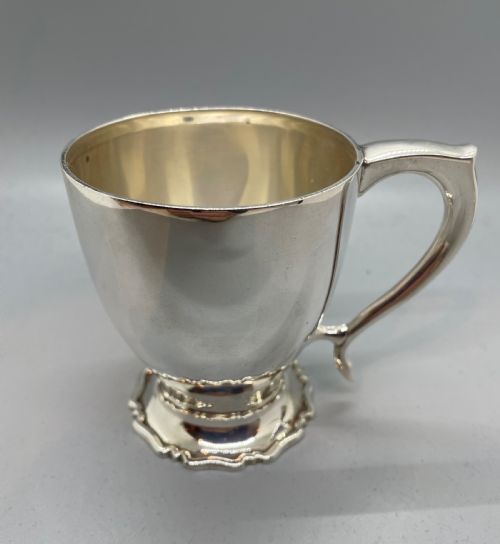
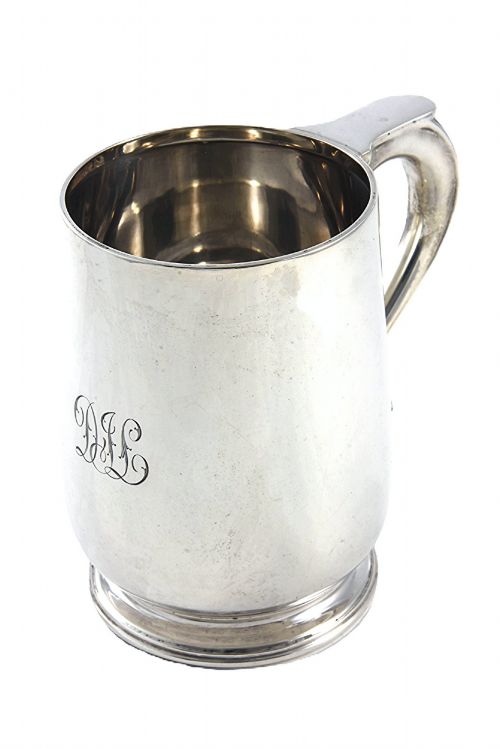
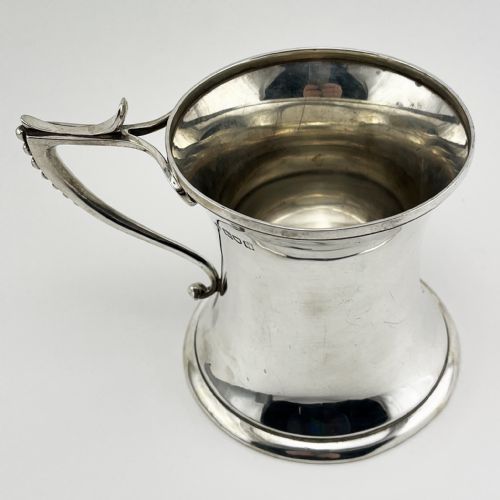
A solid silver christening mug is a small vessel traditionally given to mark a child's birth or baptism, designed to serve as both a functional cup and a keepsake. The pieces appearing here span from the George III period through the Victorian, Edwardian, and George V eras up to the mid-twentieth century.
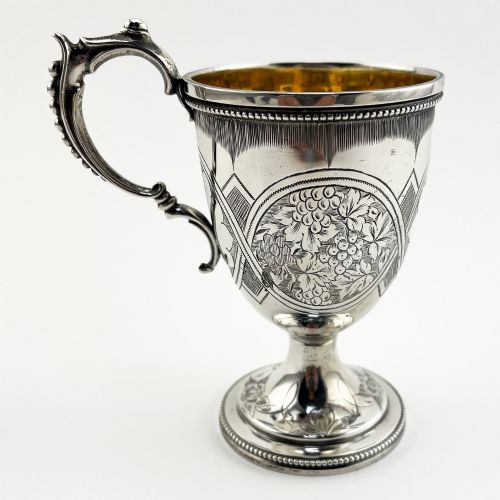
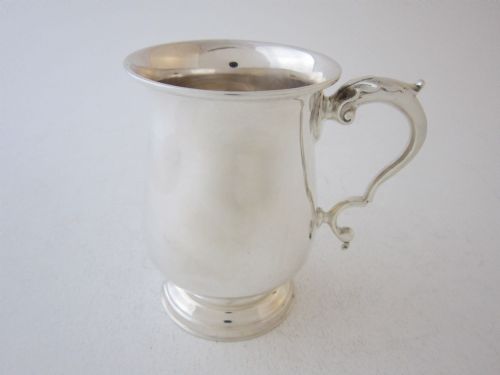
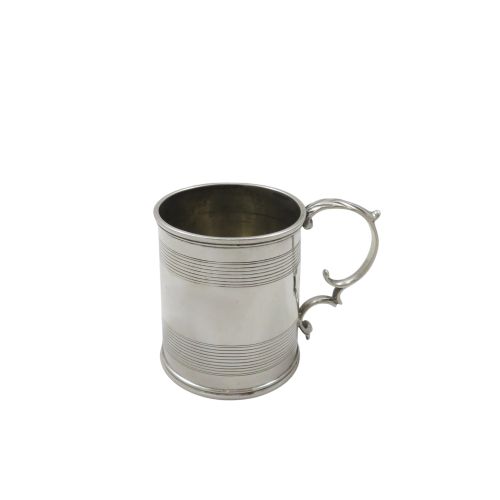
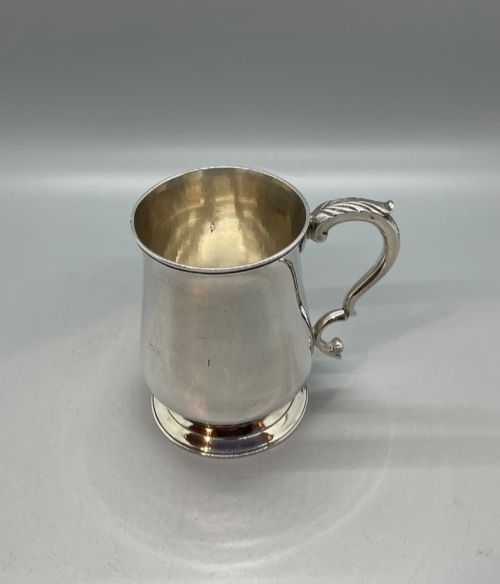
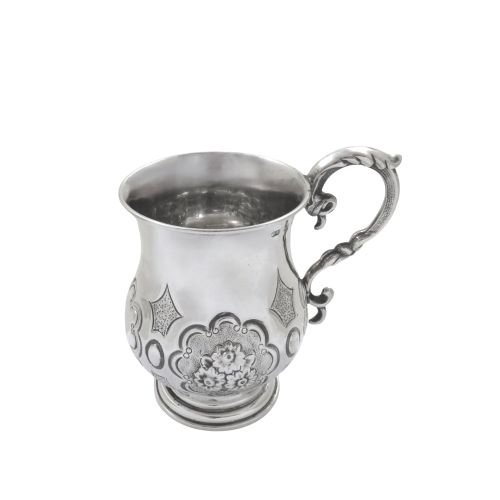
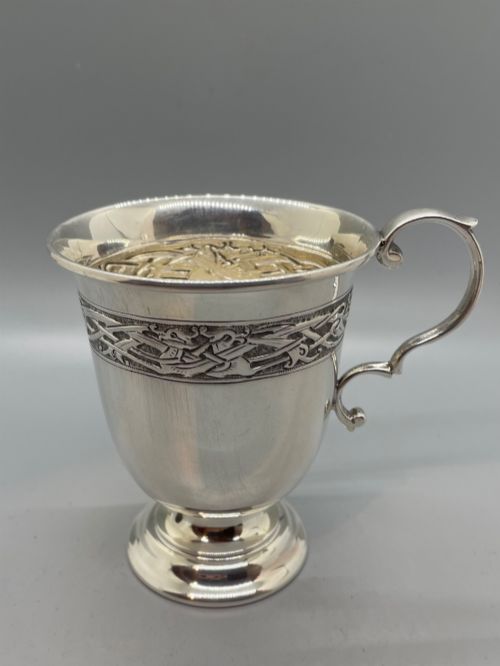
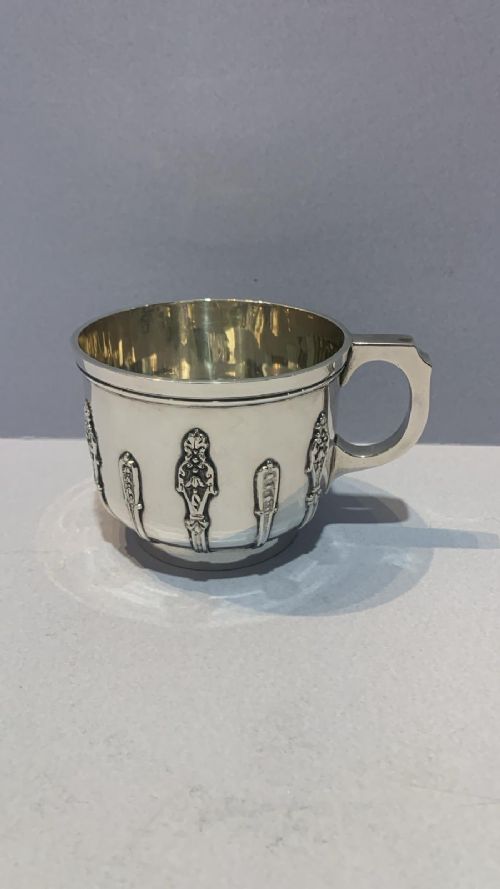
Most examples take the form of miniature tankards or baluster cups, frequently featuring scroll handles and floral engravings. These domestic objects reflect the changing stylistic preferences of their decades, moving from ornate nineteenth-century embossing to plainer twentieth-century designs.
Materials and construction
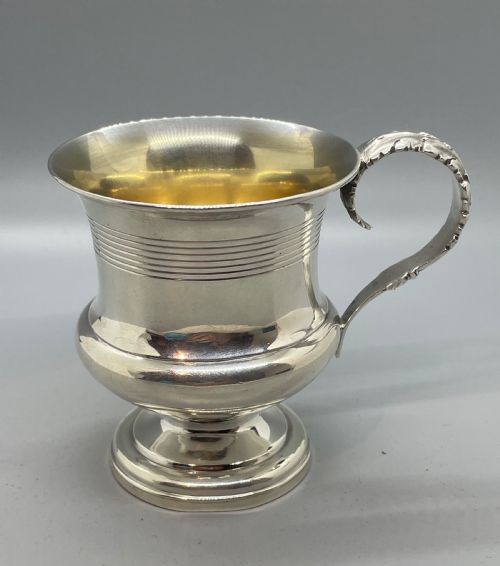
Silversmiths formed these mugs primarily from sterling silver, shaping the bodies through raising or spinning and attaching cast handles. Many pieces incorporate interior silver gilt or gold gilt finishes, adding a contrasting richness to the metal surfaces.
Decoration relied on hand techniques such as floral engraving, embossing, and chasing to create surface patterns. Makers marked their work with hallstamp impressions indicating the assay office, year, and sterling standard.
Listings feature sterling silver mugs spanning from the George III period through the Victorian, Edwardian, and George V eras to the mid-twentieth century.
Distinctions in quality
Quality rests upon the weight of the metal and the crispness of the silversmith's handwork on handles and rims. Substantial gauge silver provides a reassuring heft, whereas thinner walls alter the tactile balance of the piece.
The refinement of decorative elements, from the detailed execution of scroll handles to the depth of floral engraving, separates standard production items from finer workshop output.
R E Stone·Tiffany & Co·Lowes of Chester·Mappin and Webb·James Young
The Solid Silver Christening Mug Glossary
- Baluster
- A vertical architectural form with a swelling lower portion that inspires the curved profile of many traditional mugs. This shape provides a stable base and a comfortable grip.
- Sterling silver
- An alloy consisting of pure silver and other metals, legally standardised to a specific purity for durability. This composition forms the primary material for the pieces recorded here.
- Hallmark
- A series of official marks stamped on precious metals to guarantee the purity, assay office, and year of manufacture. These stamps allow collectors to trace the exact origin of a mug.
- Silver gilt
- Silver that has been coated with a thin layer of gold on its interior or exterior surfaces. This technique protects the metal from tarnishing and provides a warm interior colour.
Solid Silver Christening Mug: Frequently Asked Questions
How do I date a silver christening mug?
Dating a silver mug relies on reading the official hallmarks stamped into the metal by assay offices in cities like London, Birmingham, and Sheffield. These marks include date letters that correspond to specific years of production.
Stylistic clues also help narrow down the period, such as Victorian floral embossing or Edwardian plain forms. Comparing the handle shape and overall silhouette provides additional context for the age of the piece.
Were these mugs used for drinking?
These mugs were originally intended for everyday use by children, combining solid construction with practical sizing. The inclusion of sturdy scroll handles made them easy for small hands to grasp.
Over time, many of these vessels transitioned from functional nursery items into decorative display pieces and family keepsakes. Their solid silver construction ensured they survived generations of handling.
What styles are common in these mugs?
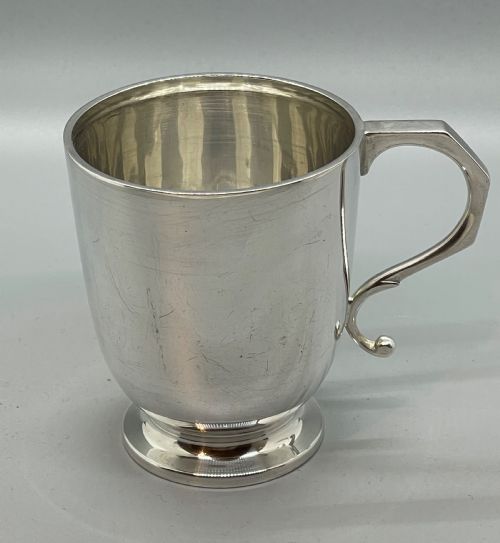
The listings show a progression of styles from George III baluster forms through Victorian floral embossed designs to Edwardian and George V plain tankards. Arts and Crafts influences also appear in certain early twentieth-century examples.
Victorian pieces often feature heavy ornamentation and repoussé work, while later mid-century items tend toward clean lines and unadorned surfaces. Each style demonstrates the prevailing decorative tastes of British silversmiths at the time.