


Solid Silver Caddy Scoop
A solid silver caddy scoop measures out dry tea leaves with precision and remains a tactile companion for every tea caddy.
Solid Silver Caddy Scoop
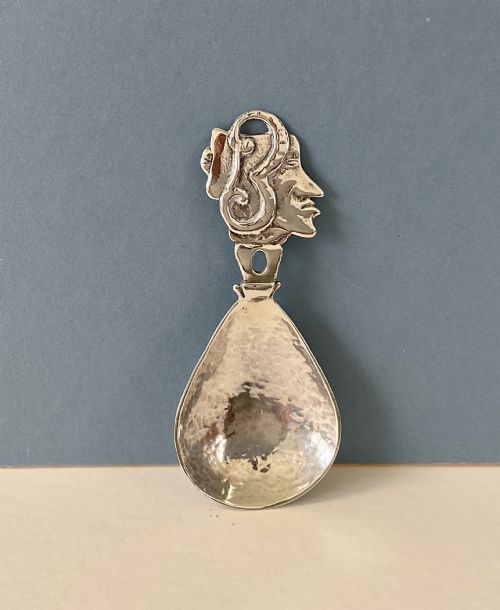
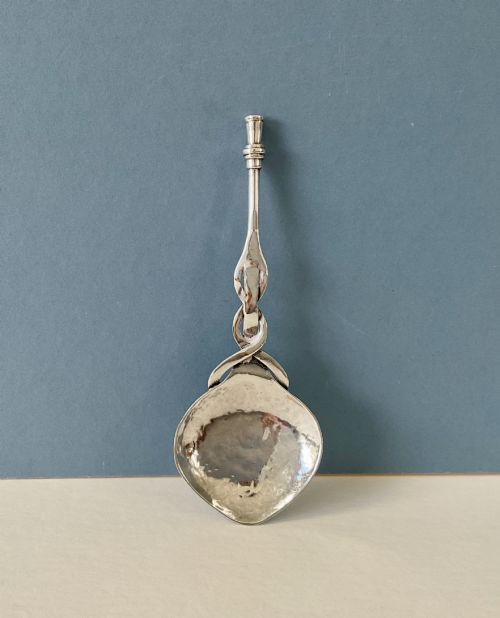
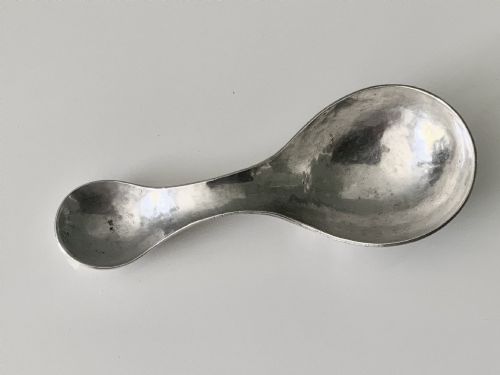
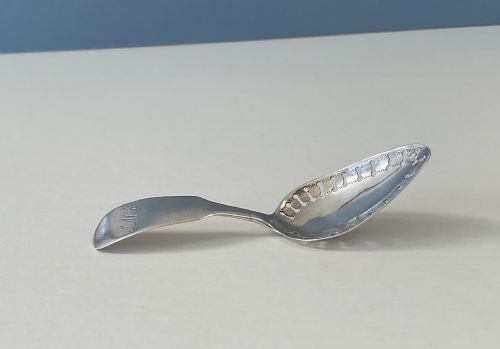
A solid silver caddy scoop is a small utensil specifically designed for measuring tea from a caddy into a pot. When searching for a solid silver caddy scoop, buyers encounter diverse forms ranging from plain bowls to intricate novelty shapes.
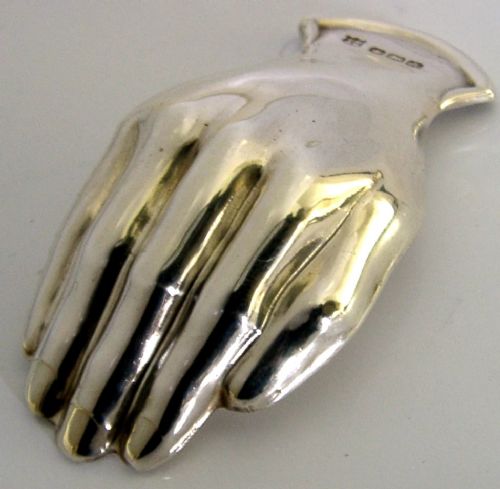
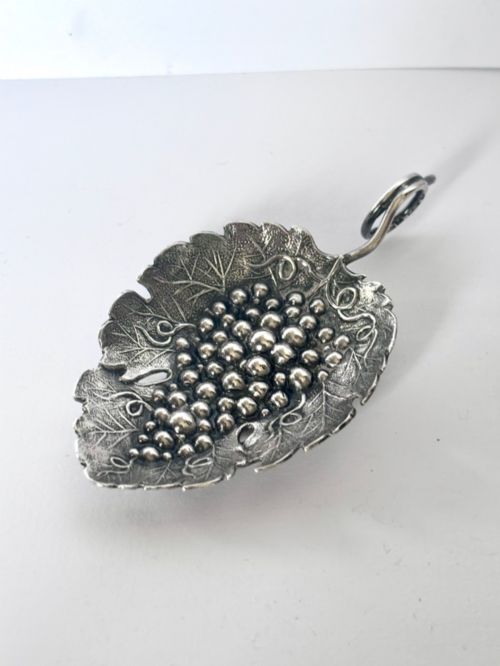
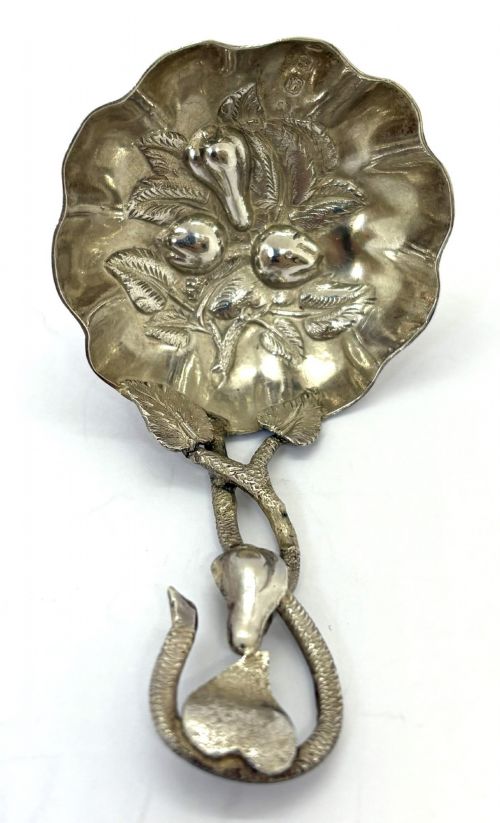
The pieces listed span multiple eras, with Georgian examples appearing frequently alongside Victorian, Edwardian, and later twentieth-century iterations. Collectors find forms shaped like leaves, hands, jockey caps, and simple shovels among the available selection.
Origin points vary across the inventory, encompassing English, Scottish provincial, Irish, Dutch, American, and Danish workshops. Each regional centre brought distinct stylistic preferences to the creation of these functional table accessories.
Materials and construction methods
Makers fashioned these pieces primarily from sterling silver, silver, and occasionally silver-gilt, utilising the malleability of the metal to form deep bowls and patterned handles. Smithing techniques involved hammering, casting, and pressing the silver into specific moulds or sheet forms.
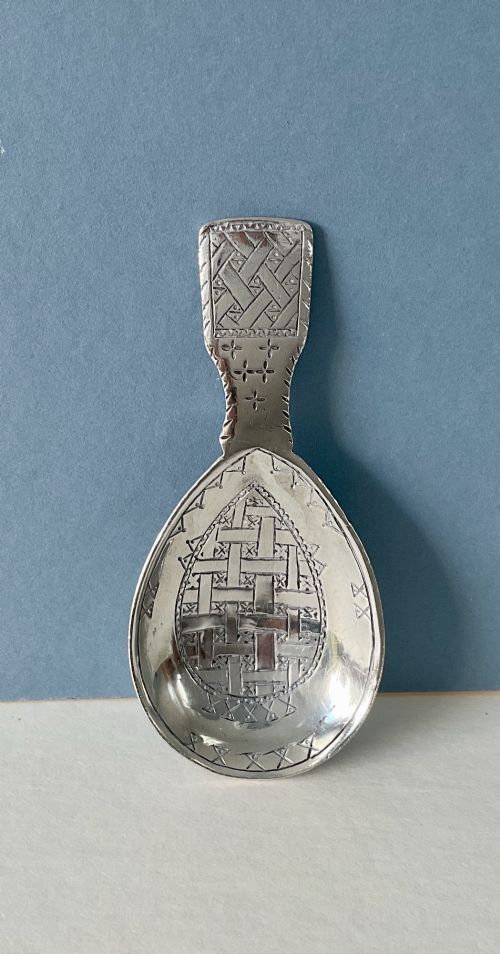
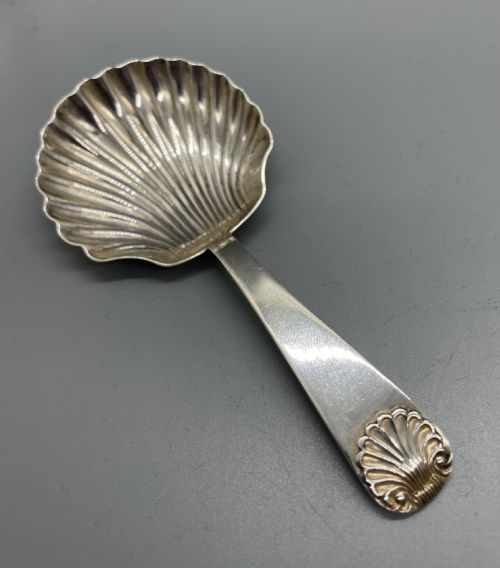
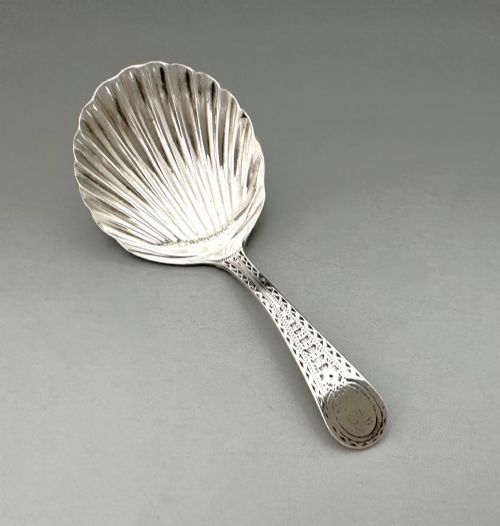
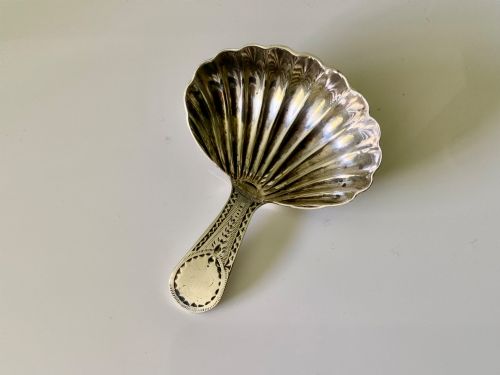
Craftsmen applied surface decoration through detailed hand engraving, chasing, and embossing, particularly on shell-patterned bowls and floral handles. Double-struck designs added heft and tactile relief to the stem and reverse of the handle.
The listings show a concentration of Georgian and Victorian eras, alongside twentieth-century Arts and Crafts and Art Deco examples in sterling silver.
Distinguishing quality in silver scoops
Quality rests in the crispness of the chasing, the depth of the engraving, and the structural integrity of the joint between handle and bowl. Finer examples display sharp, legible hallmarks and purposeful weight in the hand rather than thin, pliable metal.
Novelty forms show distinct tiers of craftsmanship, where anatomically correct hands or well-proportioned jockey caps command attention over simpler stamped versions. The clarity of the maker's mark and regional assay office stamps further anchors the distinction between standard production and exceptional work.
Joseph Willmore·Mappin & Webb·George Unite·George Wintle
The Solid Silver Caddy Scoop Glossary
- Hallmark
- Official marks stamped onto silver to indicate the standard of purity, the assay office, and the year of manufacture. These symbols provide the primary evidence for dating older pieces.
- Silver-gilt
- Silver that has been coated with a thin layer of gold on its surface, often referred to as vermeil. This treatment protects the underlying metal and adds a warm golden lustre to the interior of the bowl.
- Double struck
- A manufacturing method where the die is struck twice onto the metal to ensure deep, crisp relief on both sides of the handle. This technique indicates a higher grade of production.
- Assay office
- An official organisation responsible for testing the purity of precious metal items and stamping them with statutory hallmarks. Cities such as London, Birmingham, Sheffield, and Glasgow operated notable offices.
Solid Silver Caddy Scoop: Frequently Asked Questions
What is a caddy scoop used for?
These utensils served to transfer loose tea leaves from a storage caddy into a porcelain teapot during the preparation of tea.
Their compact size allowed them to sit neatly inside or beside the tea canister for daily use.
How do I date an old silver scoop?
Dating relies heavily upon the stamped hallmarks, which include date letters corresponding to specific assay office records.
Stylistic markers such as the shape of the bowl and engraving patterns also offer clues to the period of manufacture.
Are these scoops made of solid silver?
The listings consist of sterling silver, silver, and silver-gilt pieces rather than plated base metals.
Assay marks confirm the metallic standard used by the silversmith during fabrication.
How do I clean antique silver?
Maintenance requires gentle washing with mild soap and warm water followed by drying with a soft cloth to prevent scratching.
Avoid harsh abrasive polishes that can wear away delicate hand engraving and historic hallmarks over time.