
Antique Sterling Caddy Spoon
An antique sterling caddy spoon brings miniature scale and exquisite silversmithing to the tea table, rewarding close inspection with surprising variety.
Antique Sterling Caddy Spoon
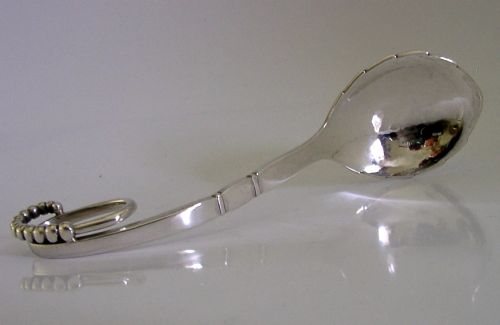
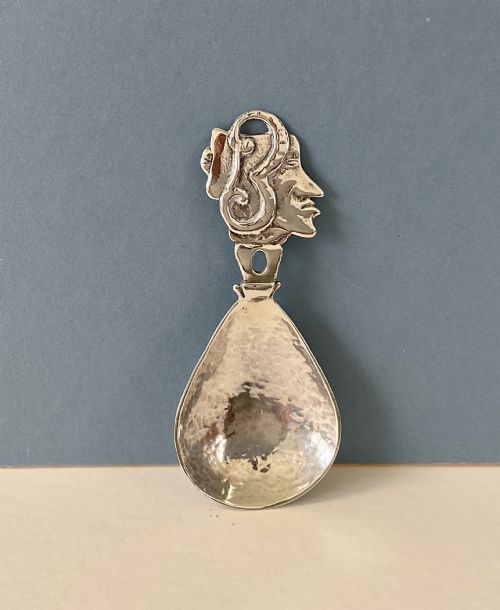
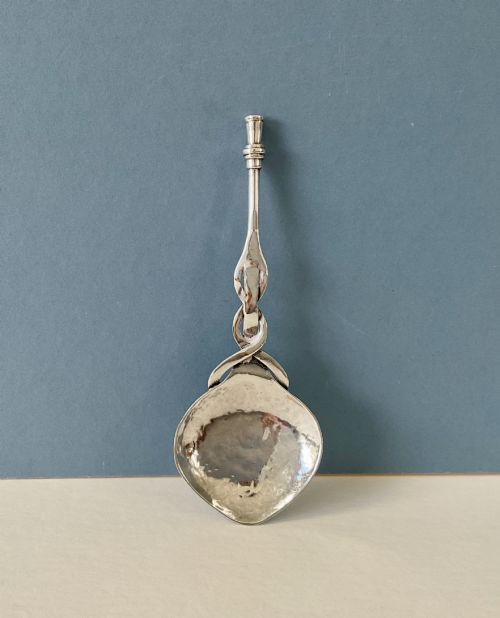
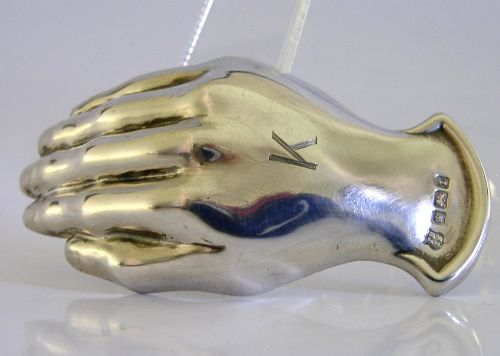
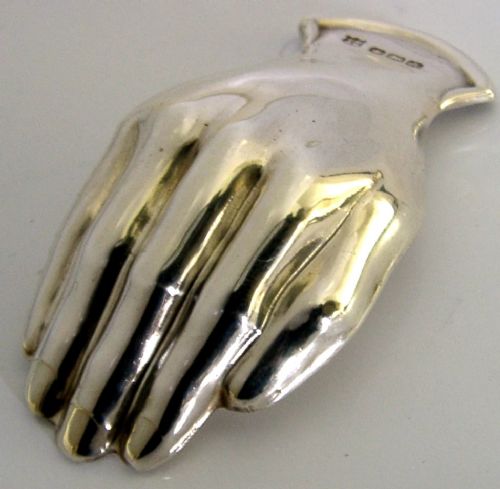
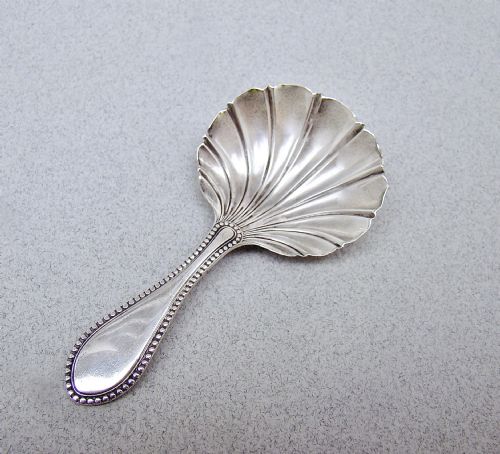
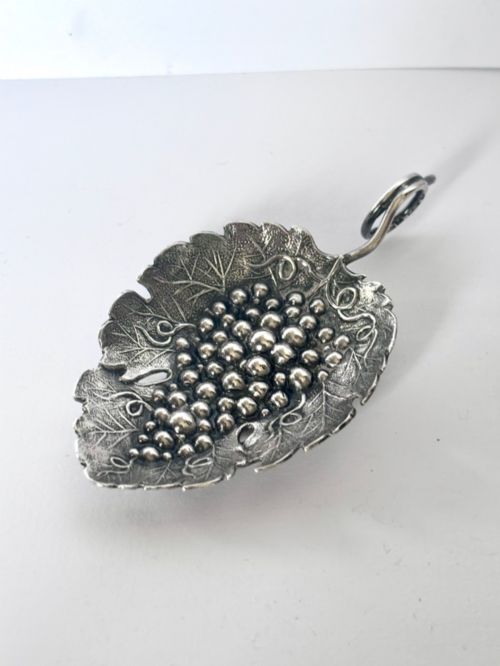
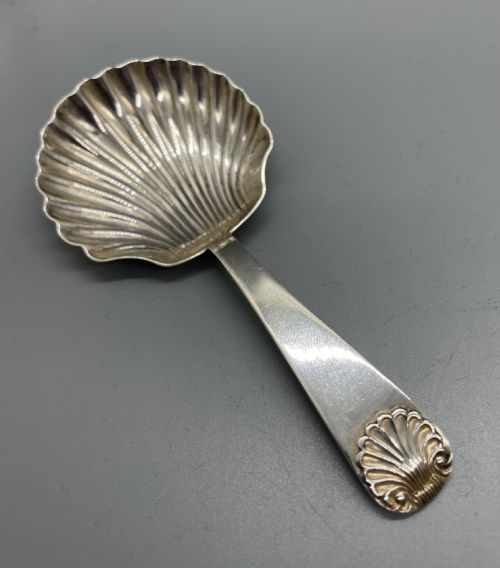
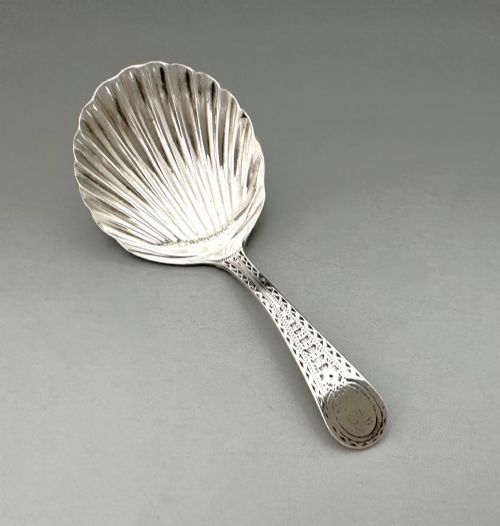
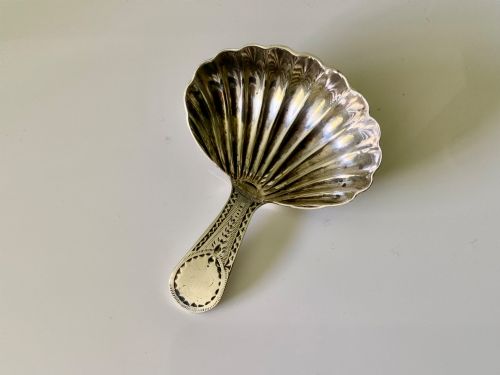
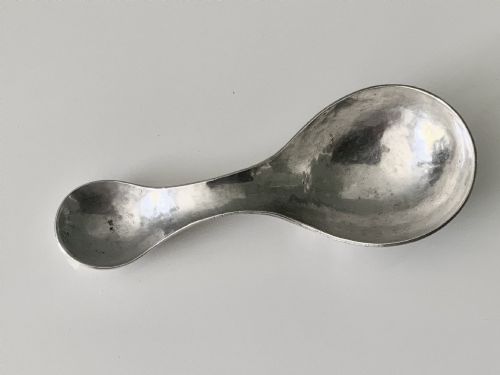
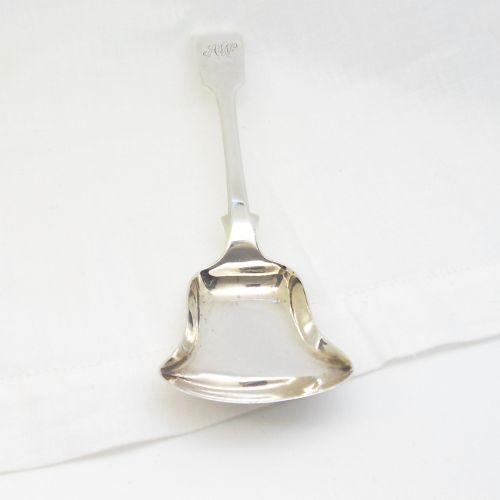
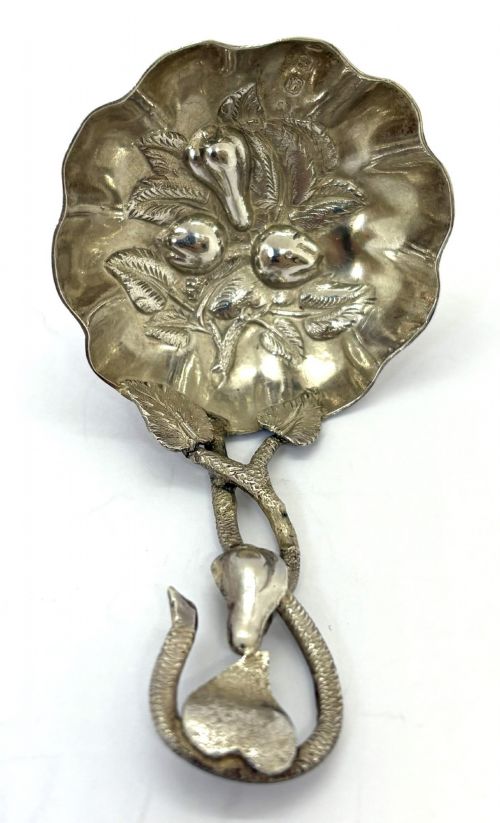
An antique sterling caddy spoon is a small utensil designed for measuring loose tea leaves from a caddy into a teapot. The forms range from simple shell bowls and fiddle pattern stems to elaborate novelty shapes like hands, jockey caps, leaves, and acorns. Georgian and Victorian examples dominate the selection, though Edwardian, Arts and Crafts, and mid-century Scandinavian pieces also appear.
Makers utilised various regional assay offices across Britain, including London, Birmingham, Sheffield, Newcastle, Glasgow, and Irish provincial centres such as Cork. Alongside standard tea service cutlery, these small pieces served specialised domestic roles in measuring and serving dry leaves. The surviving examples reflect changing tastes across the eighteenth, nineteenth, and twentieth centuries.
How they were made
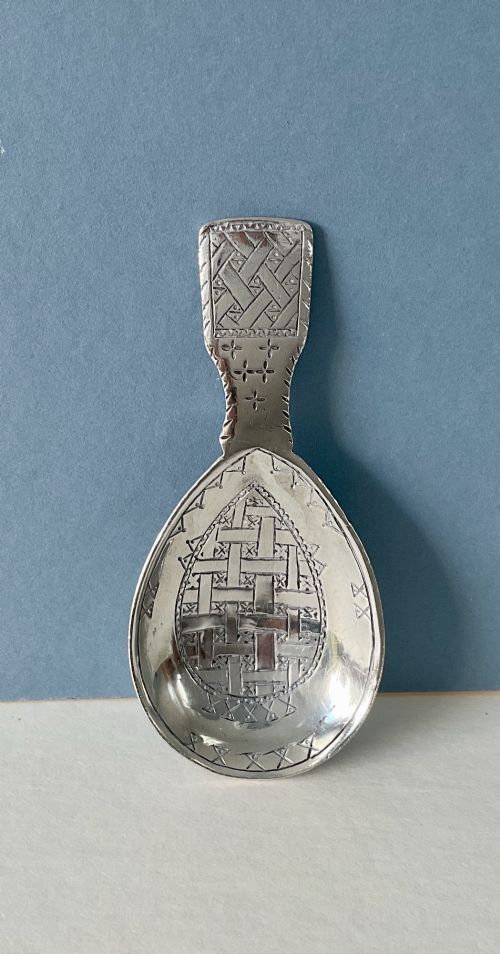
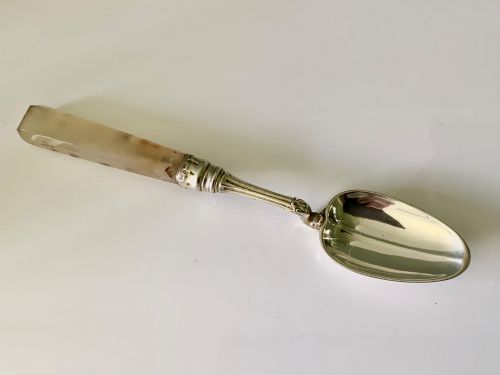
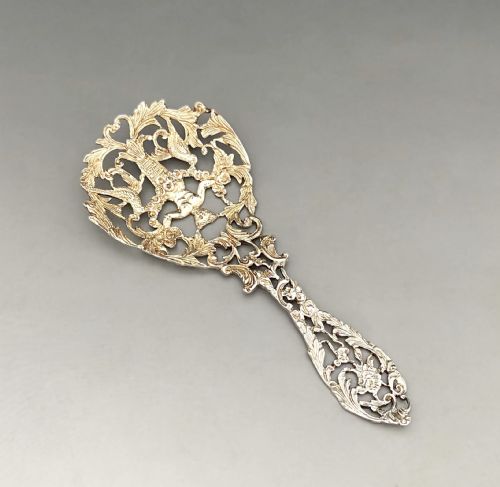
Silversmiths fashioned these spoons primarily from sterling silver and solid silver, sometimes incorporating silver-gilt, parcel-gilt, enamel, or agate handles. Many bowls were hand-raised, stamped, or cast, featuring bright-cut engraving, pierced decoration, or scalloped rims. The joining of bowls to stems required careful soldering, while handles were often shaped as leaves, hands, or distinct patterns like Kings and Fiddle.
Makers applied punches to stamp hallmarks, indicating the standard of silver, the assay office, the date letter, and the maker's mark. Specialised elements like applied enamel work or inset agate stones demanded precise lapidary and enamelling skills. Novelty pieces often required multiple cast components assembled to form realistic miniature objects such as caps or hands.
Silversmiths occasionally shaped silver tea spoons into miniature jockey caps and camel forms for wealthy horse-racing enthusiasts.
What varies in quality
The distinction between standard production and superior work rests on the crispness of the chasing, the depth of bright-cut engraving, and the originality of the form. Novelty items and naturalistic leaf designs executed with anatomical or botanical precision command greater interest than plain utility spoons. Maker attribution also influences standing, with pieces by noted specialists or celebrated firms carrying distinct weight.
The integrity of the hallmarks, the retention of original gilding or surface crispness, and the harmony between handle design and bowl shape mark the upper tier. Modest output shows simpler stamped bowls and plain stems without secondary decorative embellishment. Quality reveals itself in the weight of the metal and the sureness of the silversmith's hand in finishing details.
Martin Hall & Co·Joseph Willmore·John Walton·William Comyns·William Neale·David Andersen·Oliver Barker·Mappin & Webb·George Unite·Georg Jensen·William Pugh·Amy Sandheim
The Antique Sterling Caddy Spoon Glossary
- Hallmark
- A series of official marks stamped onto precious metals to guarantee the purity of the silver, the maker, the assay office, and the year of production. These tiny stamps provide the primary evidence for dating British silver.
- Bright-cut engraving
- A surface decoration technique utilising faceted angled cuts to create sparkling geometric or floral patterns. This method was widely used by Georgian silversmiths to catch the light on small silver items.
- Silver-gilt
- Sterling silver that has been coated with a thin layer of gold, often referred to as vermeil in modern contexts. This treatment protected the silver from tea staining and added a rich two-tone appearance to the bowl interior.
- Assay office
- An official body responsible for testing the purity of precious metal items and stamping them with statutory hallmarks. Major British offices included London, Birmingham, Sheffield, and Chester.
- Novelty spoon
- A decorative spoon shaped to resemble an object, animal, or human feature rather than traditional cutlery forms. Examples include jockey caps, hands, leaves, and animals produced primarily during the Victorian and Edwardian periods.
Antique Sterling Caddy Spoon: Frequently Asked Questions
What was a caddy spoon used for?
These small spoons were used to measure and transfer loose tea leaves from a storage caddy into the teapot. Their short handles allowed them to sit conveniently inside or beside the tea canister.
Because tea was a valuable commodity in the eighteenth and nineteenth centuries, these spoons were proportioned specifically for accurate dosing. They formed an essential part of the formal tea service ritual.
How do I date an antique sterling caddy spoon?
Dating relies primarily on the stamped hallmarks, which include a specific letter code corresponding to the year of assay and the town mark. Stylistic clues such as bright-cut engraving or heavy cast vine leaves also help assign pieces to Georgian or Victorian periods.
Design shifts from plain geometric stems to naturalistic flora and novelty shapes track closely with changing nineteenth-century fashions. Comparing the maker's mark against historical records confirms the exact active dates of the silversmith.
Are novelty caddy spoons rare?
Novelty spoons formed a smaller percentage of total production compared to standard fiddle or shell patterns, making them sought after by collectors today. Forms depicting hands, caps, or animals required more complex manufacturing processes.
Their uncommon shapes meant they were produced in lower quantities by specialist silversmiths. Surviving examples offer a glimpse into Victorian and Edwardian playful domestic design.
How should I display or store silver caddy spoons?
Silver caddy spoons can be housed in shallow display cabinets or kept in specialised anti-tarnish storage rolls when not on view. Handling them with clean hands minimises oils that accelerate the tarnishing process.
Regular gentle dusting helps maintain the surface without the need for frequent abrasive polishing. Allowing the silver to develop a soft, natural patina preserves the character of the antique metal.