
Solid Seat Wooden Chair
A solid seat wooden chair offers honest timber construction and daily utility, spanning centuries of country and formal seating.
Solid Seat Wooden Chair
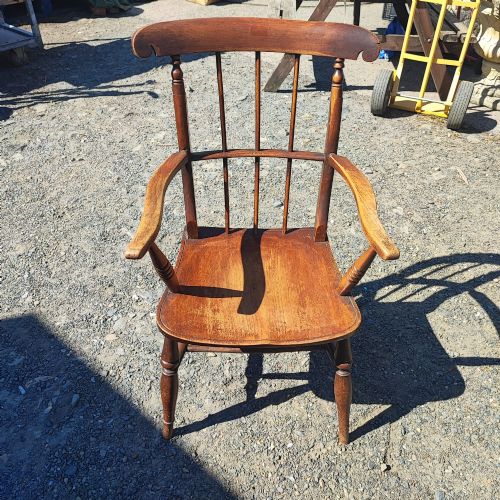
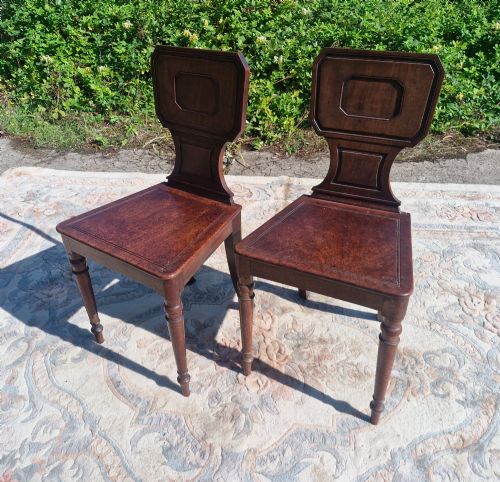
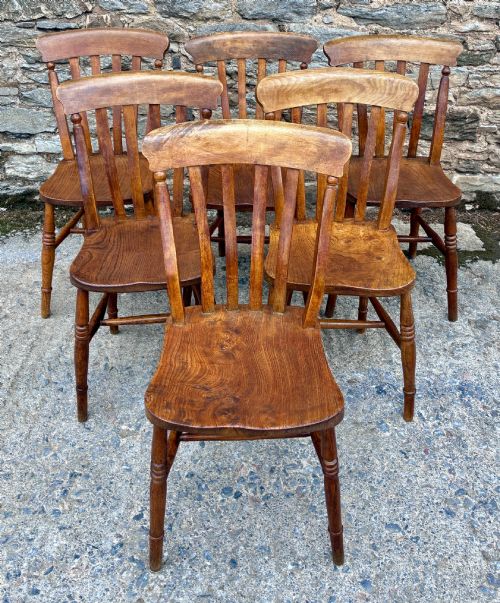
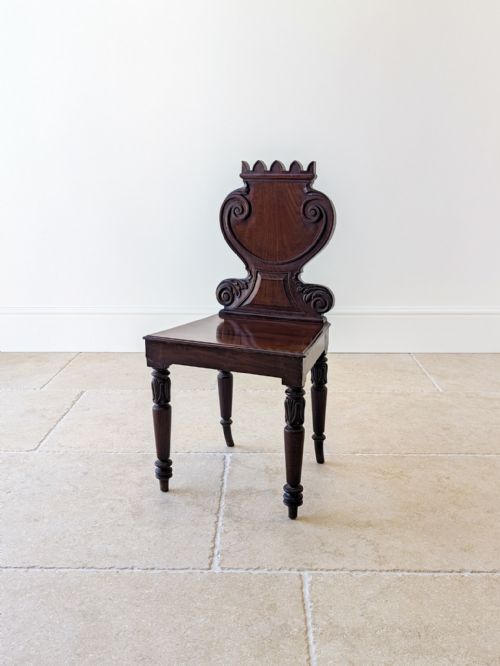
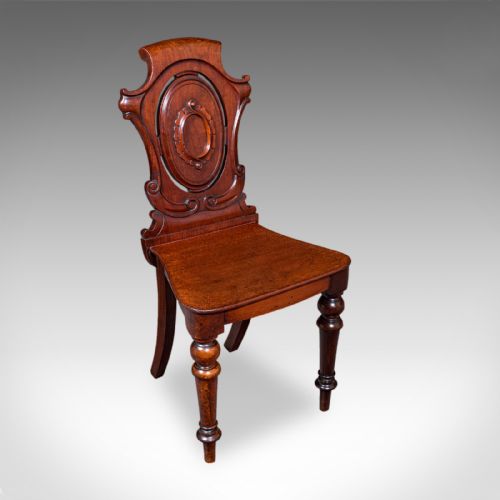
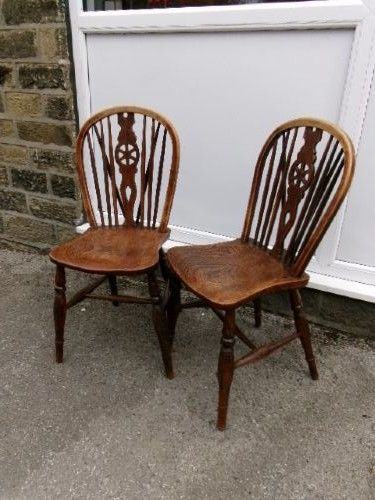
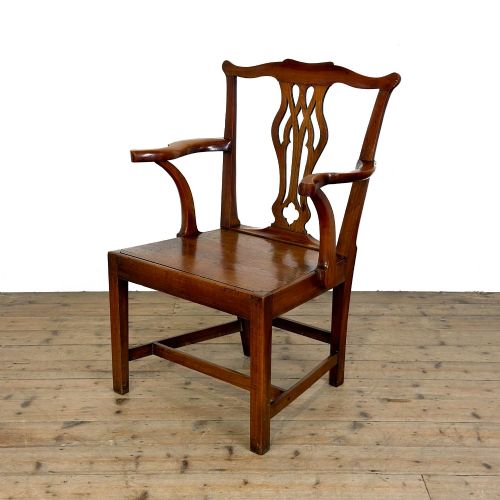
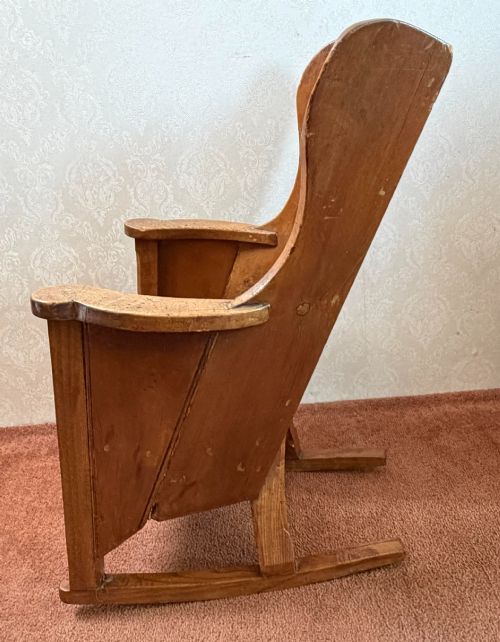
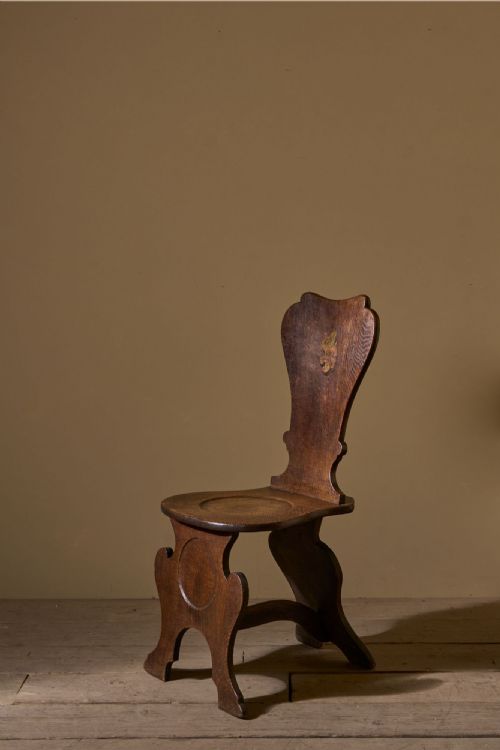
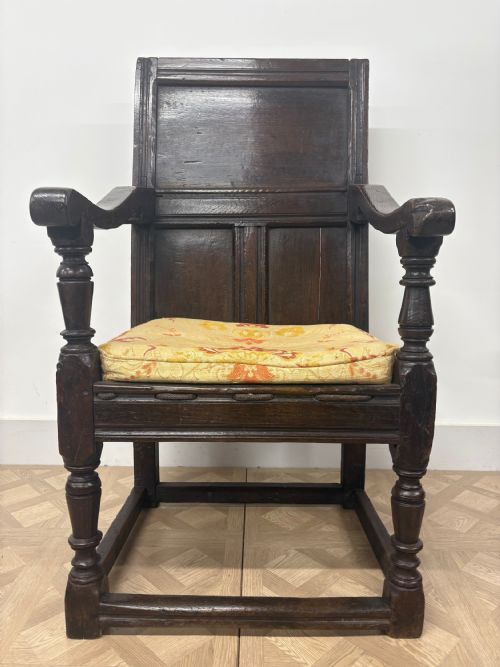
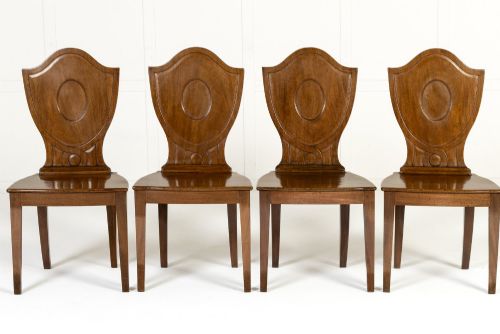
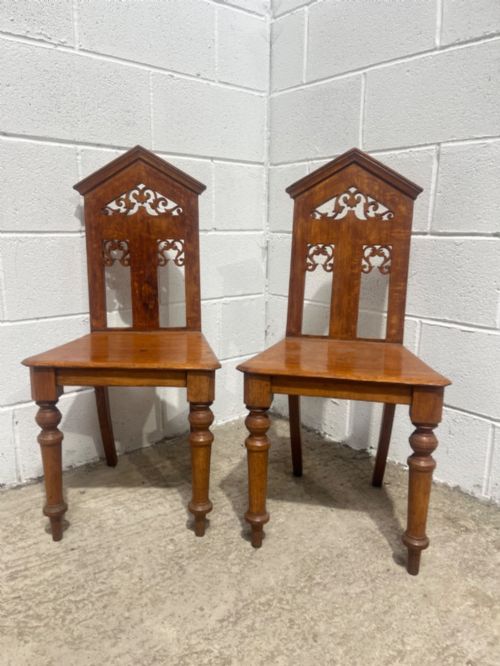
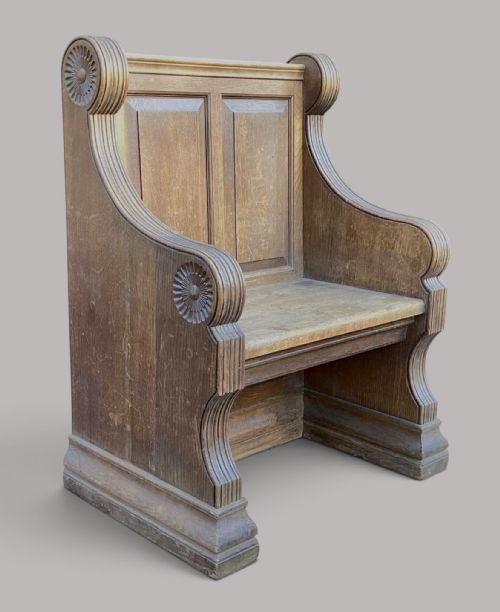
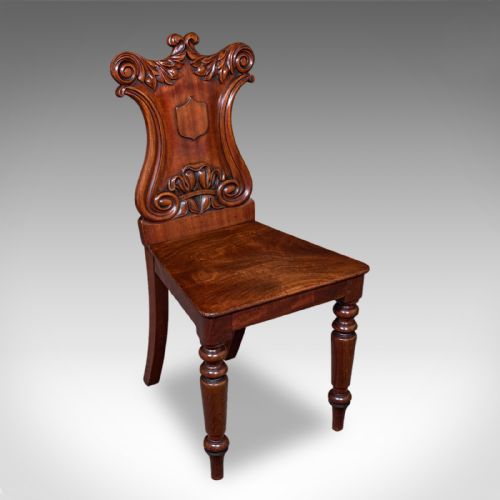
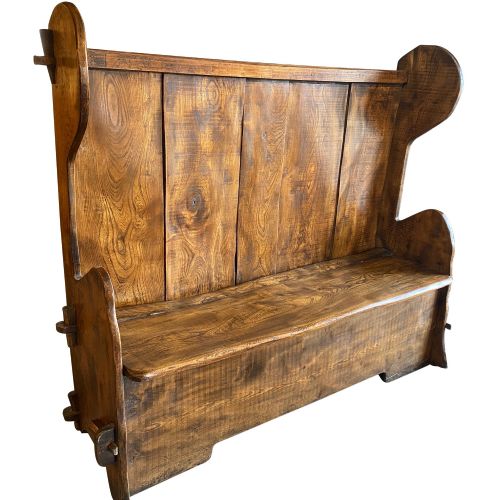
A solid seat wooden chair encompasses everything from sturdy 17th century wainscot armchairs to formal Regency mahogany hall chairs and rustic elm kitchen seating.
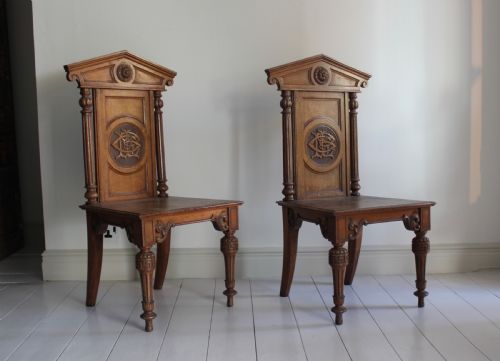
The selections on this page draw from periods spanning the 17th century through the Edwardian era, showing styles like Gothic Revival, English Country, and Regency.
Buyers encounter single reception seats, matched pairs, and larger sets of dining chairs intended for practical daily use or architectural display.
Construction and timber choice
Cabinetmakers and country joiners utilised native timbers including oak, mahogany, elm, beech, ash, and walnut to build rigid frames capable of bearing heavy wear.
Solid wooden seats were carved, shaped, or planked directly into the underframing, often supported by turned legs, Windsor spindles, or robust splats.
Distinctions in construction and finish
Quality rests in the selection of figured or dense timbers, the crispness of hand-carved shield backs or panels, and the integrity of traditional joinery.
Pristine survival of original surfaces, patination, and uncompromised structural frames elevate certain examples above standard utility pieces.
The Solid Seat Wooden Chair Glossary
- Hall chair
- A rigid wooden seat, frequently made of mahogany or oak, placed in an entrance hall and carved with family crests or shields.
- Windsor chair
- A vernacular seating form featuring turned legs and spindles socketed into a solid carved wooden seat.
- Wainscot armchair
- An early heavy wooden armchair constructed with panelled backs, originating in the 17th century.
- Lathe back
- A chair back constructed with horizontal or vertical wooden slats secured into a solid seat.
- Harlequin set
- A group of chairs sharing similar styles and periods assembled together rather than manufactured as one original set.
Solid Seat Wooden Chair: Frequently Asked Questions
How do I clean a wooden chair?
Dust regularly with a dry cloth to protect the antique surface from accumulating grit.
Apply occasional beeswax to nourish dry timbers without stripping historical patination.
Are these chairs comfortable for dining?
Solid timber seats offer firm support rather than upholstered plushness, making them durable for meals.
Adding loose squab cushions can improve comfort during extended periods of sitting.
Can I mix different chair styles?
Harlequin sets demonstrate that pairing similar timber tones creates an authentic country interior look.
Matching wood species helps unify diverse regional designs around a single table.
What woods were used most?
Oak and elm appear frequently in robust vernacular pieces from country workshops.
Mahogany and walnut tend to feature in formal urban dining and hall settings.