





Crested Hall Chairs
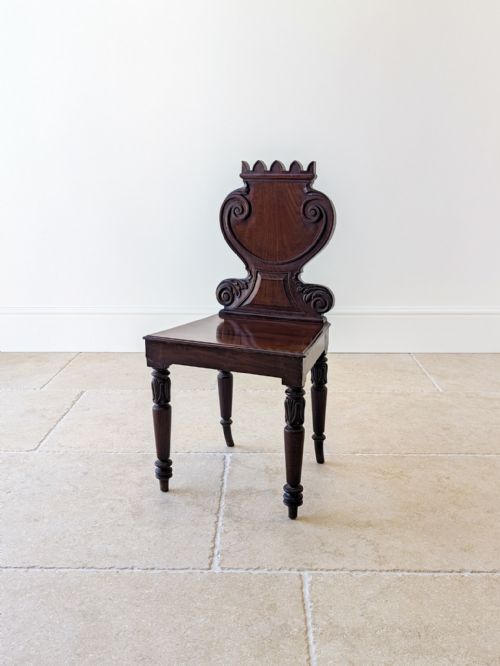
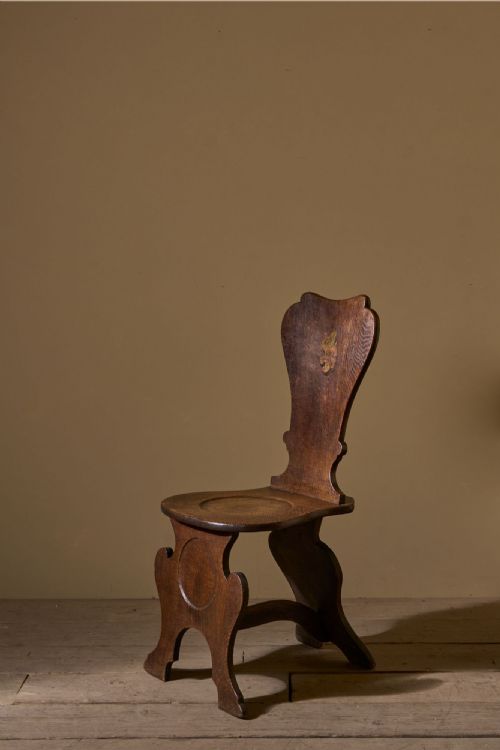
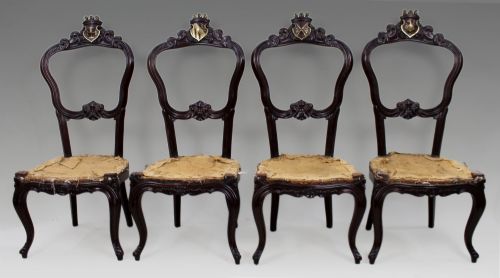
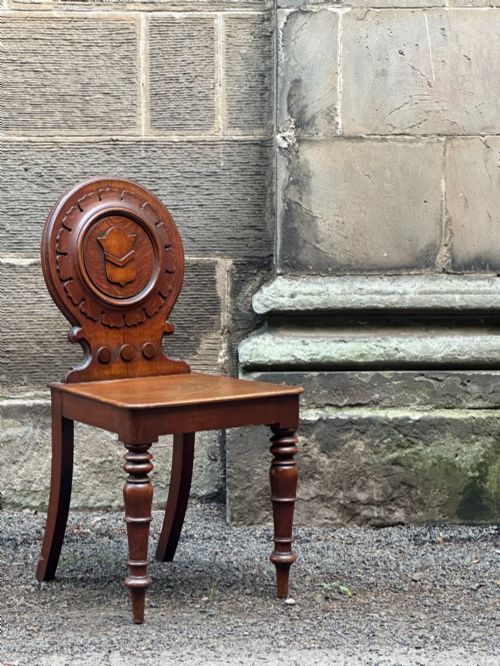
Crested hall chairs are formal statement seats bearing family crests or heraldry, chosen to bring a distinct pedigree and architectural presence to an entrance.
Crested Hall Chairs
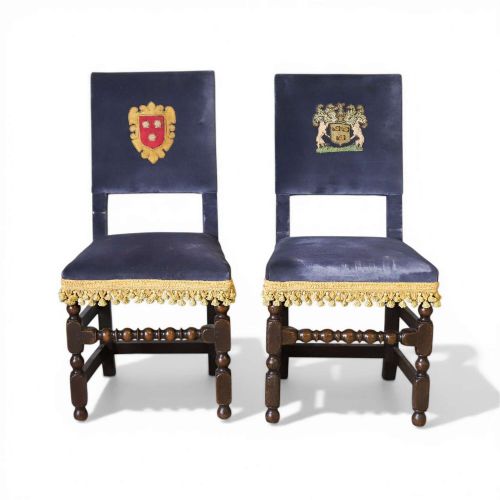
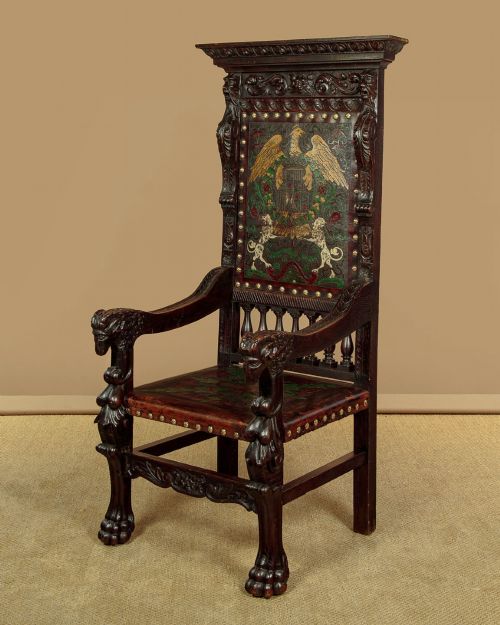
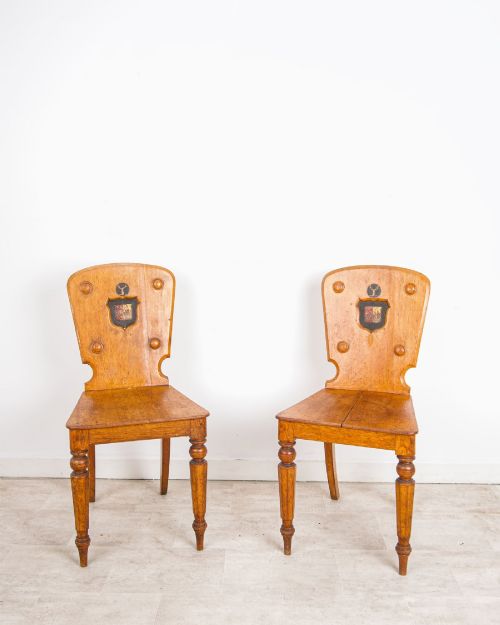
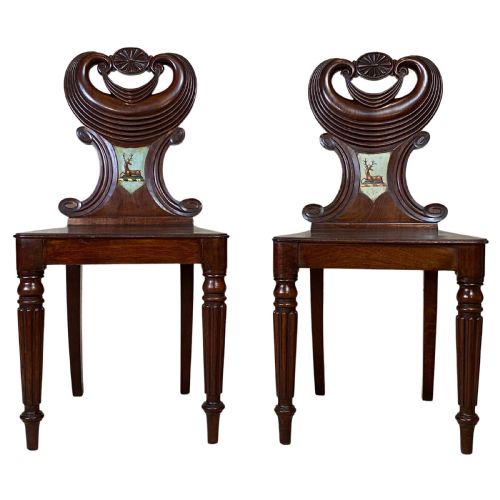
When searching for crested hall chairs, a buyer looks at formal wooden seating designed to display family arms, coats of arms or heraldic shields in a grand entrance or hallway. These pieces serve as both functional furniture and statements of lineage, often commissioned in matched pairs or larger sets for country houses.
On this page, the most common examples span the 18th and 19th centuries, rendered in mahogany, oak or walnut. The selection ranges from severe shield backs to ornately carved Victorian and Regency iterations, alongside earlier 17th-century interpretations and later revival styles.
How they were made
Cabinet makers built these seats using dense hardwoods such as mahogany, oak and walnut, which provided the structural stability required for heavy carving. Solid timbers formed the seats and frames, often shaped with turned legs or solid panel backs designed to display painted or carved heraldic crests.
Surface decoration relied on hand carving, turning and sometimes painted leather, cane or velvet upholstery. Master workshops utilised traditional joinery like mortise and tenon frames to ensure the chairs endured generations of use in busy halls.
Some chairs bear crests so fiercely carved they seem ready to leap off the timber and guard the front door.
What varies in quality
Quality rests primarily in the crispness of the carving and the depth of detail in the heraldic crest, distinguishing workshop production from mass commercial output. Superior examples display sharp lines in the shield or armorial bearings, integrating the crest naturally into the timber rather than applying it as a superficial addition.
The choice of timber and the integrity of the frame construction further separate standard pieces from exceptional ones. Denser hardwoods, well-figured grains and robust joinery maintain their structural rigidity over centuries, preserving the intended silhouette.
Gillows·Waring & Gillow
The Crested Hall Chairs Glossary
- Armorial
- Bearing a coat of arms or heraldic crest. This term describes chairs decorated with carved or painted family insignia.
- Shield back
- A chair back shaped in the form of a heraldic shield. This design gained popularity during the Georgian and Regency periods.
- Carolean
- Pertaining to the reign of Charles II or the artistic style of that period. Pieces from this era often feature rich carving and tall proportions.
- Backstool
- An early form of upholstered or wooden single chair without arms. These appear frequently in 17th-century inventories.
- Cane
- Woven rattan material used for chair seats and backs. It provides a lightweight, textured contrast to solid hardwoods.
Crested Hall Chairs: Frequently Asked Questions
Where were crested hall chairs placed?
These chairs stood primarily in grand entrance halls, corridors or reception rooms of country estates and town houses. They functioned mainly as formal seating for visitors waiting to be announced.
Because they were placed in public areas of the house, their design focused heavily on visual impact and displaying family lineage to guests.
Are these chairs comfortable for daily use?
Most traditional examples feature solid wooden seats designed for upright posture rather than lounging. They were built for formal architectural display rather than relaxed seating.
Some variations incorporate upholstered pads or velvet inserts, though the rigid high backs encourage proper posture rather than soft comfort.
How do I distinguish Regency from Victorian examples?
Regency pieces tend to favour clean architectural lines, classical motifs and rich mahogany timbers inspired by ancient Greek and Roman designs. They often feature restrained elegance and sophisticated turning.
Victorian interpretations lean towards heavier proportions, deeper relief carving and ornate Gothic or Renaissance revival styles using oak and walnut.