
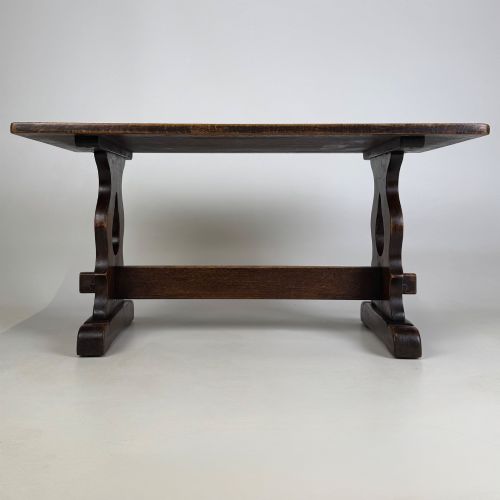
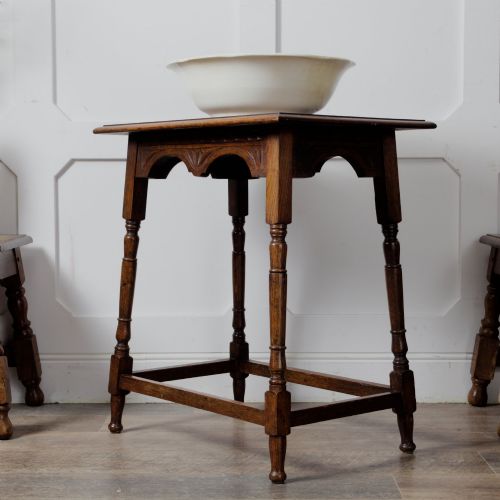
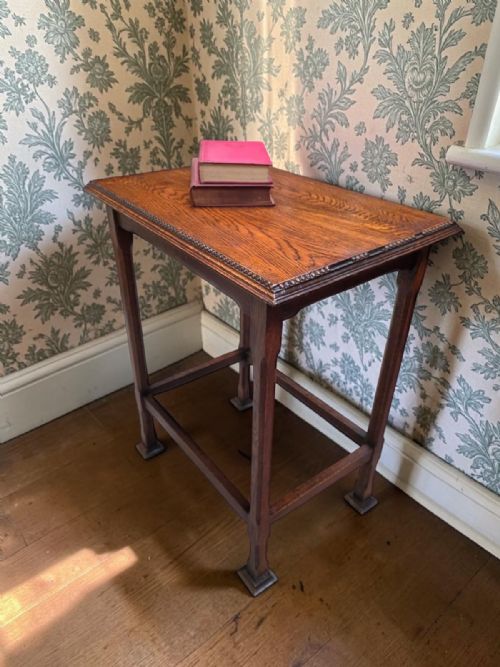
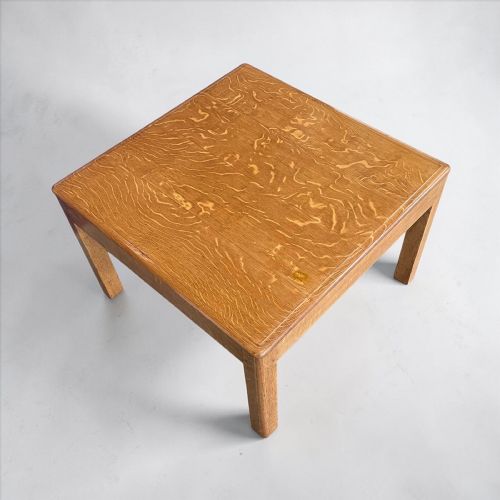


Solid Oak Tea Table
A solid oak tea table brings honest timber and sturdy craft to a sitting room, offering a dependable surface with a rich grain.
Solid Oak Tea Table
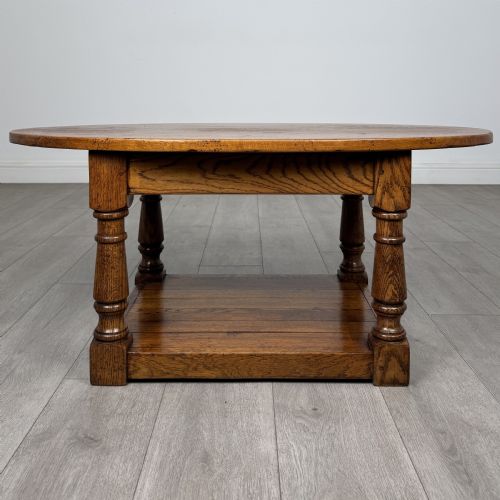
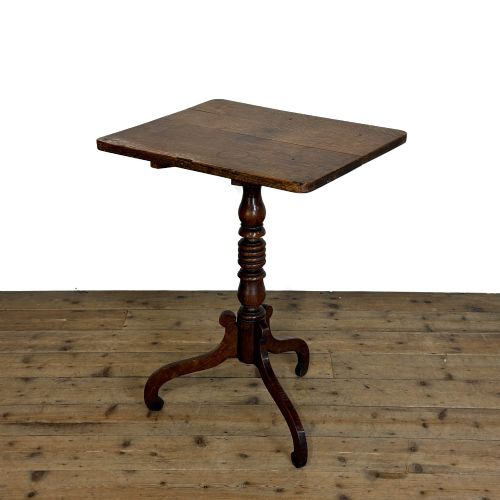
A solid oak tea table is a practical piece of furniture designed for serving and gathering, appearing in forms ranging from low coffee tables to traditional tilt-top pedestal designs. When buyers search for a solid oak tea table, they encounter items spanning the Victorian era through the Edwardian period and into the 1920s and 1930s.
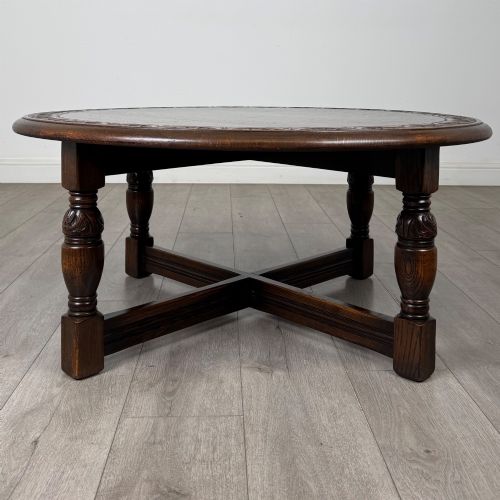
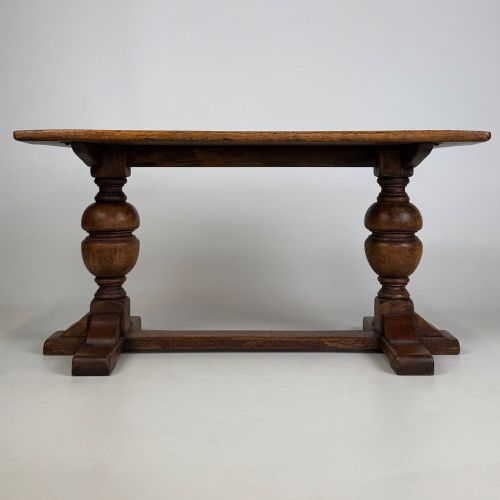
The selection on this page demonstrates diverse stylistic influences, including Arts and Crafts, Art Deco, and Jacobean Revival. Side tables, occasional tables, and low coffee tables dominate the offerings, often constructed from durable English or Scottish oak.
Period examples showcase functional adaptations, such as hexagonal tops, tiled surfaces, or tilt mechanisms for easy storage. Buyers are most likely to meet Edwardian and early twentieth-century interpretations that prioritize straightforward utility alongside decorative carving or turned legs.
Factors determining quality
Quality in these tables rests upon the selection of the timber and the integrity of the joinery rather than surface ornamentation alone. Heavier construction and thoughtful detailing, such as carved borders or balanced tilt-top mechanisms, distinguish finer examples from standard utility pieces.
The harmony of design - whether executed in the manner of established workshops or reflecting regional country house aesthetics - separates standard production items from more distinctive workshop pieces.
The listings span the nineteenth century through the 1930s, featuring oak alongside brass, ceramic, and painted finishes.
Betty Joel·Heals
The Solid Oak Tea Table Glossary
- Tilt top
- A tabletop mounted on a hinge mechanism that allows the surface to be rotated vertically for storage when not in use. This clever design saved valuable floor space in period parlours.
- Jacobean Revival
- A nineteenth and twentieth-century style borrowing heavily from seventeenth-century motifs, characterised by heavy turning, deep carving, and dark finishes. It reflects a Victorian and Edwardian fondness for historicist domestic interiors.
- Arts and Crafts
- A design movement emphasising honest construction, visible handcraftsmanship, and local materials rather than mass production. Glasgow School pieces often demonstrate these principles through simplified geometric forms.
- Tiled top
- A table surface inset with ceramic tiles, often glazed or patterned, designed to protect the wood from hot teapots and moisture. This feature gained popularity around the turn of the twentieth century.
Solid Oak Tea Table: Frequently Asked Questions
How do I date an oak table?
Dating an oak table involves examining the construction methods, tool marks, and stylistic clues present in the legs and top. Edwardian and Victorian pieces often show machine-sawn timber alongside traditional hand joinery.
Stylistic markers such as Arts and Crafts geometry or Jacobean Revival turning help narrow down the decade of manufacture.
Were these tables used for tea?
These tables served primarily as stable surfaces for holding tea services, porcelain pots, and cups in domestic parlours and drawing rooms. Their sturdy oak construction easily supported the heavy silver and ceramic wares of the period.
Over time, many adapted to general living room use as low coffee tables.
How do I care for solid oak?
Solid oak benefits from regular dusting with a dry cloth and occasional treatment with appropriate wood waxes to nourish the grain. Direct sunlight and excessive heat sources should be avoided to prevent the timber from splitting.
Using coasters protects the antique finish from moisture rings left by cups.