
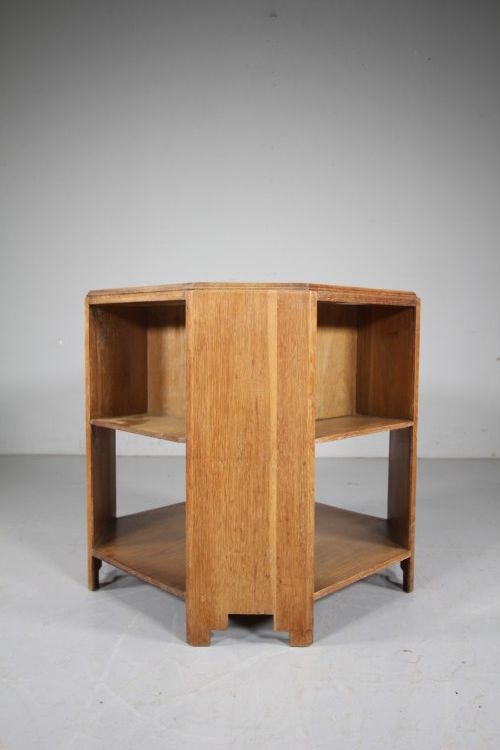


Solid Oak Standing Lamp
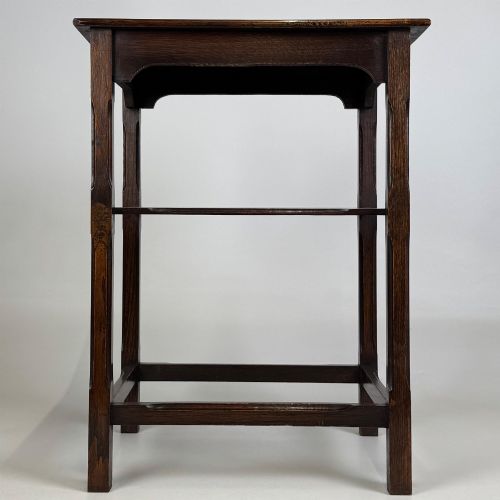
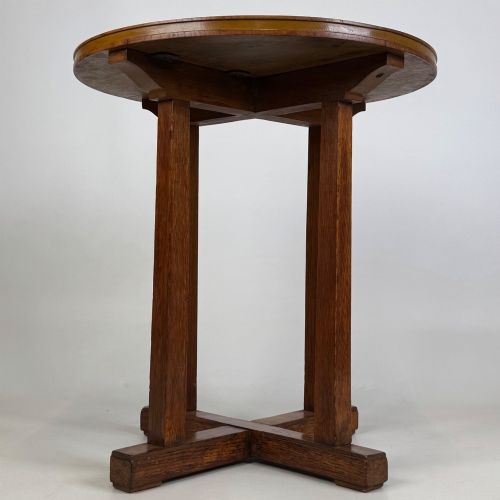
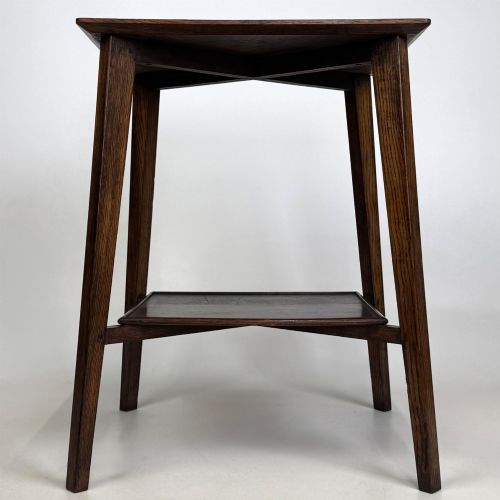
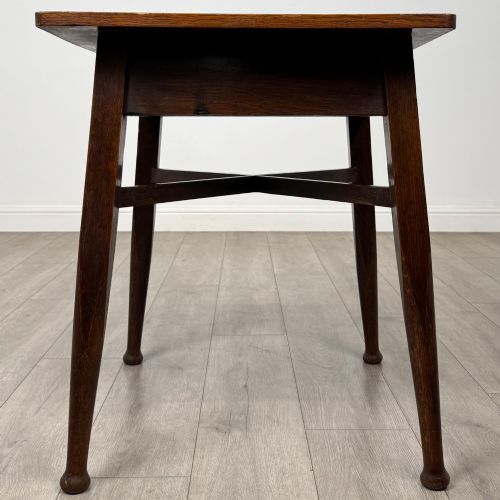
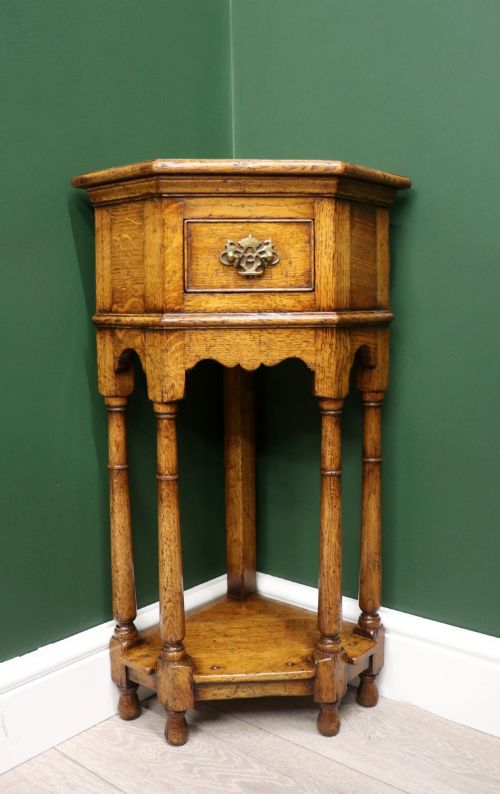
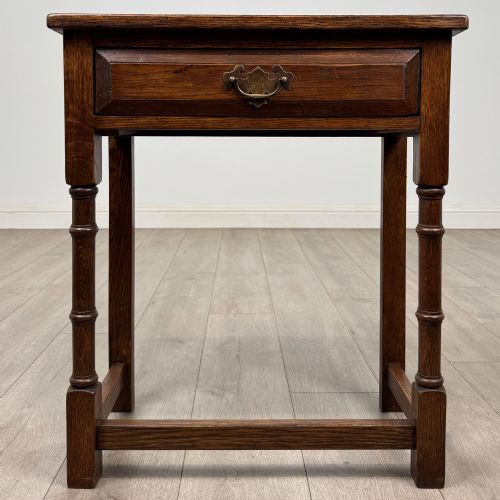
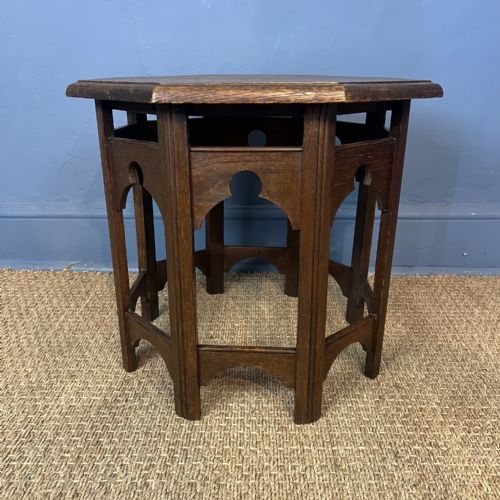
These solid oak standing lamps and accompanying occasional tables bring sturdy craftsmanship and rich timber into any room.
Solid Oak Standing Lamp
A solid oak standing lamp provides both height and a sturdy footprint, often appearing alongside related forms such as standard lamps and occasional side tables. When searching for a solid oak standing lamp, buyers encounter various interpretations spanning the Victorian, Edwardian, and Art Deco periods.
The selection frequently includes standard lamps executed in solid oak, sometimes accented with brass, ebonised wood, or ebony. Alongside dedicated floor lamps, the record shows pieces attributed to notable workshops like Heals and Whytock & Reid.
Craftsmen during the Arts and Crafts and Art Deco movements favoured this timber for its robust character and honest grain. These items served as functional illumination and practical furniture in domestic interiors across Britain.
How they were made
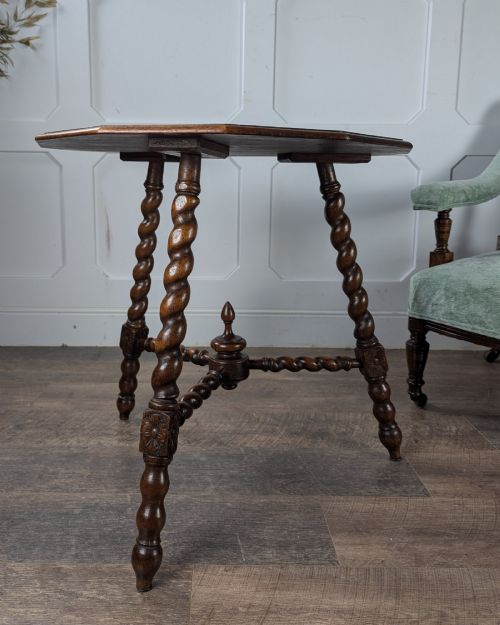
Makers utilised solid oak to construct shafts, bases, and accompanying tables, relying on its natural density for stability. Turning techniques created characteristic columns, including barley twist profiles and simple turned bases.
Details such as ebonised wood or contrasting ebony inlays provided visual definition against the golden oak surface. Brass components often served as functional fittings or structural accents on standard lamps.
One determined lamp chose to disguise itself among side tables before finally standing up straight as a proper floor lamp.
What varies in quality
Quality rests in the selection of the timber and the crispness of the turning on the upright shaft. Pieces bearing associations with known makers or progressive design movements generally exhibit superior joinery and thoughtful proportions.
The integration of secondary materials, such as well-executed ebonised highlights or solid brass fittings, distinguishes finer examples from utilitarian production.
Heals and Sons·Whytock and Reid
The Solid Oak Standing Lamp Glossary
- Barley twist
- A type of turning shaped like a spiral helix, frequently seen on the upright shafts of standard lamps and side tables. This decorative form gained popularity during the late Victorian and Edwardian eras.
- Standard lamp
- A tall floor-standing lamp designed to illuminate a room from a fixed position. These fixtures utilise a heavy weighted base or solid timber construction to maintain stability.
- Ebonised wood
- Timber treated with a dark stain or finish to imitate ebony. Makers applied this technique to create sharp contrast against golden oak surfaces, particularly in Art Deco designs.
- Arts and Crafts
- A design movement valuing traditional craftsmanship and simple forms over mass production. Pieces from this tradition often display exposed construction and honest material use.
- Tripod
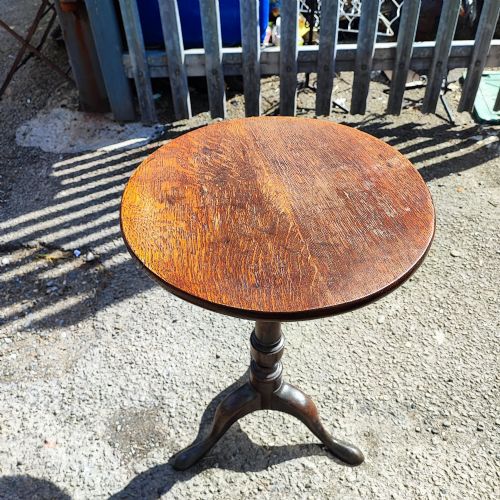
- A three-legged base structure providing stable support on uneven floors. This configuration appears frequently on occasional and wine tables associated with earlier periods.
Solid Oak Standing Lamp: Frequently Asked Questions
How do I date a solid oak standard lamp?
Dating relies on stylistic clues such as turnings, base construction, and associated design movements like Arts and Crafts or Art Deco.
Evidence from the period points span from late Victorian examples through to pieces made in the nineteen-thirties.
Are these lamps made entirely of solid oak?
The listings show pieces constructed primarily in solid oak, sometimes combined with brass fittings or ebonised wood accents.
Individual pieces may feature contrasting timber details like ebony inlay to highlight the grain.
Where should I place a standard lamp in a room?
These tall floor-standing fixtures suit corners or seating areas where they provide ambient vertical illumination.
Their substantial timber presence pairs well with traditional side tables and occasional furniture.
What distinguishes Arts and Crafts lighting?
Arts and Crafts pieces emphasise straightforward construction and visible material quality without excessive ornamentation.
Designers from this tradition favoured honest timber work over factory-produced uniformity.