


Solid Oak Kitchen Sideboard
A solid oak kitchen sideboard provides robust timber storage and display, bringing substantial utility and honest craftsmanship straight into a family hub.
Solid Oak Kitchen Sideboard
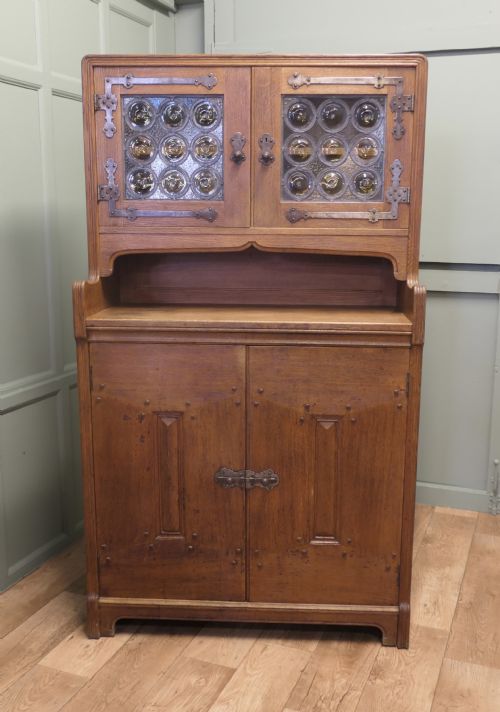
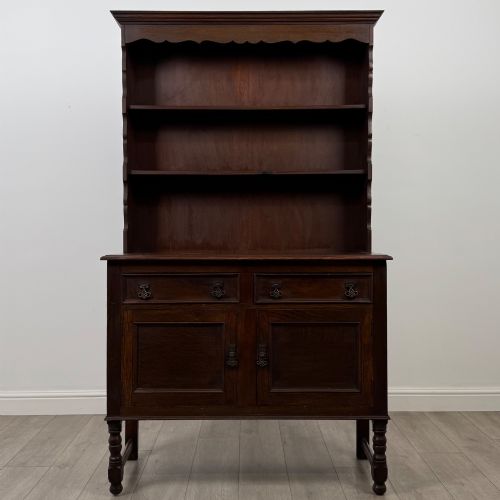
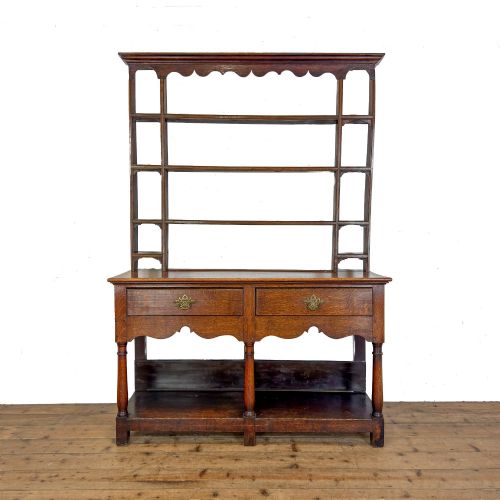
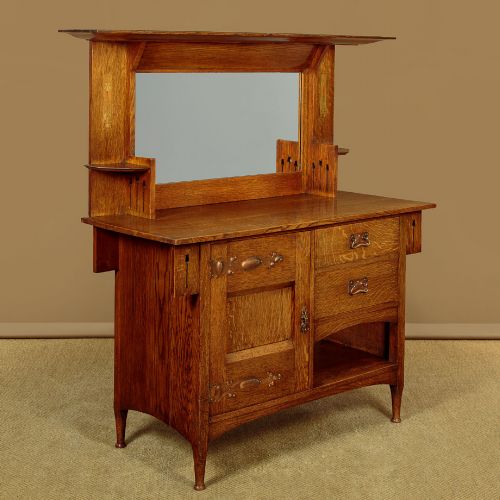
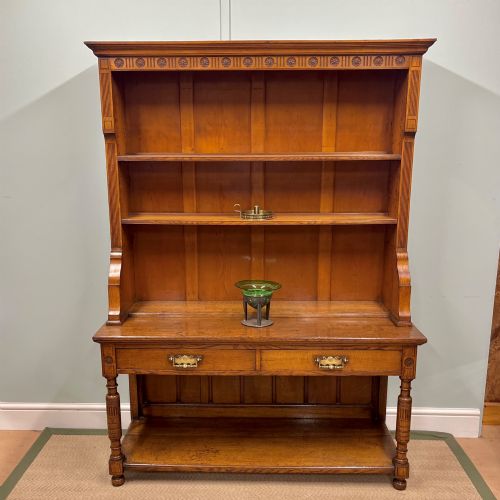
When buyers search for a solid oak kitchen sideboard, they encounter substantial country furniture designed for heavy daily storage and display. These pieces range from early provincial cupboards to Arts and Crafts cabinets, offering deep drawers and sturdy pot boards.
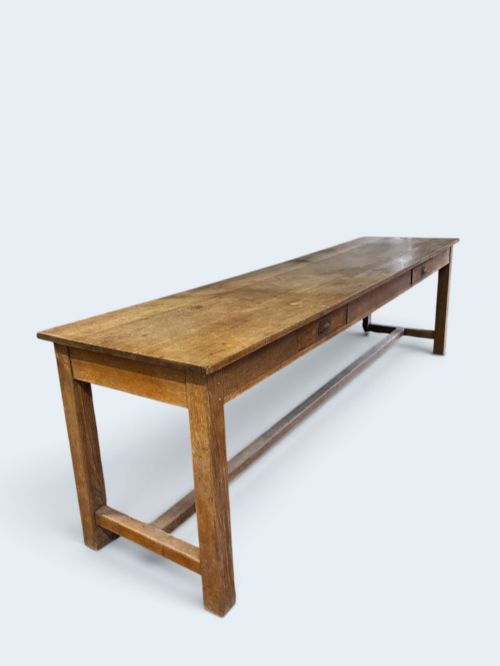
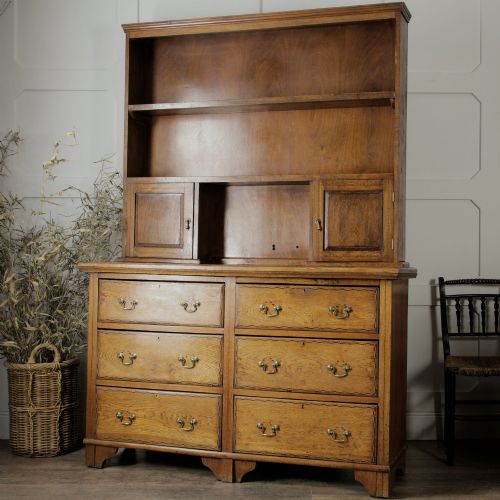
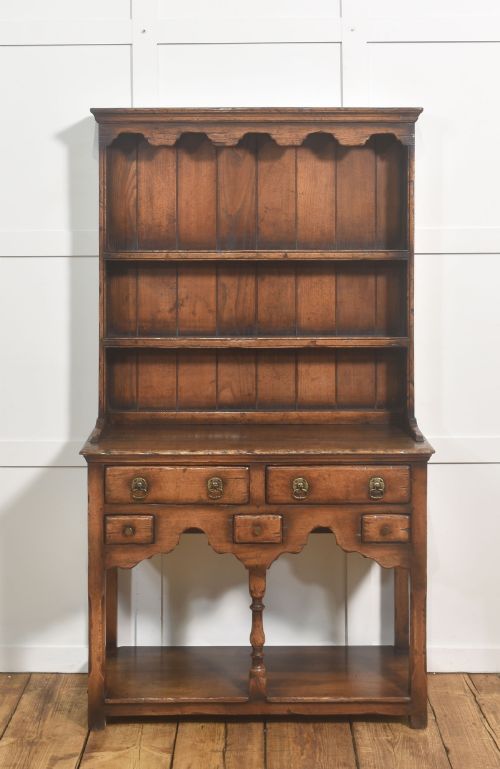
The versions most commonly met on this page include country oak dressers featuring integrated plate racks, alongside utilitarian serving tables and robust housekeepers cupboards. These pieces predominantly span the eighteenth and nineteenth centuries, carrying the marks of regional British craftsmanship.
Makers working within these traditions utilised durable timber to build furniture that anchored large domestic spaces. The resulting items combine open shelving for everyday earthenware with enclosed lower storage for provisions and linens.
Construction and materials
These items rely on solid oak planks joined with traditional framing methods, alongside brass or iron hardware such as drop handles and strap hinges. Timber selection prioritised quarter-sawn boards that resisted warping while displaying natural grain patterns.
Secondary materials such as glass, copper, and occasional wood inlay appear in specific regional or later pieces, particularly within Arts and Crafts designs. Structural integrity comes from pegged mortise and tenon joints built to withstand decades of heavy use.
Listings feature periods ranging from the seventeenth century through to the Edwardian era, constructed in solid oak with brass and iron hardware.
Assessing quality and proportion
Quality separates pieces through the integrity of their timber selection and the restraint of their proportions. Superior examples display well-matched grain on primary surfaces and maintain original brassware without intrusive modern replacements.
Construction details dictate distinction, such as hand-cut dovetails on drawer linings and untouched patination on the oak surfaces. Pieces showing minimal structural alteration retain greater architectural coherence than those rebuilt from disparate elements.
The Solid Oak Kitchen Sideboard Glossary
- Pot board
- A low slatted or solid shelf positioned beneath a dresser base, originally designed to hold heavy earthenware pots and kitchen utensils.
- Plate rack
- An upper wooden framework featuring grooved shelves and vertical slats, built to display plates and platters safely upright.
- Housekeepers cupboard
- A tall, enclosed storage piece used for linen and dry stores, typically featuring panelled doors and internal shelving.
- Mortise and tenon
- A traditional woodworking joint where a protruding peg fits snugly into a corresponding cavity to lock timbers together firmly.
Solid Oak Kitchen Sideboard: Frequently Asked Questions
How do I care for solid oak furniture?
Maintain timber surfaces by applying natural beeswax periodically to nourish the grain and protect against moisture. Avoid placing these pieces near direct heat sources to prevent the wood from splitting.
Clean surfaces regularly with a soft, dry cloth rather than harsh chemical sprays that strip the historic finish.
What is the difference between a dresser and a sideboard?
A dresser traditionally combines a lower storage base with an upper plate rack for displaying ceramic ware. A sideboard consists purely of the lower cabinet or serving table structure.
Both forms utilise solid oak construction, but dressers offer significantly greater vertical presence in a room.
How can I tell an eighteenth century piece apart from later styles?
Earlier pieces exhibit hand-carved details, pegged joinery, and boards shaped with primitive tools rather than mechanical saws. Surface patination develops a deep, mellow tone over centuries of handling.
Later Edwardian or Arts and Crafts interpretations often incorporate cleaner lines or stylistic nods to earlier vernacular forms.
Are these pieces suitable for modern kitchens?
These robust items provide generous surface space and deep storage compartments that suit contemporary culinary spaces well. Their honest timber construction introduces warmth and texture alongside modern fittings.
Buyers should measure ceiling heights and floor space carefully before positioning these substantial items.