



Solid Oak Kitchen Chairs
Solid oak kitchen chairs bring weight and vernacular charm to a room, offering sturdy wood seats and honest country craftsmanship.
Solid Oak Kitchen Chairs
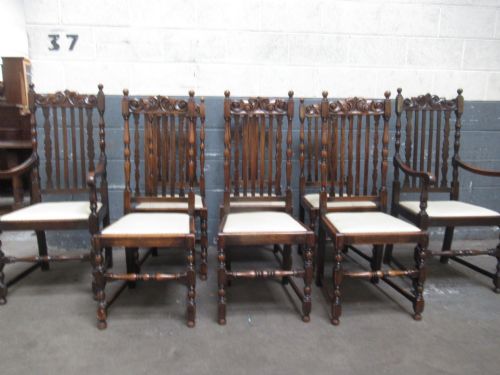
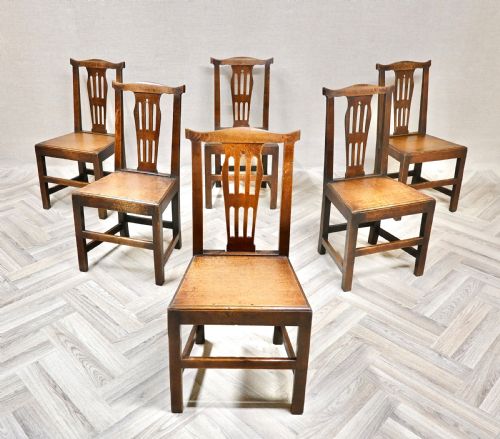
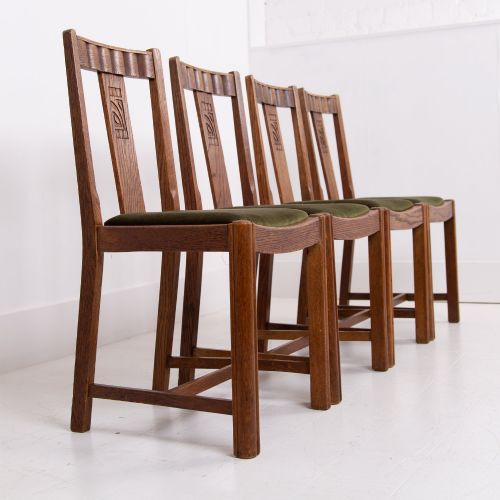
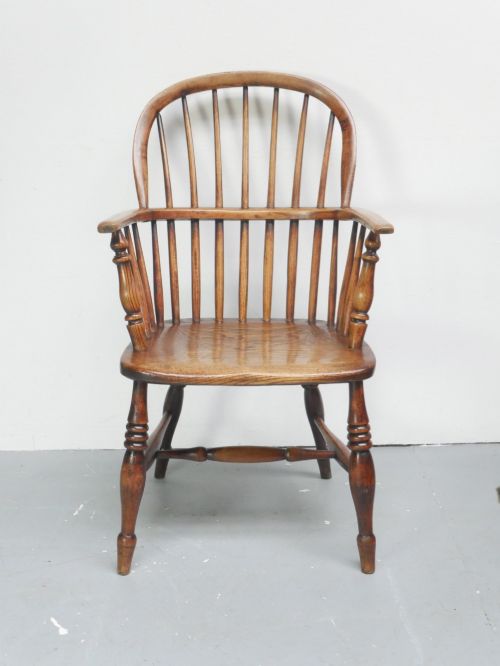
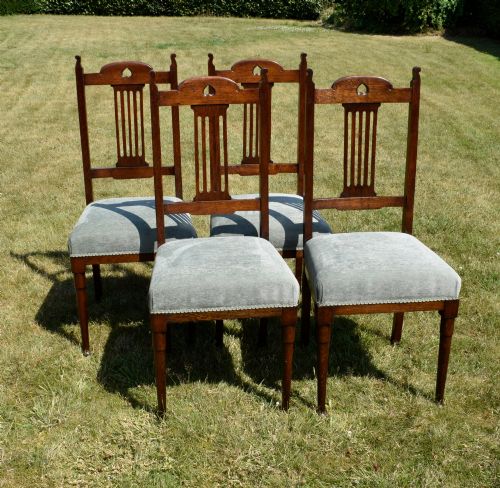
When you search for solid oak kitchen chairs, you encounter a robust range of vernacular seating spanning the Georgian, Victorian, and Arts and Crafts eras, through to the 1930s. The listings point firmly toward sturdy dining chairs and armchairs shaped by English, Welsh, and Scottish country traditions.
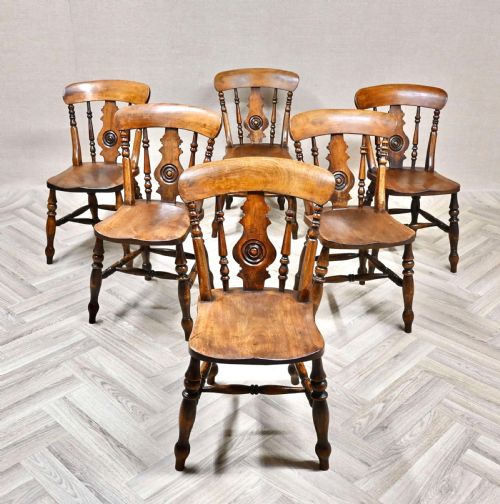
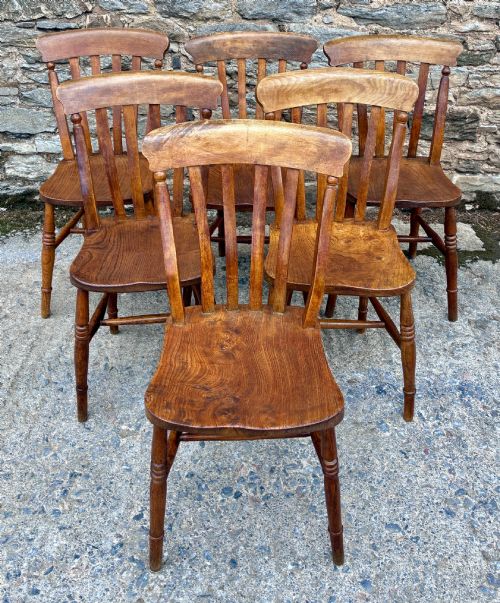
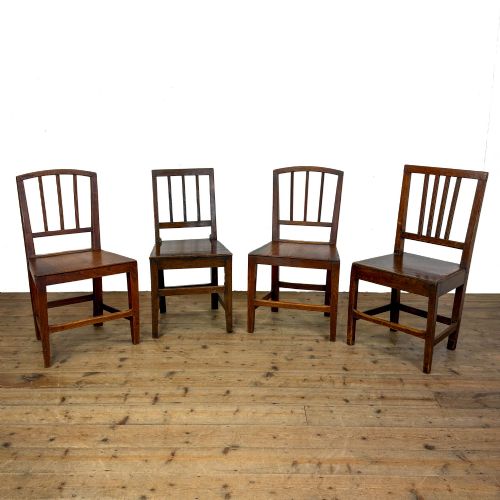
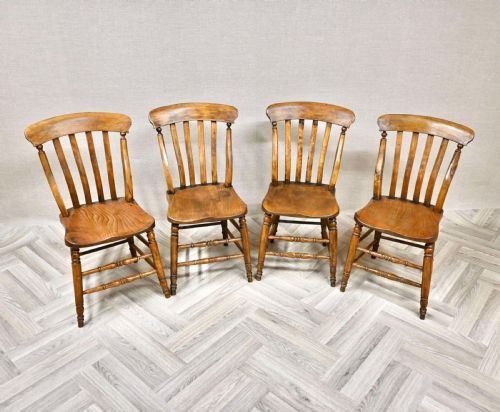
You are most likely to meet sets of four, six, or eight chairs, often configured as harlequin sets where individual pieces share a vernacular style but vary slightly in detail. These encompass Windsor forms, lathe backs, and lathbacks alongside simpler farmhouse kitchen designs with solid wood seats.
The regional origins stretch across English and Welsh workshops as well as Scottish makers, capturing local vernacular preferences in wood-seated dining furniture. These chairs served the heart of the home, built to endure daily use around the kitchen or farmhouse table.
Materials and Construction
The primary material is oak, frequently paired with elm, beech, or ash for seats and turned spindles, demonstrating traditional timber selection for strength and flexibility. Master joiners utilised seasoned hardwoods to construct Windsor frames, lathe backs, and solid wood seats capable of withstanding generations of household activity.
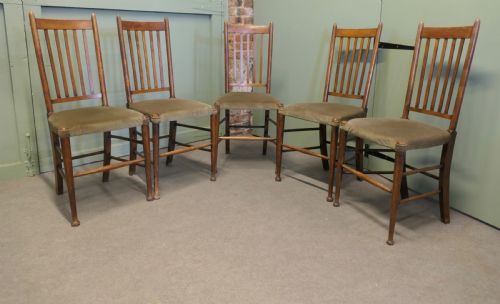
Construction methods rely on traditional joinery such as mortise and tenon joints, steam bending for curved crest rails, and turned wooden components secured with wedges. Upholstery appears selectively in the form of velvet or fabric on specific Arts and Crafts or Edwardian variants, though timber remains the dominant visual medium.
Harlequin sets prove that antique chairs love a good mix-and-match dinner party just as much as we do.
Quality Variations
Quality rests in the integrity of the timber, the tightness of the joinery, and the harmony of matched or harlequin sets. Superior examples display rich natural grain patination, substantial weight in the oak frames, and minimal replacement parts across the spindles and legs.
Design sophistication further elevates a set, distinguishing basic utility furniture from refined Arts and Crafts commissions or well-proportioned Welsh and Scottish Windsor armchairs. The skill of the original turners and the endurance of the wood seat define the lasting standing of each piece.
The Solid Oak Kitchen Chairs Glossary
- Harlequin set
- A collection of chairs assembled to match in style, period, and material while individual pieces retain subtle variations in their turning or proportions.
- Lathe back
- A chair back featuring vertical wooden slats or laths riveted into the seat and top rail, common in country dining seating.
- Windsor chair
- A chair built with a solid wooden seat into which the legs and back spindles are directly inserted, often featuring a bowed backrest.
- Arts and Crafts
- A design movement prioritising traditional craftsmanship, visible construction, and simple forms over ornate industrial decoration.
- Vernacular furniture
- Domestic objects made by local craftspeople using regional timbers and traditional methods rather than following high-style academic designs.
Solid Oak Kitchen Chairs: Frequently Asked Questions
What is a harlequin set of chairs?
A harlequin set is a assembled group of dining chairs that share a common period, material, and general style, such as nineteen-century country oak designs. Each chair retains minor individual differences in its turning, back pattern, or proportion because they were gathered together rather than born from a single workshop batch.
Buyers often choose these sets for a relaxed, authentic farmhouse aesthetic around a kitchen table. They offer the practical benefit of a matching count while celebrating the slight variations inherent in antique vernacular furniture.
How do I care for solid oak kitchen chairs?
Solid oak kitchen chairs thrive in environments with stable humidity away from direct heat sources like radiators, which can cause timber to dry and split. Regular dusting with a soft cloth and occasional application of appropriate beeswax helps nourish the wood grain and maintain its natural lustre.
Avoid harsh chemical cleaners or excessive moisture on the wood seats and turned joints. Treating the timber gently preserves the patination accumulated over generations of domestic life.
Are these chairs comfortable for daily dining?
These solid wood seat chairs were built for practical everyday use in farmhouse kitchens and dining rooms. Many feature sculpted wooden saddles shaped to fit the body, providing surprising ergonomic support during long meals.
If extra cushioning is desired, loose seat pads can be added without altering the historic structure of the chair. Their sturdy oak and hardwood frames ensure they remain stable under daily seating demands.
How can I tell the period of a kitchen chair?
Dating a kitchen chair involves examining the tool marks, timber characteristics, construction joints, and overall vernacular style. Georgian and early nineteenth-century examples often display hand-turned spindles and deep patination on the oak, while later Victorian and Arts and Crafts pieces reflect changing regional fashions.
Comparing the methods used to fix the legs into the solid wood seat provides further clues to the manufacturing era. Regional quirks in Welsh, Scottish, or English country designs also help pinpoint the origin and approximate age.