

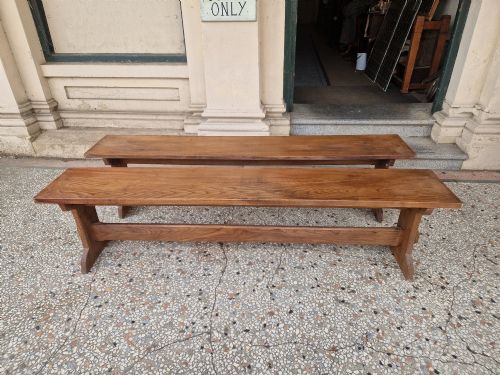


Solid Oak Hall Bench
A solid oak hall bench offers an honest welcome to any entrance, built to endure daily coming and going.
Solid Oak Hall Bench
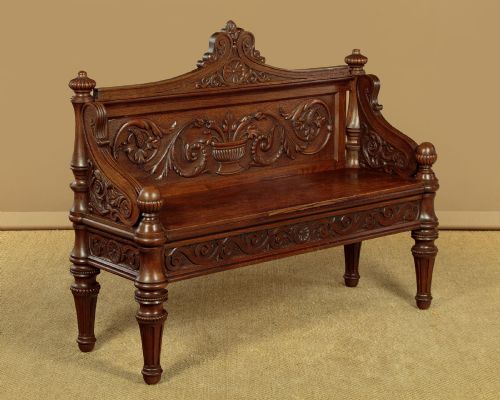
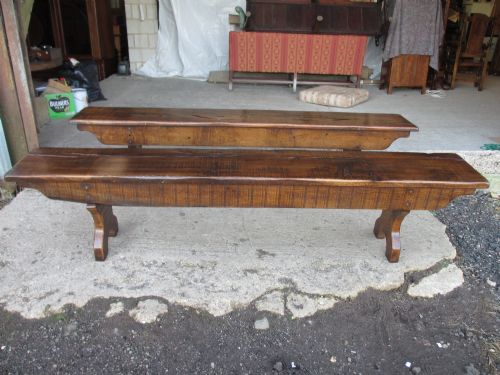
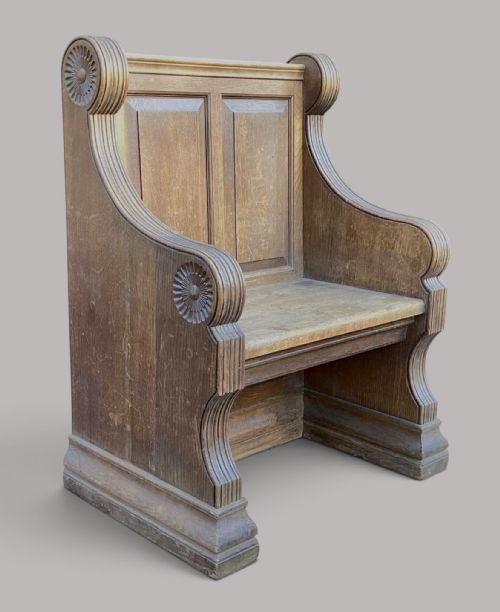
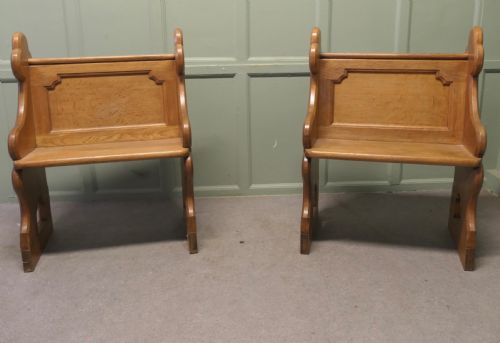
A solid oak hall bench serves as a sturdy seat for an entranceway, hallway or boot room, combining practical utility with architectural presence. The pieces found here range from narrow Edwardian examples and Victorian Gothic revivals to heavier nineteenth-century settles and monks benches.
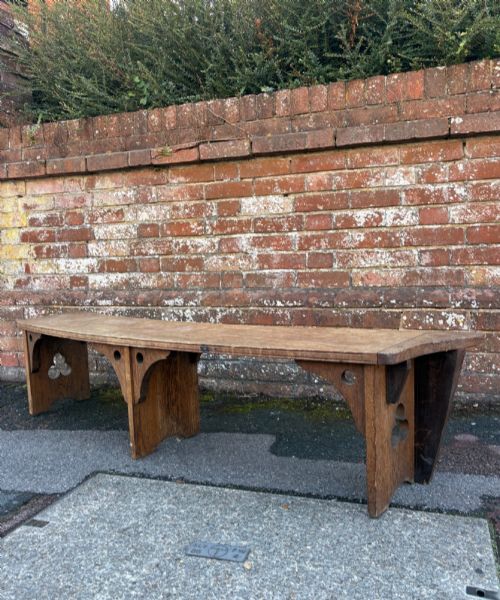
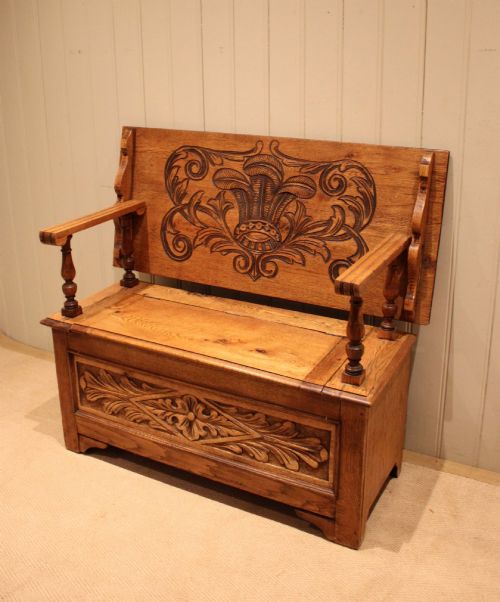
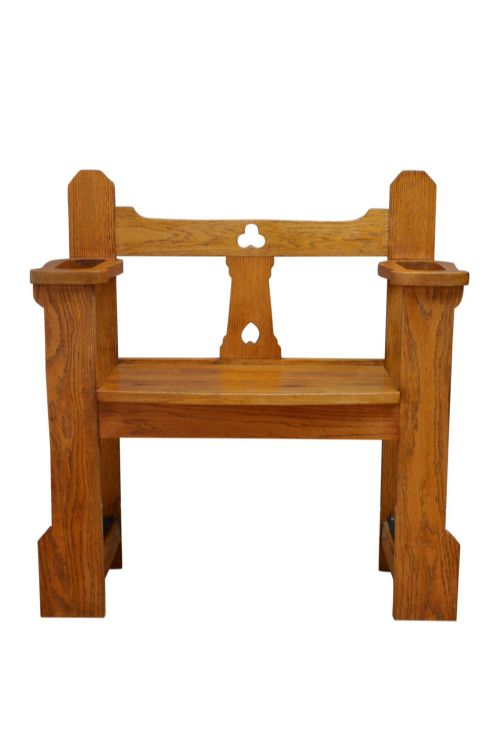
Most items you will encounter date from the Victorian and Edwardian periods, alongside pieces from around nineteen hundred to nineteen twenty. They appear in forms such as architectural seats with carved panels, narrow benches with trefoil supports, and convertible monks benches.
How they were made
Construction relies heavily upon solid oak, sometimes paired with elm or brass fittings, utilising traditional joinery methods suited to heavy everyday use. Carved panels, shaped trestle ends, and architectural forms are worked directly into the timber by hand or with period workshop tools.
Finishes highlight the natural grain of the wood, often showing golden tones or deeper patination developed over decades of service in hallways and public rooms.
Some monks benches double as tables when the back is flipped forward, proving that Victorian practicality had a clever sense of theatre.
What varies in quality
Quality rests in the weight of the timber, the crispness of carved details such as trefoils or Green Man motifs, and the integrity of the structural frame. Better examples display careful proportion, particularly in narrow variants designed for constrained spaces, alongside harmonious matching pairs.
The degree of original versus restored surface makes a difference to collectors, as does the complexity of architectural elements like high back panels and shaped trestle ends.
Waring and Gillow
The Solid Oak Hall Bench Glossary
- Monks Bench
- A convertible piece of furniture featuring a pivoting back that folds down to form a table top over a box seat. It provides dual utility in compact entrance spaces.
- Settle
- A high-backed wooden bench with solid arms and a closed base designed to block draughts in corridors and halls. Older examples often incorporate panelled woodwork.
- Trefoil
- A three-lobed ornamental design resembling clover leaves, frequently pierced or carved into nineteenth-century Gothic revival woodwork. It appears on supports and backrests.
- Trestle ends
- Supporting uprights positioned at either end of a bench rather than conventional legs, offering stability for long timber seats. They are common in Edwardian designs.
- Gothic Revival
- An architectural and decorative style drawing inspiration from medieval forms, utilising pointed arches and heavy carved detail. This aesthetic heavily influences nineteenth-century seating.
Solid Oak Hall Bench: Frequently Asked Questions
Where should I place a hall bench?
A hall bench sits naturally in an entrance hall, porch or boot room where guests remove coats and shoes. Its narrow profile allows it to line a corridor without obstructing movement.
In larger spaces, a high-backed settle or monks bench can anchor an empty wall, providing both seating and a strong architectural focal point upon entering the home.
How do I care for solid oak furniture?
Solid oak benefits from occasional treatment with appropriate wax to nourish the grain and protect the surface from dry indoor atmospheres. Avoid placing wooden seating directly beside heat sources or in prolonged direct sunlight.
Routine dusting with a soft cloth keeps the finish intact, while prompt attention to moisture prevents water marking on the seat timbers.
Can I use these benches for daily seating?
These pieces are built from solid oak and robust timbers designed specifically for heavy domestic traffic and regular use. Their durable construction makes them practical for putting on shoes or resting bags.
Pairing the seat with a suitable cushion can add comfort for longer sitting, though the sturdy frame easily withstands everyday household demands without issue.