
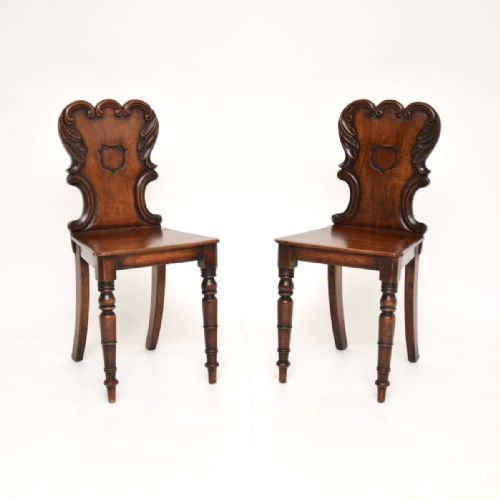


Solid Mahogany Seat
When you search for a solid mahogany seat, you are looking at substantial timber furniture spanning the Georgian, Regency, and Victorian periods.
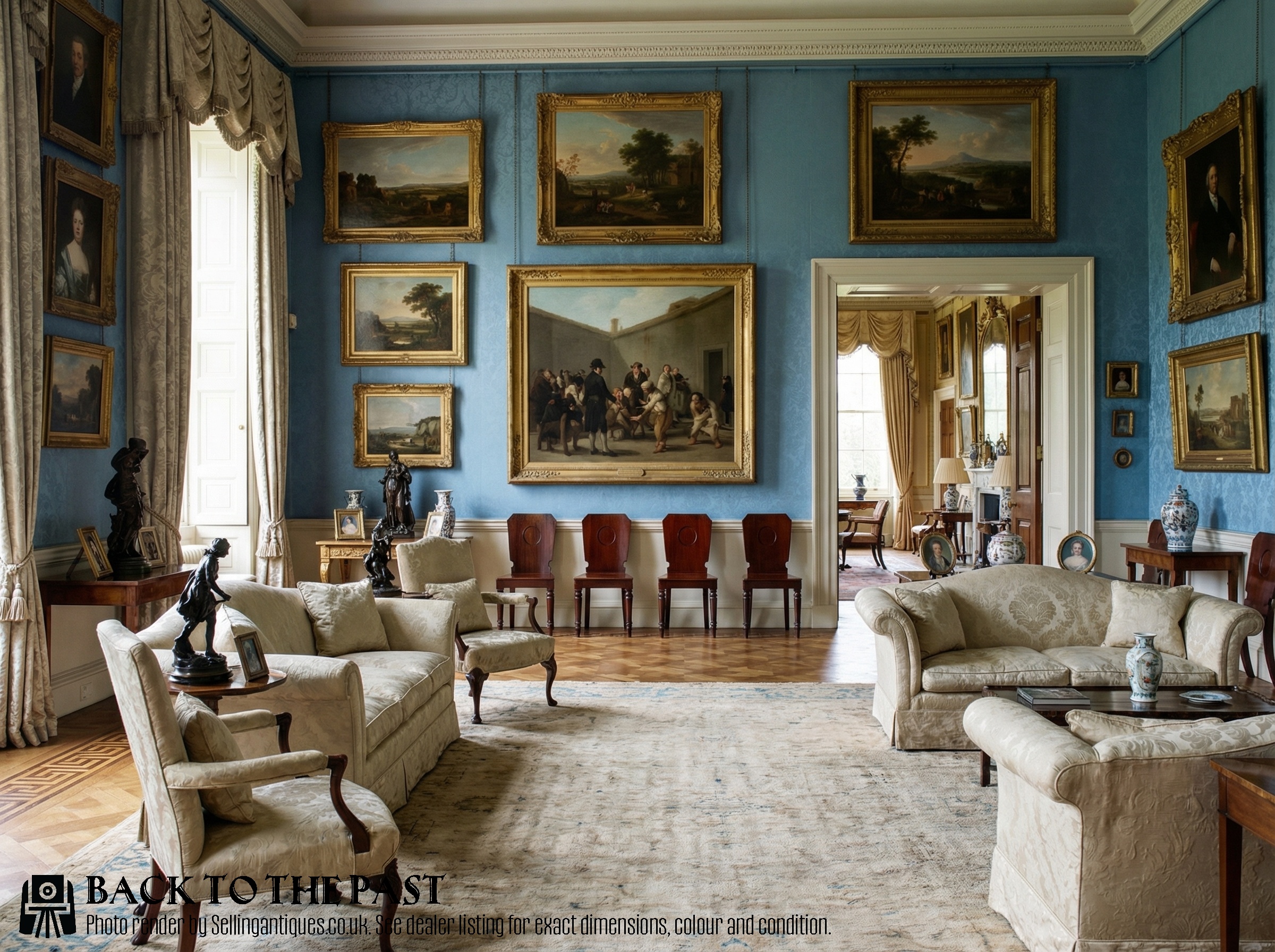
Solid Mahogany Seat
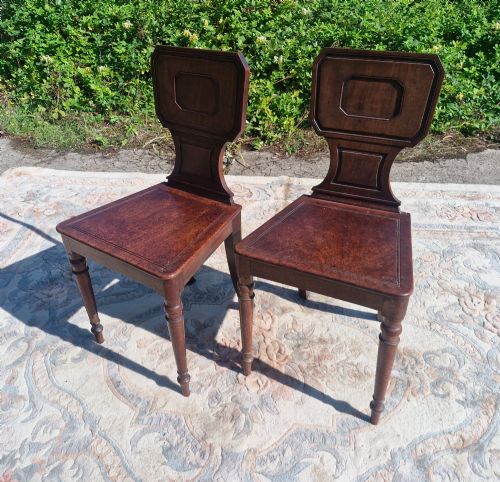
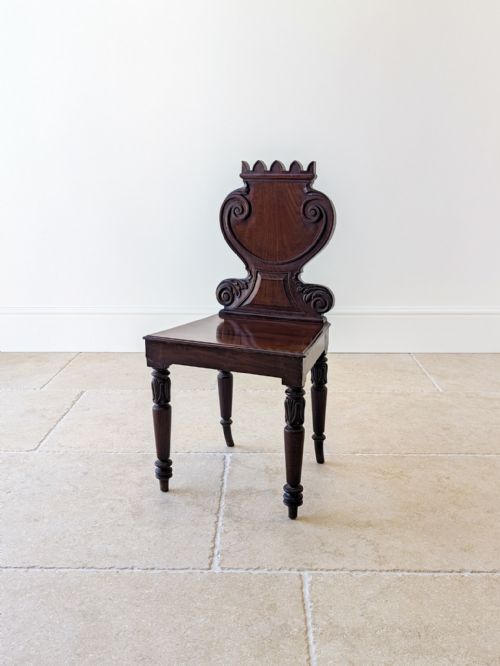
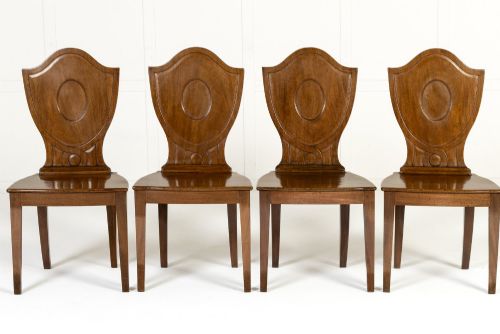
A solid mahogany seat encompasses functional wooden furniture designed for halls, receptions, and dining rooms across the eighteenth and nineteenth centuries. The pieces on this page are predominantly hall chairs, side seats, and occasional benches originating from Georgian, Regency, and Victorian workshops.
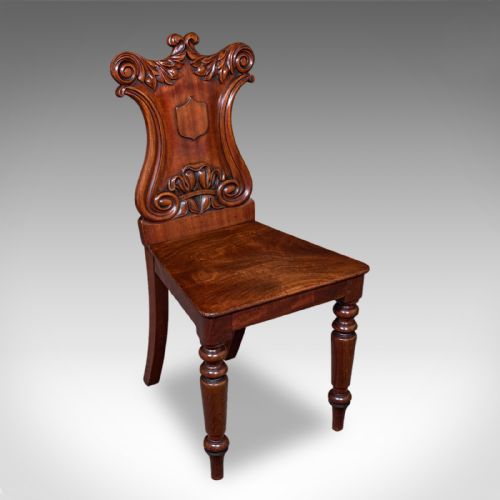
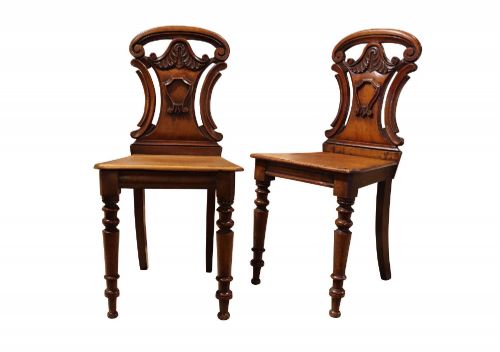
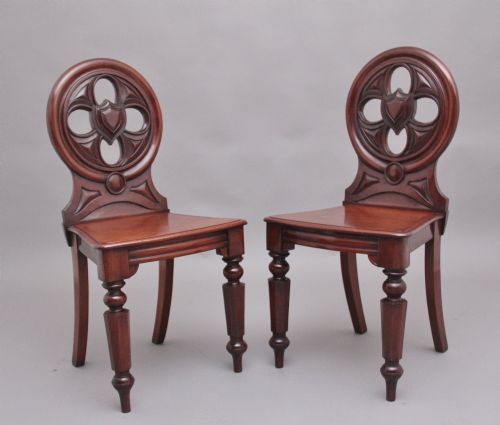
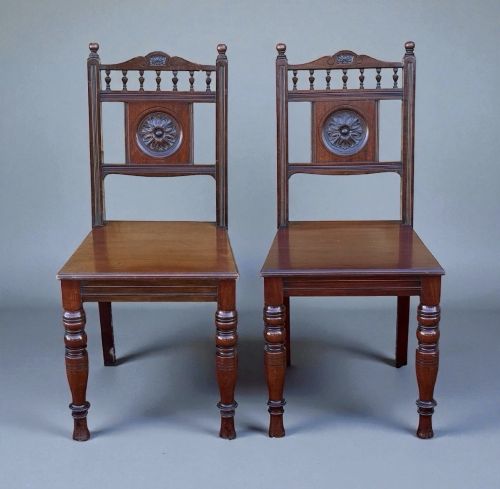
The form is defined by rigid timber construction, often featuring carved wooden backs, solid wooden seats, and turnings appropriate to styles such as Gothic Revival, William IV, and the Aesthetic Movement. While dining tables also appear in the historical archive, the predominant focus remains upright seating intended for hallways and reception spaces.
How they were made
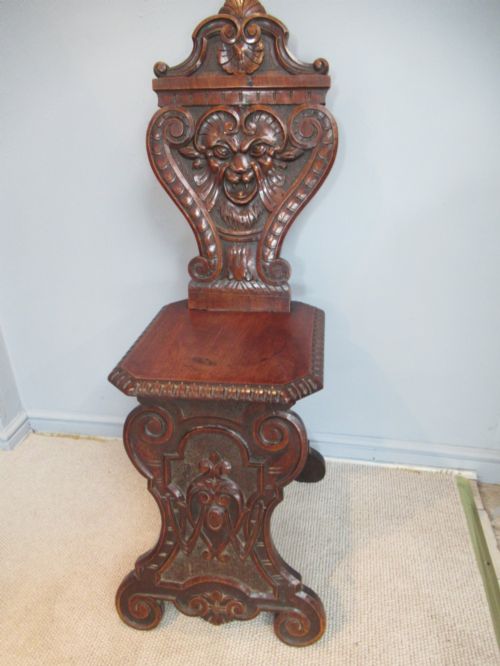
Cabinet makers utilised dense timbers, predominantly solid mahogany, supplemented occasionally by brass inlay, iron hardware, and paint finishes. Wood was selected for grain pattern and strength, allowing for deeply carved shell backs, pelta backs, and sculptural outlines that endured heavy daily use.
Construction techniques relied on solid wood joinery, turning, and hand-carving rather than applied veneers. Chairs often integrated turned legs and solid timber seats shaped directly from the plank, while benches and larger seats employed sturdy framework to support daily weight.
The listings on this page span the Georgian, Regency, and Victorian eras, utilising solid mahogany, brass, and timber.
What varies in quality
The distinction between ordinary utility items and superior examples lies in the depth and crispness of the timber carving. Pieces featuring sculptural shell backs, pelta designs, or brass inlay demonstrate a higher level of craftsmanship than plain, utilitarian boards.
Origin and stylistic cohesion also dictate standing, with matched pairs and larger sets commanding greater interest than isolated examples. The choice of figured mahogany and the precision of nineteenth-century joinery separate standard production from exceptional workshop output.
Gillows
The Solid Mahogany Seat Glossary
- Mahogany
- A durable tropical timber valued for its rich colour, stability, and suitability for carving. It forms the primary structural material across the seats listed on this page.
- Hall chair
- An upright wooden seat designed for placement in an entrance hall or corridor, typically lacking upholstery to withstand heavy use. These pieces often display carved family crests or decorative back panels.
- Regency
- A design period spanning the early nineteenth century, characterised by classical restraint, Grecian influences, and refined timber turning. Pieces from this era often exhibit clean lines and precise proportions.
- Pelta back
- A chair back shaped in the form of an ancient Greek crescent shield. This specific outline appears frequently among nineteenth-century hall seating.
- Shell back
- A decorative chair back carved to resemble a fluted scallop shell. It is a defining ornament of fine Georgian and Regency reception seating.
Solid Mahogany Seat: Frequently Asked Questions
What is a solid mahogany seat used for?
These items served primarily as functional furniture in grand hallways, reception rooms, and dining spaces where guests would momentarily sit. They were built from solid timber to withstand the rigours of high-traffic entrance areas.
Over time, these pieces transitioned from utilitarian hallway furnishings into decorative antiques valued for their sculptural wooden backs and dense mahogany construction.
How do I identify a Regency hall chair?
Regency hall chairs typically display classical architectural influences, crisp carved details, and proportions inspired by ancient Greece and Rome. They date from the early nineteenth century and often feature solid mahogany construction with turned front legs.
Look for refined design elements such as pelta or shell backs, which distinguish these pieces from later, heavier Victorian iterations.
Are these seats comfortable to sit on?
Most antique hall seats and chairs are constructed entirely from solid wood with unpadded timber seats, reflecting their original purpose for brief seating in hallways. They prioritise architectural presence and durability over plush comfort.
While some archive items include upholstered elements or drop-in needlework pads, standard hall chairs remain firm, upright pieces designed for posture and display.
How do I care for solid mahogany furniture?
Solid mahogany requires minimal intervention, benefiting primarily from regular dusting with a soft, dry cloth to protect the timber surface. Avoid placing wooden furniture near direct heat sources or in fluctuating humidity to prevent timber movement.
Applying occasional natural wax helps nourish the wood and maintain the natural lustre of the nineteenth-century finish without sealing the grain.