




Small Writing Cabinet
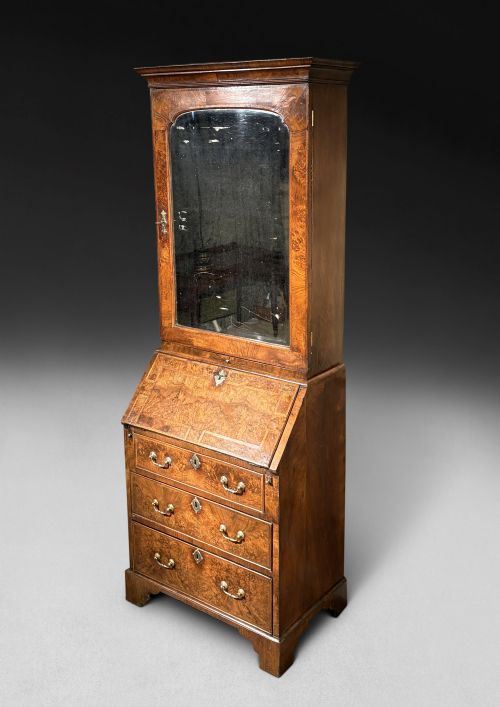
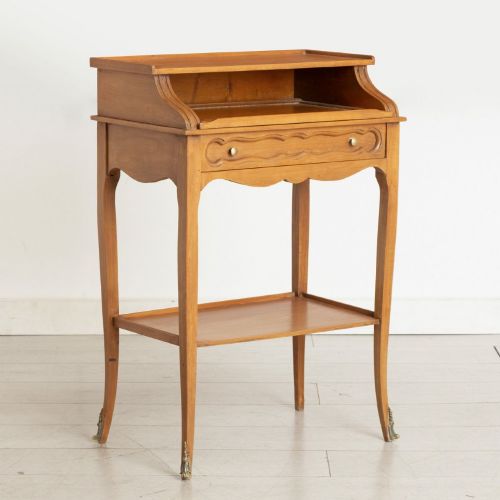
A small writing cabinet offers a compact place for correspondence, taking many forms from the Georgian bureau to the Victorian Davenport.
Small Writing Cabinet
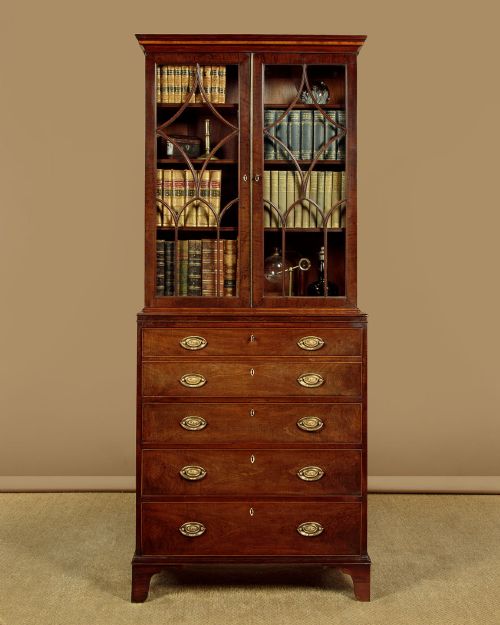
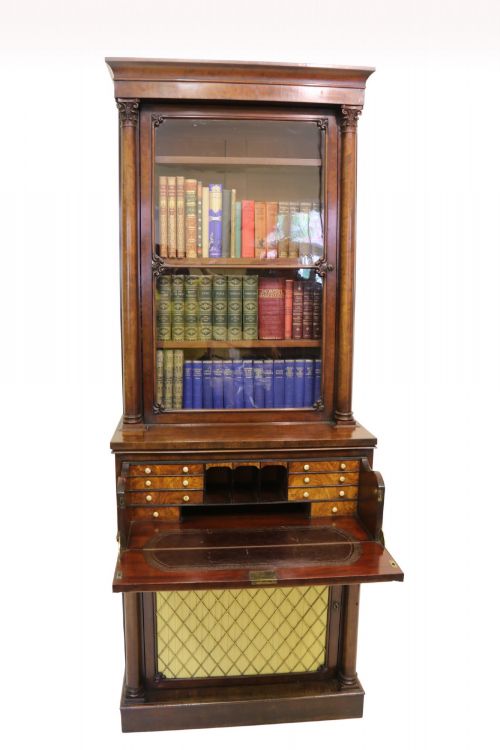
A small writing cabinet brings together storage and a compact writing surface, appearing frequently in walnut, mahogany, and rosewood across the Georgian, Regency, and Victorian periods. Buyers exploring this category encounter pieces designed for tight spaces, ranging from miniature apprentice samples to full-height secretaire bookcases.
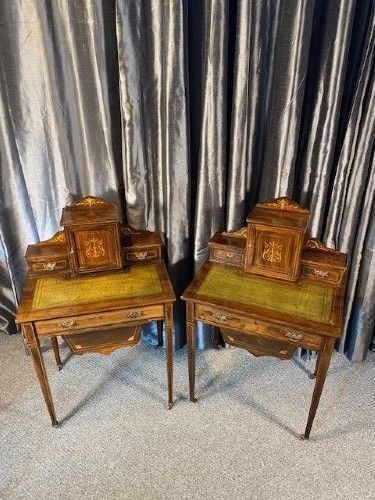
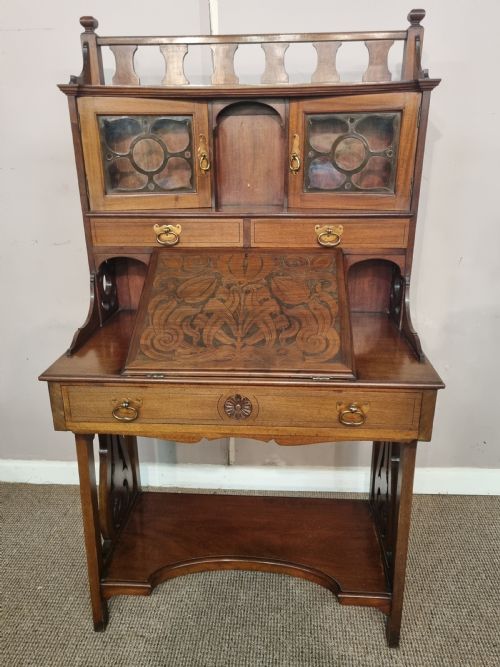
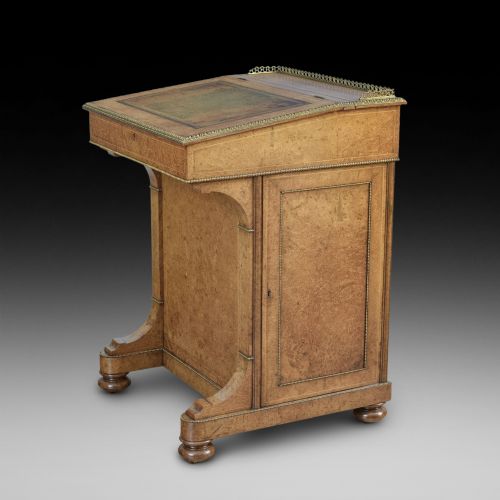
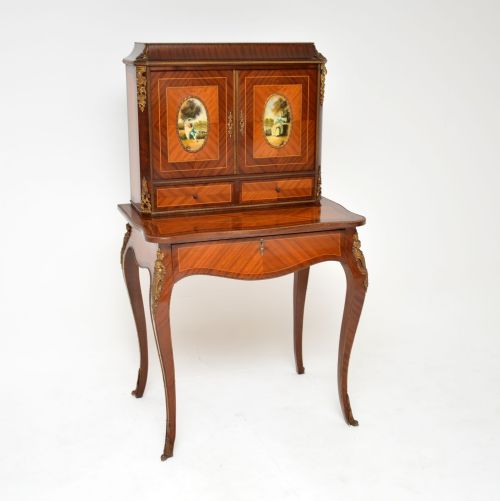
The form stretches from the slope-front bureau and the upright Davenport to the refined bonheur du jour and fitted cabinet with internal stationery compartments. Makers utilised diverse layouts, incorporating drop-down writing flaps, sliding lids, and upper shelving tiers for books or display.
How They Were Made
Craftsmen built these pieces using solid timbers like oak and mahogany, often applying decorative veneers of burr walnut, amboyna, satinwood, and rosewood to the exterior surfaces. Drawer linings typically reveal secondary woods, while internal fittings show careful compartment carpentry.
Metalwork played a structural and decorative role, with brass handles, hinges, and occasional mounts securing drawers and writing flaps. Surface finishing relied on French polishing to bring out the grain patterns of the figured timbers.
What Varies in Quality
The standard of timber selection largely dictates a piece's standing, with richly figured burr walnut and book-matched mahogany veneers marking out finer examples. The crispness of inlay work, stringing, and crossbanding also separates standard production from superior workshop output.
Construction details reveal the maker's hand, particularly in the smooth sliding action of Davenport tops, the accurate fit of internal pigeonholes, and the retention of original brass hardware. Secondary woods and dovetail crispness complete the assessment of execution.
Gillows of Lancaster
The Small Writing Cabinet Glossary
- Davenport
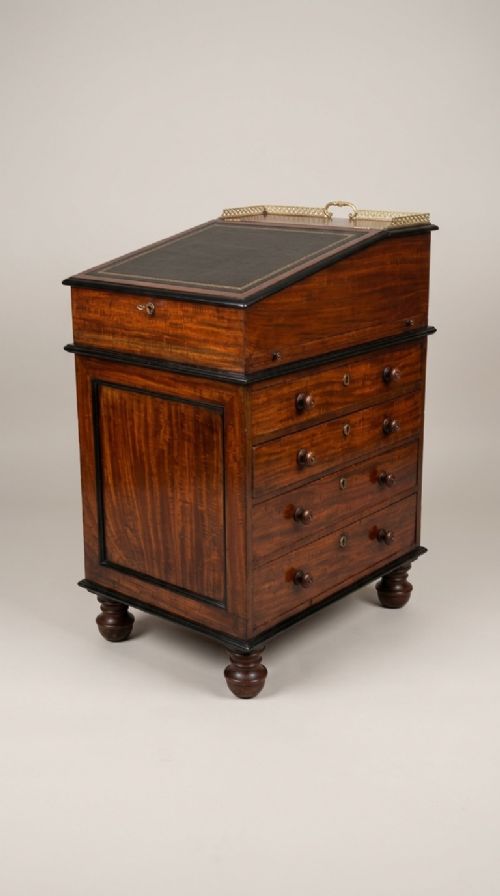
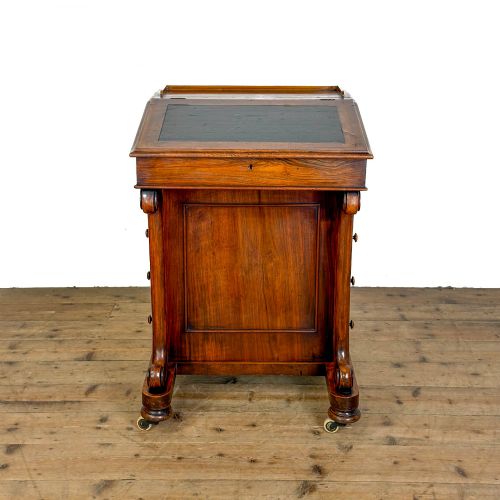
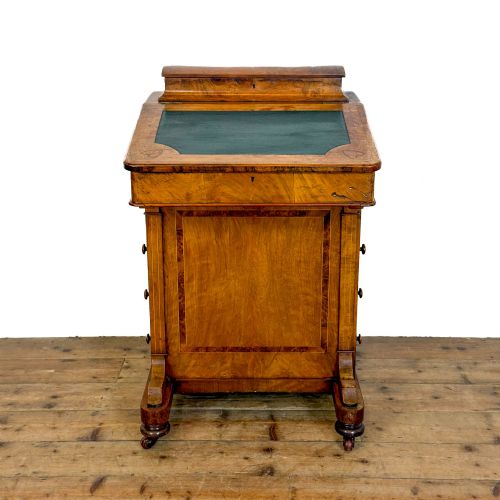
- A compact desk featuring a sloping writing surface above a pedestal of drawers. The top often incorporates a stationery compartment.
- Secretaire
- A piece of furniture containing a concealed writing drawer or drop-front writing flap that pulls down to reveal small drawers and pigeonholes.
- Bonheur du jour
- A light, elegant lady's writing desk with a small cabinet or set of shelves mounted upon the work surface.
- Bureau
- A writing desk with a sloping hinged lid that opens to enclose fitted drawers and compartments.
- Crossbanding
- A strip of veneer applied across the grain of the main surface to form a decorative border.
Small Writing Cabinet: Frequently Asked Questions
What is a Davenport desk?
A Davenport is a compact writing cabinet with a sloping lid above a pedestal of drawers, often featuring a stationery box on top.
First appearing in the Regency period, these pieces served as space-saving writing desks for ladies and gentlemen.
How do I date a small writing cabinet?
Dating relies on timber choices, construction techniques, and stylistic markers such as Georgian bracket feet, Regency brass mounts, or Victorian burr walnut veneers.
Secondary woods inside drawers also help pinpoint the era of manufacture.
What is a bonheur du jour?
A bonheur du jour is a light writing table featuring a small cabinet, mirror, or shelving tier mounted above the main writing surface.
These decorative pieces gained popularity during the 18th century and experienced revivals into the Victorian era.
Where were these cabinets used?
These cabinets served in drawing rooms, bedrooms, and studies as personal desks for managing correspondence and keeping stationery.
Their modest proportions allowed them to fit into smaller domestic spaces where full-sized desks proved impractical.