




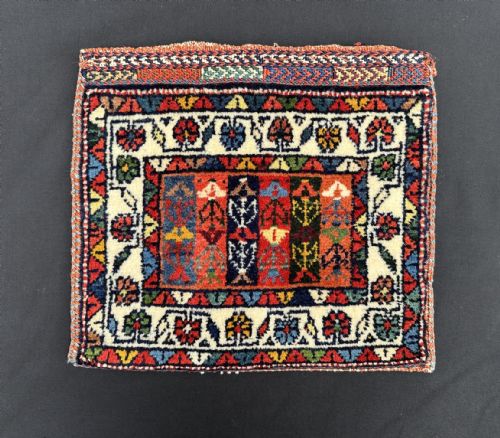
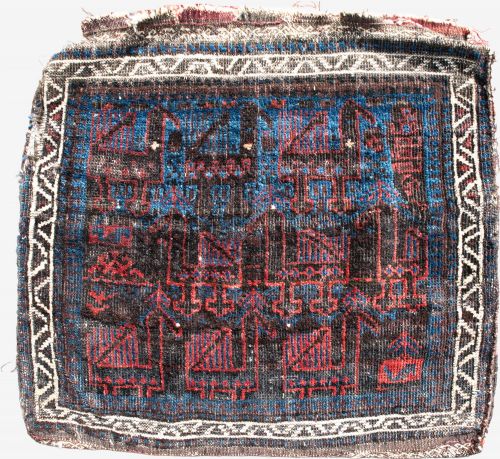


Small Woven Bag
When you handle a small woven bag, you hold a nomadic textile crafted for daily utility and tribal ceremony across Persia, Central Asia, and Anatolia.
Small Woven Bag
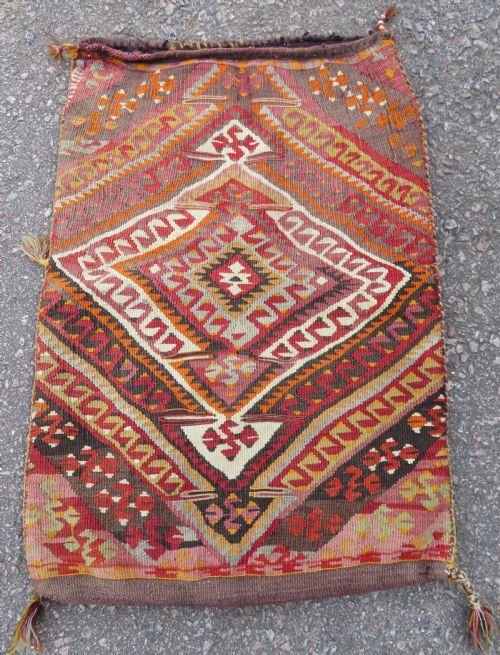
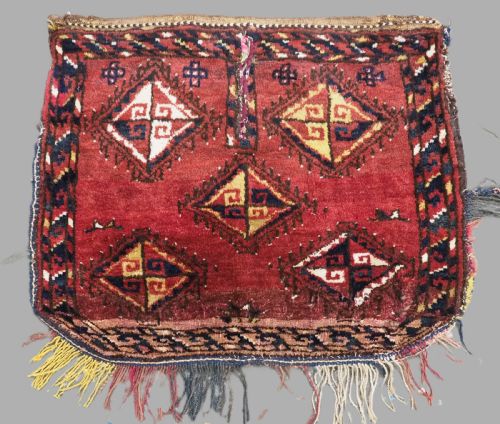
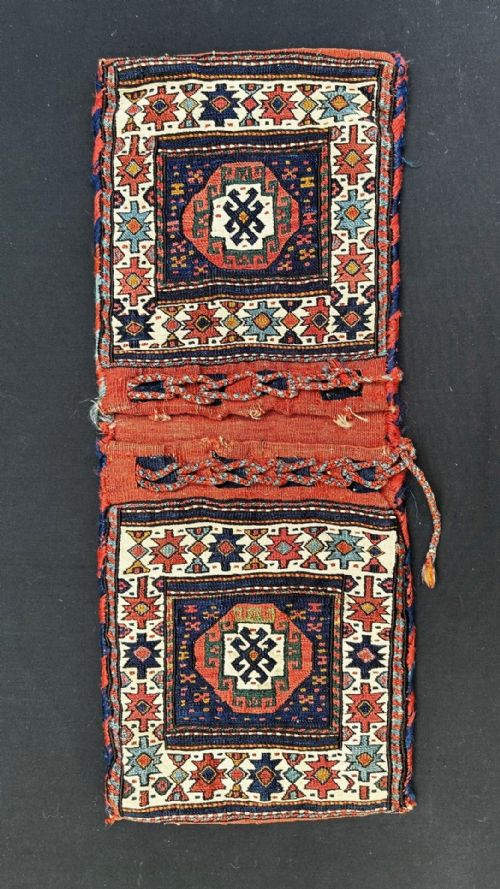
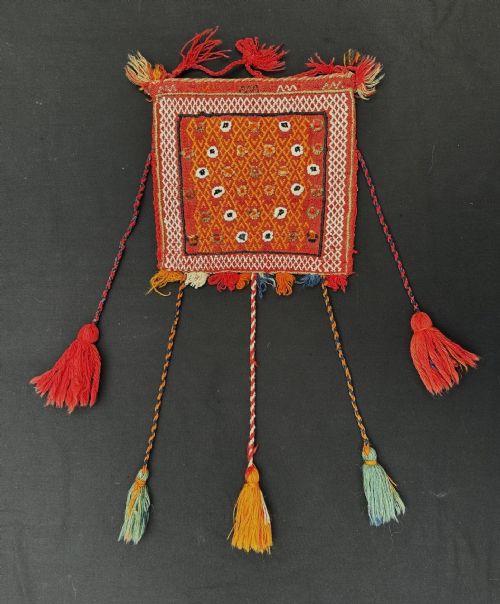
A small woven bag on this page typically manifests as a saddlebag face, torba, chanteh, or vanity bag originating from nomadic groups such as the Turkmen, Baluch, Afshar, and Qashqai.
These functional containers served diverse domestic roles in tribal life, ranging from grain storage and clothes sacks to dowry pieces and personal carry pouches.
The materials span from the nineteenth century into the early twentieth century, showing the enduring traditions of Persian tribal, Turkmen tribal, and Central Asian tribal weaving.
Wool, cotton, and natural dyes
Weavers relied primarily on wool and hand-spun wool for the foundational pile and structure, frequently incorporating cotton and crimson silk for structural contrast and detail.
Natural dyes imparted the rich palette seen across these textiles, working in harmony with hand-knotted pile and flatweave kilim techniques.
Nomadic workshops constructed these items to endure rigorous daily handling while expressing traditional tribal motifs through dense structural knotting.
Small Woven Bag Retail Price Guide 2026
Typical asking prices for small woven bag among the pieces listed under this phrase on Sellingantiques today, from the lower quarter to the upper quarter. They describe what is for sale here now, not the wider market.
Listings span nineteenth-century dates up to the nineteen-thirties, featuring wool, cotton, and silk materials across Persian, Turkmen, and Anatolian tribal origins.
Density of weave and purity of colour
The fineness of the weave and the clarity of design execution separate standard utility pieces from exceptional dowry or presentation examples.
Intact original backs, well-preserved natural dye saturated grounds, and precise tribal gul geometries distinguish superior survivals from heavy wear fragments.
The refinement of the knotting and the complexity of subsidiary panels demonstrate the individual weaver's skill within established tribal canons.
The Small Woven Bag Glossary
- Torba
- A small Turkmen storage bag used inside the yurt for household goods or personal items. These pieces frequently feature characteristic guls and hanging attachments.
- Chanteh
- A small Persian or Kurdish personal carrying bag or vanity pouch. They were often woven for personal use as small containers.
- Gul
- A repeated octagonal medallion motif used extensively in Turkmen and Central Asian tribal weaving. Each design often identifies a specific tribal group or clan.
- Mafrash
- A rectangular storage bag or valise used for bedding and household possessions during nomadic migration. They form part of larger sets transported by pack animals.
- Khorjin
- A traditional double saddlebag linked by a central web, designed to carry possessions across horses or camels. Surviving fragments often display only the face of one pocket.
Small Woven Bag: Frequently Asked Questions
What is a small woven bag used for?
Nomadic tribes utilised these containers for storing grain, clothes, bedding, and personal vanity items during seasonal migrations and inside tents.
They also functioned as dowry components and decorative wall hangings within the tribal household.
How do I identify a Turkmen torba?
Turkmen torbas are small storage bags defined by repeating primary medallion motifs known as guls and distinctive border arrangements.
They frequently display specialised designs such as the kepse or kedjebe pattern associated with specific tribal weaving traditions.
Are these bags complete or fragments?
The selection includes both complete pieces retaining their original woven backs and bag faces that have been separated from their matching pairs.
Many survive as single faces because the heavy use of the back panels led to their loss over time.
How should I display a tribal bag?
These textiles adapt well to wall mounting using conservation-grade display methods that distribute the weight evenly across the upper edge.
Smaller examples can also be placed on flat surfaces or integrated into textile collections with minimal direct handling.