





Small Wooden Jewellery Box
A small wooden jewellery box brings domestic history to the dressing table in the form of miniature chests, cabinets, and trinket boxes.
Small Wooden Jewellery Box
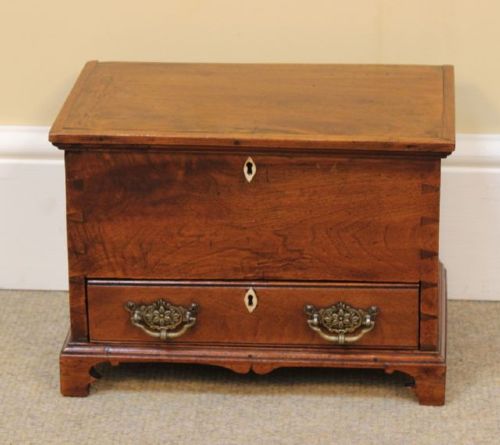
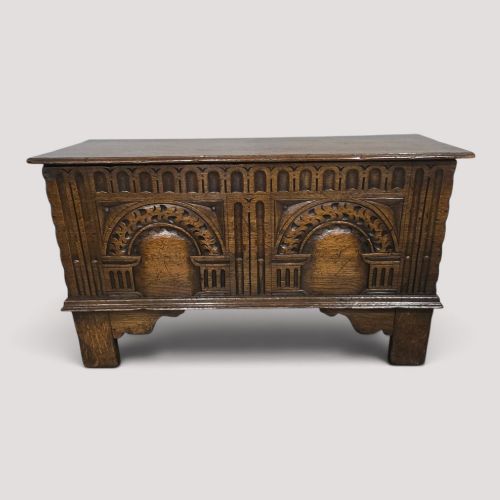
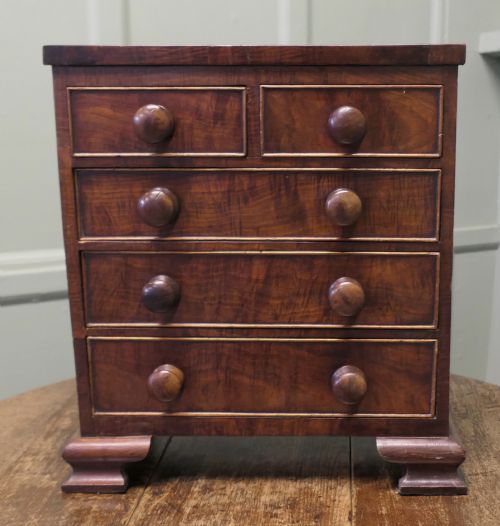
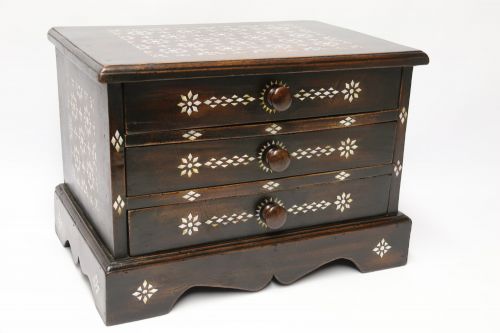
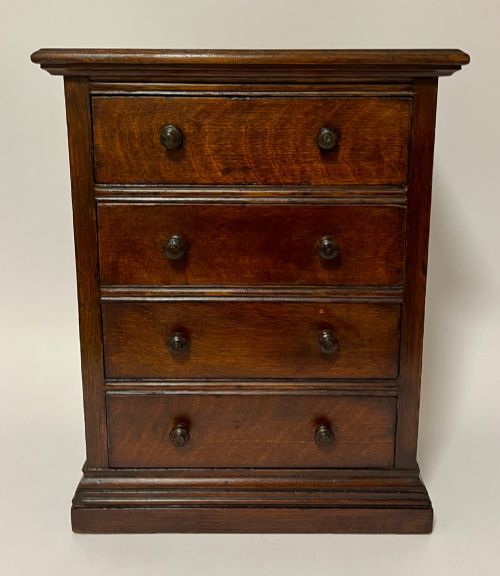
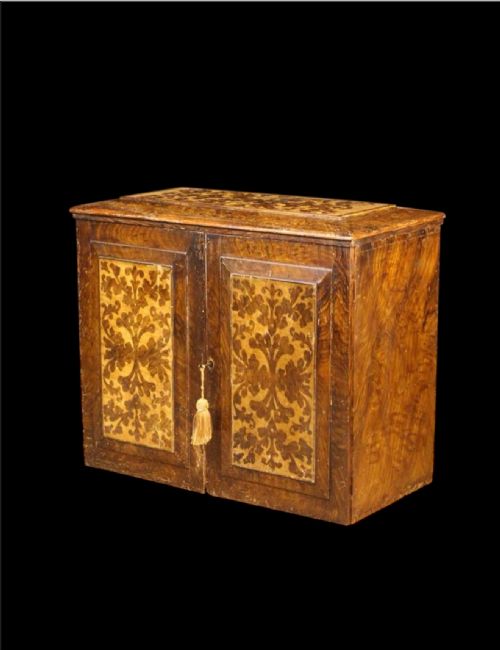
A small wooden jewellery box encompasses tabletop chests of drawers, apprentice pieces, and decorative keepsakes originating from the eighteenth, nineteenth, and early twentieth centuries. These pieces appear in forms ranging from miniature mahogany bow-front chests and oak coffers to inlaid hardwood collector cabinets and table boxes.
The selection here draws heavily upon Victorian and Edwardian examples alongside Georgian and Regency specimens. Buyers frequently encounter miniature furniture and table cabinets utilising traditional forms scaled down for desktop storage or presentation.
How they were made
Cabinetmakers utilised a variety of dense and figured timbers including mahogany, walnut, oak, elm, satinwood, and rosewood. Construction often involved fine dovetail joints, hand-carved details, and smooth wood inlay to decorate small surfaces.
Many examples incorporate brass handles, escutcheons, and hinges to secure doors and lids. Specialised finishes like black lacquer and French polish highlight the natural grain of the wood and the patina developed over centuries.
Periods spanning the selection cover the eighteenth century, the Regency era, the Victorian period, and Edwardian times up to nineteen-twenty.
What varies in quality
The standard of a small wooden jewellery box rests on the crispness of the joinery and the selection of figured timber veneers. Superior examples display carefully matched wood grains across drawer fronts and harmonious proportions that mimic full-scale furniture accurately.
Execution of decorative elements such as inlaid banding, carved mouldings, and fitted interior compartments dictates the distinction between standard utilitarian boxes and finer collector pieces. Original brass hardware and working locks with keys further elevate the standing of an antique.
The Small Wooden Jewellery Box Glossary
- Apprentice piece
- A miniature item of furniture created by a craftsman in training to demonstrate mastery of joinery and woodworking techniques. These often take the form of small chests of drawers.
- Table cabinet
- A small desktop storage unit featuring doors or drawers designed to hold valuables, papers, or specimens. They appear in oak, mahogany, and various exotic woods.
- Tunbridge ware
- Small wooden boxes decorated with tiny mosaic tiles assembled from different coloured woods to form geometric or pictorial patterns. Rosewood forms the typical carcass for these items.
- Patina
- The deep surface sheen and mellow colour developed by aged wood through handling, waxing, and exposure to light over generations. This quality indicates genuine antique age.
- Escutcheon
- A protective brass plate surrounding a keyhole on a box or cabinet door. They frequently feature decorative pierced designs matching the period style.
Small Wooden Jewellery Box: Frequently Asked Questions
How do I date a wooden trinket box?
Dating relies on identifying the timber species, construction methods like dovetailing, and the style of brass hardware fitted to the piece.
Victorian and Georgian pieces often show distinct Regency or Victorian design traits corresponding to their period of manufacture.
What woods were used for antique boxes?
Cabinetmakers employed domestic timbers like oak, elm, and mahogany alongside exotic decorative woods such as rosewood, walnut, satinwood, and amboyna.
Inlays and veneers were frequently applied to create contrasting geometric patterns on the exterior surfaces.
Were these boxes always for jewellery?
While many served as jewellery chests or keepsake boxes, others functioned as collector cabinets for specimens, cigar humidors, or specialised watch and clock repairer storage.
Interior compartments and shallow drawers adapted easily to hold various small valuable items.
How should I care for antique wood?
Keep wooden boxes away from direct sunlight and sudden temperature fluctuations to prevent the timber and veneers from drying out or splitting.
Apply a traditional beeswax polish occasionally to nourish the surface and maintain the historic patina.