


Small Wooden Desk Box
A small wooden desk box is a compact tabletop receptacle for letters and papers, prized for period craftsmanship and clever stationery storage.
Small Wooden Desk Box
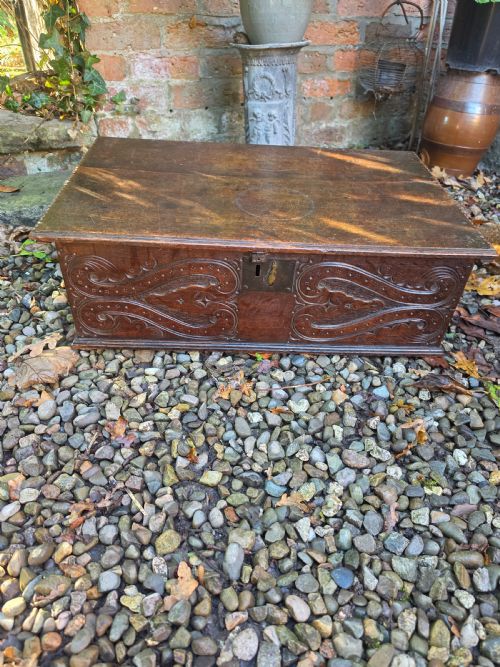
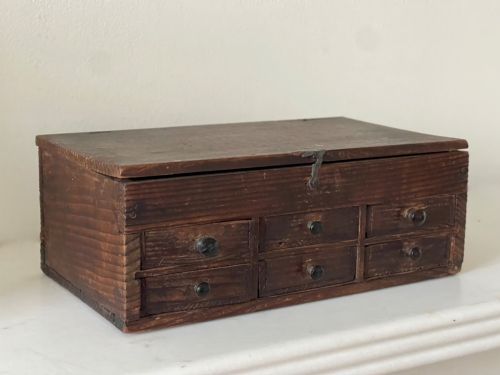
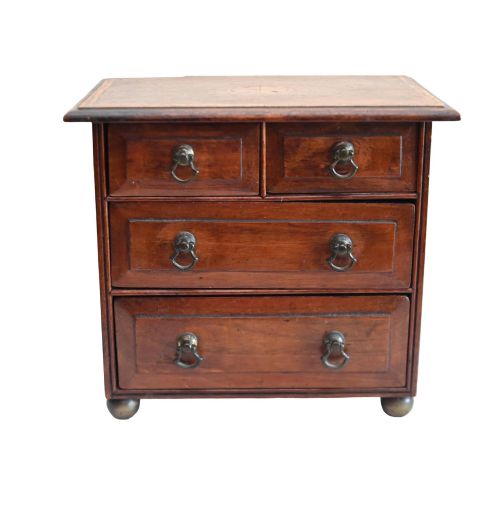
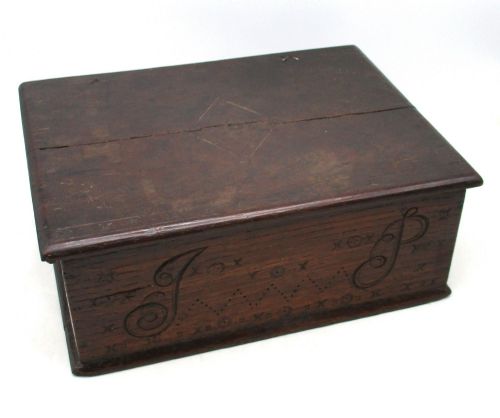
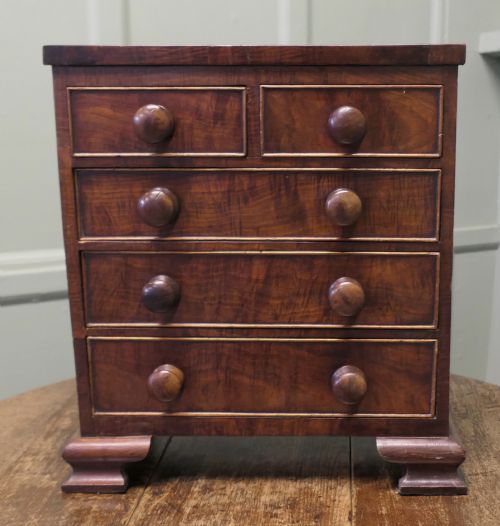
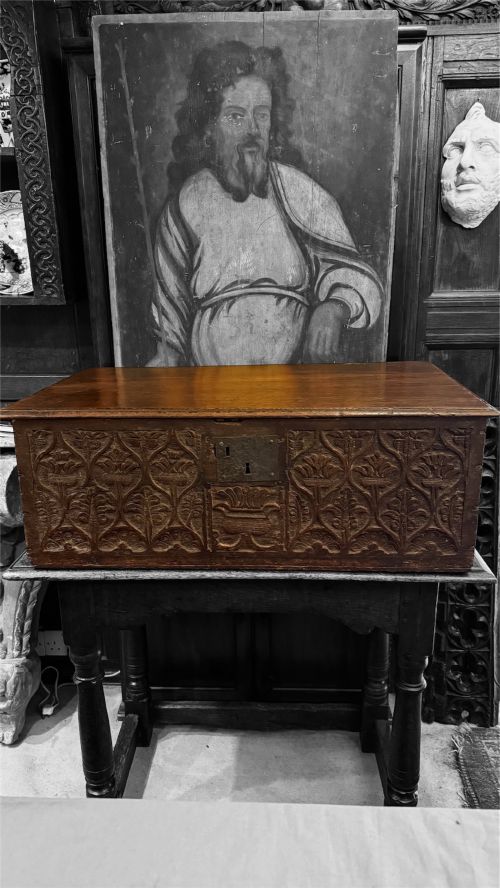
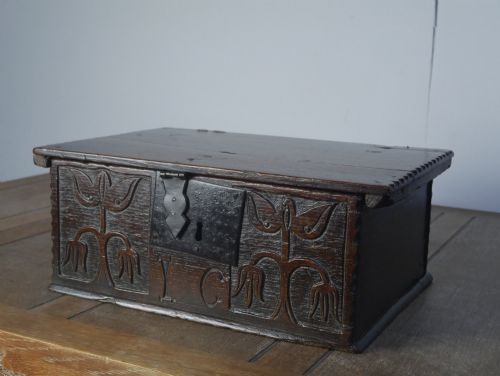
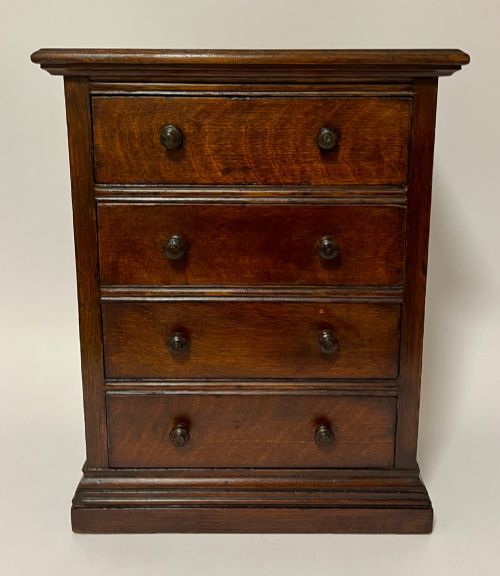
A small wooden desk box encompasses compact oak document repositories, miniature chests of drawers, and folding writing slopes designed for desktop use. These items range from seventeenth-century carved Bible boxes to Victorian walnut table cabinets and Edwardian receptacles.
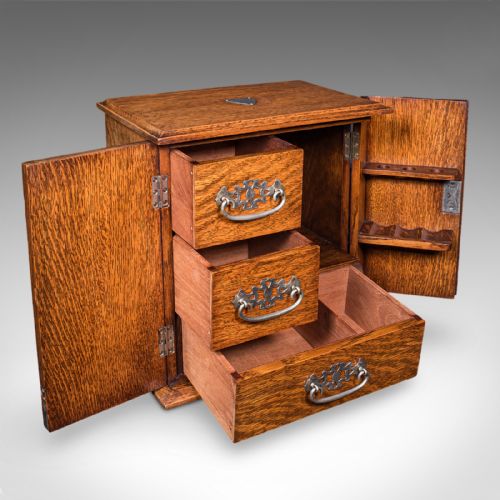
The version most commonly met on this page is the period oak document box or tabletop cabinet, often featuring hinged lids or small drawers. Pieces from the eighteenth and nineteenth centuries dominate the selection, alongside earlier seventeenth-century English examples.
How they were made
Construction relies heavily on solid timbers such as oak, mahogany, walnut, and elm, shaped into dovetailed or pegged joints depending on the period. Cabinetmakers utilised brass for locks, hinges, and carrying handles, while boxwood and satinwood provided contrasting inlay.
Surface finishes include chip carving on seventeenth-century oak, intricate tunbridgeware mosaic work on Victorian walnut, and polished mahogany veneers. Iron fittings and fabric linings appear on specific utility boxes and travelling inkwells.
Listings feature timbers including oak, mahogany, walnut, boxwood, elm, and satinwood across the seventeenth, eighteenth, and nineteenth centuries.
What varies in quality
Quality rests upon the crispness of the original timber carving, the integrity of the dovetail joinery, and the retention of original brass hardware. Pieces displaying untouched patination and dense grain command greater attention than those with heavy later alterations.
The refinement of internal partitions, such as fitted stationery slots or secret drawers, separates standard utility containers from finer cabinetmaker productions.
The Small Wooden Desk Box Glossary
- Bible box
- A sloping-lidded wooden container originally built to hold a large family Bible and later utilised for letters and documents. These pieces often date from the seventeenth century and feature chip-carved decoration.
- Document box
- A rectangular wooden chest designed to secure legal papers and correspondence under lock and key. They frequently date to the eighteenth century in oak or walnut.
- Table cabinet
- A miniature piece of case furniture with small drawers or doors made to sit upon a desk or table. They emerge in Victorian and Edwardian listings.
- Tunbridgeware
- A form of decorative woodworking using thousands of tiny coloured wood blocks to create mosaic patterns. This technique appears on Victorian trinket boxes and inkwells.
- Apprentice piece
- A small-scale item of furniture created by a craftsman to demonstrate mastery of skills. These miniature chests of drawers mimic full-sized furniture forms.
Small Wooden Desk Box: Frequently Asked Questions
What were small wooden desk boxes used for?
These boxes stored precious documents, writing paper, letters, and ink supplies securely on a table or desk.
People kept personal correspondence and important household papers inside them before fitted desk furniture became common.
How do I date an antique oak desk box?
Dating relies on construction methods like hand-cut dovetails, pegged joints, and the style of any surface carving.
Seventeenth-century examples often display chip carving and board construction, while eighteenth-century boxes utilise refined paneling.
Are these boxes suitable for daily desktop use?
Many solid timber boxes remain sturdy enough to hold modern stationery, pens, and small household items safely.
Their compact proportions allow them to fit easily onto contemporary desks and side tables.
What is the difference between a Bible box and a document box?
Bible boxes typically feature a sloping top designed for reading or resting a book upon, alongside storage.
Document boxes generally have flat lids intended strictly for stacking and securing loose papers and manuscripts.