


Vintage Wooden Tobacco Container
These vintage wooden tobacco containers bring centuries of carved craft and domestic habit right to your tabletop.
Vintage Wooden Tobacco Container
A vintage wooden tobacco container is a small receptacle designed to hold pipe tobacco, snuff, or cigars, taking forms that range from simple turned barrels to elaborate figural carvings. When you search for vintage wooden tobacco container, you encounter pieces that span multiple eras from the eighteenth century through the early twentieth century.
These pieces served a daily utilitarian function in homes and smoking rooms before mass production homogenised household goods. Today, collectors value them for their tactile qualities, regional carving styles, and the patina accumulated through decades of handling.
How they were made
Craftsmen shaped these containers primarily from hardwoods, fruitwoods such as yew and walnut, and linden wood using traditional woodworking techniques like turning on a lathe, hand-carving, and inlay. Lighter woods and dense hardwoods alike lent themselves to detailed relief work and smooth, polished surfaces.
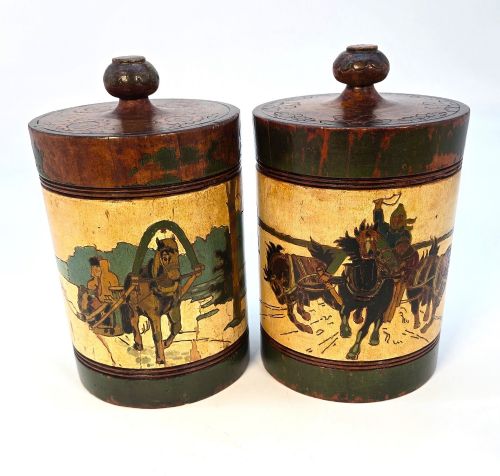
Decoration relied heavily on direct hand-carving to create figural representations of animals or objects, complemented occasionally by polychrome paint and brass fittings for hinges and closures. Barrel forms utilised tightly fitted stave construction or hollowed-out sections turned precisely to seal contents against the air.
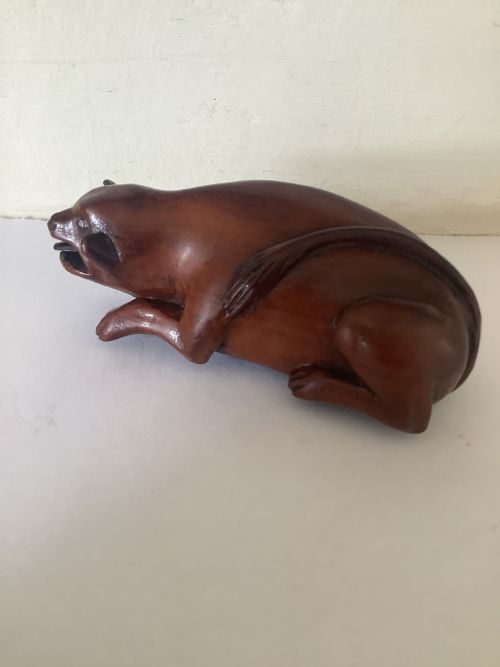
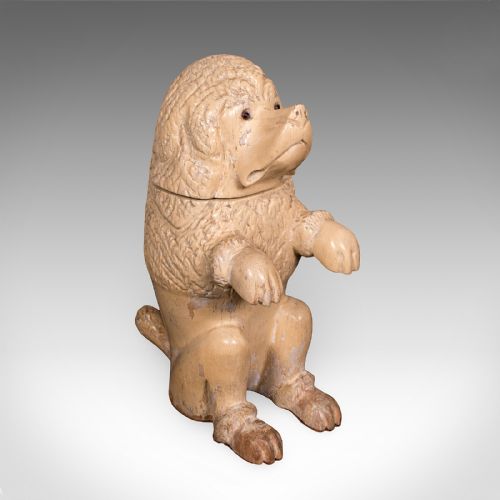
Carvers could not resist turning tobacco containers into soccer footballs, brown bears, and poodles.
What varies in quality
Quality in these containers rests on the crispness and depth of the carving, particularly in figural and folk art pieces where facial expressions and anatomical proportions demand sculptural skill. A superior piece displays confident chisel work and careful attention to the natural grain of the wood.
The integrity of the construction and the retention of original surface finishes also set examples apart, with well-preserved patinas and functioning lids commanding greater appreciation among collectors than heavily restored or sanded surfaces.
The Vintage Wooden Tobacco Container Glossary
- Humidor
- A moisture-controlled box or jar designed to keep tobacco fresh. These are often lined or fitted to maintain humidity.
- Snuff box
- A small pocket or table container specifically for holding powdered tobacco. They frequently feature tight-fitting lids to prevent spills.
- Black Forest
- A nineteenth-century carving style originating in Switzerland and Germany. Pieces from this tradition typically feature realistic animals rendered in linden wood.
Vintage Wooden Tobacco Container: Frequently Asked Questions
What is the difference between a tobacco jar and a snuff box?
Tobacco jars are generally larger vessels intended to sit on a table or desk to hold pipe tobacco in larger quantities. They often include fitted lids or inner weights to press the leaf down.
Snuff boxes are much smaller, designed to hold finely ground tobacco for nasal ingestion. They range from pocket-sized specimens to small table boxes.
How do I date a wooden tobacco container?
Dating relies on examining the tool marks, timber selection, hinge construction, and stylistic clues inherent to specific periods like the Georgian or Edwardian eras. Hand-turned surfaces and early metal fixings often point to older manufacture.
Comparing the decorative motifs against known folk art or regional traditions also helps narrow down the decade of creation.
How should I care for antique wooden boxes?
Keep wooden containers away from direct sunlight and rapid temperature fluctuations to prevent the wood from drying out and cracking. Maintain a stable indoor humidity level.
Dust them gently with a dry, soft cloth and avoid applying modern polishes or oils that can damage historic wax and varnish surfaces.
What woods were commonly used?
Makers utilised a wide variety of timber depending on regional availability and the desired finish, including walnut, mahogany, fruitwoods, and linden wood. Hardwoods provided durability for daily handling.
Linden wood was particularly favoured in Alpine carving traditions for its fine grain and ease of shaping intricate figural details.