




Small Walnut Writing Cabinet
A small walnut writing cabinet brings compact domestic workspace into a room through figured timber and fitted drawers.
Small Walnut Writing Cabinet
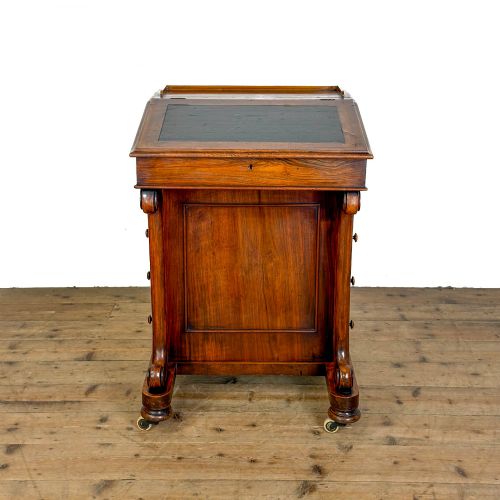
When you search for a small walnut writing cabinet, you encounter compact writing furniture designed for domestic study or correspondence. These pieces include davenport desks, bureau bookcases, and lowboys originating from the eighteenth to the early twentieth century.
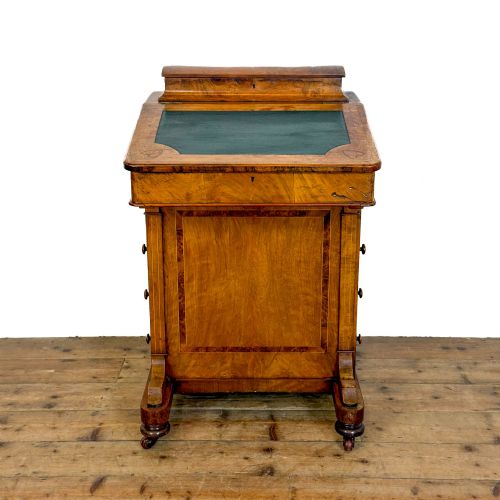
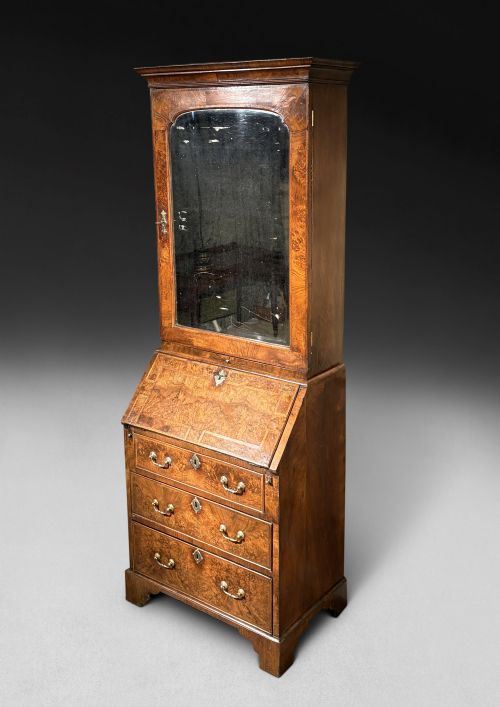
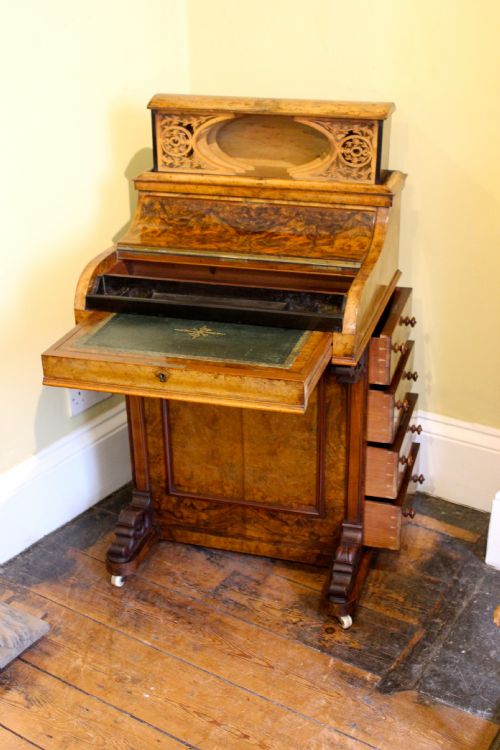
The Victorian davenport desk dominates the selection, often featuring burr walnut veneers, stationery compartments, and hinged writing slopes. Earlier Georgian and Queen Anne examples appear as slender bureaux or secretaire chests with fitted interior drawers.
Makers utilised various formats to save space while providing secure storage for papers and writing implements. French ladies desks and compact bonheur du jour tables also appear among these selections.
Materials and construction
Cabinetmakers constructed these pieces primarily using solid walnut and highly figured burr walnut veneers applied to secondary woods such as oak. Crossbanding, marquetry inlay, and ebonised details provided decorative contrast on the exterior surfaces.
Mounts in brass and ormolu reinforced corners and drawers on French and Victorian variants, while fitted leather writing surfaces supplied a durable plane for daily correspondence. Glass doors occasionally protected upper shelving sections on bureau bookcases.
Secondary materials recorded across these pieces include brass, leather, oak, glass, and ormolu mounts.
Distinctions in manufacture
Quality rests principally in the selection and matching of the walnut veneer figures across the fall front or desk lid. Superior pieces display continuous grain patterns across drawer fronts and harmonious timber tones throughout.
Interior architecture also separates standard production from finer cabinet work, seen in secret compartments, pigeonhole arrangements, and secondary drawer linings in solid timber. The precision of inlaid marquetry and the retention of original brass hardware further indicate higher manufacturing standards.
Gillows
The Small Walnut Writing Cabinet Glossary
- Davenport
- A small compact desk featuring a sloping writing top above a pedestal of drawers. This form became popular during the nineteenth century for writing and storing stationery.
- Burr Walnut
- A distinctive timber harvested from the wart-like growths on walnut trees, yielding swirling grain patterns. Cabinetmakers sliced this wood into thin veneers for decorative surfaces.
- Bureau
- A desk with an angled hinged flap that drops down to form a writing surface. It conceals a collection of small drawers and pigeonholes inside.
- Crossbanding
- A border technique where narrow strips of veneer are laid perpendicular to the main grain. This frames drawer fronts and cabinet doors with contrasting timber direction.
- Ormolu
- Gilded bronze mountings applied to furniture for decorative accent. Workshops used these cast metal ornaments extensively on nineteenth-century French pieces.
Small Walnut Writing Cabinet: Frequently Asked Questions
What is a davenport desk?
A davenport desk is a compact writing cabinet with a sloping lid and side drawers. It was designed for ladies or gentlemen to write letters in small sitting rooms.
The writing surface is often lined with leather and lifts to reveal small storage compartments for paper and ink.
How do I identify a bureau bookcase?
A bureau bookcase combines a drop-front writing desk at the base with a glazed shelving cabinet on top. They offer enclosed storage for both books and writing materials.
These pieces usually date from the eighteenth century or later revival periods and utilise figured walnut veneers.
Where should I place a small writing cabinet?
These compact cabinets suit living rooms, studies, or bedrooms where floor space is limited. Their finished backs often allow them to stand freestanding in the middle of a room rather than against a wall.
Keep them away from direct sunlight and heat sources to protect the polished walnut veneer from drying out.
How do I care for walnut veneer?
Dust the surfaces regularly with a soft, dry cloth to prevent dirt accumulation. Avoid using modern silicone sprays or abrasive cleaners that can damage the historical polish.
Apply a traditional beeswax occasionally to nourish the timber and maintain a soft lustre on the burr walnut grain.