

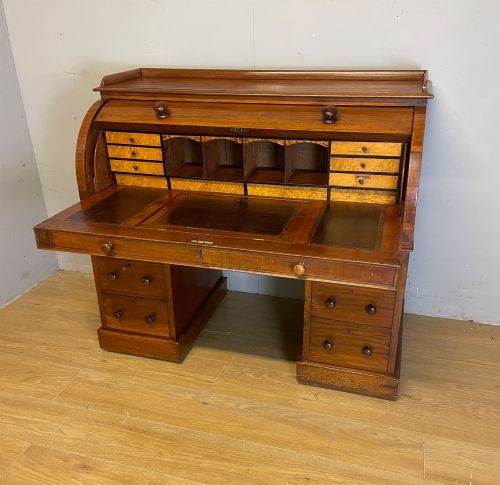
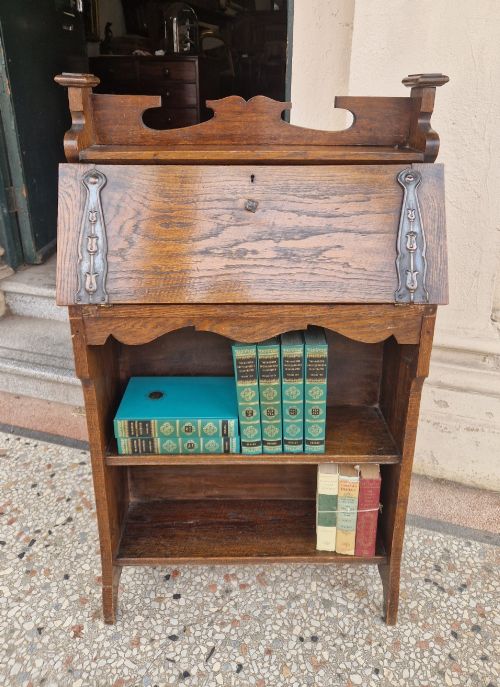
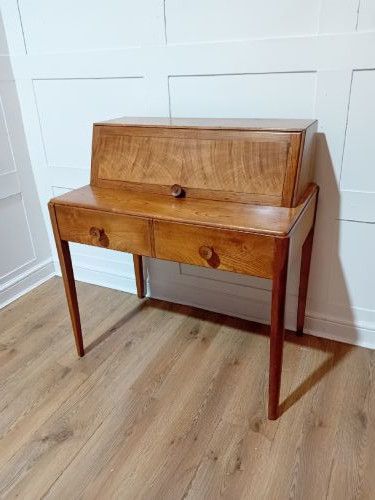
Wooden Writing Bureau
A wooden writing bureau offers a dedicated workspace concealed behind a fall front or cylinder lid, housing pigeonholes and small drawers for private correspondence.
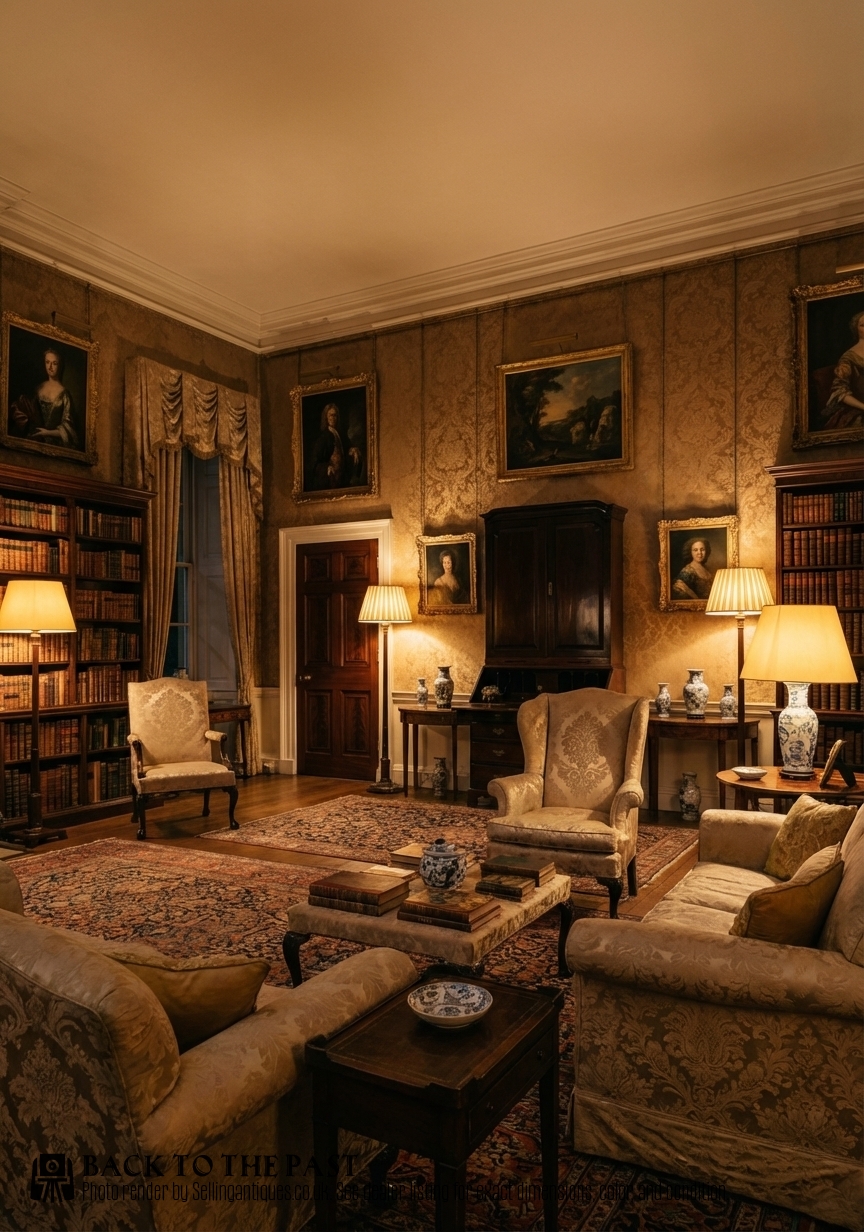
Wooden Writing Bureau
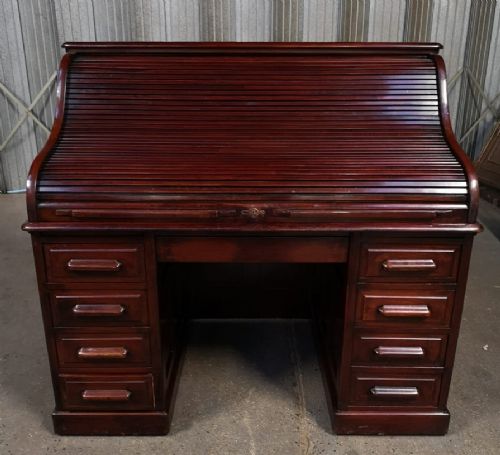
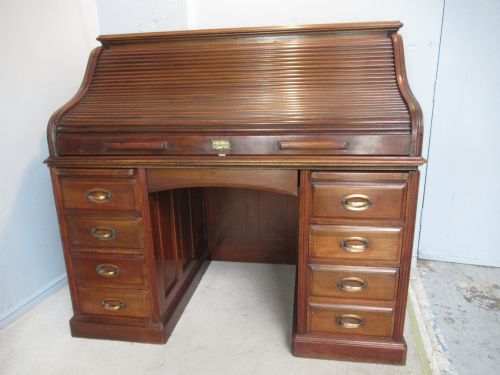
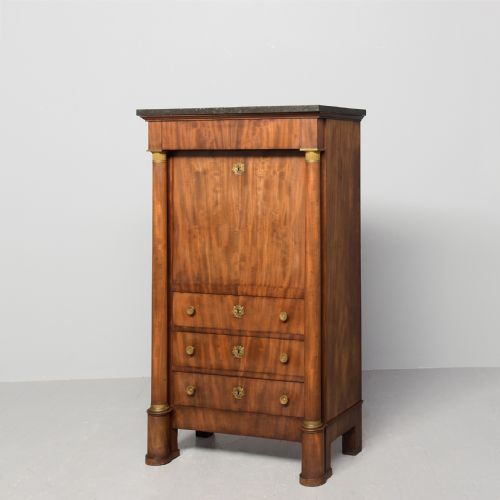
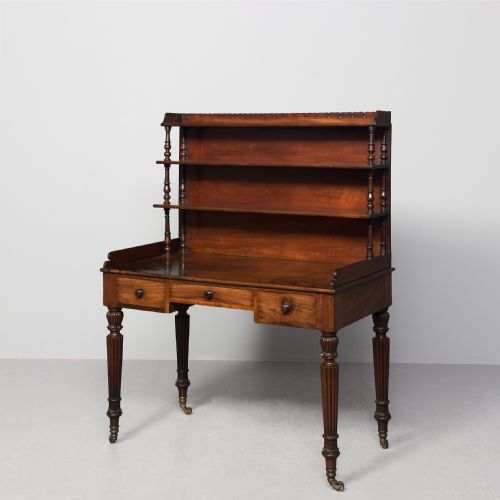
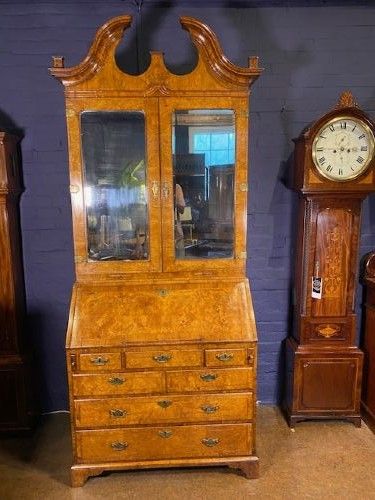
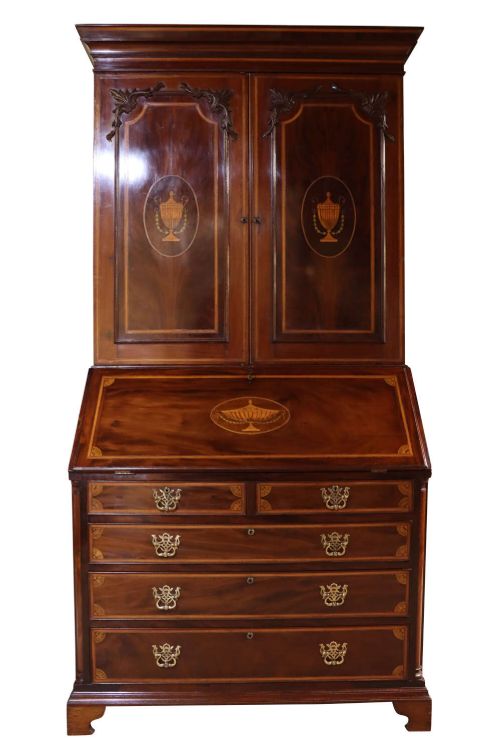
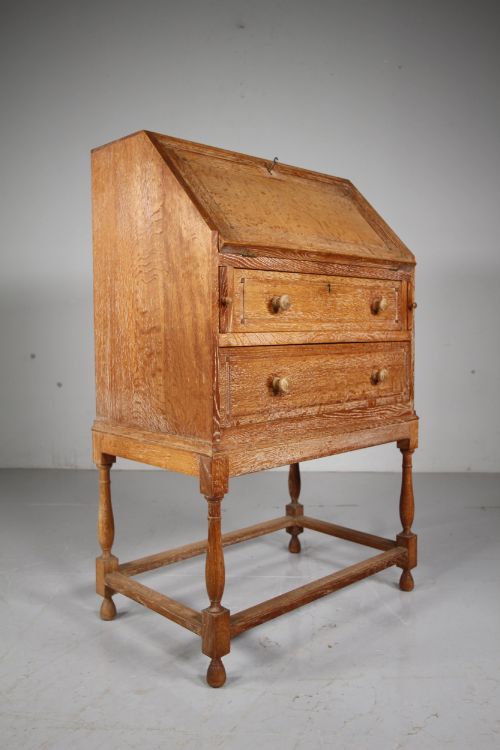
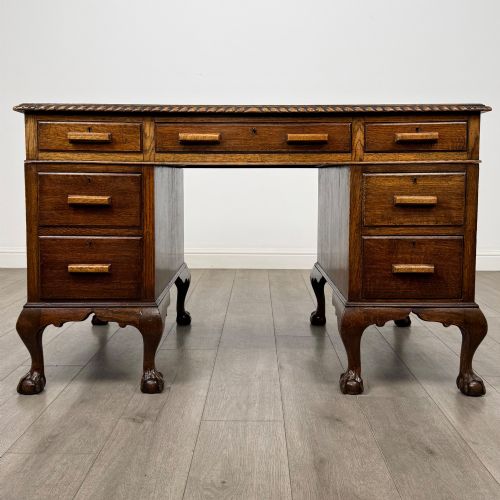
A wooden writing bureau spans centuries of domestic furniture design, appearing in formats from compact fall-front desks to large bureau bookcases and pedestal configurations. Buyers encounter pieces originating across the Georgian, Victorian, and Edwardian eras, alongside later Art Deco interpretations.
The most frequent examples on this page utilise traditional cabinet forms in mahogany and oak, often featuring fitted internal compartments with small drawers and pigeonholes. Variations range from early George III secretaire cabinets to compact Edwardian drop-front desks and sturdy Arts and Crafts oak pieces.
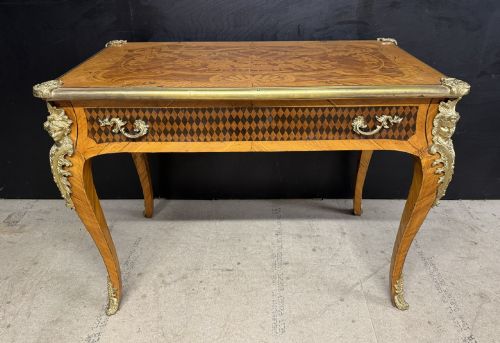
Regional and stylistic diversity emerges through French bureau plat designs, Dutch inlaid writing slopes, and Cotswold School craftsmanship. Each iteration maintains the primary function of providing a writing surface combined with enclosed storage for papers.
Materials and construction methods
Cabinetmakers constructed these pieces using solid hardwoods like mahogany, oak, and walnut, frequently applying decorative veneers such as burr walnut, flame mahogany, and satinwood to primary surfaces. Brass handles, escutcheons, and hinges provide functional hardware, while inset leather writing surfaces offer a durable writing plane.
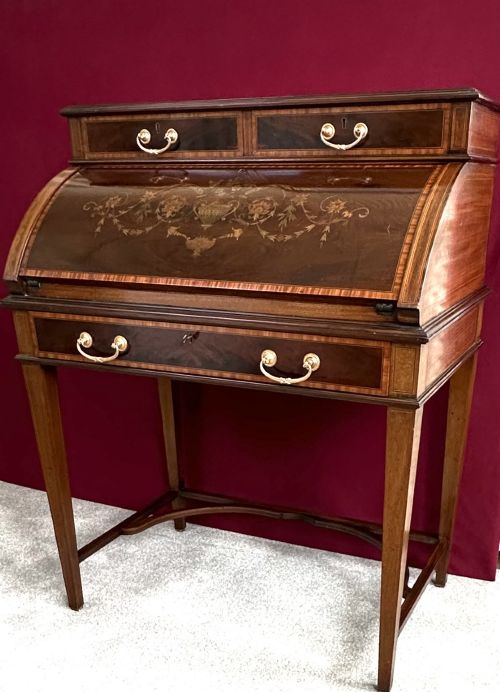
Joinery techniques involve precision dovetailing for drawer construction and panel framing to accommodate seasonal wood movement in large fall fronts and cylinder lids. Inlaid banding, marquetry, and cross-banding demonstrate advanced decorative carpentry across Georgian and later periods.
Distinctions in construction and material quality
Superior examples distinguish themselves through the selection of highly figured timber veneers, such as matched burr walnut or flame mahogany, applied with exact grain continuity across the fall front and drawers. Secondary timbers chosen for drawer linings and internal dividers reflect the overall standard of workshop production.
The refinement of internal mechanism design separates standard models from exceptional pieces, particularly in balanced cylinder desks, tambour tops, and secret compartment releases. Original brass hardware, stable drawer action, and well-preserved leather inserts contribute to the integrity of a piece.
James Mein of Kelso·Heals of London·Arthur Basil Reynolds·Bryn Mawr Welsh Oak·Gillows·Maple and Co
The Wooden Writing Bureau Glossary
- Fall front
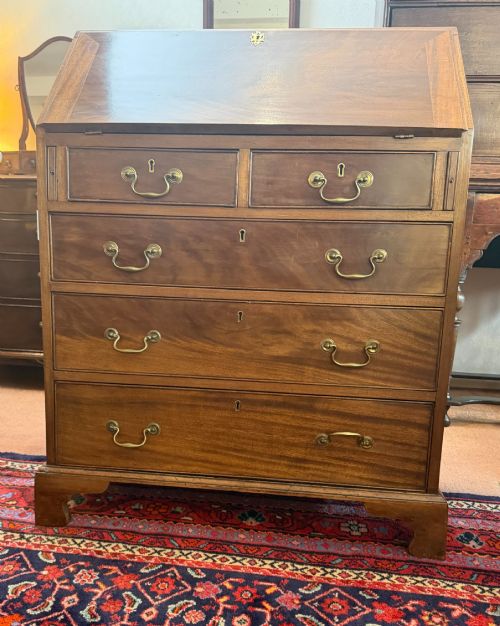
- A hinged writing flap that drops down to form a horizontal surface for writing. It conceals internal compartments when closed.
- Secretaire
- A piece of furniture containing a drawer or compartment that pulls down or drops open to serve as a writing desk. It often mimics the appearance of a chest of drawers.
- Tambour
- A flexible sliding shutter formed from narrow strips of wood glued to canvas, allowing a desk lid to curve smoothly around a track.
- Pigeonhole
- A small, open compartment within a desk interior used for sorting letters and documents. These are often framed by miniature drawers.
- Marquetry
- The art of applying decorative veneer pieces in geometric patterns or pictorial designs onto a wooden carcase. Woods of contrasting colours and grains are utilised.
Wooden Writing Bureau: Frequently Asked Questions
How do I use a bureau daily?
Lower the fall front or open the cylinder lid to reveal the fitted interior, providing an immediate surface for writing or laptop use. When finished, simply close the lid to conceal papers and maintain a tidy room.
Internal compartments organise stationery and correspondence, keeping everyday items out of sight. The enclosed nature of these desks suits traditional studies and living spaces alike.
How are periods identified?
Period identification relies on wood selection, structural proportions, and decorative details like bracket feet, brass handles, and inlay techniques. Georgian pieces often display clean lines in mahogany or oak, while Victorian examples favour heavier proportions and rich walnut veneers.
Later Edwardian and Art Deco pieces introduce lighter framing or geometric marquetry alongside oak and burr elm. Examining internal drawer construction provides further clues to the date of manufacture.
Where do bureau bookcases fit?
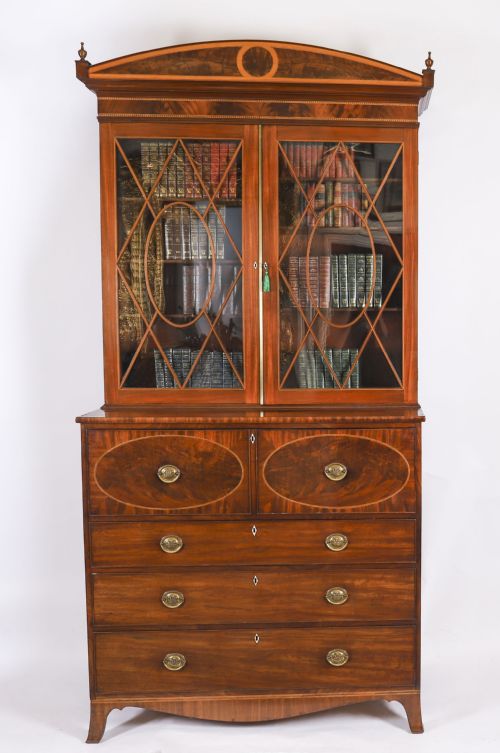
Bureau bookcases combine a lower writing desk with an upper glazed or panelled cabinet section for book storage. They anchor large rooms such as libraries or studies by utilising vertical wall space.
The upper shelves display books or collections behind glass doors, while the lower drop-front desk provides a functional workspace. This dual purpose made them popular throughout the Georgian and Victorian periods.