



Small Walnut Tallboy
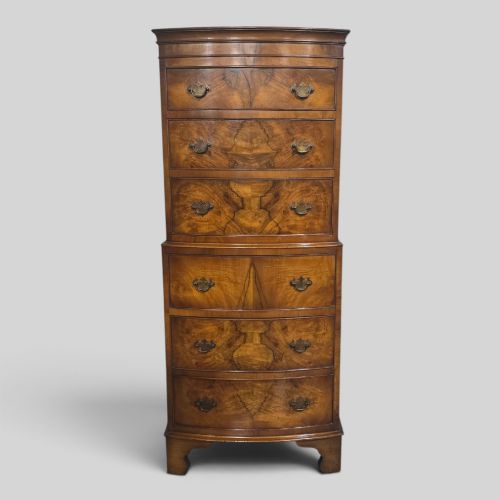
These small walnut tallboy pieces offer compact storage with striking grain, combining the height of a chest on chest with a smaller footprint.
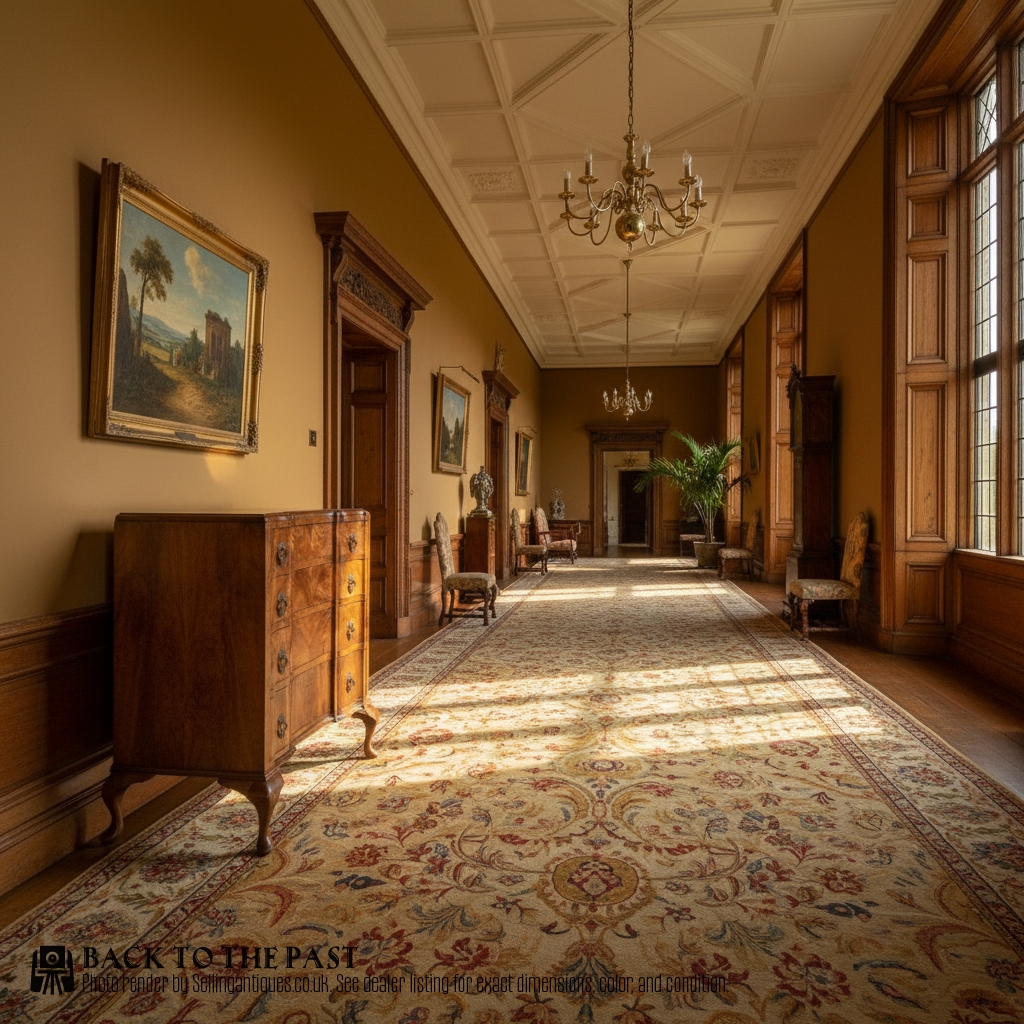
What a small walnut tallboy is
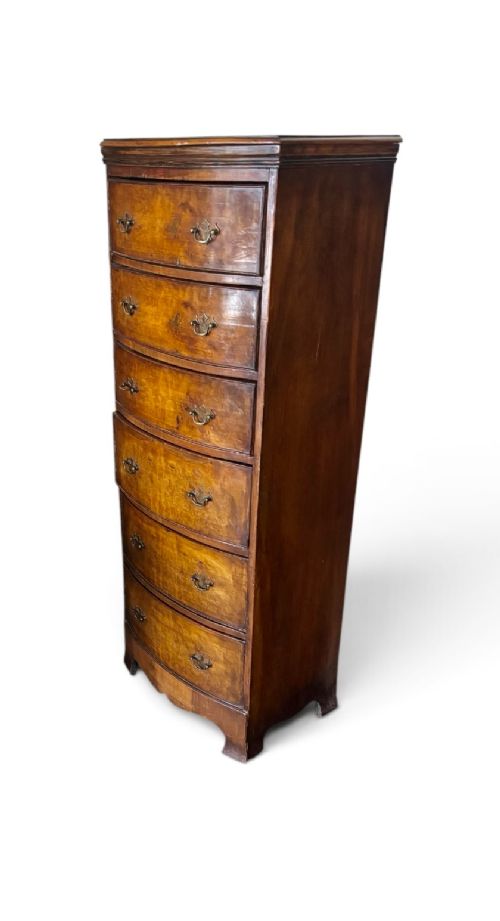
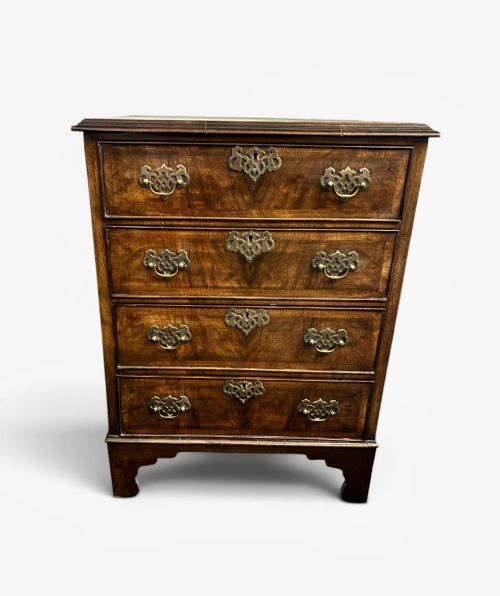
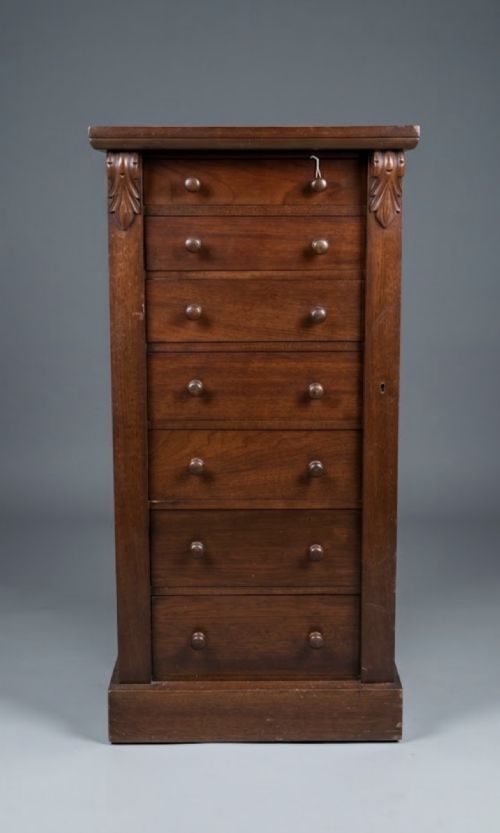
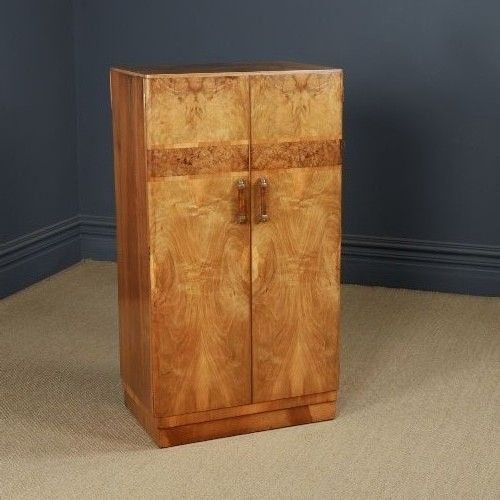
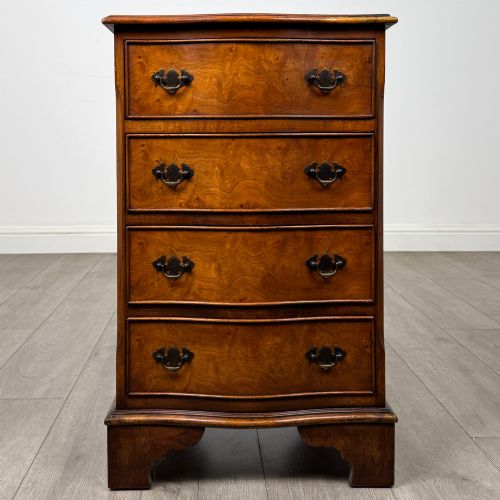
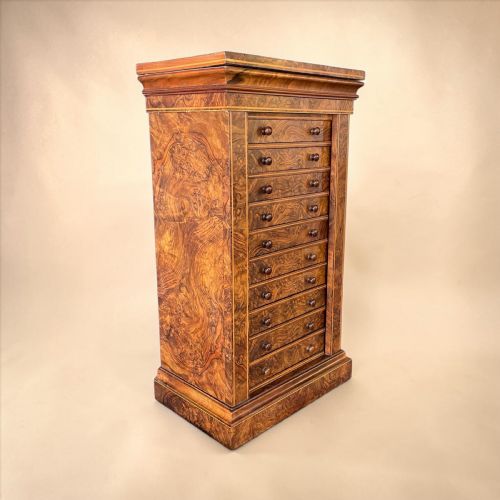
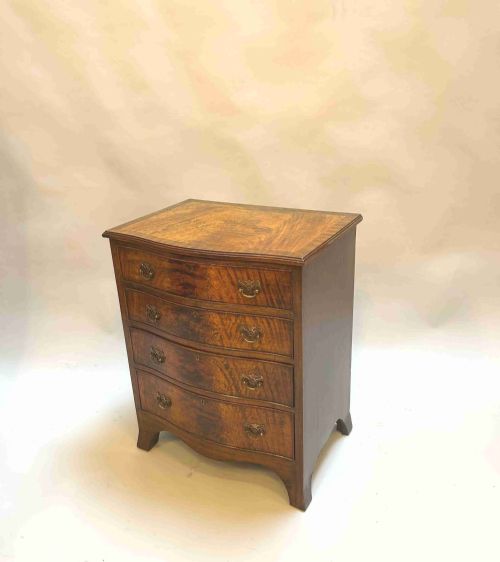
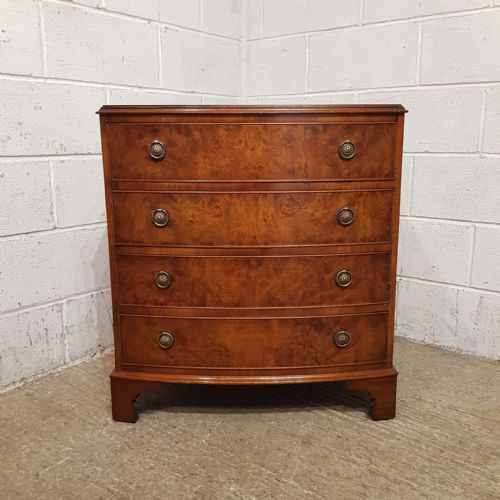
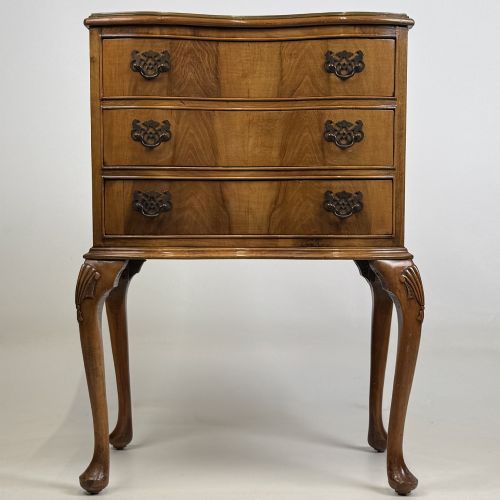
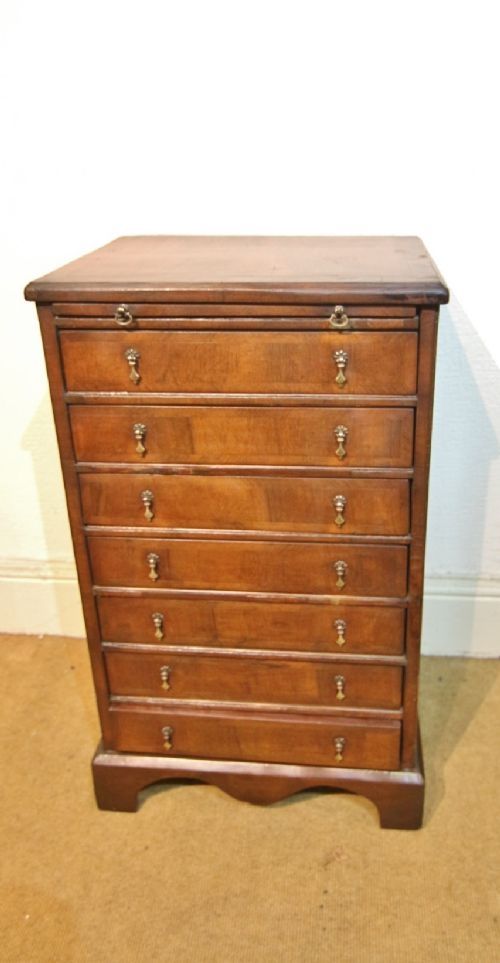
When you search for a small walnut tallboy, you find upright pieces of furniture designed for storage, appearing across various periods including the 19th Century, Edwardian era, 1920, 1930, and 1890. The form typically spans chests of drawers, bow fronted chests, serpentine chests, and two door armoires or wardrobes.
You are most likely to meet pieces built in Georgian style, Queen Anne style, and Georgian Revival. These examples feature compact proportions suited to smaller spaces while retaining the presence of a traditional tallboy or chest on chest.
The selection includes specific variations such as figured walnut, burr walnut, painted wood, and combinations involving brass hardware. Pieces range from Edwardian designs to 1930s Art Deco interpretations of earlier styles.
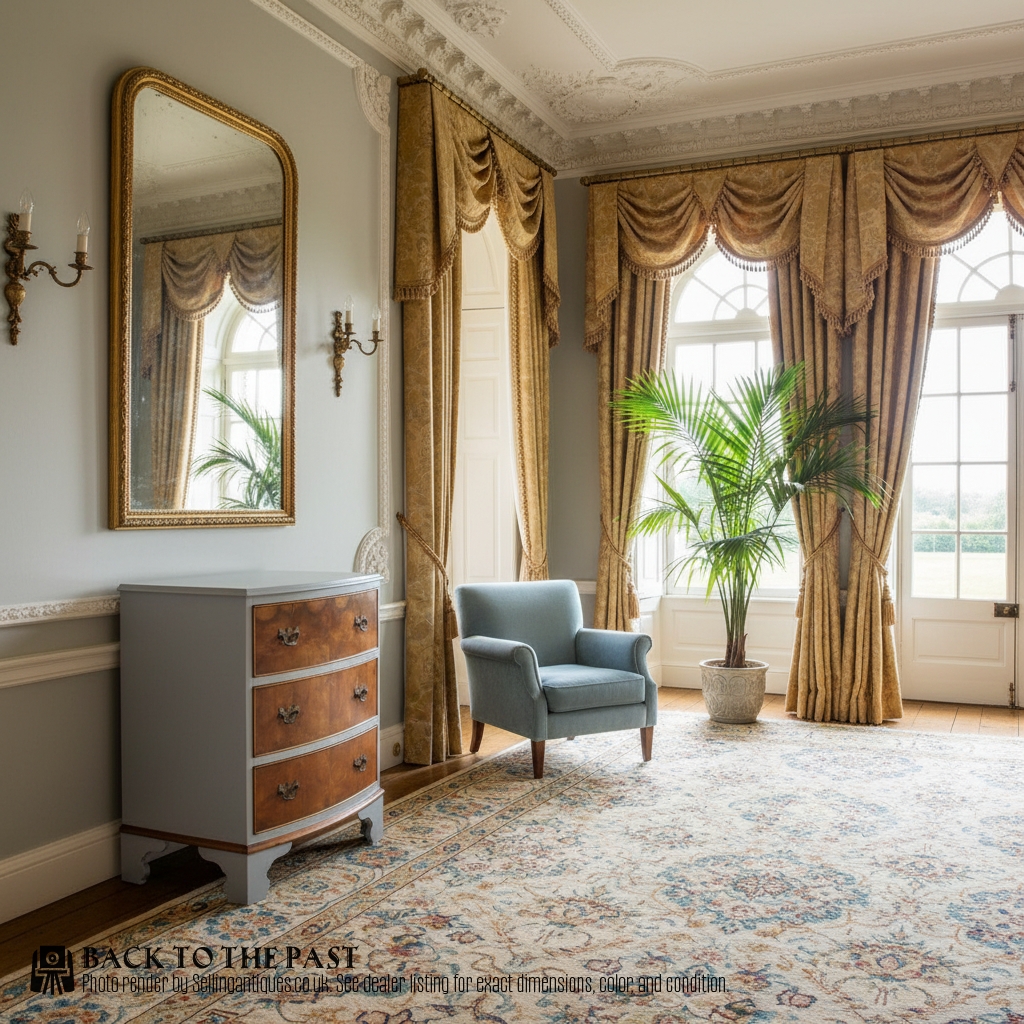
How they were made
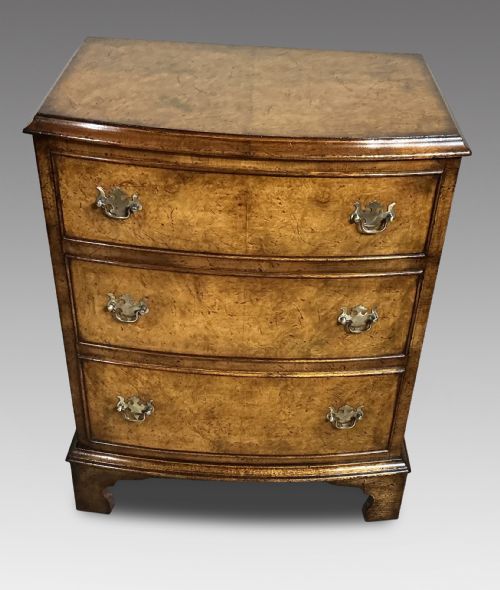
Construction relies primarily on walnut and burr walnut veneers applied to carcases, sometimes paired with painted wood surfaces. The distinctive grain patterns of burr and figured walnut form the visual centrepiece of these tallboys and chests.
Brass fittings such as handles and escutcheons accent the timber surfaces across the Edwardian and 20th century pieces. Cabinetmakers shaped these forms into serpentine fronts, bow fronts, and straight-sided tallboy configurations.
Retail Price Guide 2026
Typical UK retail prices for small walnut tallboy, calculated from the Sellingantiques database of over a million retail prices indexed since 2003. This retail price guide relies exclusively on Sellingantiques data; no external sources or auction records are used, so the figures do not describe the wider market.
Materials documented across these listings include solid walnut, burr walnut, figured walnut, painted wood, and brass hardware.
What varies in quality
The quality of a small walnut tallboy rests upon the selection and matching of the veneer. Pieces featuring symmetrical burr walnut or figured walnut grain across drawer fronts command greater visual impact than plain timber surfaces.
Execution of complex shapes like serpentine and bow fronts distinguishes finer examples. The integration of brass hardware and the crispness of mouldings further separate standard production from superior cabinetwork.
Waring and Gillow
The Small Walnut Tallboy Glossary
- Tallboy
- A tall chest of drawers, often constructed as a chest on chest, providing vertical storage without occupying a large floor area. This form combines wardrobe and drawer functions in various period examples.
- Burr walnut
- A prized timber harvested from walnut tree growths, displaying intricate, swirling grain patterns. Cabinetmakers use its veneer to create decorative fronts on chests and tallboys.
- Serpentine
- A furniture front characterised by a concave centre flanked by convex curves, or vice versa. This undulating line requires skilled woodworking to execute cleanly.
- Bow front
- A convex, outward-curving front profile common on chests of drawers and tallboys from the 19th and 20th centuries. It softens the geometric lines of upright storage furniture.
- Figured walnut
- Timber exhibiting distinctive, natural grain distortions that create light-reflecting patterns. It serves as a primary decorative surface on Edwardian and later cabinets.
Frequently Asked Questions
What is a small walnut tallboy?
A small walnut tallboy is a compact vertical storage piece, functioning as a chest of drawers or a small wardrobe chest. These items combine tall proportions with a reduced footprint.
They appear in various forms including bow front, serpentine, and two-door armoire configurations from the Edwardian period onwards.
How do I style a small walnut tallboy?
Place a small walnut tallboy in a bedroom or hallway where vertical storage is required without dominating the floor space. The rich tones of walnut timber complement both traditional and modern interiors.
Keep surrounding decor simple to allow the figured or burr grain patterns to remain the focal point of the room.
What is the difference between a tallboy and a chest of drawers?
A tallboy typically offers greater height, traditionally constructed as a chest on chest or combining cupboard space with drawers. A standard chest of drawers focuses solely on horizontal drawer tiers.
Both forms utilise walnut and burr walnut veneers across the pieces recorded in the archive.
Are these pieces Edwardian or 1930s?
The pieces span multiple eras, including Edwardian examples, 1920s items, and 1930s Art Deco variations. Stylistic influences also draw on earlier Georgian and Queen Anne aesthetics.
Examining the specific grain, hardware, and silhouette helps determine the period of manufacture.