


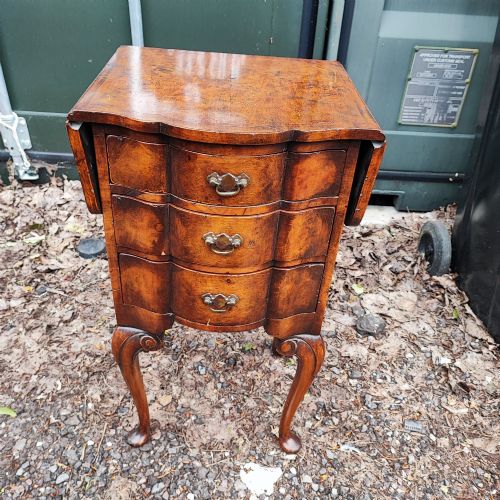

Small Walnut Side Cabinet
A small walnut side cabinet brings warm timber grain and compact storage to an alcove, hall or bedside.

Small Walnut Side Cabinet
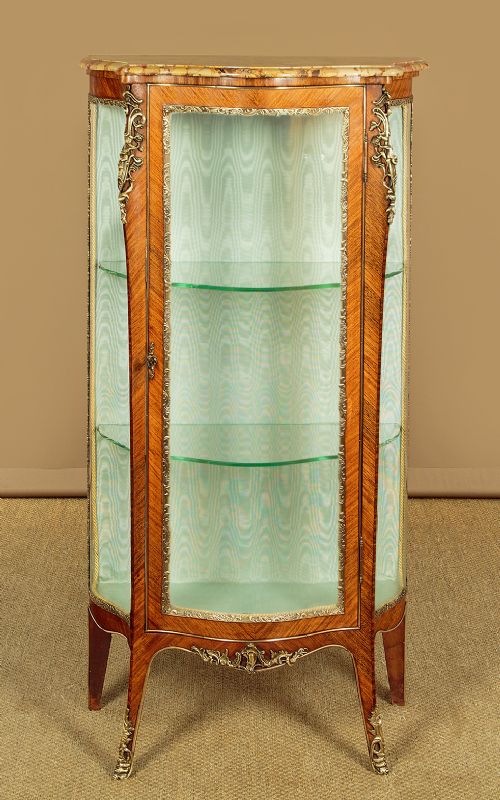
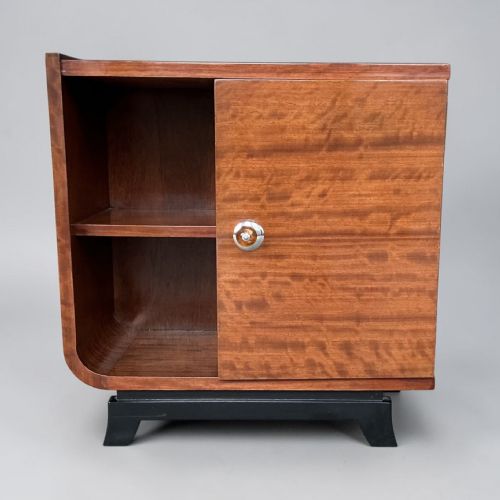
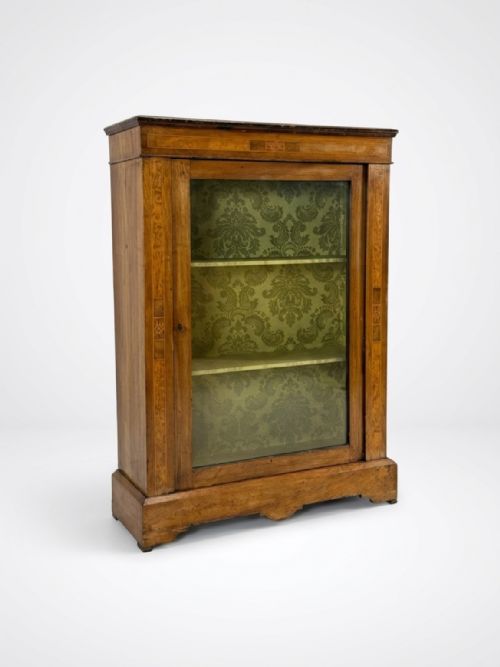
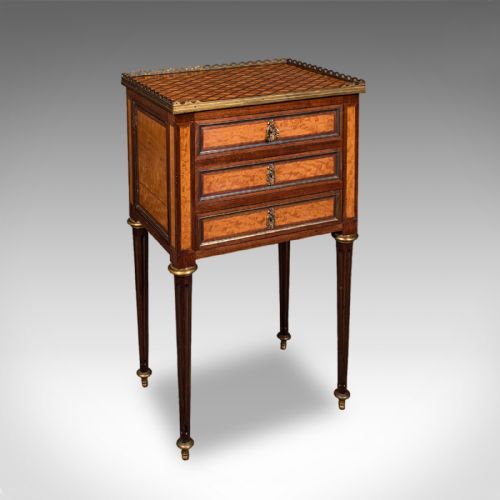
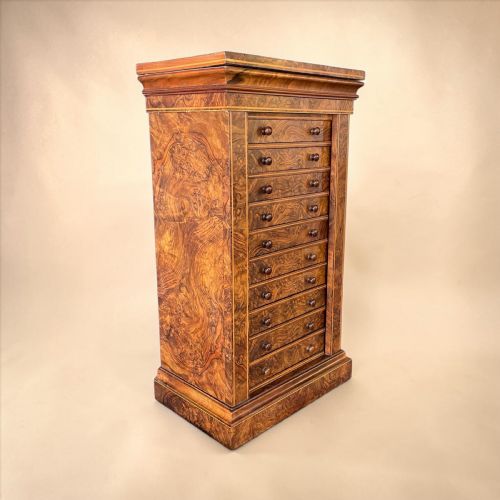
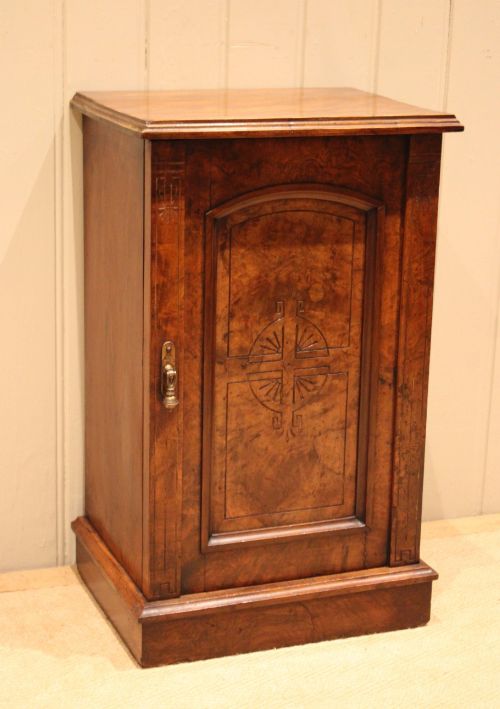
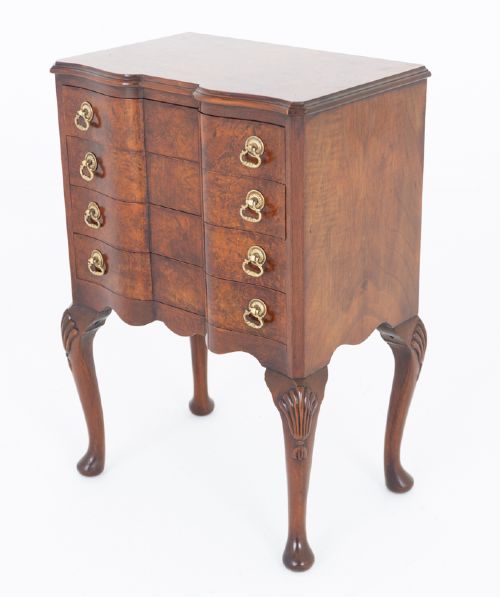
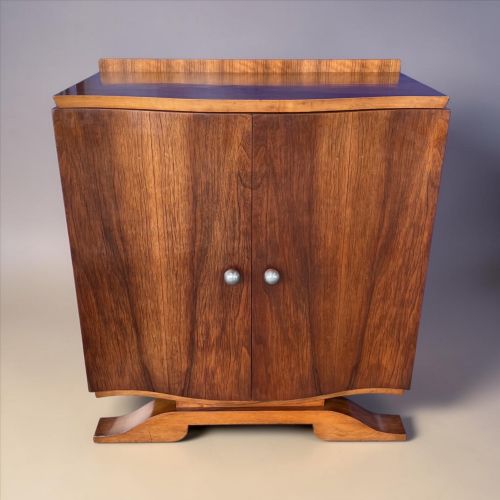
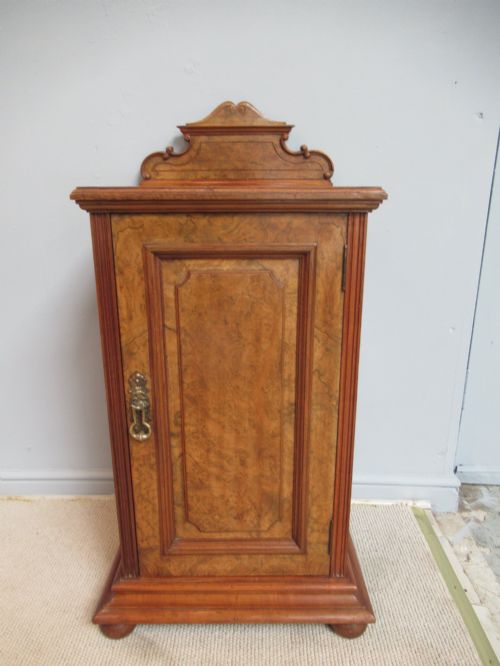
A small walnut side cabinet covers a broad family of compact domestic furniture designed to hold books, night items or display pieces in tight spaces. You will encounter Victorian bedside cupboards, Edwardian nightstands, and Art Deco variants featuring clean geometric lines or curved burr veneers.
The materials span plain walnut, richly patterned burr walnut, and figured veneers matched with brass, marble, or ormolu mounts. Makers utilised contrasting ebonised wood and subtle boxwood marquetry to accent the primary timber surfaces.
Origins stretch from English workshops to French provincial hubs, encompassing Louis XV and Queen Anne revival styles alongside functional modernist pieces from the nineteen-thirties.
Materials and construction
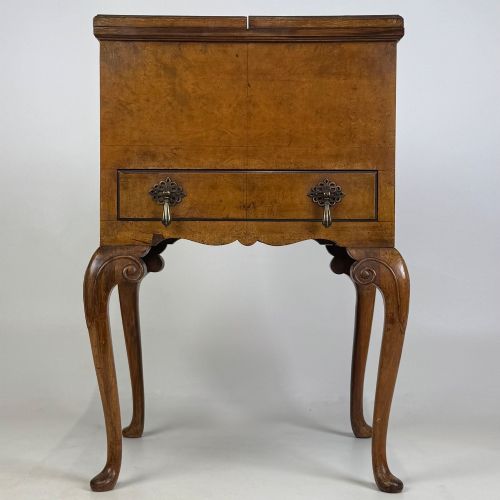
Cabinetmakers selected walnut for its stable properties and rich, varied figure, frequently slicing the timber into thin veneers to create symmetrical patterns across drawer fronts and doors. Burr walnut provided dramatic swirling grains for high-status fronts, whilst solid walnut formed structural frames and turned legs.
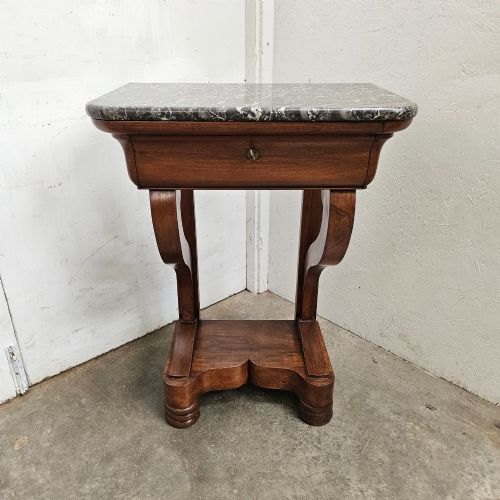
Secondary detailing involved cast brass handles, inset marble slabs on French consoles and commodes, and delicate stringing in boxwood or ebonised wood. Joinery relied on traditional dovetails for drawers and mortise and tenon frames for carcases.
The listings span multiple decades, incorporating Victorian, Edwardian, and Art Deco eras alongside revival movements like Queen Anne and Louis XV.
Judging the standard
The distinction between standard utility furniture and superior examples lies in the selection and matching of the veneer. Grain that flows seamlessly across multiple drawers indicates a more deliberate, thoughtful workshop process.
Hardware integrity and secondary timber selection separate careful construction from rushed assembly. Original brass mounts, finely cut marquetry, and clean interior oak or pine secondary woods elevate a piece from ordinary to exceptional.
The Small Walnut Side Cabinet Glossary
- Burr walnut
- A growth deformity on the walnut tree yielding intricate, swirling patterns when sliced into veneer. Cabinetmakers prized this timber for statement drawer fronts and top panels.
- Ormolu
- Gilded bronze mounts cast in decorative scrollwork or floral motifs and affixed to furniture corners and feet. French revival pieces frequently employed these metal accents.
- Marquetry
- Inlaid pieces of wood veneer forming decorative pictures or geometric patterns on a contrasting background. Boxwood was a common choice for these pale contrasting lines.
- Pier cabinet
- A low display cabinet specifically proportioned to sit against the wall space between windows. These often featured glass doors and velvet-lined interiors.
- Davenport
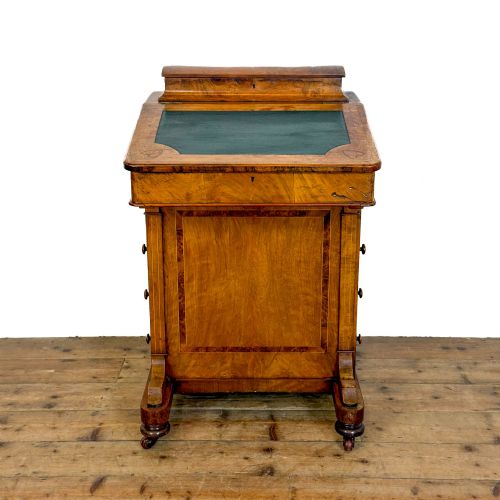
- A compact writing desk featuring a sloped leather-lined writing surface above a bank of small drawers. Early versions appeared during the nineteenth century in burr walnut.
Small Walnut Side Cabinet: Frequently Asked Questions
Where should I place a small walnut cabinet?
These compact pieces fit naturally beside a bed as a nightstand or in a narrow hallway as a small console.
They also serve well in sitting rooms as lamp tables or beneath a mirror where floor space is limited.
How do I care for walnut veneer?
Keep walnut furniture away from direct sunlight and strong heat sources to prevent the timber and underlying glue from drying out.
Dust regularly with a dry cloth and occasionally apply a quality beeswax to nourish the grain.
Are Art Deco and Victorian cabinets constructed differently?
Victorian models often feature elaborate carved details, turned legs, and revival styles such as Queen Anne or Louis XV influences.
Art Deco versions from the nineteen-thirties focus on smooth curved surfaces, figured veneers, and minimal hardware.
What is the difference between a bedside table and a side cabinet?
Bedside tables generally offer open shelf space or a single drawer specifically sized for nighttime storage next to a mattress.
Side cabinets include enclosed cupboards with doors and shelving designed for general living areas.